
Making a Scene… with Dialogue

Making a Scene… with Dialogue

In just over a month, I head to the Ontario Writers’ Conference to mingle with writers, publishers, agents and editors. I’m also delivering a workshop on dialogue, specifically on dialect and diversity in dialogue.

It took me many years to become comfortable using dialogue. My early characters spent a lot of time in their heads thinking about what was going on. In their heads, they voiced concerns, got angry, wanted to ask about stuff. The reader knew all this, [if they were still awake at this point] but the other characters in the story didn’t. Eventually, I realized my characters needed to react and interact— out loud!

But just saying everything out loud is not the whole story. Dialogue scenes are powerful. Dialogue is one of the best ways to engage the reader. Even if characters are sitting still, a dialogue scene works as an action scene and propels the story forward. And it can do so much more—even several things at once—like reveal character, advance the plot, create mood, build conflict, reveal backstory or support the theme.

“Writing good dialogue is art as well as craft,” says Stephen King. Here are 5 tips for writing good dialogue scenes:

Know why you are writing the scene

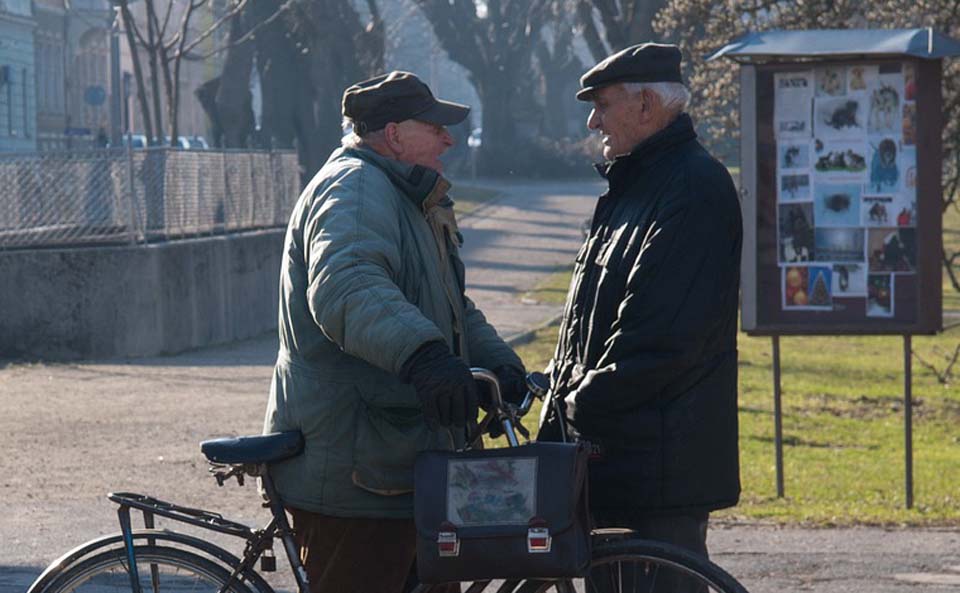
Dialogue is not filler—or shouldn’t be. If your characters are just discussing the weather or what they want for dinner, your readers’ eyes will glaze over. Kind of the same way I skip over all the pictures of people’s dinners on Facebook. Will the scene reveal or hint at some backstory, or let the reader see how the relationship is developing, or give information about the plot.people-talking
“You wouldn’t say that if you had known my mother.” (Hint at back story? Reveal character?)

“Mike said it was just over the hill, an old factory where they processed paint or something.” Relaying information BUT it must be new to the reader AND to the character being spoken to.

Make dialogue do double duty

Once you’ve decided what the main purpose of the dialogue scene is, see what else you can make it do at the same time.

 “You wouldn’t say that if you had known my mother. She was a right ball breaker. Besides, she had a stash of these things up at the old farmhouse in Williamstown.” (hint at back story PLUS info for the plot?) 

“I’ll never step foot in that woman’s house.” (Opinion of another character? Showing anger and resistance? Plot problem?…all three?)

Anchor the scene

It’s okay to dive into the scene right in the conversation, but if you start a chapter with dialogue make sure it’s not “floating”. Readers need to know who is talking and where they are, and what point this is in the story. If you don’t, the reader will find it hard to absorb the dialogue nuances or subtext because they will be too busy trying to get oriented. I’m not suggesting a long piece of exposition here. Set it up in the chapter before, use a name in the spoken dialogue, or add a beat of setting.talking

Floating:  “I can pick you up around seven. At the diner okay?”

Anchored: When Leah reached the motel, she rescued her cell from the clothes on the backseat. “Amber, I can pick you up around seven. At the diner okay?”

Show emotions

Always be aware of the emotions being felt by the characters speaking and convey that in word choice and body language, not exclamation points or adverbs tacked onto the end.

Adverbs and punctuation: “I will NOT GO!!!” said Lily defiantly.

Beats and word choice: Lily crossed her arms and stared from under smoldering eyebrows. “A team of horses couldn’t drag me to that place.”

Never use dialogue as an “info dump”

My critique circle calls this an as-you-know-Bob moment. Characters should only talk about the things that are important to them at that point in the story, that fit with their emotions at the time, and that they would ordinarily say in real life to another person.

As-you-know-Bob moment: “We’ll go to Mike’s place, near your Mom’s house, and give rubbish-143465_960_720him the book you’re holding.” (The listening character knows where Mike’s place is and knows who is holding the book. No emotional content here.)

Real words: “Ok, Ok. We’ll go to Mike’s place, already. Give him your bloody book.”

Spending time on dialogue is well worth the effort. It dramatizes your story helping readers feel like they are actually listening in.

Do you have any dialogue tips to share? Post in  the comments below.

If you want to explore dialogue further, here are some other blogs you might find interesting. .and useful.

Keep it Simple: Keys to Realistic Dialogue Part 1

Keep it Simple: keys to Realistic Dialogue Part 2

On Writing – Dialogue – Robert J Sawyer

9 Easily Preventable Mistakes Writers make with Dialogue

What’s in your writing drawer?

What’s in your writing drawer?

Gwynn Scheltema

There’s plenty of advice out there on how to prepare your work for submitting, but what if, like me, your problem with submitting—is you!

Do any of these statements apply to you?

  • ·         You have completed work ready to send out that hasn’t been submitted ever.
  • ·         Many of your completed pieces have been waiting to go out for years.
  • ·         You have several projects that are “almost ready” to send out.
  • ·         You have pieces that you sent out once, had rejected and never submitted again.

head shot of isaac Asimov


“You must keep sending work out; you must never let a manuscript do nothing but eat its head off in a drawer. You send that work out again and again, while you’re working on another one. If you have talent, you will receive some measure of success – but only if you persist.”

  Isaac Asimov

Facing fear

You likely already know that the prime reason for not sending your stuff out is fear:

  • ·         of rejection (I‘m not as good a writer as I thought I was)
  • ·         of success (now I’ll have to do it again)
  • ·         of someone stealing my ideas (lack of trust of new people or situations)
  • ·         of facing the reaction of readers (don’t like to be judged)
  • .         of rewrites and edits (what if I can’t do what they want)

book cover Art & Fear

What separates artists from ex-artists is that those who challenge their fears, continue; those who don’t, quit. Each step in the artmaking process puts that issue to the test.
― David BaylesArt and Fear


Like eating well and exercising, you know what to do and why you should do it, but you can’t bring yourself to do so. So here are a few ideas to help you over that hump:

1. Join the clubwoman afraid

We can’t control fears and feelings. Likely they are deep-rooted in our psyche. But we can find ways to move forward despite the fear.

Accept that pretty much every writer has these fears at one time or another. The trick is to accept it as part of the writing process. Embrace it and face it.

You will get rejected. It’s a given. But you will survive. You will live to write another day.

2. Let go

Ironically, the greatest feelings of self-doubt seem to come at the moment when the task is almost done. You want it to be perfect; the pressure to finish increases, and the knowledge that you will have to put it out there sits menacingly on your shoulder. But there comes a time when you must fight self-doubt and have faith in what you’ve created. You must let go.

If you don’t? What happens? Nothing. Your writing stays in the drawer. You beat yourself up for not moving forward. Nothing gets resolved.

3. Trust the Processtrust yourself

Fear focuses on unknown results of possible action. You can’t control unknown and possible. You can control process—and action. So start on the process of submitting; create a forward motion as a way to outwit, outrun, outsmart fear.

It’s hard, sure, but it’s the writing life. You can either face it or not. You can trust the process or live in fear. Your choice. The solution in your hands.

4. Get started!
  • ·         Set yourself a target date to have just ONE piece sent out.

Writers live by deadlines, so harness that attitude to help you submit. Make yourself publicly accountable—tell your writing buddy, your critique group, anyone who will call you on it.

  • ·         Break the process down into actionable tasks.

Submitting your work can feel overwhelming. But like any process, breaking things down into bite-size actionable pieces helps you to get started so that once begun, the task takes on a momentum of its own.

Try making a list for each stage of the process (which you can use again and again), and then tackle just one item on the list at a time. Tell yourself you only have to do one thing on the list. Chances are, once you get started, you’ll do a lot more. And each action you take will build your confidence. Focus on the idea that each small item is doable.leap of faith

5. Don’t Stop!

By the sheer law of averages, the more submissions you make, the more publishing success you will likely have. Think of rejections as “acknowledgments” that you are doing what real writers do. You are submitting!

A good place to start is writing contests. Join Ruth E. Walker and Dorothea Helms in May for their popular workshop Write to Win.

If you want to start the process now, make a public commitment in the comments below to a date to have ONE submission completed. We’ll follow up and see how you did.


Even Villains Need Some Affection

Even Villains Need Some Affection

Ruth E. Walker.

I do love a great villain in fiction: Voldemort, Moriarty, Bill Sykes, Cruella de Vil. And so, true-life baddtoddler sitting at beachies fascinate me – I want to know what made them nasty. Surely, no baby is born wicked (back off horror writers, I’m talking real life here.) I mean, even Adolph Hitler and Paul Bernardo were wee thumb-sucking tots at one point. I wonder what happened to drain out their empathy and fill it with cold-hearted evil?

When I’m creating villains, I want to know the same thing. Right now, I’m refining a female character that is the main antagonist to my female protagonist. She’s a cruel and devious villain, and she wants my main character dead. And, just for an added twist of nasty, my sneaky villain happens to be my protagonist’s mother.

It turns out the reason she wants her daughter dead is a big part of my protagonist’s ultimate goal. And here’s why I’m telling you this. Despite writing an outline, I had no idea about this goal when I started to write this book. My villain led me to it. Thanks Nasty Mom.

Character motivation is key…so experiment 

ethereal-839554_1920
It wasn’t until I started to focus on my villain’s motivation that I discovered something important: I didn’t know what my protagonist’s underlying goal was. By fleshing out the villain, I discovered what it needed to be. Now my plot is stronger and my overall characterization is richer. Writing experimental scenes from the mother’s POV gave me “entry” to her head. Stopping to ask “why” and letting her tell me through free-writing was genius. I didn’t always like what she said but it helped me make sense of who she is and how she got like that.

None of those writing experiments will be in the book. But that’s okay – because now my villain’s behaviour, her physical form, even what she notices and doesn’t notice, is clear to me. And that makes me write her scenes – along with her actions and reactions – with confidence. Readers notice when you aren’t consistent or logical.

Writer, how do you feel about your villain?

dalai-lama-1169298_1920 smallAnd I have some sympathy for her. What? Concern for a murderous matriarch? Yes. Because I know what happened in her life to drain the maternal instincts and replace them with self-preservation and steely resolve. And I’m a fairly compassionate person, so I like to think that even the worst of humanity has some glimmer of good in them, if only life had been kinder.

We are all capable of doing horrible things. And wonderful things. So the terrible villains that I create in my fiction all have some “wonderful” inside them. It keeps them complex and unpredictable – like real people. For readers, complex and unpredictable can make for fascinating stories. Just like real life. And that, as writers, is what we hope to achieve in our work.

Do you have any favourite villains?

Have you fallen for any desperadoes in your own work or in books you’ve read? Spend a few minutes just thinking about what makes them your favourite. Who or what do they remind you of? How do they make you feel?

The next time you are writing a villain, show that nasty, evil character a little writerly love and compassion. Take a look at why they are so nasty. Your muse and your readers will thank you for it.

Don’t have a villain as yet? Try my quick and easy recipe to develop characters to get you started. Just toss in some extra negative traits to make sure you get enough nasty in there. Having trouble with finding negative traits, try Angela Ackerman and Becca Puglisi’s book The Negative Trait Thesaurus: A Writer’s Guide to Character Flaws.

If you’d like some help, join me on March 5 for my Master Class in Character: More than Flesh and Bones.

9 Tips for Writing Steamy Scenes

9 Tips for Writing Steamy Scenes

Gwynn Scheltema. 

It’s February, the month for Valentines and all things romantic: love and…sex.

When I have to face writing sex scenes, I sometimes feel like I’m getting undressed in public. I feel like my mother is watching; like everyone will think I do all the things I describe. Do you ever feel that way?

Get over it.

Check out these 9 tips to help you.

Sex is emotion in motion.
~ Mae West

1. Don’t be afraid to write outside your own experience.

Research and write just as you would for any situation you haven’t experienced personally. Read sex scenes by other authors and note which resonate with you. Ask yourself why. I just finished reading Marissa Campbell’s Book, Avelynn. She expertly handles a full range of sexual encounters, from that first romantic kiss to attempted rape and a great deal in between.

2. Treat a sex scene like any action scene.

Have a reason to include it that involves advancing the plot or illuminating character, or developing a relationship.

3. Make your characters human.

Keep your characters human, flawed people, not a larger-than-life Adonis or Aphrodite. While romance has an element of wish fulfillment about it, if you make it so like a fairy tale, some readers won’t believe it.

4. Keep the sex real.

Sex is not always spectacular; it can be boring, mundane, or unsatisfying too. And it doesn’t always have to be completed. Interrupted sex can be quite a tease.

5. Get the timing right.

Don’t let things get hot and heavy in the most unlikely of moments and places in your plot. Don’t shove sex in because it’s been four chapters since the last tryst. Remember tip #2.

6. Get the choreography right.

Not just on a physically level, but on an emotional level too. Physically, make sure your transitions let us know if someone goes from standing to lying, or from facing to spooned. More importantly, let us know their emotional reactions and changes. The physical act by itself is just porn.

7. Be careful of metaphor and simile.

Clichés about stars exploding will only undermine what you are trying to do. Find fresh and appropriate comparisons and don’t hide behind them to avoid being explicit or to add drama. And remember that sex involves all five senses. Use them!

8. Use the correct terms and don’t be offensive.

Research if you have to. If euphemisms pepper your scene, you’ll leave the reader giggling or cringing. Also be aware of the accepted sexual practices of your genre and age group and stay in those boundaries.

9. Keep the scene brief.

Sometimes less is more. Subtle hints are often more effective than graphic description. Give readers enough to satisfy the moment, but leave them wanting more.

Have fun with itkiss

 Remember how you felt when you first discovered that French kissing involved touching tongues? As a teen, did you practise on your arm or the mirror? What about your first kiss?

 Kisses come in so many forms: passionate, wet, teasing, rough, slow… In 50 words or less, write about a kiss—fun, steamy, chaste…. Post it in the comments below.


[By the way…for a great workshop on characters, check out Ruth’s Character Master Class on March 5.]

What is Your Definition of Success?

What is Your Definition of Success?

Ruth E. Walker.

We all want success as writers. But what each of us views as “success” will likely differ. Success for one could be simply finding the time to write; for another, it could be seeing their words in print; for someone else, success could be when the awards and accolades start to arrive.

Take two minutes to view this video of Kevin Spacey, multi-award-winning actor, as he speaks about success.

https://www.youtube.com/watch?v=5mdW_ihN830

When you are done being inspired by this artist’s statement on what success means to him, consider what success means to you. Make a list of all the positives and negatives related to “success” from your perspective.

Now, work with “success” from the standpoint of what you are writing, or plan to write. Here are some ideas to get you started:

  • Draft an essay on success.
  • Make a positive and negative ‘success list’ for your character(s); then write a scene containing one positive and negative success outcome
  • Brainstorm “success” for as many meanings and ideas that come to you about that particular word; craft a poem or short scene using at least three of your ‘brainstorms’

When you are done, if you still crave more Inspiration, try all of the above with one change. Use the word “failure” as your starting point.

But know this — the word ‘failure’ is just a word. And anyone who continues to seek inspiration and ideas to challenge their writer’s mind is no failure: your success can be measured simply through your desire to explore.


The Gift of Feedback

The Gift of Feedback

Ruth E. Walker.

Feedback from colleague writers can be a tremendous help to developing writers. Or it can put good manuscripts off the rails. How do you know comments received in a writing circle or workshop feedback session are useful?

Remember Ruth’s three basic rules of successful writing feedback:

Respect:           Give it and get it. All feedback is an offered opinion. You are free to take it or leave it.

Encourage:      Never intend to diminish another writer; always offer colleague-to-colleague comments .

Inspire:            Go ahead and take risks with your writing but be prepared to hear what may need a second look.    

Receiving feedback is an art

  • respect an honest opinion by not defending your writing
  • take notes of verbal comments
  • all feedback is opinion; you may not agree but listen anyway (later on, you may realize that the opinion you dismissed is just what you needed to hear)
  • all feedback is useful; see above and remember you are free to accept or gracefully decline offered feedback
  • don’t interrupt; if you need to clarify what is said, make a note and wait for an appropriate spot to ask a question
  • if feedback is offered in a group session, pay attention; others discussing their opinions about your submission can lead you to exciting discoveries and new ideas

Giving feedback in an art

  • respect the risk a writer takes in asking for feedback; not everyone is ready for an intense critique so if you are unsure of how much to offer, ask the writer
  • begin with one positive aspect before offering suggested areas to review
  • avoid “I like” or “I didn’t like” as much as possible: this isn’t about “liking” something, it is about technique, clarity, logic, development of plot, setting, characters, etc.
  • focus on words, phrases, rhythms, etc., that stand out – either in a good way, or in a way that doesn’t work; offer suggestions if you can
  • be specific about interesting words or ideas and material that seems flat/stereotypical
  • be professional; if you are uncomfortable with the subject, and it affects your ability to critique, it is okay to pass on making any comment

~~~