There All Along

There All Along

Guest Post: Erin Thomas

Today I took a life drawing class, part of a teacher meet-and-greet event at Centennial College. Unlike the gentleman who jokingly stood up and pretended to walk away when the teacher explained that there was no nude model, I was intrigued by the sound of our assignment: we were going to draw an eye.

 First Steps

The charcoal felt alarmingly light in my fingers and snapped off at the slightest provocation, but I slowly got the hang of drawing with the side of it, not the tip. Shading. Playing with weight and layers and darkness. The bumps on the easel board under my paper gave an interesting texture, like leaf-and-crayon art.hand-drawn-987070_1280

The eye was a sphere, the teacher explained, and that was where we were to start—just shading a circle. With no real understanding of how the dark blob on my paper was going to turn into an eyeball, I followed her lead. Soon we were covering part of the eye-circle with lines that turned into an eyelid. A lower lid followed. I had lines in the wrong spot; finger-smudging made them paler, but they didn’t quite disappear.

“Don’t try to copy,” the teacher advised. “Just think about the shape of the eye.” But I couldn’t see the sphere of it anymore. The lid seemed to be covering an eye-blob that was a different shape than the eye-blob that was emerging.

Adding More 

I made more lines. It didn’t help.

I stepped back, tryeye-1447938_1280ing to find the beach ball of the greater eye within the drawing. It looked wrong, that was all. Unbalanced. I had drawn the eye of a crazed murderer, a horror-movie clown. And it was staring at me.

I made a line, smudged it out. Tried again, making a bigger mess each time. Eyelashes maybe? No. It turned out that eyelashes were not the answer.

 Uncovering

“Good,” the teacher said. Good? Were we looking at the same drawing? Ah. This was teacher good, not real good. I have used this good myself.

“Just clean it up here and here,” she added, and with an eraser she cleaned up some of the leaf-and-crayon-like texture in the eye-white. She showed me that there is usually a space between the iris and the lower lid, and with a quick dodge of her hand, made it appear. She adjusted the shape of the area over the eye, and suddenly it matched what was beneath it.

There all Along

Now I could see the beach-ball roundness, the shape of it, the lines that belonged and the ones that didn’t. It had been there all along; I just couldn’t see the shape of it. Now, I could.

Erin's Eyeball Art
Erin’s Eyeball Art

How often have I done this with a piece of writing? When something’s not working, sometimes our impulse is to keep adding lines. Add another character to supply the missing bit of information, add a plot twist to add excitement. Soon the shape of the story is obscured.

Part of what I love about my writing groups is their ability to see the shape of the eyeball underneath it all, when I can’t. To point out which lines I should erase. How many times will I need to learn the lesson that the right answer to a story problem is usually the one that’s already seeded in the manuscript? Sitting there. Waiting to be seen.

What doesn’t add…

The miracle of the eraser reminds me of my favourite piece of writing advice, one I heard from Kathy Stinson, although she makes no claim to have invented it. “What doesn’t add, subtracts.” And sometimes, it seems, subtracting is a way of adding.

Stories, it seems, have shapes of their own. telling-libraries-stories-with-video-11-638
Switching between charcoal and eraser, I made an eye. This eyeball art of mine is not going to win any prizes. It was not even the best piece of rookie eyeball art hanging on the wall with all of the other rookie-art eyeballs. But it is arguably the best thing I’ve ever drawn.

I’m going to keep a picture of it handy, to remind me to think about the shape of my story. To remind me, when I’m frustrated and lost in the lines, to be patient—to step back, to try again. The thing I’m drawing with my words might already be there, waiting to be uncovered.


Erin-1-042-4x5-rgb-240x300

Erin Thomas writes books for children and young adults from her home in Whitby, Ontario. She enjoys trying new hobbies on for size, but promises not to pursue a career in fine art. For more information, visit www.erinthomas.ca.
Draco’s Fire (HIP Books Fall 2009)
Boarder Patrol (Orca Sports Spring 2010).
Wolves at the Gate (HIP Books Spring 2011)
Overboard (HIP Books, Spring 2012)
Haze (Orca Sports, Spring 2012)
Roller Coaster (HIP Books, Fall 2013)
Forcing the Ace (Orca Limelights, 2014)
The Power of Cameo Characters

The Power of Cameo Characters

Gwynn Scheltema

“Even the smallest person can change the course of the future.”

~ The Lord of the Rings, J.R.R. Tolkien

Incidental characters, walk-on characters, cameo characters—call them what you will—they have an important part to play in a novel. Do you remember a scene where a character appears just briefly and then we never see that character again? 

When a writer includes a walk-on character, is that a good thing or a bad thing?

The answer depends on what kind of novel you’re writing, where in the novel the character appears, and what the character does in the scene.

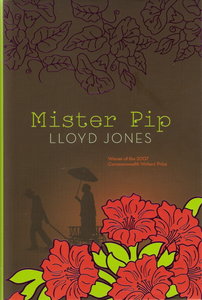
Mister Pip

Mister_Pip_(Lloyd_Jones_novel)One of my favourite “cameo characters” is a woman known only as “Daniel’s grandmother” who comes to share her wisdom with Mr. Watts’ class in Lloyd Jones’ book Mister Pip:


Daniel’s grandmother, stooped and old on her canes, peered back at our class with her weak eyes. “There is a place called Egypt,” she said. “I know nothing of that place. I wish I could tell you kids about Egypt. Forgive me for not knowing more. But if you care to listen, I will tell you everything I know about the colour blue.”

And so we heard about the colour blue. “Blue is the colour of the Pacific. It is the air we breathe. It is the gap in the air of all things, such as the palms and iron roofs. But for blue we would not see the fruit bats.

You can find blue squinting up in the cracks of the wharf at Kieta. … It is trying to get at the stinking fish guts, to take them home. If blue was an animal or plant or bird, it would be a seagull. It gets its sticky beak into everything.

But blue also has magical powers,” she said. “…Blue crashes onto the reef and what colour does it release? It releases white! …A final thing, children, and then I will let you go. Blue belongs to the sky and cannot be nicked which is why the missionaries stuck blue in the windows of the first churches they built here on the island.”

What is achieved with the character of Daniel’s grandmother?

Now on the surface, she seems just a quirky character who says some strange things about a common thing we think we know about already. Rebels have invaded the island and they are all living under very strained conditions. She has been invited to teach the children something, and yet she speaks “only” about blue.woman-1031000_640

She appears about a quarter of the way through the novel, just as things are taking a new and frightening turn. Perhaps her only purpose in the novel, therefore, is to provide some colour (pardon the pun), or perhaps some comic relief from an otherwise serious situation.

And that would be fine, because those are two good reasons to have a walk-on character.

 Is Daniel’s grandmother really just incidental?

Lloyd Jones’ character seems incidental—indeed, she could be removed altogether with no effect on the plot line—but she definitely adds to the novel.

This scene supports one of the themes of Mister Pip, which is the examination of the power of the imagination and words, and how they can achieve what is seemingly magic.art-Mr-Pip-620x349

She is also foreshadowing what Mr. Watts will do: SPOILER ALERT: to delay execution, he will weave a “magic” tale from what seems at first to be ordinary things . Daniel’s grandmother has told the children in a kind of metaphorical code or allegory what will happen. She has told them to “listen” and to believe in the magic of ordinary things.

In fact, when Mr. Watts thanks her, he says, “…while we may not know the whole world, we can, if we are clever enough, make it new….We just have to be as imaginative as Daniel’s grandmother.”

 Memorable and effective incidental characters…

  • add local colour
  • provide a break in mood or pace so readers can breathe
  • do something “complete” in their own scene so that removing them from the book seemingly doesn’t affect the main plot
  • can be used for wider purposes such as theme, foreshadowing and comparison to emphasize other characters
  • are often best left unnamed
  • should only show up when other main characters have been established

So cameo characters can enrich, elucidate, or refocus a novel, or they can simply entertain. Good ones usually have more than one purpose—and are always memorable.

Share a cameo or walk-on character that you remember in the comments below.


The value of keeping random ideas.

The value of keeping random ideas.


Gwynn Scheltema

Ever write a story that seemed to go nowhere? Ever thought of a brilliant opening line, but never wrote the story? Ever found a line that you thought might make good dialogue, or a line in a poem, or the premise of an entire novel and lost it?

lights-1254298_640Rummaging around in discarded ideas will invariably turn up something unexpected, surprising, fun or usable.
That’s not to say that every word you write is gold – saleable gold – and that none of it should go to waste. But ideas don’t always come at a time when you are ready for them, and if you have no way to revisit them, then even the good ideas will go to waste.

Increase your wheat-to-chaff ratio with an Ideas File and pop them in there. Actually, have several ideas files:

Ideas Files
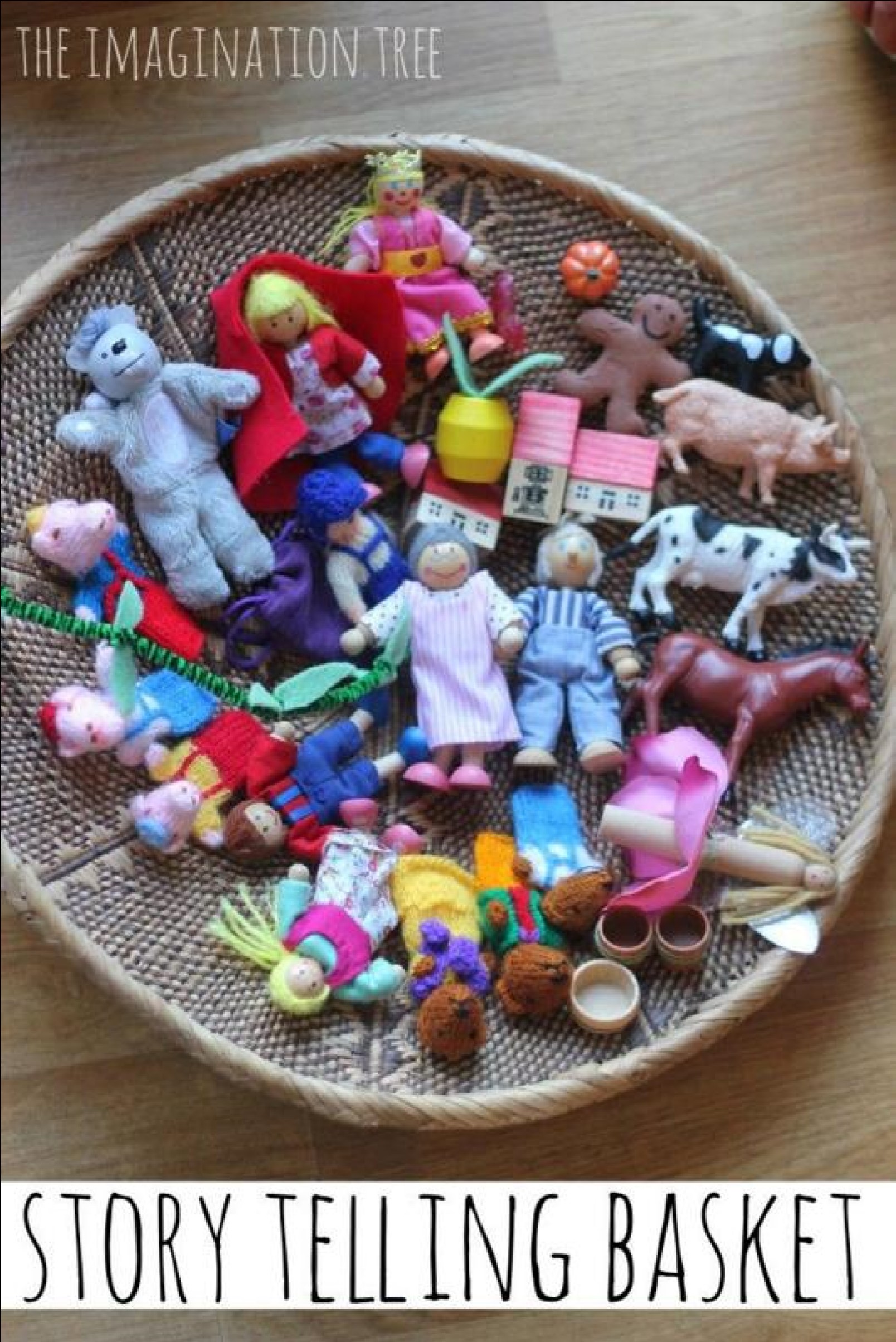
  • hard costory basketpy file folder: for ideas scribbled on napkins and other scrap bits.


  • computer file for the same. Make sure you develop a way to easily navigate through them. Naming each one “good idea” won’t be too helpful when you have 400 “good ideas.” Make use of “version” and “date” options if you have very similar drafts of an unfinished story:
    • horrornovel_v2_2016
    • babypoetryRev3March
    • trilogy_idea3


Personal coding systemcolored-pencils-168392_640

Create a personal coding system to mark up journals or notebooks for easy browsing retrieval. I use coloured highlighters: I underline or asterisk possible poetry ideas with yellow, novel snippets with blue, non-fiction article ideas with green, etc.

Other people’s ideas

Expand the concept to ideas beyond your own writing

  • In another hard copy folder keep cuttings from newspapers and magazines, old letters or theatre tickets or postcards or photos. Expand to new subfolders as ideas begin to consolidate.
  • In computer folders, keep ideas suggested by blog posts, or anything internet related, including email copy. Be sure to include URLs if you want to reference later.
  • Create a Pinterest board. This is especially useful in the early stages of a novel. Pin pictures of faces, buildings, landscapes, objects, or anything that stirs up ideas or cements a visual for you. Here is one I started for my MG novel.

pintrest board

Of course, having all these ideas is pointless if you don’t do something with them.

Here is a creative exercise to try:

Take these twold bicycleo random pictures and write a scene that will somehow link them together.ticket-153937_1280


When pairing ideas, don’t worry if they seemingly have nothing in common when you begin– that is the point of the exercise. The struggle of creating the link is what gets your brain going.


One Day I Will Write About This

One Day I Will Write About This

Guest blogger: Erin Silver

When my husband left me to be with another woman — when he confessed he was in love with someone else — there wasn’t much I could say. But I do remember telling him one thing: One day I will write about this.

fist-bump-1195446_640At first, I couldn’t write about my experience. The feelings were too raw. The emotions too heightened. I had no perspective on what had happened to me and what it meant in the grand scheme of my life. If I had tried to write about my divorce when the process began four years ago, it would have been an angry jumble of words. Words I may have regretted sharing one day.

Something told me it was time

But within two years, I was ready. Something clicked inside of me. Something told me it was time. By then, I was no longer angry. I had grown as a person and a writer. And suddenly I had a story to tell; a story about someone who was betrayed and bewildered, left to start life over from scratch. Someone who had to rediscover herself and find a way to become happy for the sake of her young boys.

strategise-865006_640I had worked through some real lows with my therapist and eventually came to realize that I wasn’t actually worthless and unloveable. Among the lows were some really bad dates and the feeling that I might never find love again. That was a terrifying thought: not knowing how my story would end or if the eventual ending would be happy. But there were some highs, too: taking my boys on a road trip all by myself, being accepted into a Masters of Fine Art in Creative Nonfiction program, meeting someone special and watching our kids grow to care for one another. I wouldn’t trade these experiences for anything.

Sharing my story

interior-design-1048090_640I began scouring my brain for different angles, different facets of my story to share with new audiences. I pitched certain ideas to certain editors, and I followed up and followed up and followed up until I began selling pieces.

I wrote about taking my son to therapy for Todays Parent, co-parenting for the Globe and Mail and going back to school for the Toronto Star. I pitched a blog, A Girlfriend’s Guide to Divorce, to UrbanMoms.ca and write regularly about my everyday experiences. Before I knew it, I had developed a portfolio of articles and blogs related to divorce, single parenting and co-parenting. I’m now writing an intimate and even funny “foodoir” (memoir plus food) about the last four years of my life.

It’s not necessarily been cathartic, as you might think. I’d prefer to describe it as a mandatory part of my existence. I can’t explain it or rationalize it. It’s not like I want to talk about it; I want to move on. I don’t want to confess my private life to people I’ve never met; it’s not pleasant dredging up memories and feelings I wish I’d never experienced. When I get into the thick of it, it’s actually quite painful. I write as I cry and I cry as I write. But I’m drawn to it not because it’s fun, because I have any interest in bashing my ex, or hanging onto the past. No, it’s just something I must do.

Because if I, a writer, don’t write about it, then everyone else going through the same thing will erroneously believe they are alone.peas-580333_1920

It’s how I felt when it happened to me. Like nobody understood my pain or suffering. Like I was the only one who was ever cheated on, betrayed, and divorced; who had to date after being dumped, put my life back together, and manage as a single mother. If I write about it — all aspects of my journey, my innermost feelings and thoughts — someone else might realize that things happen for a reason and that you must rise above challenges, face disappointments head on, to get to a better place. It’s truly what keeps me going.

Writing your experience

If you feel drawn to a particular or painful topic, like me, here are a few tips that can help you write about it:

  • Wait until you’re ready. Don’t rush the process.
  • Keep a journal, then refer to it later.
  • Take the time to reflect on your experience, even if it’s painful.
  • Be honest with yourself. Is that really how you felt?
  • Don’t hold back. If you’re uncomfortable with what you’ve written or feel too exposed, you can always edit it later.
More about Erin:

erin silverErin Silver is a writer, editor and blogger with work in Good Housekeeping, The Globe and Mail, The Toronto Star, Today’s Parent, Chatelaine, ParentsCanada, Best Health and Clean Eating magazine, among others. Her blog, “A Girlfriend’s Guide to Divorce,” appears on UrbanMoms.ca. Erin also blogs for the HuffingtonPost.ca. She is currently pursuing her Masters of Fine Arts in Creative Nonfiction at King’s College in Halifax and writing her first book, Burnt: Cooking My Way Through Divorce.

Step by Step

Step by Step

Gwynn Scheltema

Concrete steps with the words Step by step painted on themLately, I’ve been trying to increase the number of steps I walk each day. I bought a pedometer to record them. At first I just went about my regular routine to see what I was achieving already. Sad. Very sad. Some days I didn’t even break 500!

Apparently, you need to do a minimum of 6000 a day to maintain good health, and well over that if you want to lose weight or increase fitness levels. After several months, I now consistently do 7000 steps and some days even more. One day last week, I topped 15000. Yay me!

Lately, I’ve also been trying to increase the number of words I write in a week. I made a wall chart to record them. At first I just went about my regular routine to see what I was achieving already. Sad. Very sad. Most days I didn’t even break 500!

The difference is, after several months, I’m better but still not averaging a decent word count. I don’t expect to do 7000 a day, but I definitely need to average more if I want to finish my novel any time soon.

A first draft in one year

abacusAt first glance, if you do the math, an 80,000 first draft written over a year, five days a week, 50 weeks in the year, would only require a measly 320 words a day! A 100,000 word book is only 400 words a day.

But let’s face it. Not every word you write is golden. And there needs to be time in there for research or plotting with sticky notes or just plain thinking. So aiming for a minimum of 500 words a day and will allow you to produce enough “good words” for a first draft.

I prefer to think of that as an average of 2500 good words a week for 35 to 40 weeks of the year. That still leaves plenty of weeks for research or holidays or whatever.

 The problem

The problem is, when I think of 2500 a week, every week, I find that daunting, in the same way that I found the prospect of 6000 steps a day daunting. But I succeeded with the steps. So what did I do to get my steps up that I could apply to my writing?

The solution to increasing my steps:

  1. I wore my pedometer every day as a constant reminder and motivator.keyboard with check mark
  2. I coerced my husband into wearing one too so we could motivate each other.
  3. I didn’t try to do all 6000 at once during the day.
  4. I found times of the day when I could get in a quick 1000.
  5. I discovered that jogging got them done faster.
  6. I realized that every little bit counted towards the whole: walking while on the phone or jogging on the spot while waiting for the kettle to boil.
  7. I “rewarded” myself with a check mark on my chart for every day I achieved the 6000.

Therefore…the possible solution to writing 500 words every day:

  1. B.I.C [Butt in chair] every day. Doesn’t matter what I write, as long as I write, or actively work on the draft in some way.woman's face with pen writing on glass - just words
  2. Find a writing buddy so we can motivate each other.
  3. Write in several blocks of time if it’s hard to do them all at once.
  4. Identify quick items that move the project forward to do in limited time slots: look up a missing fact, decide on a character name, weigh up plot options.
  5. Use freefall to write quickly and get ahead of the internal editor.
  6. Realize that every little bit counts towards the whole – keep a notebook handy and use it: on the train to work, while waiting in the car….
  7. “Reward” myself every week I achieve the 2500. Chocolate? Solitaire? A new book?

pile of books and glasses


What do you do to keep your word count clocking up week after week?


Find Your Way to First Place

Find Your Way to First Place

Dorothea Helms, a.k.a. The Writing Fairy.

Writescape shares sage advice from award-winning humour writer and writing contest judge and administrator, Dorothea Helms, on entering and winning writing contests. Dorothea offers her special branch of magic and insider insights in The Top Drawer.

Winning writing contests is one of the most exciting things I’ve experienced during my career. In addition to validation for my writing from an objective source, the wins have brought money, publication, plaques, prizes and prestige. Oh, and surprise. I once came in third place in a poetry contest with a submission that didn’t begin “There once was a …” Contest wins listed on my writer’s CV have also added credibility.

I don’t know of a magic formula for winning (even though I’m The Writing Fairy), but I do have some tips I’d like to share on how to increase your chances.

  1. Be creative in your approach to the contest topic
  2. Follow the rules
  3. Write with abandon, but polish your writing with care
  4. Follow the rules
  5. Enter
  6. Follow the rules

Sound simplistic? For years, I have served as a writing contest judge from local to national levels, and I have run several contests myself. I’m always astounded at the number of entrants who ignore the rules. To be fair to all competitors, contest judges must eliminate those who don’t follow the rules.

Here are some reminders:

Word Count Maximumsnumbers

If the maximum word count is 2,500 and your entry is 2,501, it will be eliminated before it’s even read. I’ve had to axe entries for this mistake many times. What a shame; often, they are brilliant submissions.


Published versus Unpublished

If the rules stipulate that the piece has to be original and unpublished, make sure it is. It’s easy for contest administrators to do a Google search for a sentence and find out if it’s on a website somewhere. I’ve done that and found published work that has been entered as unpublished.

Entry Fee

coins-948603_640Many respected writing contests include entry fees. It costs money to run a contest, even when there are volunteers involved. Some journals give you a year’s subscription to their magazine as part of your entry fee. Some give you feedback on your entry. If you choose to submit to a contest with an entry fee, remember to include your payment. This is part of the rules you need to read.


Read, Read, Read Those Rules

referee-1149014_640The best way to start following the rules is to read them. In one of my Writing Fairy contests, after I published the names of the ten finalists, one of them contacted me to say he had just read the rules and that his entry had been previously published in a major US newspaper. I had to eliminate his piece, and it took time and effort to figure out who was next in line to take his spot in the top ten.


Enter

When it comes to increasing your chances of winning writing contests, the only thing worse than not following the rules is not entering. If you read winning contest entries and think, I can do better than that, then do better than that and send it in.

Oh, and did I mention—follow the rules?

DorotheaRead more about Dorothea Helms, a.k.a. The Writing Fairy, at www.thewritingfairy.com

Want to know more about entering and winning contests? Dorothea Helms teams up with Writescape’s Ruth Walker for Write to Win, a one-day workshop that covers everything from entering, to judging, to winning, to celebrating. Write to Win is a winner of a workshop.


Making a Scene… with Dialogue

Making a Scene… with Dialogue

In just over a month, I head to the Ontario Writers’ Conference to mingle with writers, publishers, agents and editors. I’m also delivering a workshop on dialogue, specifically on dialect and diversity in dialogue.

It took me many years to become comfortable using dialogue. My early characters spent a lot of time in their heads thinking about what was going on. In their heads, they voiced concerns, got angry, wanted to ask about stuff. The reader knew all this, [if they were still awake at this point] but the other characters in the story didn’t. Eventually, I realized my characters needed to react and interact— out loud!

But just saying everything out loud is not the whole story. Dialogue scenes are powerful. Dialogue is one of the best ways to engage the reader. Even if characters are sitting still, a dialogue scene works as an action scene and propels the story forward. And it can do so much more—even several things at once—like reveal character, advance the plot, create mood, build conflict, reveal backstory or support the theme.

“Writing good dialogue is art as well as craft,” says Stephen King. Here are 5 tips for writing good dialogue scenes:

Know why you are writing the scene

Dialogue is not filler—or shouldn’t be. If your characters are just discussing the weather or what they want for dinner, your readers’ eyes will glaze over. Kind of the same way I skip over all the pictures of people’s dinners on Facebook. Will the scene reveal or hint at some backstory, or let the reader see how the relationship is developing, or give information about the plot.people-talking

“You wouldn’t say that if you had known my mother.” (Hint at back story? Reveal character?)

“Mike said it was just over the hill, an old factory where they processed paint or something.” Relaying information BUT it must be new to the reader AND to the character being spoken to.

Make dialogue do double duty

Once you’ve decided what the main purpose of the dialogue scene is, see what else you can make it do at the same time.

 “You wouldn’t say that if you had known my mother. She was a right ball breaker. Besides, she had a stash of these things up at the old farmhouse in Williamstown.” (hint at back story PLUS info for the plot?) 

“I’ll never step foot in that woman’s house.” (Opinion of another character? Showing anger and resistance? Plot problem?…all three?)

Anchor the scene

It’s okay to dive into the scene right in the conversation, but if you start a chapter with dialogue make sure it’s not “floating”. Readers need to know who is talking and where they are, and what point this is in the story. If you don’t, the reader will find it hard to absorb the dialogue nuances or subtext because they will be too busy trying to get oriented. I’m not suggesting a long piece of exposition here. Set it up in the chapter before, use a name in the spoken dialogue, or add a beat of setting.talking

Floating:  “I can pick you up around seven. At the diner okay?”

Anchored: When Leah reached the motel, she rescued her cell from the clothes on the backseat. “Amber, I can pick you up around seven. At the diner okay?”

Show emotions

Always be aware of the emotions being felt by the characters speaking and convey that in word choice and body language, not exclamation points or adverbs tacked onto the end.

Adverbs and punctuation: “I will NOT GO!!!” said Lily defiantly.

Beats and word choice: Lily crossed her arms and stared from under smoldering eyebrows. “A team of horses couldn’t drag me to that place.”

Never use dialogue as an “info dump”

My critique circle calls this an as-you-know-Bob moment. Characters should only talk about the things that are important to them at that point in the story, that fit with their emotions at the time, and that they would ordinarily say in real life to another person.

As-you-know-Bob moment: “We’ll go to Mike’s place, near your Mom’s house, and give rubbish-143465_960_720him the book you’re holding.” (The listening character knows where Mike’s place is and knows who is holding the book. No emotional content here.)

Real words: “Ok, Ok. We’ll go to Mike’s place, already. Give him your bloody book.”

Spending time on dialogue is well worth the effort. It dramatizes your story helping readers feel like they are actually listening in.

Do you have any dialogue tips to share? Post in  the comments below.

If you want to explore dialogue further, here are some other blogs you might find interesting. .and useful.

Keep it Simple: Keys to Realistic Dialogue Part 1

Keep it Simple: keys to Realistic Dialogue Part 2

On Writing – Dialogue – Robert J Sawyer

9 Easily Preventable Mistakes Writers make with Dialogue

What’s in your writing drawer?

What’s in your writing drawer?

Gwynn Scheltema

There’s plenty of advice out there on how to prepare your work for submitting, but what if, like me, your problem with submitting—is you!

Do any of these statements apply to you?

  • ·         You have completed work ready to send out that hasn’t been submitted ever.
  • ·         Many of your completed pieces have been waiting to go out for years.
  • ·         You have several projects that are “almost ready” to send out.
  • ·         You have pieces that you sent out once, had rejected and never submitted again.

head shot of isaac Asimov


“You must keep sending work out; you must never let a manuscript do nothing but eat its head off in a drawer. You send that work out again and again, while you’re working on another one. If you have talent, you will receive some measure of success – but only if you persist.”

  Isaac Asimov

Facing fear

You likely already know that the prime reason for not sending your stuff out is fear:

  • ·         of rejection (I‘m not as good a writer as I thought I was)
  • ·         of success (now I’ll have to do it again)
  • ·         of someone stealing my ideas (lack of trust of new people or situations)
  • ·         of facing the reaction of readers (don’t like to be judged)
  • .         of rewrites and edits (what if I can’t do what they want)

book cover Art & Fear

What separates artists from ex-artists is that those who challenge their fears, continue; those who don’t, quit. Each step in the artmaking process puts that issue to the test.
― David BaylesArt and Fear


Like eating well and exercising, you know what to do and why you should do it, but you can’t bring yourself to do so. So here are a few ideas to help you over that hump:

1. Join the clubwoman afraid

We can’t control fears and feelings. Likely they are deep-rooted in our psyche. But we can find ways to move forward despite the fear.

Accept that pretty much every writer has these fears at one time or another. The trick is to accept it as part of the writing process. Embrace it and face it.

You will get rejected. It’s a given. But you will survive. You will live to write another day.

2. Let go

Ironically, the greatest feelings of self-doubt seem to come at the moment when the task is almost done. You want it to be perfect; the pressure to finish increases, and the knowledge that you will have to put it out there sits menacingly on your shoulder. But there comes a time when you must fight self-doubt and have faith in what you’ve created. You must let go.

If you don’t? What happens? Nothing. Your writing stays in the drawer. You beat yourself up for not moving forward. Nothing gets resolved.

3. Trust the Processtrust yourself

Fear focuses on unknown results of possible action. You can’t control unknown and possible. You can control process—and action. So start on the process of submitting; create a forward motion as a way to outwit, outrun, outsmart fear.

It’s hard, sure, but it’s the writing life. You can either face it or not. You can trust the process or live in fear. Your choice. The solution in your hands.

4. Get started!
  • ·         Set yourself a target date to have just ONE piece sent out.

Writers live by deadlines, so harness that attitude to help you submit. Make yourself publicly accountable—tell your writing buddy, your critique group, anyone who will call you on it.

  • ·         Break the process down into actionable tasks.

Submitting your work can feel overwhelming. But like any process, breaking things down into bite-size actionable pieces helps you to get started so that once begun, the task takes on a momentum of its own.

Try making a list for each stage of the process (which you can use again and again), and then tackle just one item on the list at a time. Tell yourself you only have to do one thing on the list. Chances are, once you get started, you’ll do a lot more. And each action you take will build your confidence. Focus on the idea that each small item is doable.leap of faith

5. Don’t Stop!

By the sheer law of averages, the more submissions you make, the more publishing success you will likely have. Think of rejections as “acknowledgments” that you are doing what real writers do. You are submitting!

A good place to start is writing contests. Join Ruth E. Walker and Dorothea Helms in May for their popular workshop Write to Win.

If you want to start the process now, make a public commitment in the comments below to a date to have ONE submission completed. We’ll follow up and see how you did.


9 Tips for Writing Steamy Scenes

9 Tips for Writing Steamy Scenes

Gwynn Scheltema. 

It’s February, the month for Valentines and all things romantic: love and…sex.

When I have to face writing sex scenes, I sometimes feel like I’m getting undressed in public. I feel like my mother is watching; like everyone will think I do all the things I describe. Do you ever feel that way?

Get over it.

Check out these 9 tips to help you.

Sex is emotion in motion.
~ Mae West

1. Don’t be afraid to write outside your own experience.

Research and write just as you would for any situation you haven’t experienced personally. Read sex scenes by other authors and note which resonate with you. Ask yourself why. I just finished reading Marissa Campbell’s Book, Avelynn. She expertly handles a full range of sexual encounters, from that first romantic kiss to attempted rape and a great deal in between.

2. Treat a sex scene like any action scene.

Have a reason to include it that involves advancing the plot or illuminating character, or developing a relationship.

3. Make your characters human.

Keep your characters human, flawed people, not a larger-than-life Adonis or Aphrodite. While romance has an element of wish fulfillment about it, if you make it so like a fairy tale, some readers won’t believe it.

4. Keep the sex real.

Sex is not always spectacular; it can be boring, mundane, or unsatisfying too. And it doesn’t always have to be completed. Interrupted sex can be quite a tease.

5. Get the timing right.

Don’t let things get hot and heavy in the most unlikely of moments and places in your plot. Don’t shove sex in because it’s been four chapters since the last tryst. Remember tip #2.

6. Get the choreography right.

Not just on a physically level, but on an emotional level too. Physically, make sure your transitions let us know if someone goes from standing to lying, or from facing to spooned. More importantly, let us know their emotional reactions and changes. The physical act by itself is just porn.

7. Be careful of metaphor and simile.

Clichés about stars exploding will only undermine what you are trying to do. Find fresh and appropriate comparisons and don’t hide behind them to avoid being explicit or to add drama. And remember that sex involves all five senses. Use them!

8. Use the correct terms and don’t be offensive.

Research if you have to. If euphemisms pepper your scene, you’ll leave the reader giggling or cringing. Also be aware of the accepted sexual practices of your genre and age group and stay in those boundaries.

9. Keep the scene brief.

Sometimes less is more. Subtle hints are often more effective than graphic description. Give readers enough to satisfy the moment, but leave them wanting more.

Have fun with itkiss

 Remember how you felt when you first discovered that French kissing involved touching tongues? As a teen, did you practise on your arm or the mirror? What about your first kiss?

 Kisses come in so many forms: passionate, wet, teasing, rough, slow… In 50 words or less, write about a kiss—fun, steamy, chaste…. Post it in the comments below.


[By the way…for a great workshop on characters, check out Ruth’s Character Master Class on March 5.]

Tasting the Page:  Beyond the Five Senses

Tasting the Page: Beyond the Five Senses

With Gwynn Scheltema

In this one-day workshop:

  • challenge your reader’s perceptions and assumptions
  • deepen your powers of description
  • learn new descriptive techniques to give greater weight to your narrative voice.
  • master how to add description without slowing the narrative.

Don’t let your fiction be left on the plate. Prepare it gourmet style and your readers will beg for more.

Have fun experimenting with creative writing exercises that make your writing live. We’ll munch our way through a smorgasbord of fiction foods from image and emphasis, to movement, theme, and syntax.

Come prepared to go new places and try new things.

As past participants have said, “You provoked me into thinking of new ways of approaching my writing,” and “Your exercises were great—inspiring, short, but effective. You let us try lots of different things.”