

Ruth E. Walker
I’m a firm believer in the truth behind the saying: Be kind to others and it comes back to you. I also subscribe to the belief if someone shows you a kindness, do the same for someone else. Pay it forward.
So I was delighted at a recent panel discussion to hear one of the panelists respond to the question: What’s the best piece of writing advice you ever received?
 Heather Tucker, author of the acclaimed novel The Clay Girl, smiled into the audience to reply, “Ruth Walker told me to ‘Get naked, girl, and let the epiphanies fall where they may.'” She went on to explain that she was reluctant to share her work, to submit it for consideration, to let others look at it. My words gave her inspiration and encouragement just when she needed it.
So why did I say that to Heather? The writer I am can be directly linked to a series of kindnesses that supported or encouraged me along the challenging writer’s journey. I can’t begin to recount all the ways in which others have selflessly offered help or support, often arriving at a time when I was ready to give up the dream of publication.
Making the difference
A professor at Trent University’s Durham Campus had a huge impact on my writing career. Adrian Michael Kelly knew my work from his creative writing class a year earlier. He invited me to come and meet respected author and editor, John Metcalf. John offered to read my manuscript at a time I was woefully discouraged about rejections for my novel. A couple of weeks later, he called me. Told me to keep submitting, that the manuscript was good, publisher-ready. And he was right. That novel I was ready to abandon went on to publication with Seraphim Editions and achieved second printing.
It was the support of others that got me there. My professor didn’t have to call me to come and meet John Metcalf. And John didn’t have to look at my manuscript, and then call me. It was all a kindness and I’ll always be grateful.
Ever since, when I hear a writer musing about giving up on a manuscript, I tell them my story. I tell them what John Metcalf told me. Submit, I say. And keep submitting. I pay forward the kindness I’ve received every chance I get.
Spread the support
There are lots of ways to pay it forward. I’ve benefitted from receiving grants and bursaries. They’ve helped me attend conferences and workshops in which I hone my craft. I’ve escaped to write at retreats that I couldn’t have otherwise afforded. So I know the difference it can make in a writer’s life to get a financial boost.
The Pay it Forward philosophy is happily shared by my business partner, Gwynn Scheltema. For several years, Writescape has sponsored a scholarship grant with The Writers’ Community of Durham Region (WCDR). Their scholarship program offers members a chance to apply for a range of awards, up to $500 at the top end. Gwynn and I happen to like the process where applicants don’t need to have a long list of publishing credits to apply. And there isn’t a focus on the literary form. Writers of all kinds and at all levels can apply, as long as they are a member of this 300+ group.
We’ve happily offered the Writescape scholarship each year. And we’ve been delighted to see the recipients use the grant to develop some aspect of their writing goal. This year, the Writescape scholarship went to writer and baker,  Rich Helms. He planned on taking a recipe development course at George Brown College, starting in June. Recipe development is not a simple “How to write a cookbook” course. The science in the art of developing a recipe is as precise and vital as the passion needed to create tastebud-exploding foods and then write the recipe.
Rich was deeply disappointed when the June course was cancelled but he didn’t give up. He emailed us recently to announce the course was being run again and he was signed up. We never had a single doubt that Rich would use the scholarship funds to achieve his writing goals.
More than feeling “good”
For Gwynn and me, Rich’s joy in attending his course is a wonderful reminder that paying it forward is an important part of the writer’s journey. Writescape believes in paying it forward, of finding ways to encourage other writers. It can be in small ways, like chatting in networking opportunities and sharing market insights. Or larger efforts, like the WCDR scholarship that we have sponsored for a number of years.
When we “pay it forward” we remember that it was the unexpected and unasked-for time that other more experienced writers gave us that made a difference. Both Gwynn and I have been the recipient of many kindnesses — they certainly soothed the sting of the rejections and disappointments, and fuelled the energy to keep going.
We all benefit when we pay it forward — in this case, Rich’s enthusiasm is contagious. And many writers who are not writing fiction can see that there are grants and scholarships for those “other” writers — the ones who, like Rich Helms, are writing something different but no less worthy of finding a home.
Did You Know
Ways a writer can “pay it forward” are everywhere. Start a writing critique group to share ideas, feedback with other writers. And there are lots of low-cost ways to support writers.
It’s the season of giving, so how about an “unasked for” as a “gift” to fellow writers:
- write a review
- like/join an author page
- comment on a writer’s blog or Facebook author page
- subscribe to a writer’s blog,
- ask your local library to get a copy of a book
- even better BUY A BOOK!! (support independent bookstores too if you can)
If your royalty cheque was especially flush this year, consider donating to an organization that supports writers or give to a literacy program.
Always remember that we all are on the journey together, some further ahead of you and some just behind. Where you are today is not where you will be tomorrow and, more often than not, you moved forward with the help of others.
Places that support writers:
- The Canadian Authors Association
- The Writers’ Union of Canada
- League of Canadian Poets
- The Writers’ Community of Durham Region
Literacy programs:

 Recently, I had the privilege of participating in Indie Author Day at the Pickering Central Library. Sponsored by the PineRidge Arts Council, its purpose was to bring independent and micro-published authors together under a single roof to share ideas and lamentations about this journey we call writing.
 Most of the speakers at Indie Author Day touched on the fact that indie books have a hard time finding a home in libraries and book stores large and small. There is a very good reason for this. Curated decisions at macro and micro levels are always informed by history and convention. What worked last year will continue to work in subsequent years until new factors change the conversation.
 But times are changing and Indie authors in the digital age are in a unique position to pioneer the next wave by reaching where they could not before. Heavy oak doors barred, locked and guarded by agents and executives fall away when the author, published or not, has access to millions of readers via Internet platforms. Promoting in the safety and comfort of one’s home is the best place to start building the profile that grows the brand.
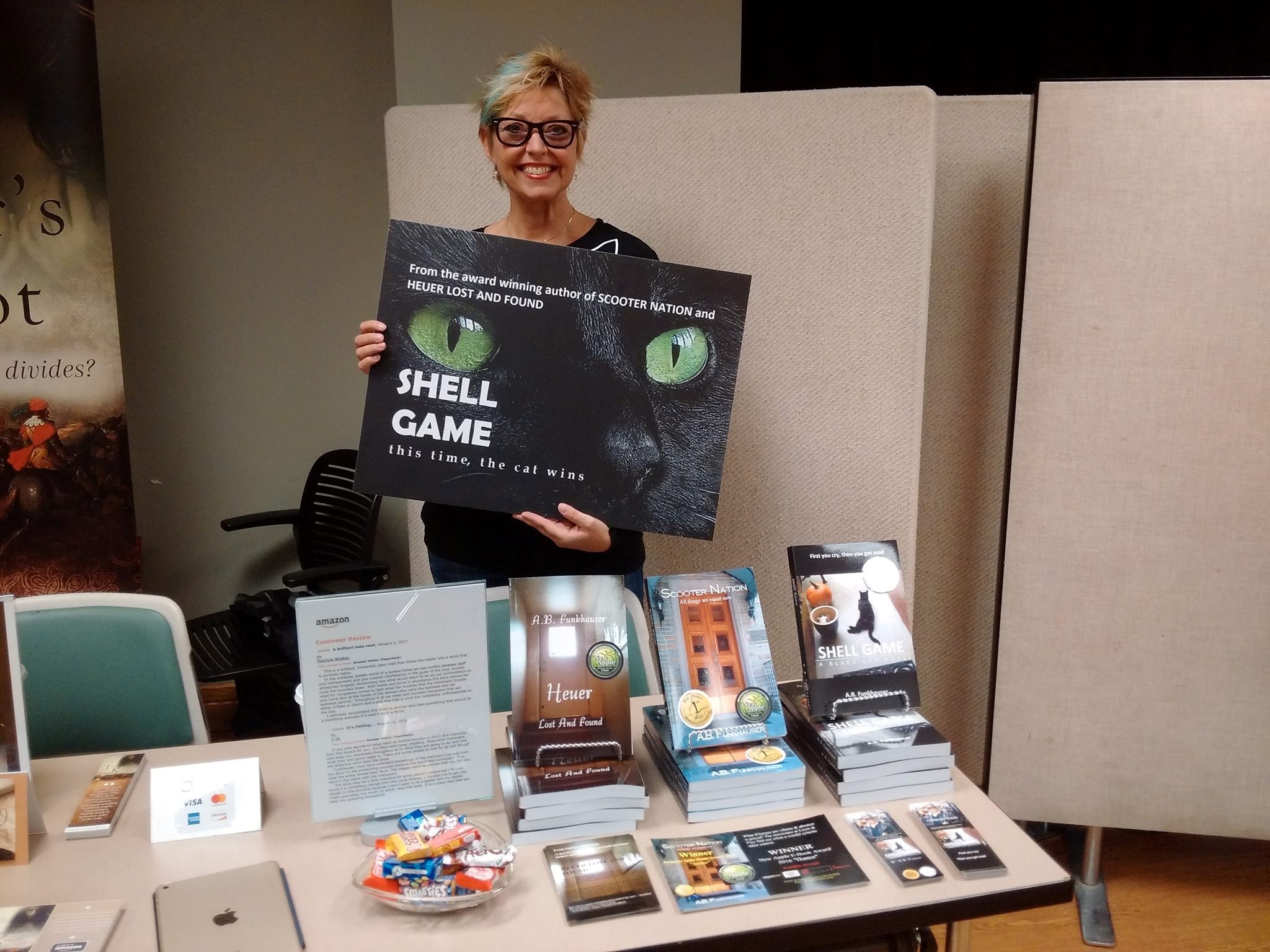 Like a politician with a constituency, independent authors need followers as a first step to developing “cred” for the words they write. As I explained more than once on Indie Author Day, we can write the best novel, screenplay, short story or poem, but no one will know if we do not get out there and let people know.
 Publishing models in the Indie world present many formulas. My publisher says “seven years or five books” before anything happens. Whatever is served up, writers should not be discouraged. Time is an opportunity not just to write, but to build brand and the followers who support and advance it.
 Toronto born
 I also like the books I read to be set in exotic places, in other cultures, and affected by political or natural turmoil that I am never likely to be faced with. I like to learn about other customs and occupations.
  The first one:
 The next:
  And the third:
  Who knows, you may discover a new genre that really speaks to you. Perhaps that coming-of-age story you’ve been struggling with as an historical romance might be better reworked as a dystopian YA. But you have to read some dystopian YA to find out.
 Initially, it doesn’t matter. When you begin your first draft, story is key and the story will land in the genre it fits best. But once that draft is done, knowing your genre is important. You’ll need to know so you can fine tune your manuscript and pitch it to the right agent or publisher.
 Let’s take the crime/mystery genre as an example and the typical “dead body”. In a cosy mystery, your readers will expect to spend a few chapters meeting the inhabitants of a cosy community and getting to know the protagonist and her friends before the “dead body” is discovered. The actual killing will be off stage. In a police procedural mystery, the “dead body” is there by the end of chapter one. Readers may even witness the murder. It will be important to follow real police investigative and forensic procedures.
 1. Prepare a book jacket blurb
 With your book jacket blurb in hand, you have your main dominant story thread. Use that main thread to define the main genre. For instance, if your book involves a mystery and a romance, is the dominant story thread a classic “who done it” with a bit of romance thrown in for character growth? (mystery) Or is it really about a relationship blossoming between two people who happen to be solving a mystery together? (romance)
 Nail down the age group your book is aimed at: children, young adult, new adult or adult. If your manuscript appeals to more than one group, you have an age cross-over. (Think Harry Potter (children/adult) or Hunger Games (YA/adult).)
 One way to do this is to have two windows open, one on Amazon and the other on Goodreads. Read the blurb on Goodreads and then search the book on Amazon to see its classification.




 So it gives us great pleasure to participate in an annual scholarship program with


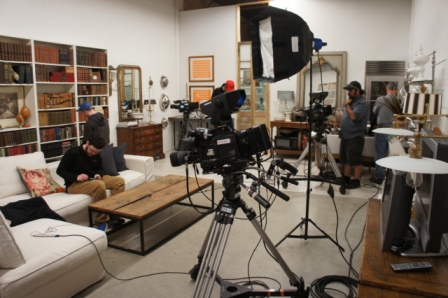


 Well, I may not have a word for that, but I do understand it. I’ve been interviewed as a writer several times on the radio, and I’m a co-host for a weekly radio program,
  Before your program can air, we need to settle you in the studio, get you set up with your mic and test your voice quality. I like to go over the format with my guests and make sure all their questions are answered. Even if you are doing the interview by phone, we still need to prepare you and test the voice quality of the connection. At your end you need to minimize background noise and get comfortable.
 Of course, hand in hand with that, make sure you prepare your answers. Don’t rote learn a script or plan to read. That is deadly! Instead know the points you want to make and practise talking about them out loud to yourself in a mirror, or with a friend or family member. Bring your notes with you. Radio is “blind” so no one will know you are using cues.


