In Conversation with…literary agent Hilary McMahon

In Conversation with…literary agent Hilary McMahon

Hilary McMahonToday, we chat with Hilary McMahon, Executive Vice President of Westwood Creative Artists (WCA), one of Canada’s oldest and most respected literary agencies. Hilary maintains an extensive and diverse list of adult and children’s writers. She also represents WCA authors on trips to American and British publishers and the Frankfurt and London Book Fairs. 

Why did you become a literary agent?

I earned a degree in journalism and English, but soon realized that I wanted to read other people’s stories far more than I wanted to write or teach. I’m an obsessive book reader, an extrovert interested in people and relationships, and a tough negotiator with a head for details and numbers. This job allows me to combine all those different skills.                                                                                                    

books-20167_640 (1)Being an agent is a tough job. So what is it that has kept you in the field for more than 20 years?

Nothing compares to the magic of being engrossed in a great book. I love being part of the process that begins with an idea or rough manuscript, and ends with a finished product that can be shared, enjoyed, discussed around the world. And working with writers can certainly be challenging at times, but it’s never dull…

If we were to spend some time in a typical day with Hilary McMahon, what would it look like?letters-286541_640

That’s one of the many wonderful things about this job, there is no typical day! It’s an illusion that I read all day. Today for example, I have reviewed a section of an author’s revised novel and then shared it with an interested publisher, worked on some blurbs for our Frankfurt catalogue, checked a film contract and sent it off to the author, given a non-fiction author feedback on her proposal, spent time crafting a tactful rejection letter, done the deal memo for a middle-grade series I’ve just sold, addressed a picture book writer’s concerns about the illustrations for her new book, and followed up on some projects out on submission. I had hoped to make a dent into my towering pile of submissions but I don’t know if I’ll get to it…

What do you like to see in a query from a writer? And is it different for a fiction versus a non-fiction query?

You’d think it’s obvious, but I need to see excellent writing! A skillful, original, compelling pitch.

For fiction, you need to hook me with a brief description of the work and draw me in with a short sample. It certainly doesn’t hurt if you include some details about places you’ve been published and any relevant awards or education.

For non-fiction, your expertise in the field is going to be important, to me and to publishers – I need to know that you have some authority about your subject. Most simply, I need to be compelled to move from the query to a writing sample.

hand-861275_640What is the one piece of advice you want writers to know once they land that elusive agent?

That just because you have an agent it doesn’t guarantee your work will sell! There’s still a lot of hard work ahead, but at least you aren’t doing it alone.

What are you reading now and how do you feel about it?

I’m reading a really intriguing submission, clever and sparely written and definitely original in story and in the telling.  But I’m still trying to decide if it’s something that I could sell…

If time, place and money are no object, who is the one person or character you’d like to have dinner with…and why?Jane Austen

I’d love to have dinner with Jane Austen, after she’d spent a bit of time in 2016 – I would love to hear her take on this modern world!

Want to get up close and personal with one of Canada’s top literary agents? Come to our fall retreat, Turning Leaves 2016.

Hilary is our special retreat guest, joining us for meals, evening chats and sharing insights and expertise in a Saturday morning workshop on catching and holding an agent’s attention. She’ll also review Turning Leaves 2016 participants’ query letters in advance and hold private one-on-one feedback sessions.

 

Prenatal care for your book baby

Prenatal care for your book baby

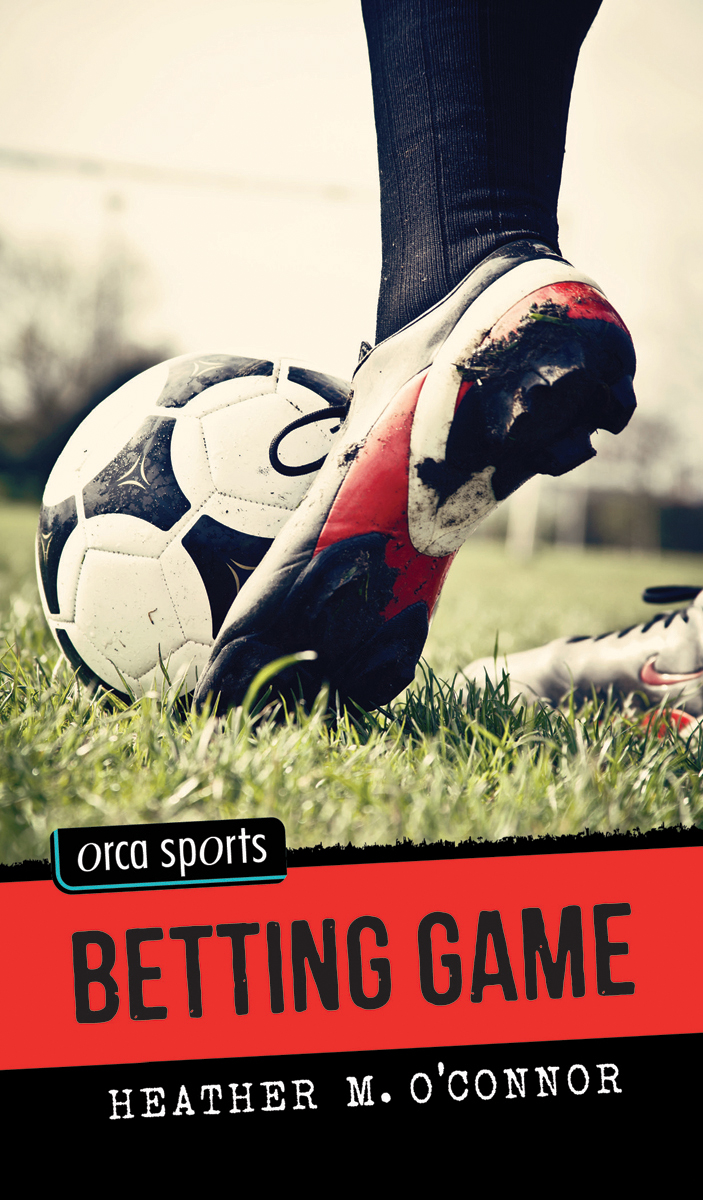
Last fall, Orca Books published my debut novel Betting Game. I had nine months between signing a contract and delivering my book baby. It seemed like plenty of time. It wasn’t.

Here are a few lessons I learned along the way.

Start earlyPregnant woman with a journal

Next time I’m expecting a new book baby, I’ll sit down right away and make a plan of action.

What do I need to do, and when? How much time will it all take? What are my priorities?

Get organized

scrivener logo

Keep everything. Edits. Images. Ideas. Promo materials. Information from your marketing team. You will use, reuse, rework and re-purpose these files again and again, so find a logical way to organize them for easy retrieval.

Scrivener worked for me. I stored all the flotsam and jetsam in one project, using labels and keywords to make the project super-simple to view and search. Of course, you can also store everything traditionally in folders and subfolders. Just be sure to file and label wisely.

Sure, it takes a little longer to be meticulous, but it saves you time every time you need to find something. And bonus! The next time you publish, you have a ready-made road map instead of starting from square one.

Gather the building blocks

wooden block towerThe first items my publisher asked for were basic promo items: an author bioback-cover blurb and a professional author photo (more on author pics in a future post.)

I tucked these items in my Scrivener project, and as time went on, I added more elements:

I also collected a variety of links and bits of code:

Raise your profile

My memberships came in handy. I belong to national writers’ organizations like CANSCAIP, SCBWI, The Writers’ Union of Canada and the Canadian Children’s Book Centre, and locally, to the Writers’ Community of Durham Region. They offer a variety of promotional opportunities.

  • book and event pages
  • school visit and speaker pages
  • member profiles

You can also create author pages on GoodReads and Amazon.com, as well as social media channels like Facebook, Twitter and Instagram.

Prepare these pages and profiles well in advance. Unfortunately, it’s not as simple as uploading the same bio and photo to each site. But they all start with the same basic building blocks.

Don’t forget to update them along the way. I kept the most recent version of each profile in Scrivener. It was easier than viewing each website one by one. (Aren’t you glad you started Scrivener project or folder system now?)

Ways to work smarter

Front-end-load the tasks. For example:

  • write newsletter announcements and media releases early so they’re ready to go
  • prepare your website, blog and social media platforms so you can trickle out your good news

Make a book trailer

One of my best investments was Rich Helms’s Book Trailers 101. This 5-week workshop taught me the elements of a successful trailer, as well as the specialized knowledge to make one. Basic tech like how to use Animoto and Movie Maker. A bit of Audacity. Where to find reasonably priced voice talent, music and images. Tricks for uploading the final product to YouTube.

Step by step, my book trailer grew from concept to finished video. The weekly group critique helped me figure out what worked and what didn’t. I came out with more than a video. I also came up with strong tag lines and blurb text. Which, of course, I tucked away in my promo folder.

Book a launch dateBetting Game book launch

Book your launch as soon as you get a publication date. I launched Betting Game at Blue Heron Books in Uxbridge. They’re one of Canada’s best independent booksellers. As a result, they get booked up quickly.

Like many indies, Shelley Macbeth and her staff really care about promoting Canadian books and authors. They gave me great advice and support. But that’s a post of its own!

Got any prenatal advice of your own for authors expecting their first book baby? Please share it below!

Book Club Confidential

Book Club Confidential

Ruth E. Walker

The first book club invitation I received came from Sharon, a co-worker. She’d read Living Underground and wondered if I might come to her book club while they discussed my book. Holy poop! I thought. Be there while they dissected my characters, found holes in my plot, puzzled over themes I didn’t know I had in there?

Absolutely terrifying. So naturally, I said yes. I figured it would be my one and only. I was wrong.

Sharon's book club Toronto
Sharon’s book club Toronto

My book was published in 2012, and Sharon’s lovely invitation was only one of many I continue to receive. I’ve travelled all over southern Ontario to libraries, pubs, living rooms, coffee shops and even an office boardroom. I’ve accepted book club invites to Virginia and Michigan. I was with a seniors’ group in London Ontario recently and in September, I’ll meet readers in Niagara-on-the-Lake.

For authors, book clubs are a wonderful opportunity to meet with people who read your book. But you should be prepared before showing up. Each club has its own structure and set of expectations — some are social with wine and nibbles; others are prepared with note pads and questions. Remember: you want to be a welcome guest who adds value to their reading experience.

Here are some pointers for attending book clubs.

Do your research. Ask questions before you go:

Coffee Shop Book Club Whitby
  • what is the format and what do they expect of you? (if they’re not sure, you need to be prepared with suggestions. Consider preparing a book club guide/questions to provide in advance)
  • will a member lead the evening or is it more free-flowing?
  • what time are you expected to be there? (sometimes, you’re asked to show up after the meeting starts to let the group settle before you arrive) and when you should leave? (they can’t talk about you if you are still in the room…)
  • what is the address? (you may think this is a silly question but you need to know exactly where you are going — front door, side door, meeting room on 2nd floor & not the main floor…)
  • what are the contact phone numbers? (and give them yours in case of last-minute changes)

Set out your parameters:

  • let them know if any question is out of bounds for you (in my case, I am clear with book clubs — they can ask me anything at all about the book & they can’t offend me with opinions or questions)
  • time limits, if you have them

Be the guest author, not the wannabe member:

A Lunchtime Book Club
A Lunchtime Book Club, Queen’s Park
  • avoid the social drinks; stick to water or tea/coffee (I like wine but not at a book club; I’m there to answer their questions, not join their group.)
  • similarly, go easy on the nibbles (eat dinner before showing up)
  • dress professionally (it’s not a white tie event; however, know that your ripped jeans and sweatshirt is only great for writing marathons and not a book club)

Bring copies of your book:

  • book clubs have usually already bought your book but it is helpful to have copies on hand (be discreet because it’s not about selling the book; you are there to appreciate your readers)

    Stafford Virginia Book Club
    Stafford Virginia Book Club

Be prepared to hear negative comments:

  • reading is an individual experience and not everyone will love your book (p.s. – really, it’s no longer YOUR book once you send it out to readers; it becomes THEIR book that you wrote)
  • practise the following:
    • Thank you for letting me know.
    • That’s interesting. It wasn’t what I had in mind when I wrote that scene but I appreciate knowing your response to it.
    • I appreciate your honesty.
  • I always let the organizer know the following:
    • Your members can ask me anything at all. I’m a writer and I’m used to critiques and rejection. They can’t hurt my feelings even if they didn’t like anything about my book. (and I repeat this at the beginning of every book club appearance — it helps break the ice for some readers.)
IMG_0818
Third Thursday Book Club Whitby

Remember to say thank you:

  • What a terrific compliment; the club members picked your book to read. If you think about it, what better validation of the crazy passion we have for writing than to have readers engage with your book?

    "Red Sails" London Chapter
    “Red Sails” London Chapter
What’s in your writing drawer?

What’s in your writing drawer?

Gwynn Scheltema

There’s plenty of advice out there on how to prepare your work for submitting, but what if, like me, your problem with submitting—is you!

Do any of these statements apply to you?

  • ·         You have completed work ready to send out that hasn’t been submitted ever.
  • ·         Many of your completed pieces have been waiting to go out for years.
  • ·         You have several projects that are “almost ready” to send out.
  • ·         You have pieces that you sent out once, had rejected and never submitted again.

head shot of isaac Asimov


“You must keep sending work out; you must never let a manuscript do nothing but eat its head off in a drawer. You send that work out again and again, while you’re working on another one. If you have talent, you will receive some measure of success – but only if you persist.”

  Isaac Asimov

Facing fear

You likely already know that the prime reason for not sending your stuff out is fear:

  • ·         of rejection (I‘m not as good a writer as I thought I was)
  • ·         of success (now I’ll have to do it again)
  • ·         of someone stealing my ideas (lack of trust of new people or situations)
  • ·         of facing the reaction of readers (don’t like to be judged)
  • .         of rewrites and edits (what if I can’t do what they want)

book cover Art & Fear

What separates artists from ex-artists is that those who challenge their fears, continue; those who don’t, quit. Each step in the artmaking process puts that issue to the test.
― David BaylesArt and Fear


Like eating well and exercising, you know what to do and why you should do it, but you can’t bring yourself to do so. So here are a few ideas to help you over that hump:

1. Join the clubwoman afraid

We can’t control fears and feelings. Likely they are deep-rooted in our psyche. But we can find ways to move forward despite the fear.

Accept that pretty much every writer has these fears at one time or another. The trick is to accept it as part of the writing process. Embrace it and face it.

You will get rejected. It’s a given. But you will survive. You will live to write another day.

2. Let go

Ironically, the greatest feelings of self-doubt seem to come at the moment when the task is almost done. You want it to be perfect; the pressure to finish increases, and the knowledge that you will have to put it out there sits menacingly on your shoulder. But there comes a time when you must fight self-doubt and have faith in what you’ve created. You must let go.

If you don’t? What happens? Nothing. Your writing stays in the drawer. You beat yourself up for not moving forward. Nothing gets resolved.

3. Trust the Processtrust yourself

Fear focuses on unknown results of possible action. You can’t control unknown and possible. You can control process—and action. So start on the process of submitting; create a forward motion as a way to outwit, outrun, outsmart fear.

It’s hard, sure, but it’s the writing life. You can either face it or not. You can trust the process or live in fear. Your choice. The solution in your hands.

4. Get started!
  • ·         Set yourself a target date to have just ONE piece sent out.

Writers live by deadlines, so harness that attitude to help you submit. Make yourself publicly accountable—tell your writing buddy, your critique group, anyone who will call you on it.

  • ·         Break the process down into actionable tasks.

Submitting your work can feel overwhelming. But like any process, breaking things down into bite-size actionable pieces helps you to get started so that once begun, the task takes on a momentum of its own.

Try making a list for each stage of the process (which you can use again and again), and then tackle just one item on the list at a time. Tell yourself you only have to do one thing on the list. Chances are, once you get started, you’ll do a lot more. And each action you take will build your confidence. Focus on the idea that each small item is doable.leap of faith

5. Don’t Stop!

By the sheer law of averages, the more submissions you make, the more publishing success you will likely have. Think of rejections as “acknowledgments” that you are doing what real writers do. You are submitting!

A good place to start is writing contests. Join Ruth E. Walker and Dorothea Helms in May for their popular workshop Write to Win.

If you want to start the process now, make a public commitment in the comments below to a date to have ONE submission completed. We’ll follow up and see how you did.


Grants: Straight to the Source

Grants: Straight to the Source

Heather M. O’Connor.

When I didn’t know something in school, I was never afraid to put up my hand. Call me curious. Call me nosy. I like answers.

When I started applying for grants for writers, I had lots of questions. I studied the application and searched for reliable resources on the Internet. But grant applications are complex and slippery beasts. You don’t have any examples to follow, and there’s no teacher to ask.
Or so I thought.

Call me!

Most grant applications give you a contact name or an email address. The person on the other end is ready and willing to help you. As one program administrator explained, granting organizations want you to apply. If the number of applicants falls off, so do the funding dollars.

What can these problem-solvers do for you?


Approved stamp

Answer questions

What exactly is a project description?” (Marion Hebb Research Grant)

Offer helpful tips

“There’s nothing wrong with asking for the maximum amount. The recommenders can’t give you more than you ask for, but they can give you less.” (Writers’ Reserve)

Share the jurors’ preferences

“They often prefer to read your first chapters.” (OAC Works in Progress)

Tell you news

“Graphic novels now have their own category.” (OAC Works in Progress)

Explain why you were unsuccessful

“The level of writing this time around was very high.” (Canada Council)

Encourage you

“Be persistent. A lot of good writing goes unfunded.” (Every writing grant ever offered.)

Go for it!

The grants are there for the asking. So apply, and do the asking!

I promise you, getting a writing grant feels a hundred times better than getting straight As on your report card. And you can take that–and the grant money–straight to the bank.

What would you use a writing grant for? Education? A writing retreat or conference? Research? Writing time? Let us know in the comments.

Get That Grant workshop

If you think writing grant applications ranks right up there with getting a root canal, Writescape can ease your pain. Gwynn Scheltema and I are offering a hands-on workshop that will walk you through the steps. From finding grants to submitting a polished and convincing application, you’ll be ready to Get That Grant (runs April 16 in Oshawa and April 17 in Bracebridge.)

Blogging for Authors: Must We?

Blogging for Authors: Must We?

Guest blogger: Kimberly Moynahan

Back in January, this article came through my Twitter stream: Blogging for Authors: Why You Need a Blog and How to Get Started, posted on the Nonfiction Authors Association website. In that article, e-book author Stephanie Chandler recommends that every author have a blog.

She advises you “contact your webmaster” to add a blog to your site; she talks about “keyword concentration”, how blogs are good for SEO and how content is king; she explains how to choose a blogging platform, why you shouldn’t host on a secondary domain and…well…are your eyes glazing over yet?

Here’s the thing: Starting a blog is like joining a gym. Eighty percent of people who begin will not last three months. Okay, I made that number up. But in fact, the realty for bloggers is probably worse. In 2008, a blog search engine company found that of 133 million blogs only 7.4 million had been updated in the last 120 days.

That translates to 95 percent of blogs being essentially abandoned, left to lie fallow on the Web, where they become public remnants of a dream — or at least an ambition — unfulfilled. — Douglas Quenqua, New York Times, June 5, 2009

So before you jump onto the “every author needs a blog” bandwagon, ask yourself if blogging is really for you. Because frankly, having a sad neglected blog is probably worse than not starting one at all.

Here is what you need to be a blogger—


A Bit of Technical Abilitycrow with tools

Even if you have a webmaster, she’s only going to set up your site. You still have to put up your own post, format it, add graphics and tags, and publish the thing. It’s not difficult, but if you are the kind of person who gets faint at the idea of formatting an Excel column, you might want to think twice about blogging.

Lion sleepingTime. Lots of it.

Stephanie, in her article, advises that you blog five times a week. It’s good writing practice she says.

First off, no, it’s not. You know as well as I do, if you are dashing off five quick posts a week, you are not practicing good writing. You’re just adding “content” which is great for attracting search engines bots and random strangers, but not so much for engaging readers and impressing publishers.

Blogging five times a week is a herculean task. Even filler posts – YouTube videos and “Wordless Wednesday” images – take effort to pull together. Recruiting guest bloggers helps, but there is work around that as well. And these stopgaps will only entertain your readers for so long. Your audience wants to hear from you.

How much time does blogging take?

My advice to potential bloggers is this: Write your first five posts before you commit. Time yourself from the moment you start thinking about what you’re going to write, to the moment all five are written, formatted for the web, proofed, have catchy titles, and have legal-to-use images with credits and captions.

Now add an hour a week for site maintenance and improvement, another hour for responding to commenters, and fifteen minutes a day (at the very least) for promoting your blog on social media. Now how’s your week shaping up?

Social Media SavvyBees

Blogs cannot live in a vacuum. It will be up to you to find your audience and make them aware of your blog. Sure search engines will find your blog so people will stumble upon it, but you will have to do the real work of alerting your followers and attracting new readers every time you post. This means mastering and diligently usingTwitter, Facebook, and other forms of social media.

Herd sheepSomething Unique to Say

What are you going to blog about? Here’s a subject that could take up a whole post. But in short, if your blog is to rise above the babble of a million author bloggers all doing the exact same thing, you are going to have to deliver something unique.

Rule #1 is reward the faithful for showing up. Your readers are your most valuable promoters. Feed and nurture them accordingly. Talk to them. Give them something they can’t get anywhere else. What that is depends on your target audience – readers, writers, or both.

Rule #2 is that blogging is not all about you, The Author. If you want to connect with your readers, you must show a bit of you, The Person.  No need to throw your entire personal life onto the screen (please), but talking about your passion for 1940s jazz, your daytime job as a dog trainer or the crazy thing that happened at the grocery store this morning goes a long way towards making your readers feel special and welcome.

Thick Skinwalruses

You’re a writer. You’re used to editors pointing out flaws in your manuscripts. You’re used to rejection. You might even be used to negative book reviews (if one ever gets used to that). So already you are stronger than most.

But how are you when your ideas are attacked? How will you respond when your credibility is challenged? When a reader comments (shouts!) in UPPER CASE that you are not worthy of the pixels you are printed on?

If you blog well, your comment section is going to be more than just people heaping praise and thanks upon you. It can become the lifeblood of your blog, an exciting place where people debate and discuss ideas. It can also become a place where people criticize, even attack you.

For instance, these are actual comments from my blog:

Are you on drugs? You clearly lack journalistic skills on top of empathy for life… 

This article is the biggest piece of SHIT I’ve read so far …

I leave them on my site for my own amusement and also so I have great examples for posts like this.

KittensYou have many choices in how to handle individual commenters and your comment sections as a whole – another topic that could fill a post. But the two choices you don’t have if you want to build a vibrant community on your blog, are turning off the comment sections and screaming back in UPPER CASE. (This never goes well.)

Stephanie Chandler is right. Blogging can help you connect with your readers. It can be a way to increase your following and possibly book sales. But so can meeting with book clubs, starting a newsletter, giving workshops, having a Facebook page, engaging on Twitter, posting on Instagram and doing the most important thing of all – finishing your book.

In the end, the answer to “Should I blog” is, it depends.
But the answer to “Must I blog?” is, no.
Read More:

L.L. Barkett: It’s Time for (Many) Experienced Writers to Stop Blogging

Jane Friedman: Reasons to Keep Blogging

Kidlit.com: Do Unpublished Writers Have to Blog?

Huffington Post: 5 Reasons Authors Should Blog

Joe Bunting: What Fiction Authors Really Need to Know About Their Platform


All images CC0 Public Domain via Pixabay

BIO


Kimberly MoynahanKimberly Moynahan is a freelance science, nature, and interpretive writer. She blogs on the natural sciences, animals, and the writing life on her site Endless Forms Most Beautiful. She has been published in Scientific American’s Best Science Writing Online and WOLVES Magazine. Kim serves on the Leadership Team for Science Borealis, the Canadian science blog network and is a regular blogger for the Canadian Science Writers Association. Find her on Twitter and LinkedIn.


A Newbie’s Guide to Book Conferences

A Newbie’s Guide to Book Conferences

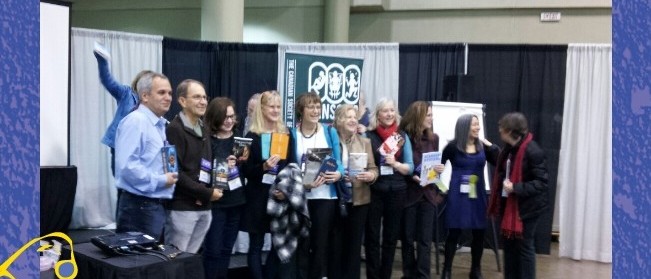
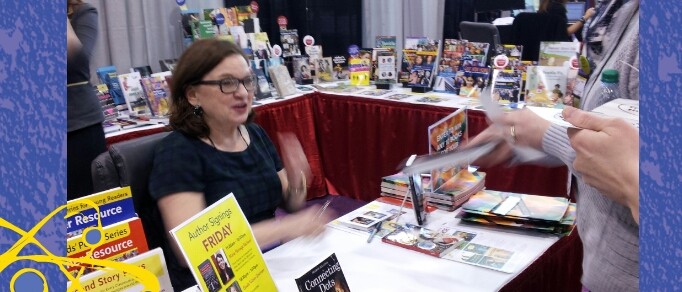
Heather M. O’Connor. My publisher Orca Books recently invited me to sign copies of Betting Game at the Ontario Library Association (OLA) Super Conference.

“Me? Sign books at the OLA? Sure!” It’s the largest library conference and trade show in Canada.

A day or two before the big day, I felt like a preteen going to her first boy-girl party. What should I wear and bring? What are the signings like? What do I say?

I’ve gathered some super tips for preparing for and attending the OLA Super Conference. You can also use this advice to get the most out of other major book events, trade shows and conferences.

Be prepared

Check out the event website. You never know what you’ll find. (The OLA provided a cool photo frame for my pics.) Identify and use the conference hashtag, and add the conference app to your phone.

Read the program, even if you’re not attending the panels. Who is signing? Who is speaking? Maybe you’ll “bump into” that editor you want to meet.

Shout out on social media that you’re going, and ask who else is attending. If you’re signing books, announce the time and your publisher’s booth. Share news about other signings and events. If the conference has a Facebook group or event, join it.

What to wear

The default attire is business casual.

However, some authors add a little cosplay flair to their signings. Lena Coakley donned a prim Brontë-style bonnet to sign Worlds of Ink and Shadow at the OLA. Kari-Lynn Winters signed Bad Pirate in ARRR-some pirate gear at Reading for the Love of It, a big Toronto teachers’ conference.

Skip the high heels and opt for comfortable shoes. You’ll be on your feet for hours.

What to bring

A phone for taking and posting pics, following the program and connecting with friends. A watch. Business cards. A strong bag for carrying all the book loot.

Two reliable pens or Sharpie markers for signing, if you’re picky about your writing implements. (What writer isn’t?) Book swag, like bookmarks or buttons. My time slot was at the end of the day, so I offered a free draw to entice people to stick around.

Coffee for your publishing team—they can’t always get a break.

Meet the people

Conferences are the perfect place to network, do market research, and connect with writers and book-lovers. Strike up a conversation with your neighbour. Browse for books. Share a lunch table.

Librarians and teachers:

  • find out what their kids like to read and what they ask for
  • mention you do classroom visits, book clubs and programs
  • tell them about funding for author visits (more about that in a future post)
  • swap book recommendations

Publishers:

  • study the books they showcase at the booth–what are they selling?
  • find out which books they’re excited about and why
  • identify trends and ask market-related questions (when they’re not busy)
  • pick up catalogues and take advantage of a live peek at their books

Authors:

  • hang out with other writers and expand your tribe
  • observe experienced writers in action and ask their advice
  • promote other authors and their events–what goes around comes around
  • check out the event before you’re published so you come prepared
Schmooze dos and don’ts

DO take lots of pictures. Selfies. Signings. Capture the excitement, then share your pics on social media and your blog.

DON’T accept book giveaways or enter the free draws at conferences for librarians or teachers, no matter how tempting they look. You’ll take those resources away from classrooms and libraries.

Book signing tips

Check in with your publisher when you arrive, and return to the booth 10-15 minutes before your signing. It gives you time to stow your bag, straighten your clothes and thoughts, and think about what you want to write. Ask someone to take pictures.

Librarians and teachers are book people. They’re your fans. When they ask you to sign their book “For the students of XXX School,” you feel like a million bucks. I add a personal line, like “Always count on your team” or “Keep kicking!”

Make small talk. Find connections—a student who likes soccer books, a familiar school. If they seem interested, share interesting facts and valuable resources for your book, like extras on your website or an online teachers’ guide. Or mention you do school and library visits.

You feel like a rock star while you’re signing, but it’s over before you know it. Enjoy!

What are your tips for getting the most out of a big book event like the OLA Super Conference? Share them below.