To edit or not to edit…

To edit or not to edit…

Gwynn Scheltema

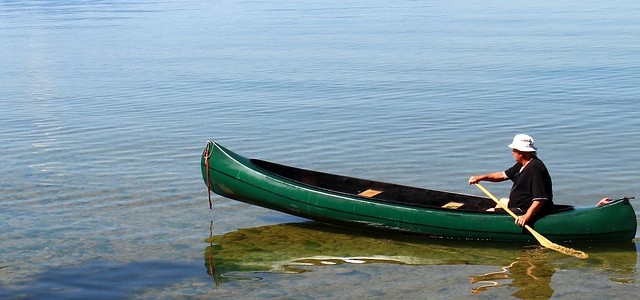
You write Chapter 1. It flows like paddling a canoe in a strong current, a few J strokes and you are heading forward fast. Yes!

Chapter 2 starts out that way too, still moving well, still splashes of enthusiasm and creativity, but the current flows a little slower now. You think back to Chapter 1. Did you start in the right place? Perhaps you should go back to the beginning and make sure?

So you retrace your steps back to the start and paddlecanoe-1082130_640 through Chapter 1 again. For the moment you are convinced that, yes, you started in the right spot. But you find a short cut on an upper stretch that improves the trip, so you make it. Chapter 1 feels really good now.

Back on the route of Chapter 2, you look for similar shortcuts, note the beautiful spots you don’t have time to explore, make notes about bad spots you’ll avoid if you come this way again.

In Chapter 3, your writing river opens into a lake. You’re not sure exactly which way to point the canoe, so you figure you’ll go back to Chapter 2 and explore those beautiful spots before you continue.

And while you are in Chapter 2, you figure you probably missed a couple of beautiful spots in Chapter 1, so you go back to Chapter 1 and….

Sound familiar?

The internal editor

It’s certainly the story of my writing life. But I know I’m not alone. The urge to rewrite before you’ve finished the story is powerful. Many discarded, unfinished manuscripts have polished first chapters that would keep readers reading…if there was more to read.

It’s all the fault of that dastardly writers’ internal editor. The one that tells us that our writing is “crap”; that we are disillusioned at best and arrogant at worst to think anyone would want to read what we write. The one that tells us we need to be perfect.

man-286477_640And the truth is, most first drafts are not publishable. As Hemingway so succinctly said, “All first drafts are shit.” First drafts will have strong parts and weaker bits, and bits that should be axed and areas where more needs to be written. That’s NORMAL. That’s what the editing process is for.

But if you heed your rational, analytical, internal editor, and constantly loop back out of the writing process and into editing, you will run out of creative energy. And you will push the unconscious creative writer in you further and further away.

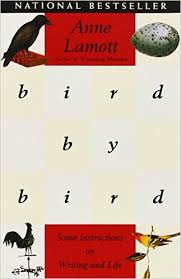
In her book on writing, Bird by Bird, Anne Lamott wrote:bird by bird

The only way I can get anything written at all is to write really, really shitty first drafts.The first draft is the child’s draft, where you let it all pour out and then let it romp all over the place, knowing that no one is going to see it and that you can shape it later. You just let this childlike part of you channel whatever voices and visions come through and onto the page… Just get it all down on paper because there may be something great in those six crazy pages that you would never have gotten to by more rational, grown-up means.

No editing on a first draft?

 So does that mean that you should never edit as you go. Of course not.

I get momentum for a new chapter by going into the previous chapter—not back to the beginning of the novel— to read it and often edit it. That’s productive. You get into the voice of your characters again, you renew your sense of place in the story. And the time invested is not huge. More importantly, you do it as a way to move forward, not as an excuse to not move forward.

Perhaps like me, part way through your manuscript, you feel that the wrong character is telling the story, or that the POV should be first person instead of third person. I think it makes sense at this point to go back to a previous chapter or two—again, not necessarily the beginning—and rewrite and decide. But make that decision and move on.

girl-1563986_640Time and circumstance play a role too. If all I have is the forty minutes on a noisy train, likely editing is a better use of my time.But maybe not. Maybe just thinking through a plot hole or a character’s reaction in an upcoming scene would be better for keeping the novel moving forward.

It’s definitely tempting to go back to edit when you can’t think of  what to write next. I do it all the time. But I’ve found some effective ways to overcome that urge:

  • Go for a walk and think my way through the plot or character problem and then write forward again.
  • Use targeted writing prompts
  • Freefall write
  • Write a brief summary of the scene I’m stuck on, and go on to the next scene.
  • Persuade myself to write just one sentence…then one more…then…

It all comes down to how much your editing loops are preventing you from writing new material. We all create and work differently. If a bit of editing gets the creative juices flowing, go right ahead. But if it’s a procrastination tactic, fight the urge. The main goal of your first draft is to get the whole story down.

How do you stop yourself from using editing as procrastination? Share your tactics in the comments below.


Been there: Using real-world settings in fiction

Been there: Using real-world settings in fiction

Gwynn Scheltema

I’m always fascinated by the worlds that writers create for fantasy and sci-fi novels. I think I’m fascinated by the sheer complexity of creating an entire culture from its laws and religion to its people, plants and landscape.

But basing our stories in the “real world” we all know (or think we know), can be just as complex.

Keeping facts straight.

krzywy-las-641507_640Using real settings—real towns or cities, real street names, real landmarks— can seem easy because you have everything created already. You don’t have to invent culture, landmarks or names. If you mention the CN Tower or Westminster Abbey, you need only give a few details, and readers can fill in the rest.


Provided you get it right.

You can be sure that if you get it “wrong”, someone’s going to tell you. Or your reader will be aware that you made a mistake once, and be on the alert in case you do it again, so now there is a subconscious element of distrust as they read. At the very least, it will kick them out of the narrative momentarily.building-72225_640

Your Impressions

Sure, you can control facts to a large degree with good research and careful editing, but what you can’t control is readers’ reactions to your perceptions of real places. If, like facts, readers think that you got the impression “wrong”, it will be noticed, and have the same effect as getting facts wrong. If, as a narrator, you describe a particular real neighbourhood as “dangerous”, or “upcoming” or “ugly”, that might be your interpretation, but your reader may not agree. Your perceptions of real places are valid, but so are your readers’impressions of the same place.

So what can you do?

Impressions vs. facts

As you write be aware which setting details are facts and which are opinions. Characters only should express all the impressions or opinions. Characters in this instance include the narrator in a first person story. In sections of exposition, stick to facts. This is a good rule of thumb for any details actually, not just for setting. Essentially, setting opinions expressed through exposition become “author intrusion” and open that door for “getting it wrong”.

Manipulating impressions

The moment you move impressions of real places to the realm of character, you have the opportunity to manipulate setting to support other elements like character development and theme.

By choosing to focus on the details the character notices in a setting and what they think and how they feel about it, says as much about the character as the setting. Characters usually notice the things that align with their emotional state and with their level of understanding. You can set or heighten mood and sneak in details that will be important to plot or speak to theme.

midway-game-983385_640

Think of a child and his mother entering a fairground. The child is likely feeling excited and looking forward to fun, so will notice details that are colourful, fun and energizing: whirling rides, flags and balloons, stalls full of prizes to be won. The mother might be jaded by years of attending fairgrounds, aware of potential danger and cost. She will notice questionable people, machinery that looks or souman-1283576_1280nds dangerous and the crush of crowds that make it hard for her to keep track of her child.

Another manipulation is to purposely describe factual details “wrong” to establish an unreliable character.

Fiction and reality fusion

Perhaps the best way to use real settings is to create a fictional piece within the real one. A fictional town in real Northern Ontario. A fictional bar in Paris. You still get the advantages of the “real world” settings, but not the disadvantages. Your fictional component should be similar enough for believability, but you have the freedom to create your own “impressions”’ of the place. You get to decide if the place is “dangerous”, or “upcoming” or “ugly”, and your readers will believe you.


There All Along

There All Along

Guest Post: Erin Thomas

Today I took a life drawing class, part of a teacher meet-and-greet event at Centennial College. Unlike the gentleman who jokingly stood up and pretended to walk away when the teacher explained that there was no nude model, I was intrigued by the sound of our assignment: we were going to draw an eye.

 First Steps

The charcoal felt alarmingly light in my fingers and snapped off at the slightest provocation, but I slowly got the hang of drawing with the side of it, not the tip. Shading. Playing with weight and layers and darkness. The bumps on the easel board under my paper gave an interesting texture, like leaf-and-crayon art.hand-drawn-987070_1280

The eye was a sphere, the teacher explained, and that was where we were to start—just shading a circle. With no real understanding of how the dark blob on my paper was going to turn into an eyeball, I followed her lead. Soon we were covering part of the eye-circle with lines that turned into an eyelid. A lower lid followed. I had lines in the wrong spot; finger-smudging made them paler, but they didn’t quite disappear.

“Don’t try to copy,” the teacher advised. “Just think about the shape of the eye.” But I couldn’t see the sphere of it anymore. The lid seemed to be covering an eye-blob that was a different shape than the eye-blob that was emerging.

Adding More 

I made more lines. It didn’t help.

I stepped back, tryeye-1447938_1280ing to find the beach ball of the greater eye within the drawing. It looked wrong, that was all. Unbalanced. I had drawn the eye of a crazed murderer, a horror-movie clown. And it was staring at me.

I made a line, smudged it out. Tried again, making a bigger mess each time. Eyelashes maybe? No. It turned out that eyelashes were not the answer.

 Uncovering

“Good,” the teacher said. Good? Were we looking at the same drawing? Ah. This was teacher good, not real good. I have used this good myself.

“Just clean it up here and here,” she added, and with an eraser she cleaned up some of the leaf-and-crayon-like texture in the eye-white. She showed me that there is usually a space between the iris and the lower lid, and with a quick dodge of her hand, made it appear. She adjusted the shape of the area over the eye, and suddenly it matched what was beneath it.

There all Along

Now I could see the beach-ball roundness, the shape of it, the lines that belonged and the ones that didn’t. It had been there all along; I just couldn’t see the shape of it. Now, I could.

Erin's Eyeball Art
Erin’s Eyeball Art

How often have I done this with a piece of writing? When something’s not working, sometimes our impulse is to keep adding lines. Add another character to supply the missing bit of information, add a plot twist to add excitement. Soon the shape of the story is obscured.

Part of what I love about my writing groups is their ability to see the shape of the eyeball underneath it all, when I can’t. To point out which lines I should erase. How many times will I need to learn the lesson that the right answer to a story problem is usually the one that’s already seeded in the manuscript? Sitting there. Waiting to be seen.

What doesn’t add…

The miracle of the eraser reminds me of my favourite piece of writing advice, one I heard from Kathy Stinson, although she makes no claim to have invented it. “What doesn’t add, subtracts.” And sometimes, it seems, subtracting is a way of adding.

Stories, it seems, have shapes of their own. telling-libraries-stories-with-video-11-638

Switching between charcoal and eraser, I made an eye. This eyeball art of mine is not going to win any prizes. It was not even the best piece of rookie eyeball art hanging on the wall with all of the other rookie-art eyeballs. But it is arguably the best thing I’ve ever drawn.

I’m going to keep a picture of it handy, to remind me to think about the shape of my story. To remind me, when I’m frustrated and lost in the lines, to be patient—to step back, to try again. The thing I’m drawing with my words might already be there, waiting to be uncovered.

Erin-1-042-4x5-rgb-240x300

Erin Thomas writes books for children and young adults from her home in Whitby, Ontario. She enjoys trying new hobbies on for size, but promises not to pursue a career in fine art. For more information, visit www.erinthomas.ca.
Draco’s Fire (HIP Books Fall 2009)
Boarder Patrol (Orca Sports Spring 2010).
Wolves at the Gate (HIP Books Spring 2011)
Overboard (HIP Books, Spring 2012)
Haze (Orca Sports, Spring 2012)
Roller Coaster (HIP Books, Fall 2013)
Forcing the Ace (Orca Limelights, 2014)
The Power of Cameo Characters

The Power of Cameo Characters

Gwynn Scheltema

“Even the smallest person can change the course of the future.”

~ The Lord of the Rings, J.R.R. Tolkien

Incidental characters, walk-on characters, cameo characters—call them what you will—they have an important part to play in a novel. Do you remember a scene where a character appears just briefly and then we never see that character again? 

When a writer includes a walk-on character, is that a good thing or a bad thing?

The answer depends on what kind of novel you’re writing, where in the novel the character appears, and what the character does in the scene.

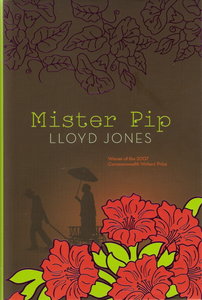
Mister Pip

Mister_Pip_(Lloyd_Jones_novel)One of my favourite “cameo characters” is a woman known only as “Daniel’s grandmother” who comes to share her wisdom with Mr. Watts’ class in Lloyd Jones’ book Mister Pip:


Daniel’s grandmother, stooped and old on her canes, peered back at our class with her weak eyes. “There is a place called Egypt,” she said. “I know nothing of that place. I wish I could tell you kids about Egypt. Forgive me for not knowing more. But if you care to listen, I will tell you everything I know about the colour blue.”

And so we heard about the colour blue. “Blue is the colour of the Pacific. It is the air we breathe. It is the gap in the air of all things, such as the palms and iron roofs. But for blue we would not see the fruit bats.

You can find blue squinting up in the cracks of the wharf at Kieta. … It is trying to get at the stinking fish guts, to take them home. If blue was an animal or plant or bird, it would be a seagull. It gets its sticky beak into everything.

But blue also has magical powers,” she said. “…Blue crashes onto the reef and what colour does it release? It releases white! …A final thing, children, and then I will let you go. Blue belongs to the sky and cannot be nicked which is why the missionaries stuck blue in the windows of the first churches they built here on the island.”

What is achieved with the character of Daniel’s grandmother?

Now on the surface, she seems just a quirky character who says some strange things about a common thing we think we know about already. Rebels have invaded the island and they are all living under very strained conditions. She has been invited to teach the children something, and yet she speaks “only” about blue.woman-1031000_640

She appears about a quarter of the way through the novel, just as things are taking a new and frightening turn. Perhaps her only purpose in the novel, therefore, is to provide some colour (pardon the pun), or perhaps some comic relief from an otherwise serious situation.

And that would be fine, because those are two good reasons to have a walk-on character.

 Is Daniel’s grandmother really just incidental?

Lloyd Jones’ character seems incidental—indeed, she could be removed altogether with no effect on the plot line—but she definitely adds to the novel.

This scene supports one of the themes of Mister Pip, which is the examination of the power of the imagination and words, and how they can achieve what is seemingly magic.art-Mr-Pip-620x349

She is also foreshadowing what Mr. Watts will do: SPOILER ALERT: to delay execution, he will weave a “magic” tale from what seems at first to be ordinary things . Daniel’s grandmother has told the children in a kind of metaphorical code or allegory what will happen. She has told them to “listen” and to believe in the magic of ordinary things.

In fact, when Mr. Watts thanks her, he says, “…while we may not know the whole world, we can, if we are clever enough, make it new….We just have to be as imaginative as Daniel’s grandmother.”

 Memorable and effective incidental characters…

  • add local colour
  • provide a break in mood or pace so readers can breathe
  • do something “complete” in their own scene so that removing them from the book seemingly doesn’t affect the main plot
  • can be used for wider purposes such as theme, foreshadowing and comparison to emphasize other characters
  • are often best left unnamed
  • should only show up when other main characters have been established

So cameo characters can enrich, elucidate, or refocus a novel, or they can simply entertain. Good ones usually have more than one purpose—and are always memorable.

Share a cameo or walk-on character that you remember in the comments below.


Making a Scene… with Dialogue

Making a Scene… with Dialogue

In just over a month, I head to the Ontario Writers’ Conference to mingle with writers, publishers, agents and editors. I’m also delivering a workshop on dialogue, specifically on dialect and diversity in dialogue.

It took me many years to become comfortable using dialogue. My early characters spent a lot of time in their heads thinking about what was going on. In their heads, they voiced concerns, got angry, wanted to ask about stuff. The reader knew all this, [if they were still awake at this point] but the other characters in the story didn’t. Eventually, I realized my characters needed to react and interact— out loud!

But just saying everything out loud is not the whole story. Dialogue scenes are powerful. Dialogue is one of the best ways to engage the reader. Even if characters are sitting still, a dialogue scene works as an action scene and propels the story forward. And it can do so much more—even several things at once—like reveal character, advance the plot, create mood, build conflict, reveal backstory or support the theme.

“Writing good dialogue is art as well as craft,” says Stephen King. Here are 5 tips for writing good dialogue scenes:

Know why you are writing the scene

Dialogue is not filler—or shouldn’t be. If your characters are just discussing the weather or what they want for dinner, your readers’ eyes will glaze over. Kind of the same way I skip over all the pictures of people’s dinners on Facebook. Will the scene reveal or hint at some backstory, or let the reader see how the relationship is developing, or give information about the plot.people-talking

“You wouldn’t say that if you had known my mother.” (Hint at back story? Reveal character?)

“Mike said it was just over the hill, an old factory where they processed paint or something.” Relaying information BUT it must be new to the reader AND to the character being spoken to.

Make dialogue do double duty

Once you’ve decided what the main purpose of the dialogue scene is, see what else you can make it do at the same time.

 “You wouldn’t say that if you had known my mother. She was a right ball breaker. Besides, she had a stash of these things up at the old farmhouse in Williamstown.” (hint at back story PLUS info for the plot?) 

“I’ll never step foot in that woman’s house.” (Opinion of another character? Showing anger and resistance? Plot problem?…all three?)

Anchor the scene

It’s okay to dive into the scene right in the conversation, but if you start a chapter with dialogue make sure it’s not “floating”. Readers need to know who is talking and where they are, and what point this is in the story. If you don’t, the reader will find it hard to absorb the dialogue nuances or subtext because they will be too busy trying to get oriented. I’m not suggesting a long piece of exposition here. Set it up in the chapter before, use a name in the spoken dialogue, or add a beat of setting.talking

Floating:  “I can pick you up around seven. At the diner okay?”

Anchored: When Leah reached the motel, she rescued her cell from the clothes on the backseat. “Amber, I can pick you up around seven. At the diner okay?”

Show emotions

Always be aware of the emotions being felt by the characters speaking and convey that in word choice and body language, not exclamation points or adverbs tacked onto the end.

Adverbs and punctuation: “I will NOT GO!!!” said Lily defiantly.

Beats and word choice: Lily crossed her arms and stared from under smoldering eyebrows. “A team of horses couldn’t drag me to that place.”

Never use dialogue as an “info dump”

My critique circle calls this an as-you-know-Bob moment. Characters should only talk about the things that are important to them at that point in the story, that fit with their emotions at the time, and that they would ordinarily say in real life to another person.

As-you-know-Bob moment: “We’ll go to Mike’s place, near your Mom’s house, and give rubbish-143465_960_720him the book you’re holding.” (The listening character knows where Mike’s place is and knows who is holding the book. No emotional content here.)
Real words: “Ok, Ok. We’ll go to Mike’s place, already. Give him your bloody book.”

Spending time on dialogue is well worth the effort. It dramatizes your story helping readers feel like they are actually listening in.

Do you have any dialogue tips to share? Post in  the comments below.

If you want to explore dialogue further, here are some other blogs you might find interesting. .and useful.

Keep it Simple: Keys to Realistic Dialogue Part 1

Keep it Simple: keys to Realistic Dialogue Part 2

On Writing – Dialogue – Robert J Sawyer

9 Easily Preventable Mistakes Writers make with Dialogue

Paging Dr. Edit: Line or copy edit?

Paging Dr. Edit: Line or copy edit?

Ruth E. Walker. When I first started writing, I didn’t know the difference between a line edit and a copy edit. After some workshops and lots of reading, I learned there’s similarity between the two. Which is good to know because not only do I edit my own work, I edit other people’s work.

Both line editing and copyediting skills zero in on how you are using words. When done properly, they both give you helpful notes and editing marks on your manuscript. Check out some of those marks with a free download from Writer’s Digest of 11 Editing Symbols All Writers Should Know.

It’s so easy to miss errors in your own writing. That’s why I’m immensely grateful to have a consistent critique group. Even so, my editor at Seraphim Editions caught things my colleague writers missed. But he commented that mine was a cleaner manuscript than he often sees. Yay critique group! Yay me!

EditingMy editor, George Down at The Book Band, still asked some tough questions and challenged some of my choices. But a good editor is supposed to make you think hard about your work. I was pleased that he didn’t have to spend too much energy on copyediting and line edits. Instead, it was more about substantive editing: he pointed out missed opportunities in the manuscript — areas where I needed important connections, transitions or back story. More on substantive editing in a future post.

So what is the difference between a line edit and copy edit?

A line edit focuses on the creative side of writing: your style, how you use language in each sentence and paragraph. A line edit helps you achieve clear meaning that helps you connect with your reader.

Line edits eliminate unnecessary words, phrases, sentences:

          • weak modifiers (such as: very, really, so)
          • adverbs (such as: suddenly, slowly, allegedly, terribly, utterly)
          • vague references (such as: this, that, those)
          • repetitions (such as: saying the same thing in different ways)
          • clichés (such as: straight as an arrow, dead as a doornail)

Line edits identify weak verbs that could be more active:

• she walked by
becomes
• she sauntered; she ambled, she strode…etc.

Line edits alert you to awkward sentence structure and unnecessary details:

• He looked up into her face above him, for a moment.
becomes
• For just a moment, he looked up at her face.

Look closely at your own work. Is there clarity in how you’ve constructed those sentences? Are you connecting with your reader in the way you intend? Have you avoided tired, overused clichés?binoculars-1015265_640

Copy edits zero in on the technical aspects of all writing:

  • grammar
  • punctuation
  • spelling
  • typos
  • syntax.

Are you correct and consistent in when and where you capitalize words? Have you missed hyphenations, quotation marks or commas?

If you’re writing non-fiction, a copy edit should catch where you don’t have your facts straight. Accuracy and consistency is important for fiction too: If the moon is out in the beginning of the scene, how come it’s snowing at the end of the paragraph?

I have a confession to make.
I cannot keep my editor’s eye on only one kind of edit. If I’m doing a line edit on someone’s manuscript and I notice a typo, I’m going to point it out. I’ve tried to look the other way, but I want the work to be as good as possible, so I mark the error. Similarly, when asked for a copy edit, well, if the sentences are stumbling over clichés and characters are moving through physical impossibilities, I will mark that too.

But my first pass on my own work is to bring a line edit focus. And it should be the same for your work: focus on the craft, on the language you’ve used, on the images you’ve included, on the mood you want to convey. This focus strengthens your creative voice. You are the chef, so help your sentences offer the kind of magic that swallows your reader’s imagination whole.Imagined Book in Paris cemetary

Don’t spend your energy (or editing budget) on just getting the spelling perfect. That won’t matter if your story doesn’t hold anyone’s attention. And it won’t reflect what you want it to: a great story that connects with the imaginations of readers, editors and publishers.

At our Spring Thaw writers’ retreat, we kick off the weekend with a feedback session. Both Gwynn and I receive, in advance, up to ten manuscript pages from the writers attending the retreat. We each review those ten pages and make line and copy edit notes for the writers. And then we meet with them for a one-on-one chat about their work. We love hearing more about each writer’s plans. We talk about plot, about character development, about markets and agents. And sometimes, writers use that one-on-one to discuss an outline or query letter.

I think Gwynn and I enjoy it so much because we have both benefited whenever an editor or mentor met with either of us to comment on our work. It can make all the difference to be able to ask a question and feel safe in doing so.

Dr. Edit has the answers.radiation-33438

If you have any editing questions, why not write to Dr. Edit? The Doctor is always “IN” and ready to take your questions. Send an email to info@writescape.ca with Dr. Edit in the subject line; the Doctor will answer you directly and we’ll feature your questions and our answers in upcoming posts.


The Guilt of Reading

The Guilt of Reading

On the radio the other day, someone was talking about getting “unplugged” to read paper books. As a writer, and a reader, my ears pricked up.

The person on the radio explained that she usually reads on her phone, but when she does, she is also plugged in to message alerts and Facebook notifications etc. and doesn’t really give the reading her full attention. But what stops her from reading paper books, she said, was dealing with the guilt of being unplugged.

eye glasses on open bookFeeling Guilty?

I wonder what’s happened to our priorities when it feels wrong to be unplugged from the digitally connected world. For pleasure or to grow our minds, what is the problem with reading a book?

Writers need to read. No question. And they need to read widely. Yet her statement about guilt had a certain ring to it.

I’m not constantly plugged in digitally (to which frustrated friends and associates who labour to get hold of me will attest). So I don’t feel any guilt about being unplugged.

But, I have to admit, I do feel guilty about taking time to read.

When I plan my day, reading is seldom, if ever, on the list as an option. I do read. Usually around one fiction book every three weeks and non-fiction in between, but that reading is reserved for before bed or with my morning coffee — a luxury or a reward for an otherwise productive day.

Admittedly, if I get to the point in a novel when the book won’t allow itself to be put down, then I might spend the morning, or stay up late and finish it. And occasionally, I will “allow” myself the luxury of a day with a book. But I do feel guilty when I do that. I feel guilty about all the things I should have done with that time in the same way as I would admonish myself for playing computer solitaire.

do what you loveReading is not a luxury

It’s time, I believe, for giving my head a good shake. Reading, especially for a writer, is not a luxury. It is as necessary as writing or editing.

And I’m not just talking reading as research. Reading other writers is hugely important. It’s important to see what my contemporaries are doing. What’s winning prizes. It’s important to read as a writer. I have a notebook next to my bed where I make notes about things I want to remember or revisit. I list every book I read and the author and date. I keep notes like: Page 57 – good child’s perspective on death.

So if reading is so necessary a part of my writing life, why the guilt?

My brain seems to find it acceptable to read a book on plot or the latest copy of Quill and Quire to stay abreast of what’s happening in the writing world. It’s reading for pure pleasure that seems somehow different.  Hmmmm…

For me, I think it’s time to move all reading into the “acceptable past-time category”. It’s time to ditch the guilt. It’s time to head over to Goodreads and pick my next book!

Even Villains Need Some Affection

Even Villains Need Some Affection

Ruth E. Walker.

I do love a great villain in fiction: Voldemort, Moriarty, Bill Sykes, Cruella de Vil. And so, true-life baddtoddler sitting at beachies fascinate me – I want to know what made them nasty. Surely, no baby is born wicked (back off horror writers, I’m talking real life here.) I mean, even Adolph Hitler and Paul Bernardo were wee thumb-sucking tots at one point. I wonder what happened to drain out their empathy and fill it with cold-hearted evil?

When I’m creating villains, I want to know the same thing. Right now, I’m refining a female character that is the main antagonist to my female protagonist. She’s a cruel and devious villain, and she wants my main character dead. And, just for an added twist of nasty, my sneaky villain happens to be my protagonist’s mother.

It turns out the reason she wants her daughter dead is a big part of my protagonist’s ultimate goal. And here’s why I’m telling you this. Despite writing an outline, I had no idea about this goal when I started to write this book. My villain led me to it. Thanks Nasty Mom.

Character motivation is key…so experiment 

ethereal-839554_1920
It wasn’t until I started to focus on my villain’s motivation that I discovered something important: I didn’t know what my protagonist’s underlying goal was. By fleshing out the villain, I discovered what it needed to be. Now my plot is stronger and my overall characterization is richer. Writing experimental scenes from the mother’s POV gave me “entry” to her head. Stopping to ask “why” and letting her tell me through free-writing was genius. I didn’t always like what she said but it helped me make sense of who she is and how she got like that.

None of those writing experiments will be in the book. But that’s okay – because now my villain’s behaviour, her physical form, even what she notices and doesn’t notice, is clear to me. And that makes me write her scenes – along with her actions and reactions – with confidence. Readers notice when you aren’t consistent or logical.

Writer, how do you feel about your villain?

dalai-lama-1169298_1920 smallAnd I have some sympathy for her. What? Concern for a murderous matriarch? Yes. Because I know what happened in her life to drain the maternal instincts and replace them with self-preservation and steely resolve. And I’m a fairly compassionate person, so I like to think that even the worst of humanity has some glimmer of good in them, if only life had been kinder.

We are all capable of doing horrible things. And wonderful things. So the terrible villains that I create in my fiction all have some “wonderful” inside them. It keeps them complex and unpredictable – like real people. For readers, complex and unpredictable can make for fascinating stories. Just like real life. And that, as writers, is what we hope to achieve in our work.

Do you have any favourite villains?

Have you fallen for any desperadoes in your own work or in books you’ve read? Spend a few minutes just thinking about what makes them your favourite. Who or what do they remind you of? How do they make you feel?

The next time you are writing a villain, show that nasty, evil character a little writerly love and compassion. Take a look at why they are so nasty. Your muse and your readers will thank you for it.

Don’t have a villain as yet? Try my quick and easy recipe to develop characters to get you started. Just toss in some extra negative traits to make sure you get enough nasty in there. Having trouble with finding negative traits, try Angela Ackerman and Becca Puglisi’s book The Negative Trait Thesaurus: A Writer’s Guide to Character Flaws.

If you’d like some help, join me on March 5 for my Master Class in Character: More than Flesh and Bones.

9 Tips for Writing Steamy Scenes

9 Tips for Writing Steamy Scenes

Gwynn Scheltema. 

It’s February, the month for Valentines and all things romantic: love and…sex.

When I have to face writing sex scenes, I sometimes feel like I’m getting undressed in public. I feel like my mother is watching; like everyone will think I do all the things I describe. Do you ever feel that way?

Get over it.

Check out these 9 tips to help you.

Sex is emotion in motion.
~ Mae West

1. Don’t be afraid to write outside your own experience.

Research and write just as you would for any situation you haven’t experienced personally. Read sex scenes by other authors and note which resonate with you. Ask yourself why. I just finished reading Marissa Campbell’s Book, Avelynn. She expertly handles a full range of sexual encounters, from that first romantic kiss to attempted rape and a great deal in between.

2. Treat a sex scene like any action scene.

Have a reason to include it that involves advancing the plot or illuminating character, or developing a relationship.

3. Make your characters human.

Keep your characters human, flawed people, not a larger-than-life Adonis or Aphrodite. While romance has an element of wish fulfillment about it, if you make it so like a fairy tale, some readers won’t believe it.

4. Keep the sex real.

Sex is not always spectacular; it can be boring, mundane, or unsatisfying too. And it doesn’t always have to be completed. Interrupted sex can be quite a tease.

5. Get the timing right.

Don’t let things get hot and heavy in the most unlikely of moments and places in your plot. Don’t shove sex in because it’s been four chapters since the last tryst. Remember tip #2.

6. Get the choreography right.

Not just on a physically level, but on an emotional level too. Physically, make sure your transitions let us know if someone goes from standing to lying, or from facing to spooned. More importantly, let us know their emotional reactions and changes. The physical act by itself is just porn.

7. Be careful of metaphor and simile.

Clichés about stars exploding will only undermine what you are trying to do. Find fresh and appropriate comparisons and don’t hide behind them to avoid being explicit or to add drama. And remember that sex involves all five senses. Use them!

8. Use the correct terms and don’t be offensive.

Research if you have to. If euphemisms pepper your scene, you’ll leave the reader giggling or cringing. Also be aware of the accepted sexual practices of your genre and age group and stay in those boundaries.

9. Keep the scene brief.

Sometimes less is more. Subtle hints are often more effective than graphic description. Give readers enough to satisfy the moment, but leave them wanting more.

Have fun with itkiss

 Remember how you felt when you first discovered that French kissing involved touching tongues? As a teen, did you practise on your arm or the mirror? What about your first kiss?

 Kisses come in so many forms: passionate, wet, teasing, rough, slow… In 50 words or less, write about a kiss—fun, steamy, chaste…. Post it in the comments below.


[By the way…for a great workshop on characters, check out Ruth’s Character Master Class on March 5.]

The Gift of Feedback

The Gift of Feedback

Ruth E. Walker.

Feedback from colleague writers can be a tremendous help to developing writers. Or it can put good manuscripts off the rails. How do you know comments received in a writing circle or workshop feedback session are useful?

Remember Ruth’s three basic rules of successful writing feedback:

Respect:           Give it and get it. All feedback is an offered opinion. You are free to take it or leave it.

Encourage:      Never intend to diminish another writer; always offer colleague-to-colleague comments .

Inspire:            Go ahead and take risks with your writing but be prepared to hear what may need a second look.    

Receiving feedback is an art

  • respect an honest opinion by not defending your writing
  • take notes of verbal comments
  • all feedback is opinion; you may not agree but listen anyway (later on, you may realize that the opinion you dismissed is just what you needed to hear)
  • all feedback is useful; see above and remember you are free to accept or gracefully decline offered feedback
  • don’t interrupt; if you need to clarify what is said, make a note and wait for an appropriate spot to ask a question
  • if feedback is offered in a group session, pay attention; others discussing their opinions about your submission can lead you to exciting discoveries and new ideas

Giving feedback in an art

  • respect the risk a writer takes in asking for feedback; not everyone is ready for an intense critique so if you are unsure of how much to offer, ask the writer
  • begin with one positive aspect before offering suggested areas to review
  • avoid “I like” or “I didn’t like” as much as possible: this isn’t about “liking” something, it is about technique, clarity, logic, development of plot, setting, characters, etc.
  • focus on words, phrases, rhythms, etc., that stand out – either in a good way, or in a way that doesn’t work; offer suggestions if you can
  • be specific about interesting words or ideas and material that seems flat/stereotypical
  • be professional; if you are uncomfortable with the subject, and it affects your ability to critique, it is okay to pass on making any comment

~~~