Writing Room Worthy

Writing Room Worthy

Noelle Bickle

holding-hands-858005_640Four months after my mother’s death, I vowed her tireless efforts to inspire belief in my dreams and evoke courage in my endeavours would not die with her. As much as I’d always credited her as my biggest cheerleader, I hadn’t fully realized that my mother served as advocate for how I valued myself. She lifted my ego when it wilted—always reminding me that success was in the intention and enthusiasm to make good things happen—in both art and life.

I was determined to honour her by letting go of insecurities and self-doubt, but first I had to alter how I valued myself as a woman and artist. She always encouraged my individuality, creativity and connection with others. She applauded unusual concepts and imaginings. Losing my mother quite literally brought me to my knees, but it took those first four months to understand I was also grieving the loss of her ongoing reassurance.

I needed serious personal and creative recalibration, so I started exploring worth and how it impacts every aspect of a woman’s life. After almost a year of not writing or reading—a self-induced boycott of the fuel that had always fed me—I had a non-fiction book idea that sparked passion in both the intention and enthusiasm to make good things happen, and so it took hold.

An elusive life-write balance

A work of non-fiction was a first for me and a stray from the fiction I spent years practising. I was knee-deep now in reading, researching and workshopping—on worth itself and on the business of writing book proposals. As much as it motivated me, it also overwhelmed. I tried to carve out more hours at night, sandwiched with a short stint of writing in the morning before work. I’d sit at my kitchen table and plug away, but I felt scattered. Notepads landed on every flat space in the house, my kitchen whiteboard filled with workshop concepts alongside grocery lists. I didn’t want to lose my drive but I was starting to feel uninspired.

After a meeting with my writing critique group, one of the members came over for tea. I wanted her opinion on my recently assembled art-gallery-style wall in my bedroom—had I gone too far with the floor-to-ceiling display? I value Jessica’s opinion in many things—but she has super-human powers in organization, and each room in her century home looks like a gorgeous magazine spread.

laundry-basket

We spent just five minutes in my bedroom with few suggestions–not because she didn’t have a laundry list of further ideas, but because Jessica was far more interested in the spare bedroom across the hall. She asked what I used it for, and I sheepishly explained away the baskets of to-be-folded laundry, and a mass of odds and ends stockpiled in the corner.

My excuse—I wasn’t using it for anything else and could quickly shove things in closets if someone were to sleepover. She wasn’t interested in excuses; she was perplexed why I hadn’t utilized the room as a creative space for myself.

I didn’t have a reason. Frankly, I’d never had a creative space to write, and although I’d spent time dreaming of “She-Sheds” or one day owning a home with a grand studio space, I didn’t think to use this or any other spot in my home to carve out as my own, because I didn’t put stock in the fact that I deserved a space of my own.

I had excuses why it wouldn’t work—I might need the room, I didn’t have a writing desk, and I couldn’t afford to buy anything to make a great creative space. Jessica balked, and said if nothing else, throw an old table in there—all a writer really needs—in order to have a spot to write. A place to hide from regular life and to simply write. It was sage advice.

A writing room for under $100

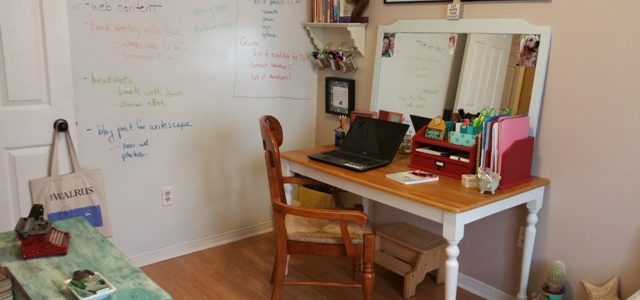
My writing room—as it stands—cost me under $100. It would have cost me nothing, but I envied the floor-to-ceiling chalkboard Jessica had in her writing room, and wanted one too. I decided on whiteboard paint instead, an easy choice more suited to me. I could use a multitude of rainbow-coloured markers, with far less mess than the chalk powder would leave on my floor. The whiteboard paint was $40; I needed two cans. The marker kit was $10. Voila – a fun mind-mapping canvas. Next item, I scavenged an old bedside table from a neighbour on garbage day. Short of tightening the legs which were a bit wobbly, it was a great wood piece. I painted that baby up pretty nice thanks to dollar store paints and examples on Pinterest. Cost me nothing.

20161125_124217-resizeEvery other item in my writing room was already in my house. A 25-year old kitchen table previously stored unassembled in my basement serves as my writing desk. Every piece hanging on the wall, on my desk or a shelf was pulled from other rooms in my home – often hidden or tucked away, not being seen or enjoyed. I tore apart a journal that was filled with inspirational quotes and filled old frames that sat in my closet. I took an old shelf, three bucket-style herb planters that were under my kitchen sink, added some twine with a glue gun and bam—my whiteboard markers had a home.

I didn’t need to make it pretty—I could have had the desk alone—but I like pretty. I also like (almost) free. My room satisfies both. There is something about the space I created for myself—it gives me exactly what I need. Each item gives me joy, calm, or creative zeal.

Constant inspiration

2015-09-28-noelle-her-mom-resizeI have only three photographs in the room—all adorn the mirror which runs the length of my writing desk (placed there so I can keep an eye on myself—one look and I can see if I’m working or playing, focused or distracted—it’s a clever trick, actually). The first photograph is of me and my mother, Norma, laughing. She always told me I was good enough, inspired me to dream big, and laughed at almost everything I said. I glance up at that photo when:

  • I’m deep in doubt and need a boost of confidence to believe in myself
  • I need the strength to just keep swimming
  • I need a helpful reminder to stop excessive late night munching while I write (thanks, Mom…you’re right, sugar only keeps me up later!)

maalik-resizedThe second photograph is of my Maalik. Before he died just this November, my 9-year-old golden retriever spent hours at my feet under my writing desk, or lounged on the bed beside the desk, watching me spin in creative chaos. I would talk aloud as I mind-mapped on the whiteboard, or practised and timed pieces for readings or presentations. He would simply watch attentively and smile on cue. He was my first audience for every piece I ever wrote. He thought anything I wrote or said was brilliant, even when it wasn’t. I glance at his picture when:

  • I need to feel like I made a difference
  • I need calm
  • I need to feel like I do indeed have something worth saying


The last photograph is me, aged 4. I’m dolled up in a bright fuchsia kilt my mother brought from a visit back home to England. I’m positioned in front of her rose garden, my stick straight hair curled at the ends—an effort to make me look less unruly for the picture she’d send back home to family. At first glance, I look darling. At second glance, the jig is up. My hand is deep in my pocket, fingers waving out the bottom of the hem as a friendly cross-continent hello to family I’d never met. I’m grinning ear to ear, cheeky thing that I was. But somehow that is what how I endeared myself to my mother. She was that same age when she came across oceans to Canada, a very small girl on a very large boat. She was quiet and serious, intelligent and well behaved, but very timid. I was wild and rambunctious, often naughty and always playful.

20161125-noelle-age-4-resizeAs little girls, we were very different. However, Mom loved books all her life—both as an escape and as a window to the world she lived in. That she passed on to me, an undeniable effort to make her children aware of the enormous impact of words. I can’t remember a time without books and all forms of writing as a main source of information, enlightenment and entertainment. I glance at that photograph when I need to remind myself:

  • that my strengths often come from being a whirling dervish
  • that life is supposed to be fun
  • that going pant-less has its perks

Over a few months, I’ve made little changes to my writing room, but it remains a creative space only—no bills, no school reports, no work outside artistic measures. I enter the room and get right to work. I don’t have to prepare or clear away the overflow of everyday life. When I leave my writing room, I become regular-life me and get to the daily grind. But in that 8×8 room, I find harmony and am inspired to create.

More than a place to work

Though a little disappointed that I didn’t give myself the gift of a creative space in the more than ten years that I’d been writing fiction, it is gratifying that I’ve finally invested in my work and am honouring my artistic self. I take myself and my craft more seriously because of it. I won’t ever land myself in a home again without somewhere to create that is mine and mine alone.

20161125_151622It doesn’t have to look like an office or a studio. I know a writer who literally created a space under her stairs—but it was hers. It doesn’t have to be magazine spread perfect, or be something to boast about. It is less about the space and all about the sanctuary.

Invest in yourself. Give yourself a sacred space to create. Whether you aim to be a published author or a lover who simply writes poetry to your muse. Regardless of whether you aim to be commissioned at an art gallery or someone who fills their own home with paintings rendered on dollar store canvases.

No matter what your creative goal is, don’t wait until you’ve reached what you deem as success to take your craft seriously. Be it a basement, a bedroom, a she-shed, or under the stairs—you are worth making room for.

Did you know:

Noelle is a writer, workshop facilitator, researcher and worth cultivator. She is currently exploring worth and morphing a non-fiction book idea into a women’s movement. Aiming to promote a nationwide surge in the well-being of Canadian women, Worth Cultivating: a women’s movement examines the commonality of women’s struggle to value themselves, and examines how each individual woman can recognize, cultivate and sustain self-worth.

Let’s prepare for a worth-cultivation movement. I guarantee—you are worth it.”  www.worthcultivating.com.

Noelle is represented by the extraordinary Carly Watters, VP and Senior Literary Agent of P.S. Literary Agency.


Purple Prose

Purple Prose

Gwynn Scheltema

In a course I teach on effective description, I talk about “purple prose” and invariably I’m asked what that means. To me, purple prose is writing that is so excessive, elaborate or flowery that it calls attention to itself and breaks the flow of the story. It’s usually recognizable by the excessive use of sensory detail.

But hang on…isn’t the use of sensory detail a mark of good writing? Absolutely! Using all the senses and painting with words through simile and metaphor makes for rich, engaging narrative. The operative word in my comment “usually recognizable by the excessive use of sensual detail” is the word “excessive”.

So how do you know what is enough and what is excessive?

Let’s find out by looking at this paragraph of purple prose:profile-461076_640

The pretty young girl sat delicately on the lush green grass under the old gnarled oak tree. The starlings sang excitedly above, and the air was filled with the perfume of wildflowers. Overhead the fluffy white clouds drifted gently, and the sun shone brightly in the blue summer sky. She felt happy. She turned coyly to the boy beside her and said hesitantly in her high sing-song voice, “Would you like a bite of this sweet juicy apple?”

At first glance, it seems to follow the guidelines for “good” writing. We have colour and sound and smells and textures. We have emotion and interaction. But for all that, it sounds amateurish. It’s awkward to read.

Here are five tips to recognize and overcome purple prose:

1 + 1 = ½

The first thing to notice is the proliferation of adjectives. When it comes to adjectives, I always say that “one plus one equals a half”. By that I mean that if you use more than one adjective to describe something, you dilute the effectiveness of each adjective. This happens, because the reader must process both adjectives separately with the noun it describes. The mind must process “the girl is pretty” and then “the girl is young”. It’s too much, and slows the reader down. In this paragraph, there are seven instances of this. (Can you find them?)words-1034410_640

Instead use just one adjective and if possible choose a stronger noun to convey the other descriptor. “Pretty young girl” could become “pretty teenager”. “Lush green grass” doesn’t need the word “green”, because “lush” says it all. Likewise, you wouldn’t expect a summer sky to be anything but blue.

Kill “descriptor” adverbs.

Note I said “descriptor” adverbs (my own label, by the way). I don’t condemn all adverbs. Adverbs like daily and often have a role to play in showing, time and frequency etc. by answering the questions of when? and how? It’s the ones that answer the question: in what way? that cause the problem. In our sample paragraph, “sat delicately” is a case in point. It’s much stronger and easier for the reader to process, if you ditch the adverb altogether and strengthen the verb to “perched” or “poised”. The starlings might “chatter” or “chirp” or “chorus” rather than “sing excitedly”. You could use a phrase like “the girl curled her legs under her”.

Swap out cliché.

A cliché is a descriptive phrase that once was a great way to describe something but which has been so over-used that it no longer has any effect on the reader except to draw attention to itself and pull the reader out of the narrative. This sample uses the cliché “fluffy white clouds”.dragonflies-1431304_640

It would be simple to say, “Find another way to describe the clouds,” and that would be valid, but I think it goes deeper than that. I believe that you should swap out cliché with details that are not already supplied automatically by the reader. If you mention a summer day, most people will automatically imagine blue skies, hot sun and fluffy white clouds. Pump up your writing by supplying a detail they may not imagine and therefore will notice, say, “a pair of tangled dragon flies”. Not only does this give a unique detail to the scene, it can also do double duty in mirroring or echoing the story thread of these two young people alone together.

Show Don’t Tell

Yes, I know, you’ve heard it before, but it’s true. This entire paragraph is tell. The reader is being told what everything looks like and what the characters are doing and how they are feeling. We are observers only, not participants in the story. We can only guess at the character’s thoughts and motivations.

This piece would be stronger if we saw at least some of the scene through the eyes and thoughts of one of the characters. That way, we get a feel for how the character feels, and this is heightened by descriptive details that the character would notice in that emotional state. Make the characters real. Give them names and thoughts and gestures.

To recognize “tell” look for places where emotions are named: “She felt happy”. Ask yourself: What does happy look like in this situation? What would she be thinking at this moment? What body language might she use? What sensory details would she notice?

Alice watched two dragonflies flit in a tangled dance near Robbie’s red face—whether from the summer heat or embarrassment, she couldn’t tell.

So what?

No matter how powerful the description, it has to have a purpose. Don’t describe for the sake of it, just to paint a setting. Always have a second purpose. As I said in my post Been There, use brief, targeted description to create atmosphere, to mirror emotion, to illuminate character or advance plot.

So let’s have another crack at the sample paragraph:

apple-1228374_640Alice curled her legs under her and lowered herself to the lush grass as close to Robbie as she could manage without startling him and breathed in the sweet smell of crushed wildflowers. Robbie closed his eyes and settled back against the ancient oak, folding his farmer-tanned arms behind his head. She watched two dragonflies flit in a tangled dance near Robbie’s red face—whether from the summer heat or embarrassment, she couldn’t tell. She hoped it was the latter. What now? Should she say something? But what? Above the chattering starlings seemed to egg her on. She reached into the picnic basket, swallowed hard and said in a voice she barely recognized as her own, “Want a bite of my apple?”

 Better?

Have a go yourself. How else could this paragraph be written? Paste your version in the comments below.

Secrets of a Good Radio Interview

Secrets of a Good Radio Interview

Gwynn Scheltema

The other day, this message came up on my Facebook stream:facebook-radio-cropped

northumberland-89-7Well, I may not have a word for that, but I do understand it. I’ve been interviewed as a writer several times on the radio, and I’m a co-host for a weekly radio program, Word on the Hills, that airs on Northumberland Radio 89.7FM. In the three years we have been running, I’ve learned a thing or two, and here’s the tips I have to offer:

Understand why are you doing the interview.

Why did the radio station ask you? Why did you agree?

Our station promotes all things local. We want to showcase people from our region doing interesting things. Word on the Hills narrows that focus to local people connected with the writing world. We love personal stories, relaxed chatter and slice-of-life humour is always welcome. We don’t just want to hear about the book. We want to hear about you. Your writing journey, your struggles, your triumphs. We want the human face on the book.

You are presumably looking at the interview as a promotional opportunity. But are you clear about what it is you want to promote? Yourself as a writer? An upcoming event? Your new book? All these things?

We are happy to be a promotional outlet for you, but you need to give us entertainment in return.

Arrive early

radio-1475055_640Before your program can air, we need to settle you in the studio, get you set up with your mic and test your voice quality. I like to go over the format with my guests and make sure all their questions are answered. Even if you are doing the interview by phone, we still need to prepare you and test the voice quality of the connection. At your end you need to minimize background noise and get comfortable.


 Understand the format

Our half-hour show is really 22 minutes. Done in two 11-minute segments. Occasionally we can go over that a bit, but we need to leave 5 minutes  at the start for news and weather updates and ads, and then a 3 minute ad break in the middle. Now consider that during the show, we need a couple of minutes up front to introduce the show and you our guest. At the end we need wrap-up time, and before and after the break we need to reacquaint listeners with what they are listening to. All that takes time too.22-minutes

What this means is that you really only have 8 to 10 minutes per segment devoted to you.Use it wisely.

Use your time wisely

The first step in using your time wisely is being prepared. We always offer our guests the opportunity to supply any questions they want to be asked. It’s a win-win that way. We know that you will be enthusiastic about your answer, and you will feel more in control and we will both be serving our goals.

If the radio station you are dealing with doesn’t make this offer to you, then make it to them.Or ask them what they will be asking you so you can come prepared. At the very least, arrive at the interview with some questions prepared in case.

town-sign-1699957_640Of course, hand in hand with that, make sure you prepare your answers. Don’t rote learn a script or plan to read. That is deadly! Instead know the points you want to make and practise talking about them out loud to yourself in a mirror, or with a friend or family member. Bring your notes with you. Radio is “blind” so no one will know you are using cues.

Most importantly, link whatever you talk about to what you want to promote. Almost any question can be steered to the topic you want to talk about provided you are clear about what that is.

Especially come with factual information written down. Event dates and times. Contact info. Website URLs. Not only will this help you remember during the interview, but it makes it easier for the radio host to echo the information because it’s handy.

Choose appropriate readings

If your interview will include readings, keep to short complete excerpts. Pick the same kind of things that you would for a live reading: funny bits, action and suspense. Not long descriptions or introspective musings. Make sure your piece is in context. If you have to supply a lead in, fine, but count it in the allotted reading time. If you are promoting your book, choose a bit that represents it so we get a flavour of the rest.

Always practise your readings out loud at a slower pace than the speed you talk. And time them. I’ve had to cut people off in mid-reading because the program was out of time. I’ve also edited recorded pieces so they will fit, and the author didn’t get a say in my edits.fel-gwynn

Although people love to hear stories, their listening focus isn’t very long. If you have been allotted more than 5 minutes of reading time, break your reading into two shorter pieces. And make them different. Leave them wanting more.

If you are reading from typed pages, bring them in plastic sleeves so they don’t rustle. If you are reading from a book, mark the pages so there is no dead air or mindless mumbling while you find your spot.

It’s all about you

The most important thing to remember is that this is about you—not the radio station, not the presenters—you! Take control. Know and push your agenda. Just do it in a way that pleases listeners, and you’ll have the radio hosts—and listeners—eating out of your hand. And with any luck, buying your book.

Have you ever been interviewed on radio? Any more advice to offer?

NaNoWriMo 101

NaNoWriMo 101

Gwynn Scheltema

What is NaNoWriMo

nano-logoNational Novel Writing Month is an Internet-based challenge to write 50,000 words of a new novel in one month. It started in 1999 with only 21 participants. By 2012, there were over 340,000 who collectively wrote over 3.2 billion words.

To win, participants must write an average of just over 1,667 words per day. Organizers of the Nano event say that the aim is simply to get people to start writing, using the deadline as an incentive to get the story going and to put words to paper. There is no fee to participate and anyone who reaches the 50,000 word mark is declared a winner.

Writing in Community

timeChurning out over 1600 words will keep you busy–and alone–most days, but you can also connect with fellow participants and participate in daily challenges, pre-Nano prep sessions and post-Nano activities. You can connect through Twitter [@nanowrimo], on Facebook  or follow their blog.sudbury-nano

Many people run their own groups locally and regionally to support one another through the month. Tips, printable schedules, and advice is all over the Internet.

NaNoWriMo programs

Nano has spilled out into communities around the world. Writescape got in on the fun when we led weekly prompts and writing sessions in partnership with the Whitby Public Library a couple of years ago.

There are three formal programs listed on the Nano website:

  • The Young Writers Program promotes writing fluency, creative education, and the sheer joy of novel-writing in K-12 classrooms. We provide free classroom kits, writing workbooks, Common Core-aligned curricula, and virtual class management tools to more than 2,000 educators from Dubai to Boston.
  • The Come Write In program provides free resources to libraries, community centres, and local bookstores to build writing havens in your neighbourhood.
  • Camp NaNoWriMo is a virtual writing retreat, designed to provide the community, resources, and tools needed to complete any writing project, novel or not.
Does it work?

nano-cartoonIt sure does. Even if participants don’t complete the 50,000 words, they get words written, lots of words. And anything that helps you write is worth trying. Sometimes just the tension of knowing you have a deadline combined with being part of a larger global event can bring inspiration and focus to the creative process.

But don’t take our word for it. Consider this: there are bestsellers that were born through NaNoWriMo.

The NaNoWriMo website says that more than 250 NaNoWriMo novels have been traditionally published. They include Sara Gruen’s Water for Elephants, Erin Morgenstern’s The Night Circus, Hugh Howey’s Wool, Rainbow Rowell’s Fangirl, Jason Hough’s The Darwin Elevator, and Marissa Meyer’s Cinder. See a full list of published authors.

Maybe NaNoWriMo is “write” for you.

Let us know if you’ve participated in NaNoWriMo and what it did for your writing.

Benefits of Bravery: Going Public Fear(less)ly

Benefits of Bravery: Going Public Fear(less)ly

In the middle of August, I took a big risk and made a somewhat rash and public pledge on this blog: Finish my novel by September 30 or…

…well, I didn’t say what the “or” might be. Only that you, dear reader, would hold me accountable. And yes, you certainly did.

Just a reminder: I compared my sluggish progress on my novel in progress to how I dropped out of aquafit some years ago (the old “life gets in the way” excuse) but that returning to regular exercise was finally showing some results.

person-947709_640I reasoned the same could happen for my novel, if I only made it a regular habit to write…the novel. (I write almost every day, just not always the novel.) In fact, there have been times I’d slipped so far away from the story that I couldn’t recall important plot elements.

On Friday, September 30, I “finished” The Last Battlewipe. And then spent the next four days making it better.

I’m still not done with the editing but I can happily report that my self-imposed kick in the pants has generated much more than a full draft. I also gained three other important results.

Result Number One:

woman-41201_640Once I made the commitment to get the darn thing done, I had to shift my thinking from write to reach the finish to a much more challenging finish to reach the writing. Accordingly, I became far more focused on the vital pieces of the novel: character arc, story structure, logic/plot glitches and glossovers.

The very act of committing to finishing the work meant I had to think deeply about what I was trying to achieve and ensure that this was foremost as I wrote those final scenes.

Result Number Two:

kisses-1039533_640I’m excited again. Like a teenaged love affair, writing is often all starry eyed and passionate at the start. It’s an adventure following those characters, letting them surprise me, discovering personality quirks and adorable idiosyncrasies.

Until the “adorable” wears off and I realize I’ve let my characters and story run off the rails following a lot of useless material. And I’m bored.

For a lot of writers, it’s at that point that the murky, muddy middle of the book wears you down.

Enter the panic of a public deadline coupled with the realization that I have a lot more novels waiting for me to write. I had to finish this one. And all that panic stuff – it made the writing exciting for me once more. But because of Result Number One, I brought focus to the rekindled love affair. So much better to be a grown up.

Result Number Three:
black-84715_640Last month, I had a fantastic pitch session at North Words Literary Festival. A query letter and the first ten pages resulted in an enthusiastic agent asking to see the rest.

I left that festival on a tremendous high: someone gets me and what I’m trying to do with The Last Battlewipe. So how was it that the first ten pages so intrigued the agent when I was still building the last quarter?

First, to keep working on the ending I had to revisit the beginning. Again. And again. Those ten pages that agent read were shaped and pared and rewritten dozens of times. Every time I set a stone in place at the end of the book, I had to return to the foundation and ensure it could hold that stone.

Second, I believe if I hadn’t got back to the story, I wouldn’t have been clear in my mind about the themes and ideas I am exploring in The Last Battlewipe. And I think my heightened focus and restored passion for my novel is contagious. I was able to carry that focus and passion into the session. It’s no guarantee that my wonderful fifteen minute pitch time will land me that agent but it sure was the 2 a.m. rocket fuel that has kept me focused on perfecting the finish line.

One more thing.

My aquafit regime? Ooops. I’ve let that one slip and my recent BIC woman-1539087_640(bum in chair) has done little to get my physical energy back on track. So I am still “a work in progress” on more than one front. But I guess we all are.

I’ll keep you posted. Meanwhile, back to the edit chair.

Do You Know…what an agent will see when they look at your query letter? Register for our November retreat when a top Canadian literary agent, Hilary McMahon, is Writescape’s special guest and she’s staying for the weekend to share insights, inspiration and a morning workshop.

Sharpening your creative edge

Sharpening your creative edge

Gwynn Scheltema

This weekend, Ruth and I spent a few hours with a motivated and talented group of writers in St. Catharines. Some were beginners, some seasoned professionals, but all of them dived in and challenged themselves and took creative risks. It was thoroughly energizing.

boots on rail lineWriting is, for the most part, a solitary act. Sometimes lonely, sometimes blissfully peaceful. But I find that too much alone time as a writer is not always good. Yes, I might get more written, but it can also sometimes skew my writing perspective.

I can get rooted in bad writing habits, forgetting to use fundamental writing skills I have used before. My writing challenges can start to feel insurmountable. Or I can relax into my writing comfort zone and stop taking risks…dulling my creative edge.

Being with other writers this weekend, feeling that energy that emerges when writers get together, reminded me that I need to build that into my writing life. I also need to hone my creative edge by deliberately taking regular creative risks.

So how can you take regular creative risks and re-energize?

Give voice to non-POV characterseyes-141363_640

Write a scene from a non-POV character‘s perspective. This reminds you that each character has their own motivations. You don’t have to use the piece you write, but in the act of writing it, that character may give you insights about your regular POV character or about the events in the scene. Perhaps there are even connections to other characters you were missing.

Approach description differently

addict-84430_640Challenge yourself to use visual description sparingly, and increase the use of the other senses instead. Try also to limit scene description to just two or three details. (And make sure that the details are ones that the characters would naturally notice and not just things the author wants the reader to notice.)

 

Use prompts

Using prompts forces you to come at things from different entry points. They stimulate memories and experiences that can be adapted to fiction and can be a springboard to new ideas. Here are three links to get you started.

Freefall writestamp-895380_640

Freefall writing is one of the best and most satisfying ways I know to stay ahead of your internal editor and left analytical brain and give your right creative brain and your subconscious a chance to surface. By writing without stopping for a set time, and having no expectations of what will be written is extremely freeing, and time and time again I’ve seen wonderful writing emerge from the practice.

Get together with other writers
Dining at Turning Leaves

Even if you have a wonderful writing space at home, getting together with other writers to write is a different and energizing experience. I live next to a lake, but look forward to going on retreat whenever I can. It allows me to “leave the world behind” for a short while and concentrate on being creative. Being with a group of people who understand the writing world is invaluable and seeing others around me writing motivates me to write too. Try it. Join Ruth and me at our annual fall retreat Turning Leaves 2016 this November.


To edit or not to edit…

To edit or not to edit…

Gwynn Scheltema

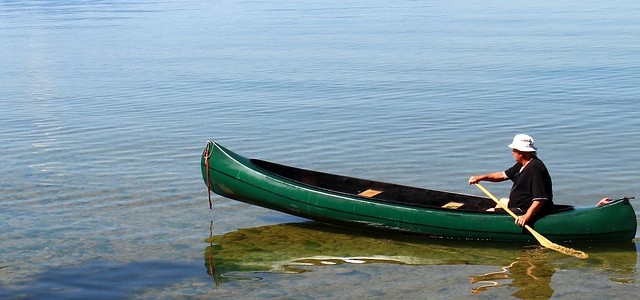
You write Chapter 1. It flows like paddling a canoe in a strong current, a few J strokes and you are heading forward fast. Yes!

Chapter 2 starts out that way too, still moving well, still splashes of enthusiasm and creativity, but the current flows a little slower now. You think back to Chapter 1. Did you start in the right place? Perhaps you should go back to the beginning and make sure?

So you retrace your steps back to the start and paddlecanoe-1082130_640 through Chapter 1 again. For the moment you are convinced that, yes, you started in the right spot. But you find a short cut on an upper stretch that improves the trip, so you make it. Chapter 1 feels really good now.

Back on the route of Chapter 2, you look for similar shortcuts, note the beautiful spots you don’t have time to explore, make notes about bad spots you’ll avoid if you come this way again.

In Chapter 3, your writing river opens into a lake. You’re not sure exactly which way to point the canoe, so you figure you’ll go back to Chapter 2 and explore those beautiful spots before you continue.

And while you are in Chapter 2, you figure you probably missed a couple of beautiful spots in Chapter 1, so you go back to Chapter 1 and….

Sound familiar?

The internal editor

It’s certainly the story of my writing life. But I know I’m not alone. The urge to rewrite before you’ve finished the story is powerful. Many discarded, unfinished manuscripts have polished first chapters that would keep readers reading…if there was more to read.

It’s all the fault of that dastardly writers’ internal editor. The one that tells us that our writing is “crap”; that we are disillusioned at best and arrogant at worst to think anyone would want to read what we write. The one that tells us we need to be perfect.

man-286477_640And the truth is, most first drafts are not publishable. As Hemingway so succinctly said, “All first drafts are shit.” First drafts will have strong parts and weaker bits, and bits that should be axed and areas where more needs to be written. That’s NORMAL. That’s what the editing process is for.

But if you heed your rational, analytical, internal editor, and constantly loop back out of the writing process and into editing, you will run out of creative energy. And you will push the unconscious creative writer in you further and further away.

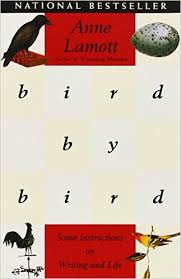
In her book on writing, Bird by Bird, Anne Lamott wrote:bird by bird

The only way I can get anything written at all is to write really, really shitty first drafts.The first draft is the child’s draft, where you let it all pour out and then let it romp all over the place, knowing that no one is going to see it and that you can shape it later. You just let this childlike part of you channel whatever voices and visions come through and onto the page… Just get it all down on paper because there may be something great in those six crazy pages that you would never have gotten to by more rational, grown-up means.

No editing on a first draft?

 So does that mean that you should never edit as you go. Of course not.

I get momentum for a new chapter by going into the previous chapter—not back to the beginning of the novel— to read it and often edit it. That’s productive. You get into the voice of your characters again, you renew your sense of place in the story. And the time invested is not huge. More importantly, you do it as a way to move forward, not as an excuse to not move forward.

Perhaps like me, part way through your manuscript, you feel that the wrong character is telling the story, or that the POV should be first person instead of third person. I think it makes sense at this point to go back to a previous chapter or two—again, not necessarily the beginning—and rewrite and decide. But make that decision and move on.

girl-1563986_640Time and circumstance play a role too. If all I have is the forty minutes on a noisy train, likely editing is a better use of my time.But maybe not. Maybe just thinking through a plot hole or a character’s reaction in an upcoming scene would be better for keeping the novel moving forward.

It’s definitely tempting to go back to edit when you can’t think of  what to write next. I do it all the time. But I’ve found some effective ways to overcome that urge:

  • Go for a walk and think my way through the plot or character problem and then write forward again.
  • Use targeted writing prompts
  • Freefall write
  • Write a brief summary of the scene I’m stuck on, and go on to the next scene.
  • Persuade myself to write just one sentence…then one more…then…

It all comes down to how much your editing loops are preventing you from writing new material. We all create and work differently. If a bit of editing gets the creative juices flowing, go right ahead. But if it’s a procrastination tactic, fight the urge. The main goal of your first draft is to get the whole story down.

How do you stop yourself from using editing as procrastination? Share your tactics in the comments below.


Get Fearless. Go Public.

Get Fearless. Go Public.

Years ago, I was a committed aquafit attendee. Underwater lunges, leg lifts by the jets, jogging through chlorinated pools—it all turned my crank. I went twice a week with my best friend, Linda. We had a blast, challenging each other to push harder, harder. We churned up big waves with our enthusiasm and built up some wonderful stamina and energy. Aquafit helped keep me healthier and decidedly thinner.

pensive-female-580611_640But life got in the way. I lost interest. And, you know, aquafit just moved to the backburner of “I’ll sign up next year.”

Several years and pounds later, I find myself back in aquafit. A new year’s resolution I opted to actually keep. But man oh man, what happened to make water churning so much harder? Linda and I were iron-women back in the day. Now, I’m feeling far more like rubber-woman. Sometimes even like sopping wet cardboard-woman. I swear they added molecules to the pool.

But I will say that several weeks in, I recognized some of the old iron-woman coming back to me. And by the end of June, I had more energy and fewer pounds. Don’t get me wrong. It will be a long time before I can jog in the pool like a whirlpool on steroids. If ever. But my confidence is up. And I’ve managed to keep a quasi-schedule over the summer with a less strenuous program in the cottage river. I’m looking forward to signing back up in September at the local pool.

And that, believe it or not, gives me hope on an unfinished manuscript that lingers in my computer. This 79,000+ word novel started out like most of my writing. I always write because I want to know the answers that I set up whenever I start a story or poem. And I set up a lot of thematic questions with this one: gender, politics, genetics and nature versus nurture. I was pumped to explore them and it was going great.writer-1421099_640

But sometimes —just like why I had to give up aquafit years ago—life gets in the way of writing. And sometimes, a writer can lose confidence. And then lose the connection to the heart of the story. And finally, simply lose interest. And that combination is deadly. My poor muse has been whispering in my ear for weeks and I just kept shrugging my shoulders and looking for distractions.

Man, I sure needed a kick in the pants. This post is my public announcement and thus, my self-kick in the pants. You, dear Top Drawer reader, will hold me accountable. Like my return to aquafit, I’m diving back into the pool of novel completion.diving-885906_640

I’ve given myself a deadline. September 30: a complete manuscript ready for beta readers. Until then, I’ll be doing the backstroke, butterfly, crawl, freestyle…anything I can do on the keyboard to swim to the finish line. And the only record I’m looking for is to achieve completion on or before September 30.

I’ll let you know if I make it.


Been there: Using real-world settings in fiction

Been there: Using real-world settings in fiction

Gwynn Scheltema

I’m always fascinated by the worlds that writers create for fantasy and sci-fi novels. I think I’m fascinated by the sheer complexity of creating an entire culture from its laws and religion to its people, plants and landscape.

But basing our stories in the “real world” we all know (or think we know), can be just as complex.

Keeping facts straight.

krzywy-las-641507_640Using real settings—real towns or cities, real street names, real landmarks— can seem easy because you have everything created already. You don’t have to invent culture, landmarks or names. If you mention the CN Tower or Westminster Abbey, you need only give a few details, and readers can fill in the rest.

Provided you get it right.

You can be sure that if you get it “wrong”, someone’s going to tell you. Or your reader will be aware that you made a mistake once, and be on the alert in case you do it again, so now there is a subconscious element of distrust as they read. At the very least, it will kick them out of the narrative momentarily.building-72225_640

Your Impressions

Sure, you can control facts to a large degree with good research and careful editing, but what you can’t control is readers’ reactions to your perceptions of real places. If, like facts, readers think that you got the impression “wrong”, it will be noticed, and have the same effect as getting facts wrong. If, as a narrator, you describe a particular real neighbourhood as “dangerous”, or “upcoming” or “ugly”, that might be your interpretation, but your reader may not agree. Your perceptions of real places are valid, but so are your readers’impressions of the same place.

So what can you do?

Impressions vs. facts

As you write be aware which setting details are facts and which are opinions. Characters only should express all the impressions or opinions. Characters in this instance include the narrator in a first person story. In sections of exposition, stick to facts. This is a good rule of thumb for any details actually, not just for setting. Essentially, setting opinions expressed through exposition become “author intrusion” and open that door for “getting it wrong”.

Manipulating impressions

The moment you move impressions of real places to the realm of character, you have the opportunity to manipulate setting to support other elements like character development and theme.

By choosing to focus on the details the character notices in a setting and what they think and how they feel about it, says as much about the character as the setting. Characters usually notice the things that align with their emotional state and with their level of understanding. You can set or heighten mood and sneak in details that will be important to plot or speak to theme.

midway-game-983385_640

Think of a child and his mother entering a fairground. The child is likely feeling excited and looking forward to fun, so will notice details that are colourful, fun and energizing: whirling rides, flags and balloons, stalls full of prizes to be won. The mother might be jaded by years of attending fairgrounds, aware of potential danger and cost. She will notice questionable people, machinery that looks or souman-1283576_1280nds dangerous and the crush of crowds that make it hard for her to keep track of her child.

Another manipulation is to purposely describe factual details “wrong” to establish an unreliable character.

Fiction and reality fusion

Perhaps the best way to use real settings is to create a fictional piece within the real one. A fictional town in real Northern Ontario. A fictional bar in Paris. You still get the advantages of the “real world” settings, but not the disadvantages. Your fictional component should be similar enough for believability, but you have the freedom to create your own “impressions”’ of the place. You get to decide if the place is “dangerous”, or “upcoming” or “ugly”, and your readers will believe you.


There All Along

There All Along

Guest Post: Erin Thomas

Today I took a life drawing class, part of a teacher meet-and-greet event at Centennial College. Unlike the gentleman who jokingly stood up and pretended to walk away when the teacher explained that there was no nude model, I was intrigued by the sound of our assignment: we were going to draw an eye.

 First Steps

The charcoal felt alarmingly light in my fingers and snapped off at the slightest provocation, but I slowly got the hang of drawing with the side of it, not the tip. Shading. Playing with weight and layers and darkness. The bumps on the easel board under my paper gave an interesting texture, like leaf-and-crayon art.hand-drawn-987070_1280

The eye was a sphere, the teacher explained, and that was where we were to start—just shading a circle. With no real understanding of how the dark blob on my paper was going to turn into an eyeball, I followed her lead. Soon we were covering part of the eye-circle with lines that turned into an eyelid. A lower lid followed. I had lines in the wrong spot; finger-smudging made them paler, but they didn’t quite disappear.

“Don’t try to copy,” the teacher advised. “Just think about the shape of the eye.” But I couldn’t see the sphere of it anymore. The lid seemed to be covering an eye-blob that was a different shape than the eye-blob that was emerging.

Adding More 

I made more lines. It didn’t help.

I stepped back, tryeye-1447938_1280ing to find the beach ball of the greater eye within the drawing. It looked wrong, that was all. Unbalanced. I had drawn the eye of a crazed murderer, a horror-movie clown. And it was staring at me.

I made a line, smudged it out. Tried again, making a bigger mess each time. Eyelashes maybe? No. It turned out that eyelashes were not the answer.

 Uncovering

“Good,” the teacher said. Good? Were we looking at the same drawing? Ah. This was teacher good, not real good. I have used this good myself.

“Just clean it up here and here,” she added, and with an eraser she cleaned up some of the leaf-and-crayon-like texture in the eye-white. She showed me that there is usually a space between the iris and the lower lid, and with a quick dodge of her hand, made it appear. She adjusted the shape of the area over the eye, and suddenly it matched what was beneath it.

There all Along

Now I could see the beach-ball roundness, the shape of it, the lines that belonged and the ones that didn’t. It had been there all along; I just couldn’t see the shape of it. Now, I could.

Erin's Eyeball Art
Erin’s Eyeball Art

How often have I done this with a piece of writing? When something’s not working, sometimes our impulse is to keep adding lines. Add another character to supply the missing bit of information, add a plot twist to add excitement. Soon the shape of the story is obscured.

Part of what I love about my writing groups is their ability to see the shape of the eyeball underneath it all, when I can’t. To point out which lines I should erase. How many times will I need to learn the lesson that the right answer to a story problem is usually the one that’s already seeded in the manuscript? Sitting there. Waiting to be seen.

What doesn’t add…

The miracle of the eraser reminds me of my favourite piece of writing advice, one I heard from Kathy Stinson, although she makes no claim to have invented it. “What doesn’t add, subtracts.” And sometimes, it seems, subtracting is a way of adding.

Stories, it seems, have shapes of their own. telling-libraries-stories-with-video-11-638

Switching between charcoal and eraser, I made an eye. This eyeball art of mine is not going to win any prizes. It was not even the best piece of rookie eyeball art hanging on the wall with all of the other rookie-art eyeballs. But it is arguably the best thing I’ve ever drawn.

I’m going to keep a picture of it handy, to remind me to think about the shape of my story. To remind me, when I’m frustrated and lost in the lines, to be patient—to step back, to try again. The thing I’m drawing with my words might already be there, waiting to be uncovered.

Erin-1-042-4x5-rgb-240x300

Erin Thomas writes books for children and young adults from her home in Whitby, Ontario. She enjoys trying new hobbies on for size, but promises not to pursue a career in fine art. For more information, visit www.erinthomas.ca.
Draco’s Fire (HIP Books Fall 2009)
Boarder Patrol (Orca Sports Spring 2010).
Wolves at the Gate (HIP Books Spring 2011)
Overboard (HIP Books, Spring 2012)
Haze (Orca Sports, Spring 2012)
Roller Coaster (HIP Books, Fall 2013)
Forcing the Ace (Orca Limelights, 2014)