Gwynn Scheltema
“Even the smallest person can change the course of the future.”
~ The Lord of the Rings, J.R.R. Tolkien
Incidental characters, walk-on characters, cameo characters—call them what you will—they have an important part to play in a novel. Do you remember a scene where a character appears just briefly and then we never see that character again?
When a writer includes a walk-on character, is that a good thing or a bad thing?
The answer depends on what kind of novel you’re writing, where in the novel the character appears, and what the character does in the scene.
Mister Pip
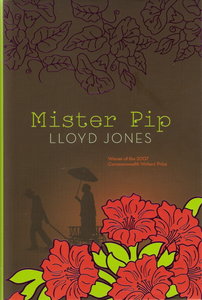 One of my favourite “cameo characters” is a woman known only as “Daniel’s grandmother” who comes to share her wisdom with Mr. Watts’ class in Lloyd Jones’ book Mister Pip:
Daniel’s grandmother, stooped and old on her canes, peered back at our class with her weak eyes. “There is a place called Egypt,” she said. “I know nothing of that place. I wish I could tell you kids about Egypt. Forgive me for not knowing more. But if you care to listen, I will tell you everything I know about the colour blue.”
And so we heard about the colour blue. “Blue is the colour of the Pacific. It is the air we breathe. It is the gap in the air of all things, such as the palms and iron roofs. But for blue we would not see the fruit bats.
You can find blue squinting up in the cracks of the wharf at Kieta. … It is trying to get at the stinking fish guts, to take them home. If blue was an animal or plant or bird, it would be a seagull. It gets its sticky beak into everything.
But blue also has magical powers,” she said. “…Blue crashes onto the reef and what colour does it release? It releases white! …A final thing, children, and then I will let you go. Blue belongs to the sky and cannot be nicked which is why the missionaries stuck blue in the windows of the first churches they built here on the island.”
What is achieved with the character of Daniel’s grandmother?
Now on the surface, she seems just a quirky character who says some strange things about a common thing we think we know about already. Rebels have invaded the island and they are all living under very strained conditions. She has been invited to teach the children something, and yet she speaks “only” about blue.
She appears about a quarter of the way through the novel, just as things are taking a new and frightening turn. Perhaps her only purpose in the novel, therefore, is to provide some colour (pardon the pun), or perhaps some comic relief from an otherwise serious situation.
And that would be fine, because those are two good reasons to have a walk-on character.
Is Daniel’s grandmother really just incidental?
Lloyd Jones’ character seems incidental—indeed, she could be removed altogether with no effect on the plot line—but she definitely adds to the novel.
This scene supports one of the themes of Mister Pip, which is the examination of the power of the imagination and words, and how they can achieve what is seemingly magic.
She is also foreshadowing what Mr. Watts will do: SPOILER ALERT: to delay execution, he will weave a “magic” tale from what seems at first to be ordinary things . Daniel’s grandmother has told the children in a kind of metaphorical code or allegory what will happen. She has told them to “listen” and to believe in the magic of ordinary things.
In fact, when Mr. Watts thanks her, he says, “…while we may not know the whole world, we can, if we are clever enough, make it new….We just have to be as imaginative as Daniel’s grandmother.”
Memorable and effective incidental characters…
- add local colour
- provide a break in mood or pace so readers can breathe
- do something “complete” in their own scene so that removing them from the book seemingly doesn’t affect the main plot
- can be used for wider purposes such as theme, foreshadowing and comparison to emphasize other characters
- are often best left unnamed
- should only show up when other main characters have been established
So cameo characters can enrich, elucidate, or refocus a novel, or they can simply entertain. Good ones usually have more than one purpose—and are always memorable.
Share a cameo or walk-on character that you remember in the comments below.



 Rummaging around in discarded ideas will invariably turn up something unexpected, surprising, fun or usable.
 py file folder: for ideas scribbled on napkins and other scrap bits.
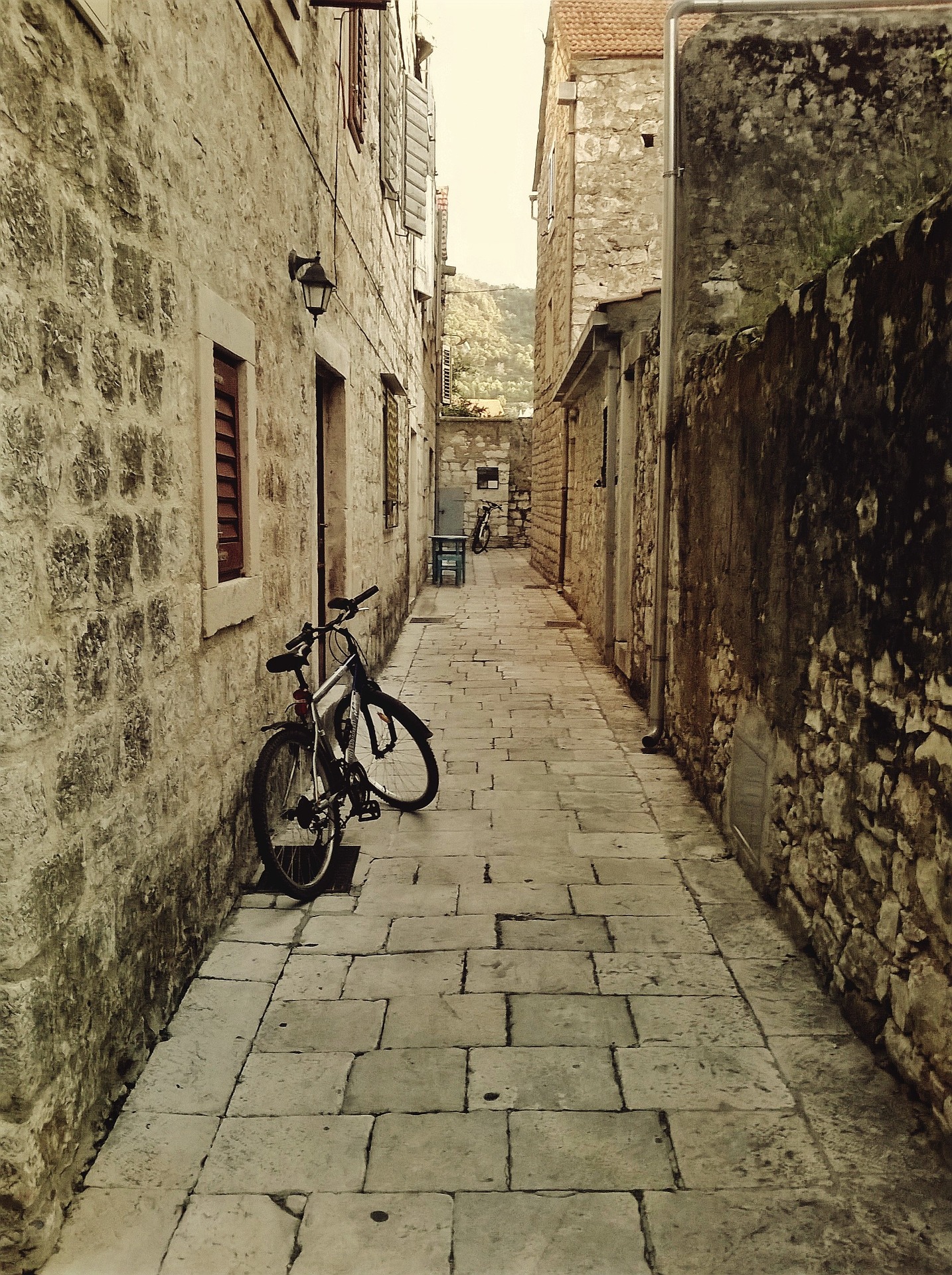 o random pictures and write a scene that will somehow link them together.

 At first, I couldn’t write about my experience. The feelings were too raw. The emotions too heightened. I had no perspective on what had happened to me and what it meant in the grand scheme of my life. If I had tried to write about my divorce when the process began four years ago, it would have been an angry jumble of words. Words I may have regretted sharing one day.
 I had worked through some real lows with my therapist and eventually came to realize that I wasn’t actually worthless and unloveable. Among the lows were some really bad dates and the feeling that I might never find love again. That was a terrifying thought: not knowing how my story would end or if the eventual ending would be happy. But there were some highs, too: taking my boys on a road trip all by myself, being accepted into a Masters of Fine Art in Creative Nonfiction program, meeting someone special and watching our kids grow to care for one another. I wouldn’t trade these experiences for anything.
 I began scouring my brain for different angles, different facets of my story to share with new audiences. I pitched certain ideas to certain editors, and I followed up and followed up and followed up until I began selling pieces.


 Lately, I’ve been trying to increase the number of steps I walk each day. I bought a pedometer to record them. At first I just went about my regular routine to see what I was achieving already. Sad. Very sad. Some days I didn’t even break 500!
 At first glance, if you do the math, an 80,000 first draft written over a year, five days a week, 50 weeks in the year, would only require a measly 320 words a day! A 100,000 word book is only 400 words a day.






 Feeling Guilty?
 Reading is not a luxury