Gwynn Scheltema
January is believed to be named for the Roman god, Janus. The first month of the Gregorian calendar, January replaced March as the first month of the Roman year, no later than 153 BCE.
As we’ve left behind 2016 and begun 2017, consider that Janus is, among other things, the god of time, beginnings and endings. His two faces look simultaneously to the future and the past.
Janus symbolized change, transition and motion. He presided over the progress of one condition to another, from one vision to another, and young people’s growth to adulthood, transition from savagery to civilization, from rural to urban space, from one universe to another. Janus oversaw the beginning and ending of conflict. As a god of motion, Janus caused actions to start.
He represented time, and was worshipped at planting and harvest, at births and marriages and deaths. He had a role to play in journeys and exchanges, gateways and thresholds.
Doesn’t that sound like a writer? I think writers are a lot like Janus, presiding over our fictional worlds.
So what can we learn from Janus?
Past and Future are connected
At any point in the writing of a story we need to be looking into the past and the future simultaneously. Even though action and plot are moving forward into the future, we need to be aware of our characters’ pasts or back story, because that is what drives all our characters’ quirks and traits and shapes the decisions they make.
 The distinction between past back story and present, or future action and plot, is a cornerstone for understanding pacing. The plot and action is what moves the story forward and keeps the pace up (and the reader engaged). The moment you indulge in a flashback (back story; the past), your pacing stands still. Sure we learn things about the characters, but the storyline is momentarily halted. Stay in the past too long, and the reader will lose interest.
That’s not to say that backstory is not important. It is. It is the subconscious motivation that drives the characters’ present actions. The future unfolds according to the events of the past, and witnessing some of the past will help the reader understand why a character acts the way he does.
Beginnings and Endings are connected.
 We all know that stories have a beginning, middle and end, but it’s more than that. Like Janus, we need to be aware of the beginning and end simultaneously wherever we are in the writing of the story. Everything is causal. Nothing happens without a reason.
Plotters write their plot beginnings with plot endings in mind. Pantsers freewheel the plot but know their character arc beginning and ending. At any point in the story the reader should feel that there is change afoot, that there is growth and discovery around the corner. Your reader should sense that at the end, it will have been worth the journey, and that the promise given at the beginning has been kept.
Duality in characters
 The two-faced Janus reminds us, too, that our characters also have dual aspects. They are at once good and bad. Readers relate to villains who have redeemable qualities. Readers like heroes with flaws. It makes them rounded and believable, not cardboard.
A character arc is a progression from one condition to another: from shy to confident, from intolerant to tolerant, from angry to calm and so on. Cardboard characters have no arc. They are shallow and act without motivation, act only because the author needs them to. If the writer, like Janus, is aware of the character’s past as she writes the action and change of the future, then the character will be more developed. The reader will care what happens to the character and keep turning the page. And that’s what we all want.
So as we write, let’s remember Janus, this January and all year long. Our readers will thank us.

DID YOU KNOW
You can explore your inner Janus this April at Writescape’s Spring Thaw retreat. This all-inclusive getaway at Fern Resort on Rice Lake, Ontario, offers plenty of time to focus on character arcs, plot developments and flashbacks that don’t drag down your story. Gwynn and Ruth are on hand to give you one-on-one feedback on your work in progress. Registration is open now.







 Whenever you are out and about, pay attention. In cafés, in waiting rooms, at the supermarket or on a lonely country road. Notice with all the senses. I listen in on conversations at Tim Hortons, or between the cashier and the shopper, moms at baseball games and GO train passengers. I notice the words and phrases they use, the topics they discuss and the reactions of those around them.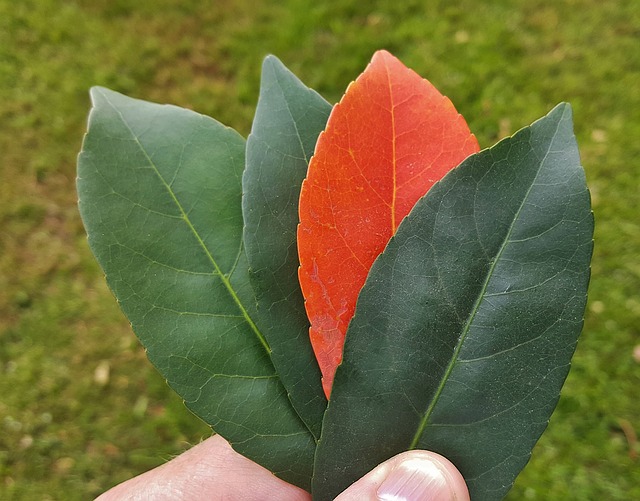
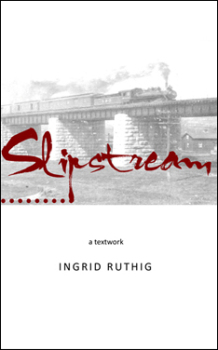 My good friend, Ingrid Ruthig taught me an important lesson about observation: the same thing can be different. The basis of her book

 And I’m waiting to see if, like the lilac Jacarandas, the red flamboyant trees will lose their blossoms in the storm that is now brewing on the horizon.


 Alice curled her legs under her and lowered herself to the lush grass as close to Robbie as she could manage without startling him and breathed in the sweet smell of crushed wildflowers. Robbie closed his eyes and settled back against the ancient oak, folding his farmer-tanned arms behind his head. She watched two dragonflies flit in a tangled dance near Robbie’s red face—whether from the summer heat or embarrassment, she couldn’t tell. She hoped it was the latter. What now? Should she say something? But what? Above the chattering starlings seemed to egg her on. She reached into the picnic basket, swallowed hard and said in a voice she barely recognized as her own, “Want a bite of my apple?”

 Well, I may not have a word for that, but I do understand it. I’ve been interviewed as a writer several times on the radio, and I’m a co-host for a weekly radio program,
  Before your program can air, we need to settle you in the studio, get you set up with your mic and test your voice quality. I like to go over the format with my guests and make sure all their questions are answered. Even if you are doing the interview by phone, we still need to prepare you and test the voice quality of the connection. At your end you need to minimize background noise and get comfortable.
 Of course, hand in hand with that, make sure you prepare your answers. Don’t rote learn a script or plan to read. That is deadly! Instead know the points you want to make and practise talking about them out loud to yourself in a mirror, or with a friend or family member. Bring your notes with you. Radio is “blind” so no one will know you are using cues.

 National Novel Writing Month is an Internet-based challenge to write 50,000 words of a new novel in one month. It started in 1999 with only 21 participants. By 2012, there were over 340,000 who collectively wrote over 3.2 billion words.
 Churning out over 1600 words will keep you busy–and alone–most days, but you can also connect with fellow participants and participate in daily challenges, pre-Nano prep sessions and post-Nano activities. You can connect through Twitter [@nanowrimo], on
 It sure does. Even if participants don’t complete the 50,000 words, they get words written, lots of words. And anything that helps you write is worth trying. Sometimes just the tension of knowing you have a deadline combined with being part of a larger global event can bring inspiration and focus to the creative process.


 Writing is, for the most part, a solitary act. Sometimes lonely, sometimes blissfully peaceful. But I find that too much alone time as a writer is not always good. Yes, I might get more written, but it can also sometimes skew my writing perspective.
 Challenge yourself to use visual description sparingly, and increase the use of the other senses instead. Try also to limit scene description to just two or three details. (And make sure that the details are ones that the characters would naturally notice and not just things the author wants the reader to notice.)


 through Chapter 1 again. For the moment you are convinced that, yes, you started in the right spot. But you find a short cut on an upper stretch that improves the trip, so you make it. Chapter 1 feels really good now.
 And the truth is, most first drafts are not publishable. As Hemingway so succinctly said, “All first drafts are shit.” First drafts will have strong parts and weaker bits, and bits that should be axed and areas where more needs to be written. That’s NORMAL. That’s what the editing process is for.