The Art of Noticing

The Art of Noticing

Gwynn Scheltema

Lately I haven’t been writing much. For once I have a valid reason. I’ll spare you the details, but essentially, because of a family crisis, I find myself back at my childhood home in Zimbabwe with little to no time to myself and definitely no emotional energy to be creative.

I decided that I should at least do a bit of journaling, and record what is happening and how I felt about the situation I find myself in, but I’m too close to it right now, and too focused on what needs doing to write even that. My friend and business partner Ruth, in her wisdom, suggested that I just be aware of the five senses while I am here. Store up the smells and sounds and tastes of Africa where my novel is set.

It was a good idea. I had noticed, for instance, that when I arrived in the last week of October the Jacaranda trees were in full and splendid bloom. They only bloom like this for about a week, and if you are lucky enough to witness it, you can find yourself travelling under a canopy of trumpet-shaped lilac blossoms—no green leaves yet, just blossoms— each blossom bunch a nodding head of delicate beauty. Then one gusty wind storm or a thrashing afternoon thundershower and they fall en masse, carpeting the ground in lilac for one glorious day until they are trampled underfoot into a bruised mess. I knew this about Jacarandas. I’d grown up with them. But in my memory, I had one important detail wrong. I always thought this happened in September!

flying-white-antsIt’s also the time for flying white ants. I thought I knew all about them too. After all, as kids we used to catch and cook them on a fire till they were crispy and edible. (Yes, people, the fad move to eating insects is definitely not revolutionary.) What I had never noticed, however, was that once they lost their wings (a natural occurrence) they seek each other out on the ground and form a train of wingless bodies head to toe. To what end, I have yet to discover.

So, I told myself, maybe forget trying to advance the novel for now and concentrate on noticing with a writer’s eye. Australian writer, Paddy O’Reilly,  says, “Deep and focused attention makes the old new. It recognizes connections between things we thought were unrelated. It throws light on hidden parts of ourselves and others. The attention we pay to the world pays us back as writers.”

It’s advice I give to participants in my creative get-a-ways at Glentula. It takes time and focus and a willingness to really look and see what really is and not what you think is or should be. There is an art to noticing.

So how can you develop your writer’s eye and learn to really notice?

  1. Practise, practise, practise

cafe-845527_640Whenever you are out and about, pay attention. In cafés, in waiting rooms, at the supermarket or on a lonely country road. Notice with all the senses. I listen in on conversations at Tim Hortons, or between the cashier and the shopper, moms at baseball games and GO train passengers. I notice the words and phrases they use, the topics they discuss and the reactions of those around them.

I often travel by car long distances on the same road and have challenged myself to notice different things on different trips. One trip, I may focus on what grows in ditches. Or what yellow things occur naturally in nature. What birds sit on fences or what a roadkill really looks like. I feel the fabrics in a fabric store or smell the flowers in public gardens. How do you describe the taste of coffee?

  1. Look for incongruitiesleaves-1380761_640

How is the thing you are observing different from other things of its kind? Why is it different? What’s missing? What’s extra? Why are all the kids at the crosswalk wearing coats except one? Why does only one apartment in a high-rise have a balcony flower box? Can you think of a story behind that observation?

  1. The same thing can be different

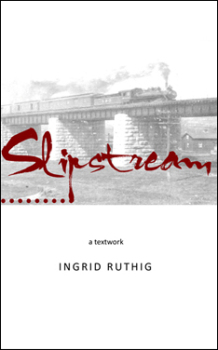
Microsoft Word - Artist's Book Cover in total.docMy good friend, Ingrid Ruthig taught me an important lesson about observation: the same thing can be different. The basis of her book Slipstream was a scene observed out of a window every hour on the hour for eighteen hours.

Try describing the same thing at different times of the day, different seasons. Notice what cell phone covers women or young people choose over older men. Don’t just notice a colleague’s scarf, notice how it is tied today versus yesterday. What colour is the asphalt when it rains versus a sunny day? What colour is snow? (it’s seldom white).

  1. Read people

Don’t just look at people in general, look for specifics: what makes them stand out or blend in. What actions and body language do they use to exude confidence or jealousy or nervousness? What can you deduce from how they dress or wear their hair or hats? If a couple looks unhappy, businesslike or best friends, can you identify what made you come to that conclusion? What is it about someone that makes you uneasy or willing to open your heart to them?

  1. Challenge your powers of description

How many ways can you describe something? What is it like? How many different similes can you come up with? How would your characters describe it? My husband and I try to find different names for the kinds of moons we see: wolf moon, rain moon, wishing moon… Do you always resort to sense of sight? Do you consider light and temperature, texture and mood?
piet-my-vrou

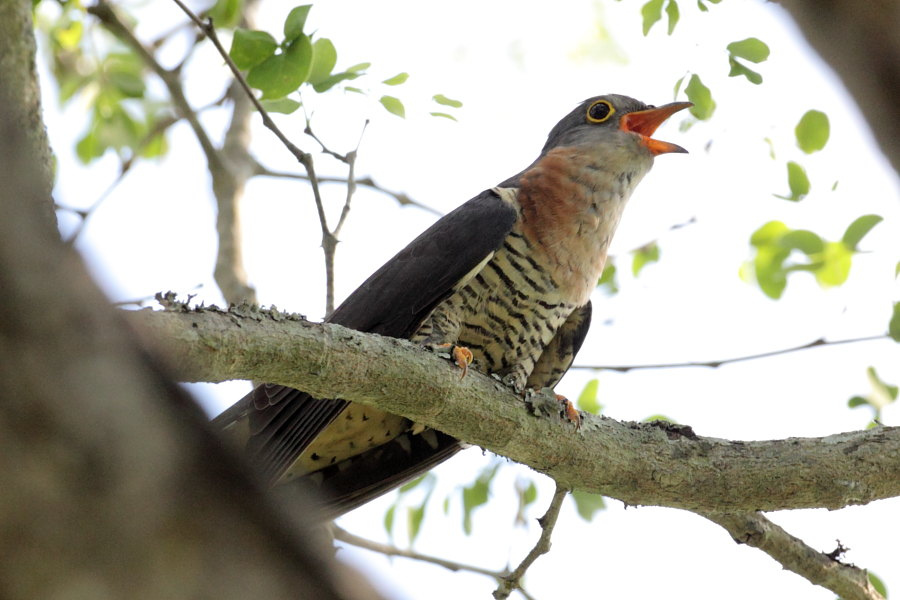
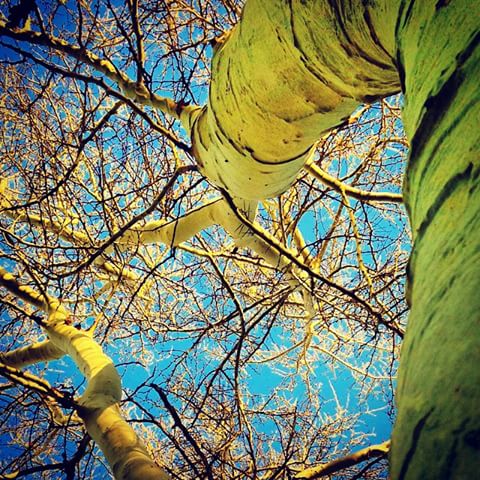
So what have I noticed today? I’ve noticed the three-note call of the piet-my-vrou bird is the first birdsong of the morning. That the pods of the weeping boer bean tree hang like fruit bats. That the blue-green iridescent loerie bird that flew overhead has red underwings, and the bark of the fever tree is yellow.fever-tree
That my sister’s dachshund dog is so portly that when he sleeps his legs stick out straight like roadkill. That the tortoise in the garden can devour half a watermelon in twenty minutes, and that my mother’s hair is the colour of history: iron, copper, silver and gold.

flower-15249_640And I’m waiting to see if, like the lilac Jacarandas, the red flamboyant trees will lose their blossoms in the storm that is now brewing on the horizon.

What did you notice lately?

Purple Prose

Purple Prose

Gwynn Scheltema

In a course I teach on effective description, I talk about “purple prose” and invariably I’m asked what that means. To me, purple prose is writing that is so excessive, elaborate or flowery that it calls attention to itself and breaks the flow of the story. It’s usually recognizable by the excessive use of sensory detail.

But hang on…isn’t the use of sensory detail a mark of good writing? Absolutely! Using all the senses and painting with words through simile and metaphor makes for rich, engaging narrative. The operative word in my comment “usually recognizable by the excessive use of sensual detail” is the word “excessive”.

So how do you know what is enough and what is excessive?

Let’s find out by looking at this paragraph of purple prose:profile-461076_640

The pretty young girl sat delicately on the lush green grass under the old gnarled oak tree. The starlings sang excitedly above, and the air was filled with the perfume of wildflowers. Overhead the fluffy white clouds drifted gently, and the sun shone brightly in the blue summer sky. She felt happy. She turned coyly to the boy beside her and said hesitantly in her high sing-song voice, “Would you like a bite of this sweet juicy apple?”

At first glance, it seems to follow the guidelines for “good” writing. We have colour and sound and smells and textures. We have emotion and interaction. But for all that, it sounds amateurish. It’s awkward to read.

Here are five tips to recognize and overcome purple prose:

1 + 1 = ½

The first thing to notice is the proliferation of adjectives. When it comes to adjectives, I always say that “one plus one equals a half”. By that I mean that if you use more than one adjective to describe something, you dilute the effectiveness of each adjective. This happens, because the reader must process both adjectives separately with the noun it describes. The mind must process “the girl is pretty” and then “the girl is young”. It’s too much, and slows the reader down. In this paragraph, there are seven instances of this. (Can you find them?)words-1034410_640

Instead use just one adjective and if possible choose a stronger noun to convey the other descriptor. “Pretty young girl” could become “pretty teenager”. “Lush green grass” doesn’t need the word “green”, because “lush” says it all. Likewise, you wouldn’t expect a summer sky to be anything but blue.

Kill “descriptor” adverbs.

Note I said “descriptor” adverbs (my own label, by the way). I don’t condemn all adverbs. Adverbs like daily and often have a role to play in showing, time and frequency etc. by answering the questions of when? and how? It’s the ones that answer the question: in what way? that cause the problem. In our sample paragraph, “sat delicately” is a case in point. It’s much stronger and easier for the reader to process, if you ditch the adverb altogether and strengthen the verb to “perched” or “poised”. The starlings might “chatter” or “chirp” or “chorus” rather than “sing excitedly”. You could use a phrase like “the girl curled her legs under her”.

Swap out cliché.

A cliché is a descriptive phrase that once was a great way to describe something but which has been so over-used that it no longer has any effect on the reader except to draw attention to itself and pull the reader out of the narrative. This sample uses the cliché “fluffy white clouds”.dragonflies-1431304_640

It would be simple to say, “Find another way to describe the clouds,” and that would be valid, but I think it goes deeper than that. I believe that you should swap out cliché with details that are not already supplied automatically by the reader. If you mention a summer day, most people will automatically imagine blue skies, hot sun and fluffy white clouds. Pump up your writing by supplying a detail they may not imagine and therefore will notice, say, “a pair of tangled dragon flies”. Not only does this give a unique detail to the scene, it can also do double duty in mirroring or echoing the story thread of these two young people alone together.

Show Don’t Tell

Yes, I know, you’ve heard it before, but it’s true. This entire paragraph is tell. The reader is being told what everything looks like and what the characters are doing and how they are feeling. We are observers only, not participants in the story. We can only guess at the character’s thoughts and motivations.

This piece would be stronger if we saw at least some of the scene through the eyes and thoughts of one of the characters. That way, we get a feel for how the character feels, and this is heightened by descriptive details that the character would notice in that emotional state. Make the characters real. Give them names and thoughts and gestures.

To recognize “tell” look for places where emotions are named: “She felt happy”. Ask yourself: What does happy look like in this situation? What would she be thinking at this moment? What body language might she use? What sensory details would she notice?

Alice watched two dragonflies flit in a tangled dance near Robbie’s red face—whether from the summer heat or embarrassment, she couldn’t tell.

So what?

No matter how powerful the description, it has to have a purpose. Don’t describe for the sake of it, just to paint a setting. Always have a second purpose. As I said in my post Been There, use brief, targeted description to create atmosphere, to mirror emotion, to illuminate character or advance plot.

So let’s have another crack at the sample paragraph:

apple-1228374_640Alice curled her legs under her and lowered herself to the lush grass as close to Robbie as she could manage without startling him and breathed in the sweet smell of crushed wildflowers. Robbie closed his eyes and settled back against the ancient oak, folding his farmer-tanned arms behind his head. She watched two dragonflies flit in a tangled dance near Robbie’s red face—whether from the summer heat or embarrassment, she couldn’t tell. She hoped it was the latter. What now? Should she say something? But what? Above the chattering starlings seemed to egg her on. She reached into the picnic basket, swallowed hard and said in a voice she barely recognized as her own, “Want a bite of my apple?”

 Better?

Have a go yourself. How else could this paragraph be written? Paste your version in the comments below.

NaNoWriMo 101

NaNoWriMo 101

Gwynn Scheltema

What is NaNoWriMo

nano-logoNational Novel Writing Month is an Internet-based challenge to write 50,000 words of a new novel in one month. It started in 1999 with only 21 participants. By 2012, there were over 340,000 who collectively wrote over 3.2 billion words.

To win, participants must write an average of just over 1,667 words per day. Organizers of the Nano event say that the aim is simply to get people to start writing, using the deadline as an incentive to get the story going and to put words to paper. There is no fee to participate and anyone who reaches the 50,000 word mark is declared a winner.

Writing in Community

timeChurning out over 1600 words will keep you busy–and alone–most days, but you can also connect with fellow participants and participate in daily challenges, pre-Nano prep sessions and post-Nano activities. You can connect through Twitter [@nanowrimo], on Facebook  or follow their blog.sudbury-nano

Many people run their own groups locally and regionally to support one another through the month. Tips, printable schedules, and advice is all over the Internet.

NaNoWriMo programs

Nano has spilled out into communities around the world. Writescape got in on the fun when we led weekly prompts and writing sessions in partnership with the Whitby Public Library a couple of years ago.

There are three formal programs listed on the Nano website:

  • The Young Writers Program promotes writing fluency, creative education, and the sheer joy of novel-writing in K-12 classrooms. We provide free classroom kits, writing workbooks, Common Core-aligned curricula, and virtual class management tools to more than 2,000 educators from Dubai to Boston.
  • The Come Write In program provides free resources to libraries, community centres, and local bookstores to build writing havens in your neighbourhood.
  • Camp NaNoWriMo is a virtual writing retreat, designed to provide the community, resources, and tools needed to complete any writing project, novel or not.
Does it work?

nano-cartoonIt sure does. Even if participants don’t complete the 50,000 words, they get words written, lots of words. And anything that helps you write is worth trying. Sometimes just the tension of knowing you have a deadline combined with being part of a larger global event can bring inspiration and focus to the creative process.

But don’t take our word for it. Consider this: there are bestsellers that were born through NaNoWriMo.

The NaNoWriMo website says that more than 250 NaNoWriMo novels have been traditionally published. They include Sara Gruen’s Water for Elephants, Erin Morgenstern’s The Night Circus, Hugh Howey’s Wool, Rainbow Rowell’s Fangirl, Jason Hough’s The Darwin Elevator, and Marissa Meyer’s Cinder. See a full list of published authors.

Maybe NaNoWriMo is “write” for you.

Let us know if you’ve participated in NaNoWriMo and what it did for your writing.

Sharpening your creative edge

Sharpening your creative edge

Gwynn Scheltema

This weekend, Ruth and I spent a few hours with a motivated and talented group of writers in St. Catharines. Some were beginners, some seasoned professionals, but all of them dived in and challenged themselves and took creative risks. It was thoroughly energizing.

boots on rail lineWriting is, for the most part, a solitary act. Sometimes lonely, sometimes blissfully peaceful. But I find that too much alone time as a writer is not always good. Yes, I might get more written, but it can also sometimes skew my writing perspective.

I can get rooted in bad writing habits, forgetting to use fundamental writing skills I have used before. My writing challenges can start to feel insurmountable. Or I can relax into my writing comfort zone and stop taking risks…dulling my creative edge.

Being with other writers this weekend, feeling that energy that emerges when writers get together, reminded me that I need to build that into my writing life. I also need to hone my creative edge by deliberately taking regular creative risks.

So how can you take regular creative risks and re-energize?

Give voice to non-POV characterseyes-141363_640

Write a scene from a non-POV character‘s perspective. This reminds you that each character has their own motivations. You don’t have to use the piece you write, but in the act of writing it, that character may give you insights about your regular POV character or about the events in the scene. Perhaps there are even connections to other characters you were missing.

Approach description differently

addict-84430_640Challenge yourself to use visual description sparingly, and increase the use of the other senses instead. Try also to limit scene description to just two or three details. (And make sure that the details are ones that the characters would naturally notice and not just things the author wants the reader to notice.)

 

Use prompts

Using prompts forces you to come at things from different entry points. They stimulate memories and experiences that can be adapted to fiction and can be a springboard to new ideas. Here are three links to get you started.

Freefall writestamp-895380_640

Freefall writing is one of the best and most satisfying ways I know to stay ahead of your internal editor and left analytical brain and give your right creative brain and your subconscious a chance to surface. By writing without stopping for a set time, and having no expectations of what will be written is extremely freeing, and time and time again I’ve seen wonderful writing emerge from the practice.

Get together with other writers
Dining at Turning Leaves

Even if you have a wonderful writing space at home, getting together with other writers to write is a different and energizing experience. I live next to a lake, but look forward to going on retreat whenever I can. It allows me to “leave the world behind” for a short while and concentrate on being creative. Being with a group of people who understand the writing world is invaluable and seeing others around me writing motivates me to write too. Try it. Join Ruth and me at our annual fall retreat Turning Leaves 2016 this November.


To edit or not to edit…

To edit or not to edit…

Gwynn Scheltema

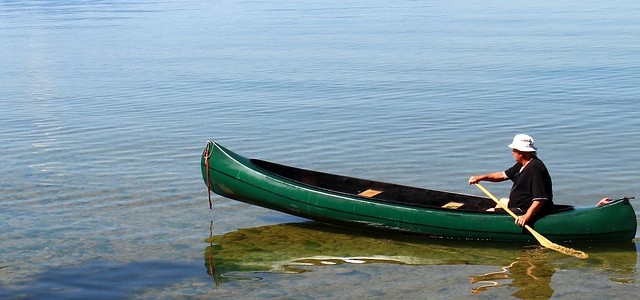
You write Chapter 1. It flows like paddling a canoe in a strong current, a few J strokes and you are heading forward fast. Yes!

Chapter 2 starts out that way too, still moving well, still splashes of enthusiasm and creativity, but the current flows a little slower now. You think back to Chapter 1. Did you start in the right place? Perhaps you should go back to the beginning and make sure?

So you retrace your steps back to the start and paddlecanoe-1082130_640 through Chapter 1 again. For the moment you are convinced that, yes, you started in the right spot. But you find a short cut on an upper stretch that improves the trip, so you make it. Chapter 1 feels really good now.

Back on the route of Chapter 2, you look for similar shortcuts, note the beautiful spots you don’t have time to explore, make notes about bad spots you’ll avoid if you come this way again.

In Chapter 3, your writing river opens into a lake. You’re not sure exactly which way to point the canoe, so you figure you’ll go back to Chapter 2 and explore those beautiful spots before you continue.

And while you are in Chapter 2, you figure you probably missed a couple of beautiful spots in Chapter 1, so you go back to Chapter 1 and….

Sound familiar?

The internal editor

It’s certainly the story of my writing life. But I know I’m not alone. The urge to rewrite before you’ve finished the story is powerful. Many discarded, unfinished manuscripts have polished first chapters that would keep readers reading…if there was more to read.

It’s all the fault of that dastardly writers’ internal editor. The one that tells us that our writing is “crap”; that we are disillusioned at best and arrogant at worst to think anyone would want to read what we write. The one that tells us we need to be perfect.

man-286477_640And the truth is, most first drafts are not publishable. As Hemingway so succinctly said, “All first drafts are shit.” First drafts will have strong parts and weaker bits, and bits that should be axed and areas where more needs to be written. That’s NORMAL. That’s what the editing process is for.
But if you heed your rational, analytical, internal editor, and constantly loop back out of the writing process and into editing, you will run out of creative energy. And you will push the unconscious creative writer in you further and further away.

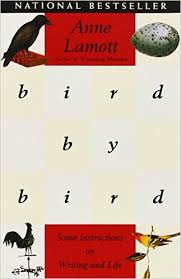
In her book on writing, Bird by Bird, Anne Lamott wrote:bird by bird

The only way I can get anything written at all is to write really, really shitty first drafts.The first draft is the child’s draft, where you let it all pour out and then let it romp all over the place, knowing that no one is going to see it and that you can shape it later. You just let this childlike part of you channel whatever voices and visions come through and onto the page… Just get it all down on paper because there may be something great in those six crazy pages that you would never have gotten to by more rational, grown-up means.

No editing on a first draft?

 So does that mean that you should never edit as you go. Of course not.

I get momentum for a new chapter by going into the previous chapter—not back to the beginning of the novel— to read it and often edit it. That’s productive. You get into the voice of your characters again, you renew your sense of place in the story. And the time invested is not huge. More importantly, you do it as a way to move forward, not as an excuse to not move forward.

Perhaps like me, part way through your manuscript, you feel that the wrong character is telling the story, or that the POV should be first person instead of third person. I think it makes sense at this point to go back to a previous chapter or two—again, not necessarily the beginning—and rewrite and decide. But make that decision and move on.

girl-1563986_640Time and circumstance play a role too. If all I have is the forty minutes on a noisy train, likely editing is a better use of my time.But maybe not. Maybe just thinking through a plot hole or a character’s reaction in an upcoming scene would be better for keeping the novel moving forward.

It’s definitely tempting to go back to edit when you can’t think of  what to write next. I do it all the time. But I’ve found some effective ways to overcome that urge:

  • Go for a walk and think my way through the plot or character problem and then write forward again.
  • Use targeted writing prompts
  • Freefall write
  • Write a brief summary of the scene I’m stuck on, and go on to the next scene.
  • Persuade myself to write just one sentence…then one more…then…

It all comes down to how much your editing loops are preventing you from writing new material. We all create and work differently. If a bit of editing gets the creative juices flowing, go right ahead. But if it’s a procrastination tactic, fight the urge. The main goal of your first draft is to get the whole story down.

How do you stop yourself from using editing as procrastination? Share your tactics in the comments below.


Expert advice

Expert advice

Heather M. O’Connor

When Richard Scrimger came to Turning Leaves a couple of years ago, he told us, “Writers are liars and thieves.”

He meant, of course, that the best stories are partly made up, and partly built on stolen bits of real life. Readers want to believe your lies. You can tell the most outrageous whoppers, from a theme park with cloned dinosaurs to a school for wizards. As long as the stolen bits ring true.

Steal what you know, research what you don’t

Take my novel Betting Game, for instance. It’s the story of an elite soccer player who gets mixed up with illegal gambling.

I could lie and steal with panache about soccer. I play. My kids play. I watch the sport on TV. But illegal gambling? That was a central part of my novel’s plot and characters, and I didn’t know a thing about it. Nada. Zip. How could I make my story believable?

Who ya gonna call?

I needed a subject matter expert. Someone in the biz. But not the gambling biz. A “reliable narrator” if you know what I mean. Someone in law enforcement. It took time to track down an expert, but what he told me was invaluable.

Looking for an expert of your own? Here are the steps to follow.

Go surfing

Begin your search online. I started by studying news stories. Who was quoted on the topic? Who went to court?

Your expert may speak at industry events and conferences. Check continuing education classes and LinkedIn, too.

network of peopleTap your network

Have you asked your friends and family if they know an expert? I was stunned to learn that one of my teammates was once a CSI investigator in New York City. (She now teaches forensic science and invited me to a crime scene class. Coolest writer field trip ever!)

Don’t forget your local librarians—they’re walking encyclopedias.

Do a little diggingman-1483479_1920

Once you locate subject matter experts, don’t waste their time. Pick your own brains before you pick theirs.

Prepare a list of open-ended questions that require more than a yes or no answer. Try to think up a couple of questions they may never have answered.

Email your questions and a short synopsis of your story a day or two before the interview. This gives the person time to mull over answers and think of interesting anecdotes.

Don’t be shy

Relax. Chatting with a subject matter expert is easier than it looks.

People like talking about their jobs. Though they find their work fascinating, their friends and family may not. You provide a rare treat—an enthusiastic audience.

office-336368_1920Take note!

I prefer to interview in person or by phone. People have more to say when they don’t need to write it all down. You also have a chance to ask follow-up questions when you’re talking live. Email interviews are very limiting. They’re best for confirming facts.

I usually record my interviews, as long as there’s no objection. Most smartphones have an app for that. I also take detailed notes.

Say thank you

Remember to thank your expert for taking the time to share their knowledge and expertise. Send a thank you note. If their help was significant, include them in the acknowledgements, and consider sending them a copy of your book.

In Conversation with…literary agent Hilary McMahon

In Conversation with…literary agent Hilary McMahon

Hilary McMahonToday, we chat with Hilary McMahon, Executive Vice President of Westwood Creative Artists (WCA), one of Canada’s oldest and most respected literary agencies. Hilary maintains an extensive and diverse list of adult and children’s writers. She also represents WCA authors on trips to American and British publishers and the Frankfurt and London Book Fairs. 

Why did you become a literary agent?

I earned a degree in journalism and English, but soon realized that I wanted to read other people’s stories far more than I wanted to write or teach. I’m an obsessive book reader, an extrovert interested in people and relationships, and a tough negotiator with a head for details and numbers. This job allows me to combine all those different skills.                                                                                                    

books-20167_640 (1)Being an agent is a tough job. So what is it that has kept you in the field for more than 20 years?

Nothing compares to the magic of being engrossed in a great book. I love being part of the process that begins with an idea or rough manuscript, and ends with a finished product that can be shared, enjoyed, discussed around the world. And working with writers can certainly be challenging at times, but it’s never dull…

If we were to spend some time in a typical day with Hilary McMahon, what would it look like?letters-286541_640

That’s one of the many wonderful things about this job, there is no typical day! It’s an illusion that I read all day. Today for example, I have reviewed a section of an author’s revised novel and then shared it with an interested publisher, worked on some blurbs for our Frankfurt catalogue, checked a film contract and sent it off to the author, given a non-fiction author feedback on her proposal, spent time crafting a tactful rejection letter, done the deal memo for a middle-grade series I’ve just sold, addressed a picture book writer’s concerns about the illustrations for her new book, and followed up on some projects out on submission. I had hoped to make a dent into my towering pile of submissions but I don’t know if I’ll get to it…

What do you like to see in a query from a writer? And is it different for a fiction versus a non-fiction query?

You’d think it’s obvious, but I need to see excellent writing! A skillful, original, compelling pitch.

For fiction, you need to hook me with a brief description of the work and draw me in with a short sample. It certainly doesn’t hurt if you include some details about places you’ve been published and any relevant awards or education.

For non-fiction, your expertise in the field is going to be important, to me and to publishers – I need to know that you have some authority about your subject. Most simply, I need to be compelled to move from the query to a writing sample.

hand-861275_640What is the one piece of advice you want writers to know once they land that elusive agent?

That just because you have an agent it doesn’t guarantee your work will sell! There’s still a lot of hard work ahead, but at least you aren’t doing it alone.

What are you reading now and how do you feel about it?

I’m reading a really intriguing submission, clever and sparely written and definitely original in story and in the telling.  But I’m still trying to decide if it’s something that I could sell…

If time, place and money are no object, who is the one person or character you’d like to have dinner with…and why?Jane Austen

I’d love to have dinner with Jane Austen, after she’d spent a bit of time in 2016 – I would love to hear her take on this modern world!

Want to get up close and personal with one of Canada’s top literary agents? Come to our fall retreat, Turning Leaves 2016.

Hilary is our special retreat guest, joining us for meals, evening chats and sharing insights and expertise in a Saturday morning workshop on catching and holding an agent’s attention. She’ll also review Turning Leaves 2016 participants’ query letters in advance and hold private one-on-one feedback sessions.


Been there: Using real-world settings in fiction

Been there: Using real-world settings in fiction

Gwynn Scheltema

I’m always fascinated by the worlds that writers create for fantasy and sci-fi novels. I think I’m fascinated by the sheer complexity of creating an entire culture from its laws and religion to its people, plants and landscape.

But basing our stories in the “real world” we all know (or think we know), can be just as complex.

Keeping facts straight.

krzywy-las-641507_640Using real settings—real towns or cities, real street names, real landmarks— can seem easy because you have everything created already. You don’t have to invent culture, landmarks or names. If you mention the CN Tower or Westminster Abbey, you need only give a few details, and readers can fill in the rest.

Provided you get it right.

You can be sure that if you get it “wrong”, someone’s going to tell you. Or your reader will be aware that you made a mistake once, and be on the alert in case you do it again, so now there is a subconscious element of distrust as they read. At the very least, it will kick them out of the narrative momentarily.building-72225_640

Your Impressions

Sure, you can control facts to a large degree with good research and careful editing, but what you can’t control is readers’ reactions to your perceptions of real places. If, like facts, readers think that you got the impression “wrong”, it will be noticed, and have the same effect as getting facts wrong. If, as a narrator, you describe a particular real neighbourhood as “dangerous”, or “upcoming” or “ugly”, that might be your interpretation, but your reader may not agree. Your perceptions of real places are valid, but so are your readers’impressions of the same place.

So what can you do?

Impressions vs. facts

As you write be aware which setting details are facts and which are opinions. Characters only should express all the impressions or opinions. Characters in this instance include the narrator in a first person story. In sections of exposition, stick to facts. This is a good rule of thumb for any details actually, not just for setting. Essentially, setting opinions expressed through exposition become “author intrusion” and open that door for “getting it wrong”.

Manipulating impressions

The moment you move impressions of real places to the realm of character, you have the opportunity to manipulate setting to support other elements like character development and theme.

By choosing to focus on the details the character notices in a setting and what they think and how they feel about it, says as much about the character as the setting. Characters usually notice the things that align with their emotional state and with their level of understanding. You can set or heighten mood and sneak in details that will be important to plot or speak to theme.

midway-game-983385_640

Think of a child and his mother entering a fairground. The child is likely feeling excited and looking forward to fun, so will notice details that are colourful, fun and energizing: whirling rides, flags and balloons, stalls full of prizes to be won. The mother might be jaded by years of attending fairgrounds, aware of potential danger and cost. She will notice questionable people, machinery that looks or souman-1283576_1280nds dangerous and the crush of crowds that make it hard for her to keep track of her child.

Another manipulation is to purposely describe factual details “wrong” to establish an unreliable character.

Fiction and reality fusion

Perhaps the best way to use real settings is to create a fictional piece within the real one. A fictional town in real Northern Ontario. A fictional bar in Paris. You still get the advantages of the “real world” settings, but not the disadvantages. Your fictional component should be similar enough for believability, but you have the freedom to create your own “impressions”’ of the place. You get to decide if the place is “dangerous”, or “upcoming” or “ugly”, and your readers will believe you.


The Power of Cameo Characters

The Power of Cameo Characters

Gwynn Scheltema

“Even the smallest person can change the course of the future.”

~ The Lord of the Rings, J.R.R. Tolkien

Incidental characters, walk-on characters, cameo characters—call them what you will—they have an important part to play in a novel. Do you remember a scene where a character appears just briefly and then we never see that character again? 

When a writer includes a walk-on character, is that a good thing or a bad thing?

The answer depends on what kind of novel you’re writing, where in the novel the character appears, and what the character does in the scene.

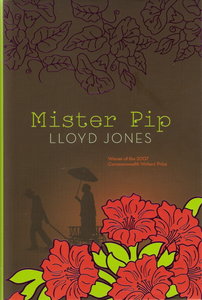
Mister Pip

Mister_Pip_(Lloyd_Jones_novel)One of my favourite “cameo characters” is a woman known only as “Daniel’s grandmother” who comes to share her wisdom with Mr. Watts’ class in Lloyd Jones’ book Mister Pip:


Daniel’s grandmother, stooped and old on her canes, peered back at our class with her weak eyes. “There is a place called Egypt,” she said. “I know nothing of that place. I wish I could tell you kids about Egypt. Forgive me for not knowing more. But if you care to listen, I will tell you everything I know about the colour blue.”

And so we heard about the colour blue. “Blue is the colour of the Pacific. It is the air we breathe. It is the gap in the air of all things, such as the palms and iron roofs. But for blue we would not see the fruit bats.

You can find blue squinting up in the cracks of the wharf at Kieta. … It is trying to get at the stinking fish guts, to take them home. If blue was an animal or plant or bird, it would be a seagull. It gets its sticky beak into everything.

But blue also has magical powers,” she said. “…Blue crashes onto the reef and what colour does it release? It releases white! …A final thing, children, and then I will let you go. Blue belongs to the sky and cannot be nicked which is why the missionaries stuck blue in the windows of the first churches they built here on the island.”

What is achieved with the character of Daniel’s grandmother?

Now on the surface, she seems just a quirky character who says some strange things about a common thing we think we know about already. Rebels have invaded the island and they are all living under very strained conditions. She has been invited to teach the children something, and yet she speaks “only” about blue.woman-1031000_640

She appears about a quarter of the way through the novel, just as things are taking a new and frightening turn. Perhaps her only purpose in the novel, therefore, is to provide some colour (pardon the pun), or perhaps some comic relief from an otherwise serious situation.

And that would be fine, because those are two good reasons to have a walk-on character.

 Is Daniel’s grandmother really just incidental?

Lloyd Jones’ character seems incidental—indeed, she could be removed altogether with no effect on the plot line—but she definitely adds to the novel.

This scene supports one of the themes of Mister Pip, which is the examination of the power of the imagination and words, and how they can achieve what is seemingly magic.art-Mr-Pip-620x349

She is also foreshadowing what Mr. Watts will do: SPOILER ALERT: to delay execution, he will weave a “magic” tale from what seems at first to be ordinary things . Daniel’s grandmother has told the children in a kind of metaphorical code or allegory what will happen. She has told them to “listen” and to believe in the magic of ordinary things.

In fact, when Mr. Watts thanks her, he says, “…while we may not know the whole world, we can, if we are clever enough, make it new….We just have to be as imaginative as Daniel’s grandmother.”

 Memorable and effective incidental characters…

  • add local colour
  • provide a break in mood or pace so readers can breathe
  • do something “complete” in their own scene so that removing them from the book seemingly doesn’t affect the main plot
  • can be used for wider purposes such as theme, foreshadowing and comparison to emphasize other characters
  • are often best left unnamed
  • should only show up when other main characters have been established

So cameo characters can enrich, elucidate, or refocus a novel, or they can simply entertain. Good ones usually have more than one purpose—and are always memorable.

Share a cameo or walk-on character that you remember in the comments below.


The value of keeping random ideas.

The value of keeping random ideas.


Gwynn Scheltema

Ever write a story that seemed to go nowhere? Ever thought of a brilliant opening line, but never wrote the story? Ever found a line that you thought might make good dialogue, or a line in a poem, or the premise of an entire novel and lost it?

lights-1254298_640Rummaging around in discarded ideas will invariably turn up something unexpected, surprising, fun or usable.
That’s not to say that every word you write is gold – saleable gold – and that none of it should go to waste. But ideas don’t always come at a time when you are ready for them, and if you have no way to revisit them, then even the good ideas will go to waste.

Increase your wheat-to-chaff ratio with an Ideas File and pop them in there. Actually, have several ideas files:

Ideas Files
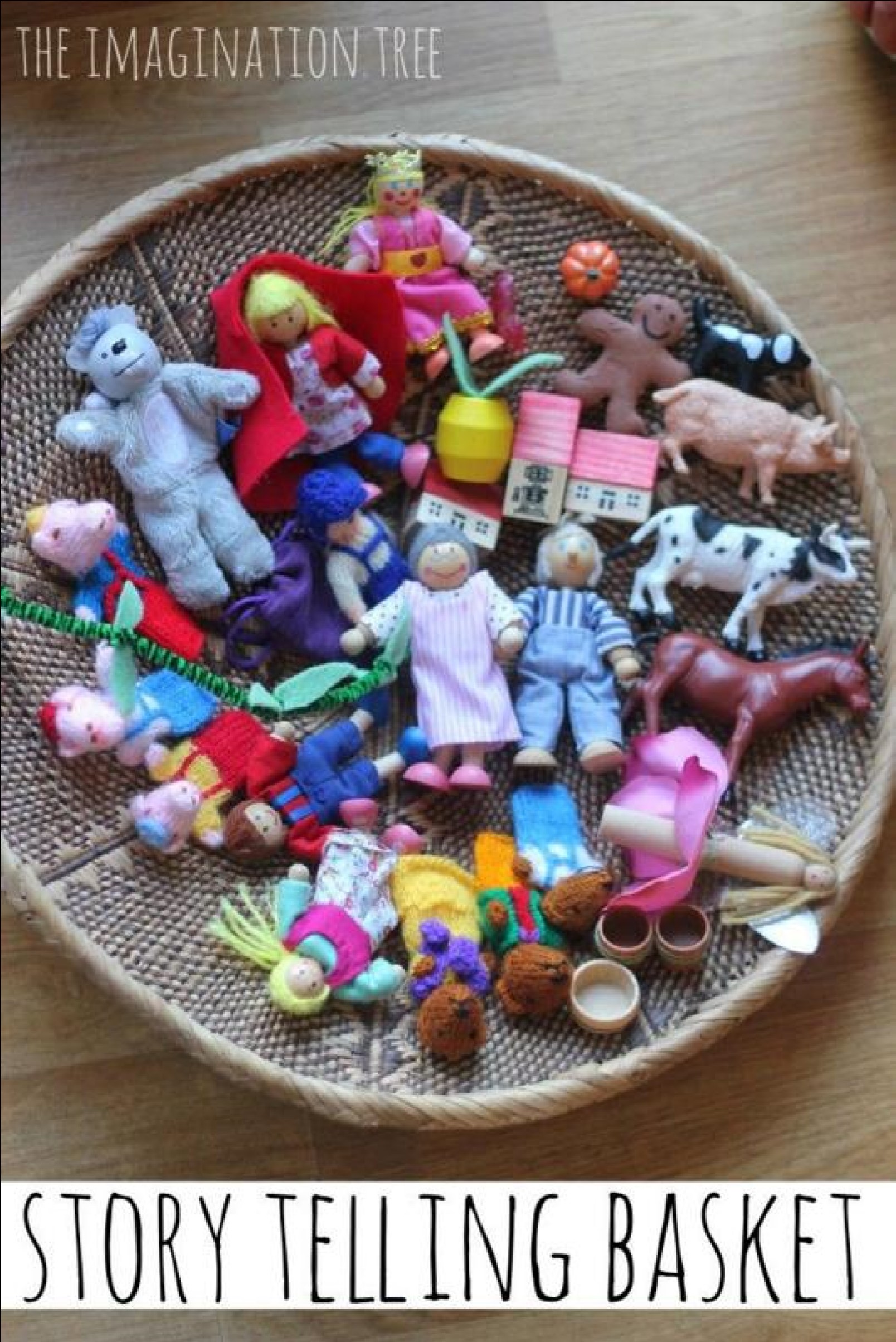
  • hard costory basketpy file folder: for ideas scribbled on napkins and other scrap bits.

  • computer file for the same. Make sure you develop a way to easily navigate through them. Naming each one “good idea” won’t be too helpful when you have 400 “good ideas.” Make use of “version” and “date” options if you have very similar drafts of an unfinished story:
    • horrornovel_v2_2016
    • babypoetryRev3March
    • trilogy_idea3


Personal coding systemcolored-pencils-168392_640

Create a personal coding system to mark up journals or notebooks for easy browsing retrieval. I use coloured highlighters: I underline or asterisk possible poetry ideas with yellow, novel snippets with blue, non-fiction article ideas with green, etc.

Other people’s ideas

Expand the concept to ideas beyond your own writing

  • In another hard copy folder keep cuttings from newspapers and magazines, old letters or theatre tickets or postcards or photos. Expand to new subfolders as ideas begin to consolidate.
  • In computer folders, keep ideas suggested by blog posts, or anything internet related, including email copy. Be sure to include URLs if you want to reference later.
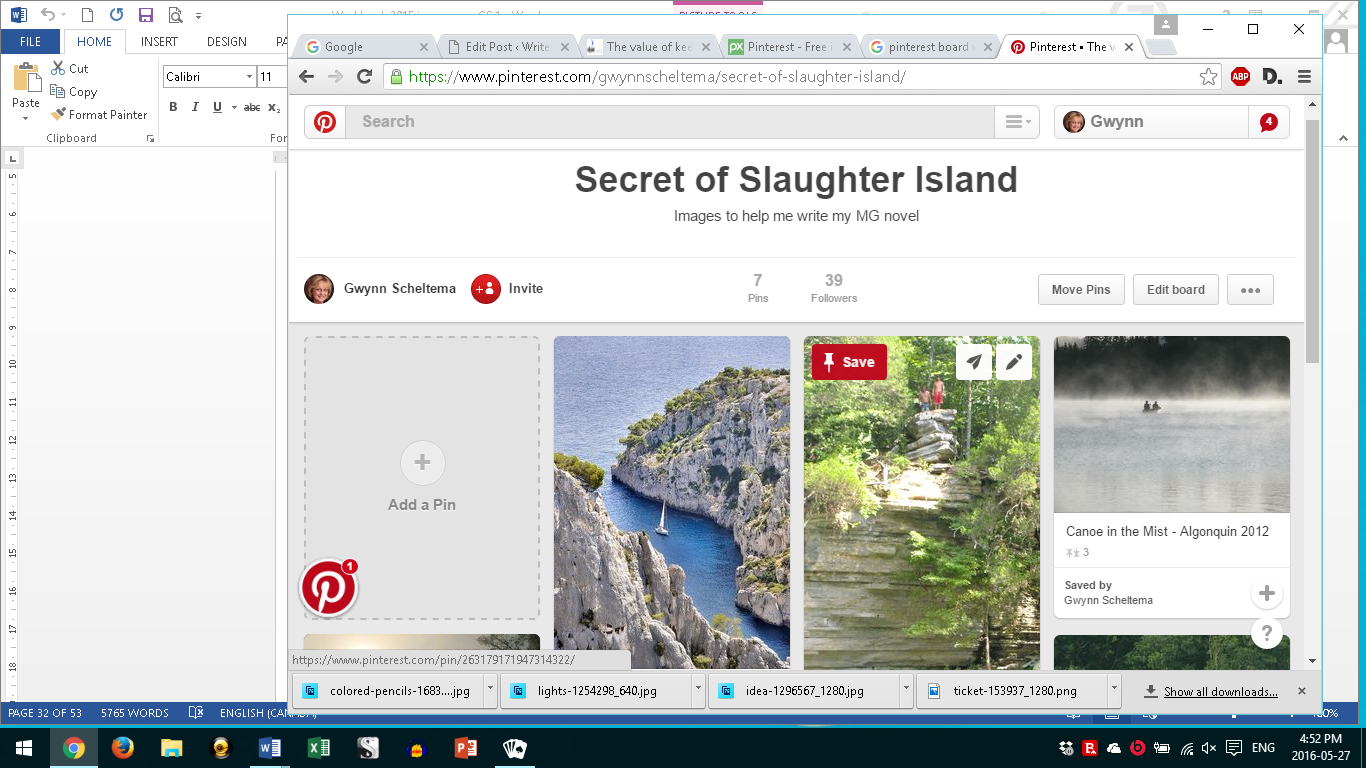
  • Create a Pinterest board. This is especially useful in the early stages of a novel. Pin pictures of faces, buildings, landscapes, objects, or anything that stirs up ideas or cements a visual for you. Here is one I started for my MG novel.

pintrest board

Of course, having all these ideas is pointless if you don’t do something with them.

Here is a creative exercise to try:

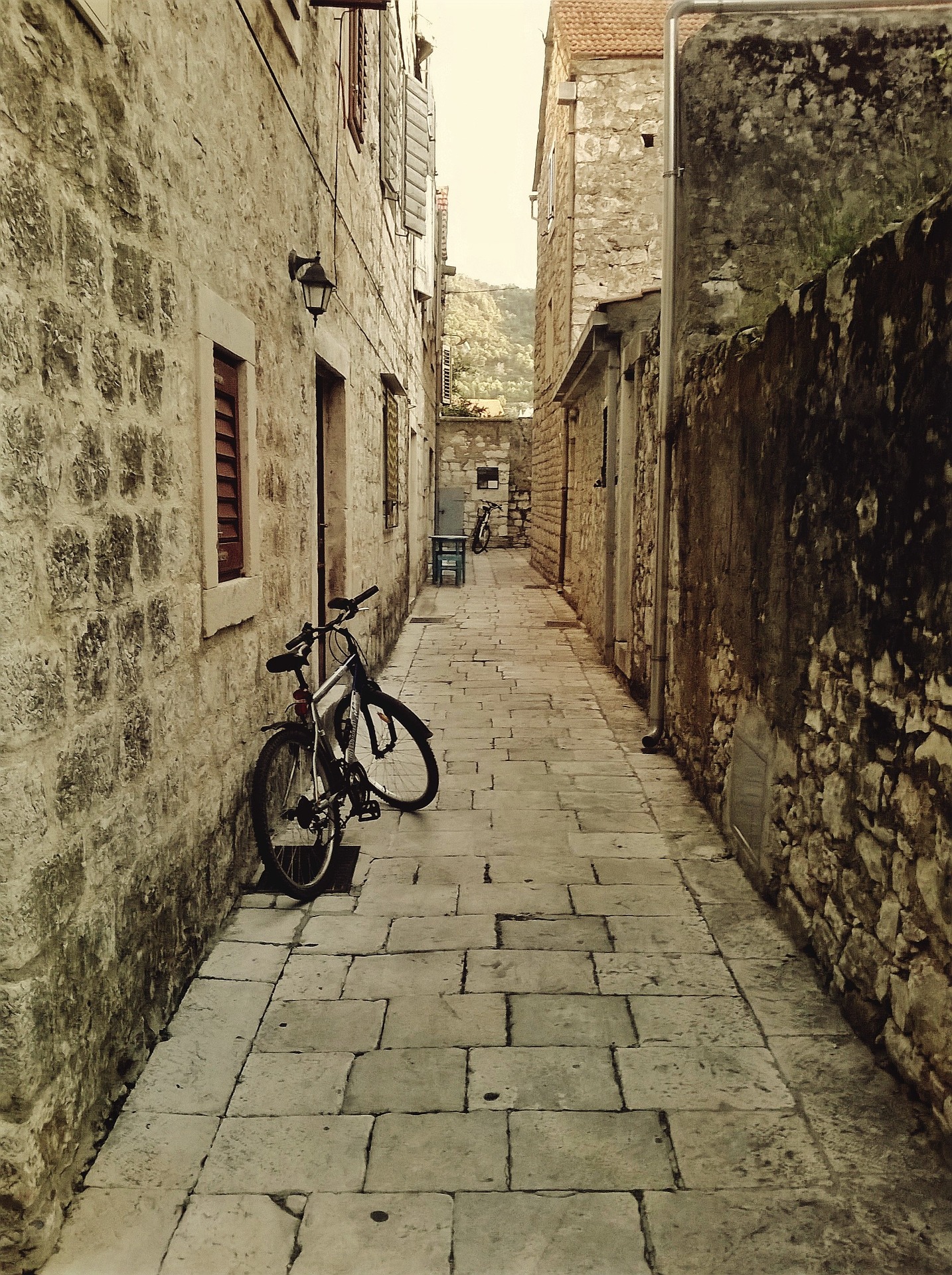
Take these twold bicycleo random pictures and write a scene that will somehow link them together.ticket-153937_1280


When pairing ideas, don’t worry if they seemingly have nothing in common when you begin– that is the point of the exercise. The struggle of creating the link is what gets your brain going.