Gwynn Scheltema
I’m often asked what the difference is between theme and premise. Here’s my take—with a comment or two from others:
What is theme?
A story needs to be unified around something, and that something is theme, a recurrent idea or motif. You can begin to identify your theme by coming up with ONE word to sum it up. That one word is usually a human quality: Friendship. Love. Trust. Fear. Redemption. Abandonment. Freedom. Motherhood. Truth. Ambition. Justice. Revenge. Confidence.Or a universal quality: Duality. War. Confinement.
 But the theme of a novel goes deeper. Theme in a novel is not just that one word, say LOVE, but the statement the author makes about the motif with the story.
FROZEN: sisterly love is greater than power.
Generally, theme is linked to the emotional growth of the protagonist, or the personal vendetta of the antagonist.
Sometimes you don’t know what your theme is up front. You might change it, or discover it in the course of storytelling. It evolves. And that doesn’t matter because it isn’t stated anywhere in the narrative. It’s a sense we come away with, a flavour, a key.

Theme can also be several statements/explorations around a human quality. For example, an author could explore different kinds of LOVE through different characters: brotherly love, love of self, absence of love, parental love, love of money over people, love of country etc.
What is Premise
Premise, on the other hand, is the idea behind the story, what the author is writing about, the basic idea and foundation for the plot.
John Truby suggests premise is the simplest combination of character and plot: Some event that starts the action, some sense of the main character and some sense of the outcome.
Author and screenwriter Alexandra Sokoloff talks about the premise being “the pitch” for the story. That works too. After all, a pitch is the one-liner distilled version of your book and introduces us to the main character, what obstacles he must overcome, and why.
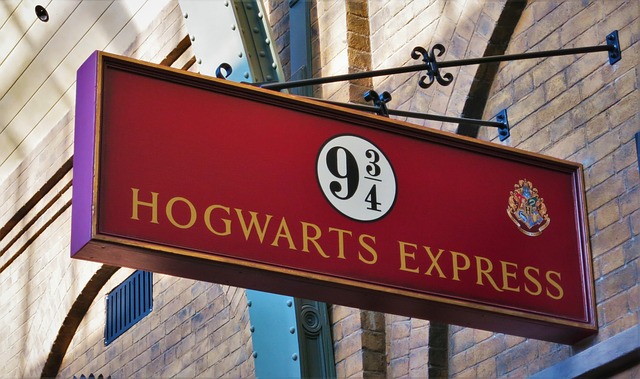
HARRY POTTER: When boy wizard Harry Potter and his friends at Hogwarts wizard school are threatened by the Dark Lord, Harry must find his magical power to overcome him and become a man and a great wizard.
Premise out of theme
Chris Vogler agrees that premise is the basic idea and foundation for the plot but also that it is “a more developed expression of the “theme” idea, beyond just one word. It’s a sentence that you pull out of that one word.”
First be specific. “LOVE” isn’t specific enough. What kind of love? Brotherly love? Blind love? Love of country? Loving yourself? What kind of trust? What kind of faith?
And then restate it as a kind of formula:
X behaviour leads to Y consequences
MACBETH: ruthless ambition leads inevitably to destruction
Why does it matter?
Premise is useful as you write because it holds the ultimate character transformation in the front of your mind, so you are conscious of your character’s actions and reactions being in step with where he is along the character arc. For instance Harry Potter could never have faced the dementors at the beginning of the series, not only because he didn’t have the wizardly skills, but because he had not yet found his confidence or his loyalty.
As you write, theme doesn’t matter, but when it comes to editing, it provides an umbrella measure to decide which scenes and characters can get cut. Does this scene support the theme better than this one?
One last word
Screenwriter Andrew Oye sums the whole thing up very nicely. He says premise and theme are cousins not twins. That the premise is the subject of the story and the theme is the meaning from the story.


 Start with an open mind and playful attitude. Mind mapping is a “brain dump.” Expect that many of the ideas you produce will not be useful. That’s not important. You can harvest the valuable nuggets later.
 Begin with one central keyword or concept in the centre of the page. Starting in the middle of the page gives the creative right brain a head start, as our non-creative left brain is used to starting in the upper left-hand corner.
 Keep your hand moving. If ideas slow down, take your hand back to the central concept and begin a new branch. Draw empty lines, and your brain will move to fill them automatically; or inject more energy with a different colour pen.

 The phrase DOCTORS OFFICE has me curious. I follow the branch back towards the centre, trying to work out what PINK and SUGAR have to do with it. Then it hits me… when I was a child, our doctor used to hand out tiny cylindrical candies that smelled like scented geraniums. I realize that I haven’t seen them in decades. What other sweeties from that era are no longer around? Hmmm….. Another article? A scene for my novel? A short story? Things are brewing now.
 The perfect spot to be creative – and mind map to your heart’s content – is at


 hope to see a crocus – frustrated with winter already – amazed at how those squirrels survive out there in the cold – awed by the beauty of everything – awed by the determination of a tiny flower pushing through all that snow – anticipation of spring coming in just a few weeks – resignation that there is still winter to live through – teased by winter – foreverness -winter teaching me a lesson in patience – promise….


 the creaking branches and knobbly branches remind me of my bony arthritic fingers – the squirrels are like busy moms dashing about making sure everyone has the things they need – layers of snow like blankets- ice is a blanket too – crocus and saffron spice – sun like a returning lover
 Trees wave knobbly fingers
 Bony tree limbs wave