

Ruth E. Walker
Have you ever picked up a book, started to read it and stopped? Maybe you put it down, never to pick it up again. Perhaps the subject matter didn’t fit your taste. Maybe the author’s style didn’t speak to you.
 Or just maybe you asked yourself, who edited this?
That’s a question that should not be on any reader’s mind. Editors are behind-the-scenes workers. They ask the author questions, offer guidance, note big issues of plot and character, and point out logic, syntax, grammar and spelling errors before that manuscript heads to the printer. They appreciate a quiet acknowledgement in the back.
When something’s missing
 A book that hasn’t been edited often shows some of the following: Spelling errors. Logic glitches. Flat characters. Vague references. Passive text. No forward progression. Lack of plot arc. Unnecessary repetition. Stilted dialogue. Lack of action. Lack of transitions…
Any combination—indeed, even if it’s just one of these errors repeated—will kick readers out of the story. If it’s just an error here or there, the kick out is temporary. But readers are not too forgiving and when those editing misses pile up, a reader will abandon the book.
 I’ve seen issues even with a traditionally published book, but most often, it’s the self-published books that show a need for editing. Those unsold books end up in boxes in a writer’s basement, or dumped on bargain sales tables. I wish more writers would factor in the cost of editing when they budget to self-publish. So why don’t they?
Five reasons to not hire an editor:
- I have family and dear friends who can help me edit my book.
- That’s great, except none of them are professional editors but “they all read a lot and they love me.” And that means they might notice some things that need work. Or not. Hopefully, they capture everything that needs editing and they agree on everything that needs work.
- My printing company provided editing services—they proofread it all.
- Be careful. Proofreading is not editing; it’s a focus on the final manuscript just before printing. It finds errors with spelling, grammar, syntax, word usage and consistency. Proofreading does not consider pacing, character development, thematic issues and figurative language, plot arcs, subplot(s), effective description, setting clarity, etc. Proofreading will not suggest that your book begins in the middle of chapter 4 and all that comes before is either unnecessary or better placed elsewhere. Proofreading will not ask you questions that help you discover that your main character has almost no motivation. Proofreading is necessary, but only one piece of the editing process.
- I love my book and I don’t want to change anything.
- You are one in a million and should have no trouble making it to all the best-seller lists.
- Having an editor scares me. How do they know what I’m trying to accomplish? What if they tell me my book is awful?
- No editor should scare a writer; if so, that editor is not for you. You’re not looking for a dear friend (see #1) to help you polish your manuscript. You need a professional with whom you feel comfortable enough to trust with your work. So shop around. Ask others about editors they’ve hired to work with. Are there testimonials on the website? Get quotes. Ask questions: Have you edited science fiction before? Have you worked on non-fiction? Do you offer consultation to discuss suggested edits? Do I have to pay in advance? Can I spread out my payments? Ask the questions that are important to you and see what the answers are.
- I can’t afford an editor
- Hire a good editor, and you hire a professional who is objective about your book. Someone who wants you to have good sales. Someone who is motivated to help your book be the best it can be. You’ve invested untold hours in crafting your story. You’re already paying to have it bound with an attractive cover, printed and delivered to your door. You will be spending money and a huge investment of time to promote the book. In an already crammed marketplace, do you want to have a reader pick up your book, scan the first couple of pages and then put it back down?
Even Margaret Atwood appreciates an editor
 I work as an editor and have done so for many years. While I’m no Margaret Atwood, I’ve been edited by others and appreciate all their work on my magazine articles, poetry and short stories. But I am immensely grateful to my editor, George Down, for his work on my novel Living Underground. George asked questions. George caught errors. And most importantly, George didn’t shape my novel into George’s book. He helped me see what needed attention and let me craft my baby into its best possible shape.
I blogged about the role of the editor a couple of years ago. Editors Frances Peck and Sherry Hinman offered some great advice in that blog. And I wrote about George and The Book Band in another blog. I continue to follow these editors’ advice and celebrate what they taught me about editing.



 If you had asked me earlier in my writing career, I’d be all for pansters. Write by the seat of my pants, that was my motto. I’ve done some fine work that way, writing I’m quite proud of. And it is my way of getting to the page, of discovering the story, the layers of personalities in emotions, actions and reactions. I’m excited to follow their journey. If I had it all mapped out, it would deflate some of the energy that feeds me in the writing.
 After a retreat weekend with author
  It starts with the midpoint of a novel. As the author of 10 successful novels, Andrew knows a thing or two about plotting a novel. He’s clear that the midpoint comes pretty much in the middle of the novel and that getting it right is crucial to the rest of the work. In fact, if the midpoint isn’t smack dab in the middle of the book, well, you’ve likely either not correctly identified your midpoint or put it in the wrong place.
 What good is writing a wonderful poem, a brilliant short story, an entire novel manuscript, only to leave them forgotten in the digital drawer? A big part of being a writer is submitting your work. Agreed, not everything you write should see the light of day, but you know in your heart which pieces should be sent out into the world. It’s hard, yes. It takes courage to expose yourself to possible rejection, but you can only enjoy success if you take this important step. So, this fall, dig out those finished pieces, brush them off, pretty them up and decide where they can find a home. Then—the important bit—actually send them out!
 As we near the end of the year, reflect on what you achieved in your writing life. Was it more or less than you hoped for? If, like me, you didn’t get as much done as you planned, don’t beat yourself up about it. Take action instead.
 I am terrible for starting projects and not finishing them. Are you? Is there even one project you could finish up and clean off your list before the end of the year? What about your writing space and daily habits? Are they “cleaned up” enough for you to feel creative, to have the time you need? Should you be throwing some habits out and replacing them with new?
 Now is the time to plan a winter schedule for your writing. What project/s do you want to tackle? Are there courses you need to sign up for in 2019? Conferences or retreats you want to attend next year that you must register for or save for now. A writing residency? A grant application? A submission schedule?
 Want to find an opposite, a rhyming word, a word for a phrase? Head to
  Is your research article “Too Long Didn’t Read” or TLDR? Add
  Instead of hitting the backspace key multiple times to erase a word., hit crtl + backspace to erase the whole word at once. It works the same for deleting a whole word with crtl + delete.

 Writing Down the Bones
 Passion for Narrative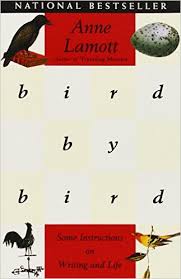


 The Emotional Craft of Fiction

 Fruitflesh


 Looking for another way to describe hair colour? Words to use instead of “amazing”. Pinterest has pins for that. Also pins for commonly misused words, when to use what kind of hyphen, and avoiding clichés—including cliché characters.
 If you like to be social, you can follow other pinners, join group boards or comment on pins. There are even hilarious “Pinterest Fail” pins.
 There is no “best way” to begin. Here are 10 ways to consider.
 Example: Mr. Jones, of the Manor Farm, had locked the hen-houses for the night, but was too drunk to remember to shut the pop-holes. (Animal Farm; George Orwell)
 Example: Last night I dreamt I went to Manderley again. It seemed to me I stood by the iron gate leading to the drive, and for a while I could not enter, for the way was barred to me. There was a padlock and a chain upon the gate. I called in my dream to the lodge-keeper, and had no answer, and peering closer through the rusted spokes of the gate I saw that the lodge was uninhabited. (Rebecca, Daphne du Maurier)
 A truism is a statement that is so obviously true that it is almost not worth saying, but using one as a start to a story usually implies that the story to follow is about to prove it untrue, or at least comment on it in some way, and so readers are drawn in to see what the “other take” is.
 What is your story about?
 Character’s name
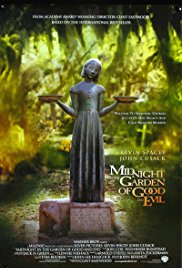 When the story happens
 Genre
Genre A representative line from the text
 Go against expectation
 A Play on words: double meanings, puns
 Single words
  The promise of a story
 1. Raise the stakes

 10. Make writing craft work for you