Ruth E. Walker
When we were looking at the focus for The Top Drawer for December of 2016, we thought it would be good to highlight positive, uplifting topics. For too long, we thought, the world’s been listening to a lot of negative words and ideas. Let’s keep it optimistic and encouraging. Set the tone!
So we celebrated the delightful and inspired writing spaces of Noelle Bickle and Heather Tucker. Creative writing teacher Dorothea Helms (a.k.a. The Writing Fairy) made us smile about the tough realities of humour writing. And we ended the year with some easy-to-accomplish writerly resolutions for 2017.
 Cue fireworks and happy music…wha-?

For 2017, we wanted to continue that positive vibe. But world events are impossible to ignore. Negative politics and incomprehensible behaviours are being analyzed in every form of media, social or otherwise. Protests are erupting worldwide like pre-holiday pop-up shops.
Frankly, with a son, daughter-in-law and grandchildren in Texas, it’s difficult for me to look away. Not even the keening call of my nearly finished novel is pulling me from the news. Indeed, on Sunday night, the horrific attack in Ste. Foy, Québec, brought me to my knees.

As a writer, what can I do to work through this deep foreboding in my heart? Sure, I marched in the Women’s March (in Texas, no less.) In actions and in words posted on my personal social media, I share my support for thoughtful discourse, equality and empathy. I believe in social justice.
Writing strategies for challenging times
 I am also a creative writing teacher, and dedicated to sharing ideas on technique, craft and inspiration. Indeed, Gwynn Scheltema and I started Writescape to encourage and support writers, and that isn’t going to change.
So what can we writers do when the world sucks away our energy? As part of our “2016 positive words” theme, Gwynn brought constructive ideas about what we writers can do when writing is just not possible. Her Art of Noticing is one way to work through emotional fatigue and rekindle your muse.
I find physical exercise is also helpful. I’ll be at the gym tonight, pedalling off steam and worry, and trying not to look at the latest headlines scrolling past on the overhead TVs. I hope that when I come back home, my manuscript will forgive my lapse of the past couple of days and allow me back into my characters’ lives.
All writers (because writers are also people) have found themselves without the will to think and to express themselves creatively. So I turn to four wonderful writers for their words of wisdom.
Advice for writers from beloved best-selling authors:

Poet, civil rights activist and beautiful thinker, Maya Angelou said: What I try to do is write. I may write for two weeks ‘the cat sat on the mat, that is that, not a rat.’ And it might be just the most boring and awful stuff. But I try. When I’m writing, I write. And then it’s as if the muse is convinced that I’m serious and says, ‘Okay. Okay. I’ll come.’

Novelist Jack London offers up some tough love for writers who are distracted or down in the dumps: You can’t wait for inspiration. You have to go after it with a club.

Poet, novelist and so-very-wise Margaret Atwood advises us to face our reality and use it to make true our writing: The darkness is really out there. It’s not something that’s in my head, just. It’s in my work because it’s in the world.
 And I’ll end with some words from the great science fiction writer who first spoke to my adolescent heart from the shelves of my public school library, Ray Bradbury: You must stay drunk on writing so reality cannot destroy you.
There you go writers:
- seduce your muse by not giving up
- chase down inspiration like a Palaeolithic hunter
- remember you’re a writer and awful is necessary even in fiction, and
- whatever you do, don’t let reality take you down.
How are you coping? Comments please:
Let us know if world events are simply background noise and not distracting you. Or If you’re struggling with staying focused these days, share some tips or ideas on how to write through it all.
Check out more Top Drawer posts in our blog archive


 “…to the ROM a royalty-free, irrevocable, perpetual, transferrable, non-exclusive license to use, reproduce, modify, publish, create derivative works from, and display his/her wildlife photo (the “Work”), in whole or in part, on a worldwide basis, and to incorporate it into other works, in any form, media or technology now known or later developed, including for promotional or marketing purposes; in connection with the Contest.“


 The distinction between past back story and present, or future action and plot, is a cornerstone for understanding pacing. The plot and action is what moves the story forward and keeps the pace up (and the reader engaged). The moment you indulge in a flashback (back story; the past), your pacing stands still. Sure we learn things about the characters, but the storyline is momentarily halted. Stay in the past too long, and the reader will lose interest.
 We all know that stories have a beginning, middle and end, but it’s more than that. Like Janus, we need to be aware of the beginning and end simultaneously wherever we are in the writing of the story. Everything is causal. Nothing happens without a reason.
 The two-faced Janus reminds us, too, that our characters also have dual aspects. They are at once good and bad. Readers relate to villains who have redeemable qualities. Readers like heroes with flaws. It makes them rounded and believable, not cardboard.


 I include a record of submissions that I send out —whether they come to fruition or not— because even the act of submitting is a positive and motivating step for any writer. I list writing events I attend. I list open mic opportunities, readings, interviews or panels I participate in. I paste copy from encouraging emails about my work. I record the completion or start of writing projects, or even segments within writing projects— “finished Chapter 3!”. I record workshops attended or given, and retreats and writer’s breakfasts. I fill in the dots on the calendar for every B.I.C session I complete.
 Seeing where you were a year ago and where you are today can be revealing. Priorities and goals can change over the course of the year. Projects can fizzle or get sidelined by new projects (and life) unimagined at the start of the year, and that is not necessarily a bad thing. Just because something on your goal list doesn’t get completed doesn’t mean you’ve failed. Reflect on what you’ve learned. Adjust and move on. Go with the flow.
 Achieving writing goals is all very well, but if they are achieved at the expense of your health or your family relationships and other important aspects of life, then perhaps you need to reconsider your life balance. As Ruth said in her blog,




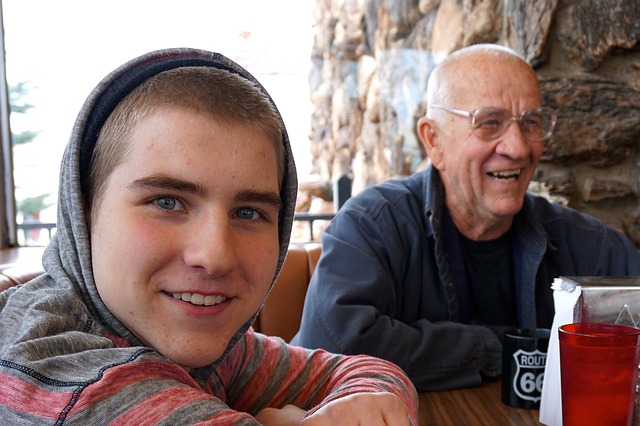 Whenever you are out and about, pay attention. In cafés, in waiting rooms, at the supermarket or on a lonely country road. Notice with all the senses. I listen in on conversations at Tim Hortons, or between the cashier and the shopper, moms at baseball games and GO train passengers. I notice the words and phrases they use, the topics they discuss and the reactions of those around them.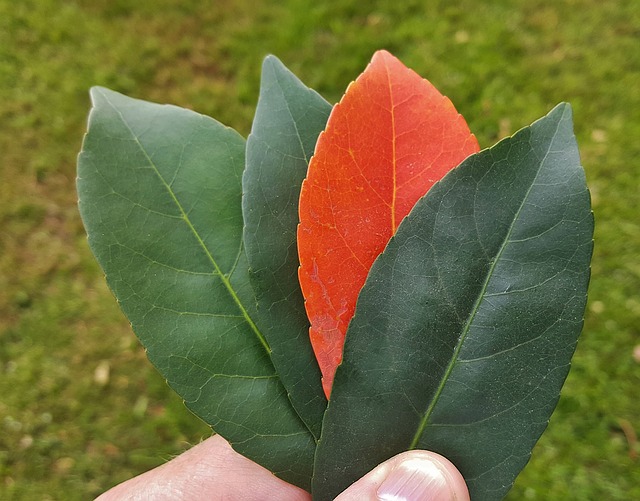
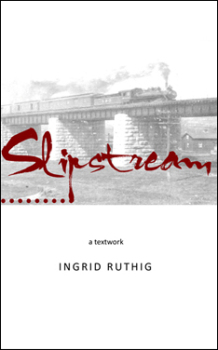 My good friend, Ingrid Ruthig taught me an important lesson about observation: the same thing can be different. The basis of her book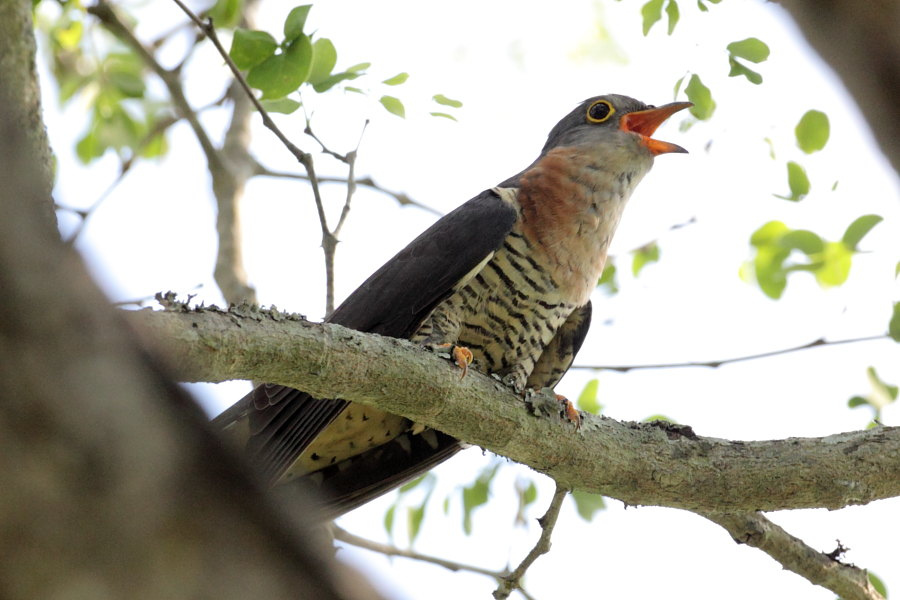
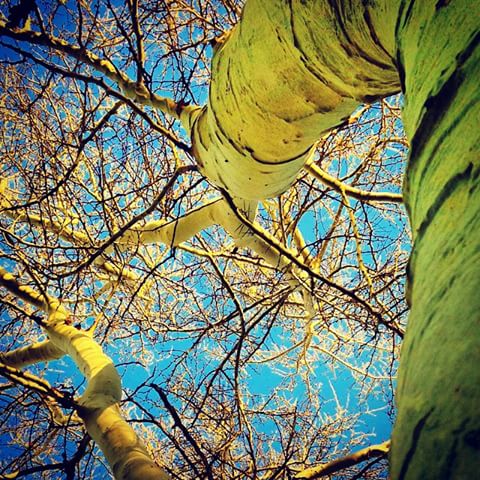
 And I’m waiting to see if, like the lilac Jacarandas, the red flamboyant trees will lose their blossoms in the storm that is now brewing on the horizon.


 Alice curled her legs under her and lowered herself to the lush grass as close to Robbie as she could manage without startling him and breathed in the sweet smell of crushed wildflowers. Robbie closed his eyes and settled back against the ancient oak, folding his farmer-tanned arms behind his head. She watched two dragonflies flit in a tangled dance near Robbie’s red face—whether from the summer heat or embarrassment, she couldn’t tell. She hoped it was the latter. What now? Should she say something? But what? Above the chattering starlings seemed to egg her on. She reached into the picnic basket, swallowed hard and said in a voice she barely recognized as her own, “Want a bite of my apple?”
 Writing is, for the most part, a solitary act. Sometimes lonely, sometimes blissfully peaceful. But I find that too much alone time as a writer is not always good. Yes, I might get more written, but it can also sometimes skew my writing perspective.
 Challenge yourself to use visual description sparingly, and increase the use of the other senses instead. Try also to limit scene description to just two or three details. (And make sure that the details are ones that the characters would naturally notice and not just things the author wants the reader to notice.)

 through Chapter 1 again. For the moment you are convinced that, yes, you started in the right spot. But you find a short cut on an upper stretch that improves the trip, so you make it. Chapter 1 feels really good now.
 And the truth is, most first drafts are not publishable. As Hemingway so succinctly said, “All first drafts are shit.” First drafts will have strong parts and weaker bits, and bits that should be axed and areas where more needs to be written. That’s NORMAL. That’s what the editing process is for.