

Gwynn Scheltema
Now that the blooms are spent, I’ve been pruning my lilacs. I miss their heady scent and pendulous flowers, but each year when they are in blossom, I think of Canadian poet Irene Livingston’s poem “I Cannot Tell a Lilac.”. Ruth and I chose that poem as the first place winner in a contest for a poetry book collection called Open Window 111 (Hidden Brook Press 2002)—sadly now out of print.
I Cannot Tell a Lilac
I remember being intrigued by the playful title and hoped that the poem would not be overloaded with cliché references to the lilac blooms and scent we all know so well. But like the Stephen Leacock Poetry Prize winner that she is, Irene Livingston delivered surprise and delight!
The poem was fun, light-hearted. Livingstone played with semantics and form; she invented words. The poem danced to a happy bouncy rhythm; it had a quiet humour. The rhyme was subtle and skilled. None of it was forced. Everything from the images to the word choice was deliberate, but had the feeling of a careless, happy-go-lucky throwing together of thoughts and feelings. And at the end of it, I could smell the lilacs, see the ponderous blooms hanging low and feel the promise and warmth of spring. It remains one of my favourite poems.
Here are the first few lines of Livingston’s poem:
I’m cycling along so nicely, in brightfully
spritzing four o’clock sun-stream, when I suddenly
spy, with my little eye, a bushlet of fabulous lilacs
“Oh lilacs!” I cry to the halcyon Sunday street.
“Methinks I will toodle on up to the door,
give a light tap-tap and inquire as to
whether I might be permitted to snap off
some sprigs of vosnifferous, luminous blooms……
Is it Nonsense?
Words like “brightfully” and “vosnifferous” take me back to childhood nonsense poems that were fun to read but seemingly made no sense. Like: “”Hey diddle, diddle / The cat and the fiddle / The cow jumped over the moon…” and Lewis Carroll’s “The Jabberwocky”:
 Twas brillig, and the slithy toves
Did gyre and gimble in the wabe:
All mimsy were the borogoves,
And the mome raths outgrabe
But “I Cannot Tell a Lilac” isn’t nonsense. It’s the story of a young child riding a bike through the neighbourhood and being so overcome by the lilacs that he wants to pick them… with funny results.
So if it’s not a “nonsense poem”, what is it? Nonsense rhymes and “I Cannot Tell a Lilac” are both forms of light verse, a genre that includes a myriad of “fun” verse forms from epigram and clerihew to boute-rimes and macaronics.
Encyclopædia Britannica, defines light verse as “poetry on trivial or playful themes that is written primarily to amuse and entertain and that often involves the use of nonsense and wordplay. [It’s] frequently distinguished by considerable technical competence, wit, sophistication, and elegance.”
Light Verse Grows Up
Light verse has been around since Greek and Roman times. The Greek Anthology contains many epigrams. The Roman poets Catullus and Horace used innuendo, wordplay and satire.
In Medieval times light verse took on a narrative form and was often bawdy and irreverent but with a moral undertone. The limerick also made its debut around this time as did fable stories like Pierre de Saint-Cloud’s 40,000-line Le Roman de Renart [Reynard the Fox] written in 1174.
In the 18th century, mock-epics joined the genre, like Alexander Pope’s “The Rape of the Lock”, and Lord Byron’s verse novel Don Juan. Light verse was still filled with innuendo and moral judgement, but took on a sardonic and casual tone.
 In 1846 Edward Lear’s Book of Nonsense popularized the limerick form:
There was an Old Man with a beard,
Who said, “It is just as I feared!
Two Owls and a Hen,
Four Larks and a Wren,
Have all built their nests in my beard!”
I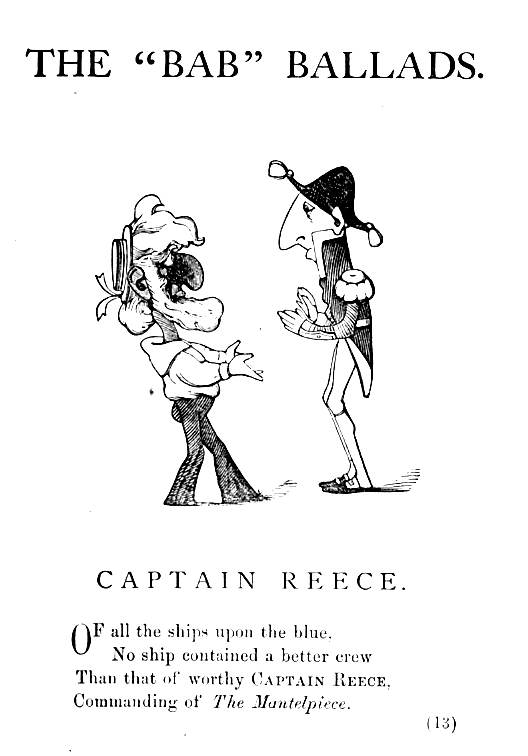 n the late 1800s Lewis Carroll introduced nonsense poems, like “The Jabberwocky” I mentioned earlier. W.S. Gilbert’s Bab Ballads introduced absurdity like in this excerpt from “Captain Reece.”
Of all the ships upon the blue,
No ship contained a better crew
Than that of worthy CAPTAIN REECE,
Commanding of THE MANTELPIECE.
A feather bed had every man,
Warm slippers and hot-water can,
Brown Windsor from the captain’s store,
A valet, too, to every four…..
I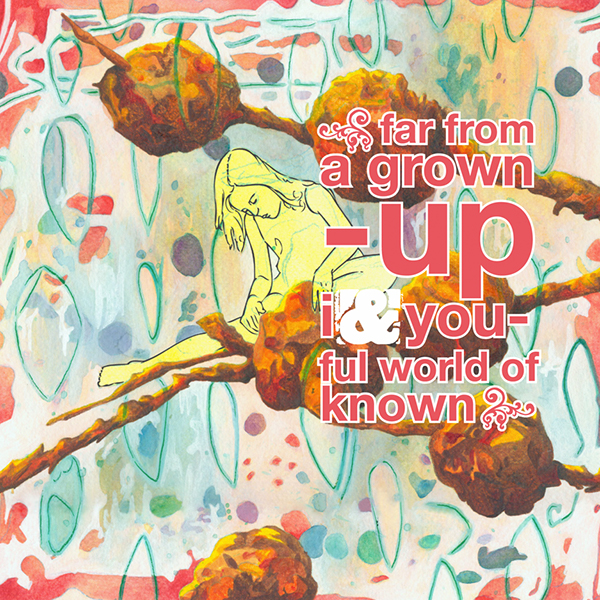 n the 1900s, poetic forms introduced by Dadaists, Futurists, and Surrealists, and the distinctive techniques of the Beat poets and e.e. cummings confused the boundaries between light verse and serious poetry. Flippant and irreverent tones were actually seriously intended. Poetry that began in an amusing way ended sometimes in bitterness or terror. What had been playfulness with grammar and syntax became forms of their own such as this excerpt from e.e.cumming’s poem “[2 little whos]”
(far from a grown
-up i&you-
ful world of known)
who and who
(2 little ams
and over them this
aflame with dreams
incredible is)
Today, I believe the line between serious humorous poetry and light verse is firmly blurred. Wit and satire, absurdity and irreverence abound in both forms. But for me, in light verse, I still look for the elements I found originally in “I Cannot Tell a Lilac”:
- a quiet understated humour
- playing with semantics and form
- inventing words
- a happy bouncy rhythm
- subtle, skilled rhyme
- evoking a feeling of entertainment and delight.
DID YOU KNOW
Irene Livinston won her Stephen Leacock Poetry Prize in 2001 at the Orillia International Poetry Festival. But did you know that the first winner of the Stephen Leacock Memorial Medal for Humour also honoured poetry (with a satirical twist) —Paul Hiebert’s novel Sarah Binks (1947), a fake biography of “The Sweet Songstress of Saskatchewan”. The Canadian Encyclopedia describes the book as “a comic creation which derives from Canadian literature while simultaneously making a contribution to it.”


 But our family has also been touched these past weeks with the news of terminal cancer. Many of us in this situation feel the helplessness of not knowing what to do or what to say.
 His article explained that storytelling encourages imaginative responses even from dementia patients who have forgotten the names of their loved ones; that suspenseful wondertales can help patients with severe depression “regain their desire to discover what happens next — in the story, and in their own lives.”
 When I was a young woman, it seemed to me that biographies and to a lesser degree, autobiographies, were the only source of “life stories.” And to make it into book form, the subject life had to be a famous one: great achievement, great adversity, great discovery and such. Today, I have noticed that memoir stories abound. Stories still of great achievement, great adversity and great discovery, but stories from “ordinary” people. The kind of people I might know. The kind of lives I can recognize.
 The
The  Isak Dinesen said, “To be a person is to have a story to tell.” So throw off any thoughts of “my story isn’t worth telling.” It is. In writing or orally, tell your story as only you can tell it.
 Most readers, even though they may not realize it, read to mirror their own lives. Have they felt that way before? What would they do in a similar situation? How is this situation different from their lives? A story about events of that civil war would be different from an average reader’s life, but would it connect with readers on a human, emotional level? The key to making my story work was to focus not the events the reader couldn’t relate to, but on the emotions the reader could relate to. The emotional mirror.
 “In almost every instance the result is the same,” he says, “The ‘riveting’ piece bores, while the ‘boring’ piece holds interest.”
 As I wrote, I closed my eyes and imagined the scene in my mind. What could I see above, below, to the sides? What people and things were in my periphery? What could I hear, smell, touch, what was the quality of the light, temperature of the air? What emotion was I feeling at each point and what did that emotion look like in gestures, actions and reactions?
  To heighten the feeling of disorientation, of not fitting into a new world, of being out of control, I edited to make the sentence structure disjointed in places, short and fragmented in others and even syntactically out of step at times.


 Don’t fight the writer within. Your best, most authentic stories come from that place deep in you and will resonate with readers when you allow the distilled essence of your life, your experience, your passions and your attitudes come through.



 During her childhood, she was a romanticized Katherine, dressed by her misty-eyed, fussy mother in dresses that looked like ruffled pillowcases. By high school, she’d shed the frills and emerged as a bouncy, round-faced Kathy, with gleaming freshly washed hair and enviable teeth, eager to please and no more interesting than a health-food ad. At university she was Kath, blunt and no-bullshit in her Take-Back-the-Night jeans and checked shirt and her bricklayer-style striped denim peaked hat. When she ran away to England, she sliced herself down to Kat. It was economical, street-feline, and pointed as a nail.
 Playing with names is a useful and powerful tool to add to your writing toolkit. Names have meanings, ethnic histories, associations with myth and stories, famous people, gods and family ties. Choosing the right name is the key.
 Devyani Borade
 The facilitator was
  And the day delivered—in spades. There were many “ah ha” moments. Here’s one about paradox:

 A unicorn is a symbol of purity and also, paradoxically, of lust. In the play, “


