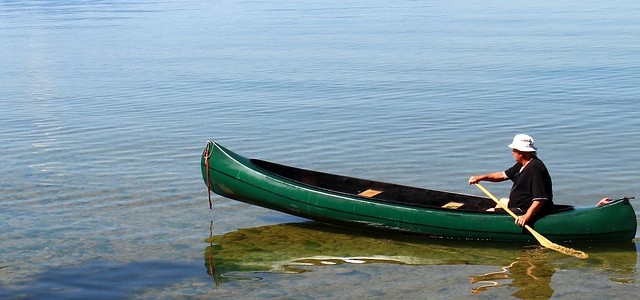
Frogging It

Frogging It

Erin Thomas

I’ve often taken satisfaction from the idea that writing, in some ways, is like knitting. Not the following-patterns part, although sometimes in the depths of my writerly frustration, I imagine that would be nice. And it’s not the tangible result, either; a writer goes through many, many iterations before having something tangible to show for her efforts.

No, it’s more the idea of building something big—a scarf, a sweater, a blanket—out of a series of small steps. It’s holding the “whole” in your mind, when all you can see is a pile of yarn, when all you can do in the moment is make one more tiny stitch towards that whole.

Word by word, or bird by bird if you’re an Anne Lamott fan. Stitch by stitch.

I work away at my shawl; one stitch is almost nothing. It’s a word, a period. An entire row of stitches, maybe that’s something. There’s a sense of completion there. A paragraph, or maybe even a scene. But it takes so many, many rows to make a shawl.

Writers work in “the end” and “the now”

Building a novel, or a draft of a novel, feels a bit like that. You have to split your mind; part of it imagines the finished product, holds the shape of it before you. This, it says. This is the reason you’re working. This is what you’re making.  But that finish line is a long way away, so another part of your mind focuses only on the task at hand, the small piece you’re doing just now. The stitch, the row, the bit of lace. The next twist of the cable.

Maybe you go so far as to admire how it connects to what came before, how the project is growing. What you cannot do is focus on how much there is still to do. That way lies discouragement. In knitting, as in writing, it pays to have something of a zen mindset. Your work is the work of the moment.

Sometimes, though, there’s a mistake. Sometimes there’s a mistake so big, so early in the project, that you can’t work back and fix it. For a while, maybe, you pretend it’s not there. You pretend no one else will see it. It’s okay. It was near the edge, near the beginning, before the pattern really took shape; maybe you can pretend it happened on purpose.

But it nags at you. After all, you started this because you had a vision. And this object in your hands, it doesn’t match that vision.

You work ahead. Maybe you can fix it. Maybe you can repeat it, somehow, or work in a call-back. You’ve made so many stitches since that point. Good stitches. Stitches that look the way they’re supposed to. You keep going, building on those good stitches. But if the initial flaw is big enough, it will affect the whole. The pattern is broken; the count is off. You could push ahead, you could even finish it, but will you be happy with the finished project?

The fix is usually necessary

Sometimes, the answer is no. Sometimes, the only answer is to start over. So you pull on the yarn and all those lovely stitches unravel, and you rewind the yarn, and your project dissolves back to the mistake or even the starting point, and you begin again.

Knitters have a term for this. It’s called “frogging it,” apparently because “rip it, rip it” sounds like the noise frogs make.I’ve used other f-words from time to time.

I’ve frogged novels, too. When something is wrong that’s fundamental to the story, when it’s built into every scene and chapter and fibre of the novel, sometimes it’s best to start over.

Starting over hurts. You’ve written all those lovely words. Your critique partners have helped you hone them. Some of those chapters sing. Starting over feels like a waste.

What remains is priceless

It’s not a waste. When you frog your knitting, you don’t lose everything. You keep the yarn, the substance out of which the project is made. And you keep the knowledge you gained—the new stitch patterns you learned, the deeper understanding of how the garment comes together. This time, you can do it better. You’re aware of the pitfalls. You can work more easily. Maybe you can even add something that will improve it.

Frogging it isn’t always the answer. Sometimes there will be a way to fix what’s wrong without pulling apart the entire manuscript. But sometimes, sometimes, it’s necessary. And when it is, the best thing you can do is grit your teeth and rip that yarn with courage and commitment, knowing that you’re going to tackle this project again, or even build something better out of the same stuff.

And you begin again. Stitch by stitch.

Erin Thomas writes books for children and young adults (and knits compulsively) from her home in Whitby, Ontario. For more information, visit www.erinthomas.ca.

Plotting a Search for Structure

Plotting a Search for Structure

Ruth E. Walker

At my critique group last night, we did a bit of dissection on the plot of a member’s novel in progress. Sounds scary, doesn’t it?

Here’s a bit of background. One of our members has a great story for middle grade readers. It has lots of elements that the age group enjoys:

  • a relatable POV character with a problem to solve
  • some simmering tension with a member of the opposite sex
  • a science fiction backdrop that is fun and fantastical
  • a school full of goofy rules, and
  • a dastardly villain bent on stopping our POV character dead in his tracks

All the right ingredients. But the novel wasn’t quite working the way the writer hoped it would. So he continued to work on the story and recently sent us a revised synopsis.

Our role, as with all submissions, was to look at the synopsis, mark up the copy with questions and notes, and bring it to the session for discussion. Questions and detailed notes are important but the discussion in our critique group is widely considered the true gold of membership.

Our critique group collectively has some wide-ranging skill sets and expertise. This we all bring to the table. But a couple of us (not me!) are exceptional in the plot department. One, in particular, often brings visual aids, related reading and notes from research and workshops.

Last night, I suspect Christopher Vogler’s ears were burning. And the meeting room’s white board was a colourful palette of ideas and plot points.

How it worked for one writer:

Our two-hour session focused on reviewing our colleague’s current plot structure as outlined in his synopsis and getting to the heart of his story.

It was brilliant. Dividing the basic plot into three main acts and then placing the existing story into that structure allowed the writer to consider changes that simplified areas of the story. Some parts were more complex than they needed to be. At least one character needed to be shipped to the Island of Unwanted Characters.  And some goals needed to be adjusted.

The writer had some significant ah-ha! moments. He left the meeting with a renewed sense of where he wanted his story to go. What started out like a last-ditch revision became the groundwork for a new vision and plenty of possiblities.

And, as a side benefit, I found it all immensely helpful in looking at my own work in progress.

The basics of the Three-Act Structure:

Act I sets the stage, introduces the POV character with a problem(s) to overcome and the inciting incident.

Act II is the meat of the matter and has its own moment of crisis in the mid-point. As our colleague explained, “It’s like in the Wizard of Oz where they reach the Wizard, and Dorothy thinks he’ll send her home. But no. First they have to complete this impossible task: kill the Wicked Witch of the West.

So using Dorothy and Wizard, Act II is divided into two sections: Act II a (following the yellow brick road to see the Wizard) and Act II b (kill the witch before she kills Dorothy, Toto and her three companions)

And then, of course, Act III. This final act has the crushing disappointment of learning the wizard is not all-powerful after all, quickly followed by a joyful realization that everyone had what they needed all along, the journey home and most important, the POV character’s completed arc of understanding or change. (There’s no place like home…)

Can this approach work for you?

So, looking at your plot, are there areas in your story that you think could use a bit of tightening up? Could a three-act structure overview give you clues about needed changes? Or does it confirm that you have all the necessary ducks in a row? Good for you if that’s the case!

A word of caution. My critique group example is just a simplified version of one approach to looking at plot. Screenwriter and script consultant, Christopher Vogler, has a popular book The Writer’s Journey: Mythic Structure for Writers (which, strangely enough, had a cameo in our session yesterday.) Vogler’s 407-page book is only one of the many great resources for writers on structure and storytelling.

Have you struggled with structure? What did you do to help you get past the challenge of plotting? If you have suggestions, let us know what resources and approaches you recommend for other writers.

Submissions: Why We Chose It

Submissions: Why We Chose It

Ruth E. Walker.

I subscribe to the Kenyon Review‘s newsletter, a literary journal out of Kenyon College in Ohio. I enjoy reading “Why We Chose It.” This feature explores some of the reasons why Kenyon Review selected a particular piece to publish in their journal.

Here’s an excerpt of Kirsten Reach’s post about “He Comes to Feed the Horses”, a short story by Mary Terrier:

Our interns were the first to cull this from our submission pile; we had no connection to Mary Terrier before. Within a few paragraphs, I think you’ll find yourself listening closely to the voice she’s found in this tough, nameless narrator. “By the time I was desperate enough to call hospice, you were already pretty far gone,” she says, addressing her late husband. Henry can hardly manage to get a straw into his mouth, and nurses have taken up residence in their house. She needs help, but she hates the help. The bathroom is too small to fit even the two of them, and each body that enters their home seems out-of-place.

Sounds like a good story to me. But it isn’t a new story, is it? So why did Kirsten and the interns pick this one?

Like every magazine that publishes short stories, we get a few dozen stories about unhappy marriages or spouses handling end-of-life care in every submission period...As an editor, you’re looking for an author with style, and a caretaker who makes you care deeply about this story, in the vein of Alice Munro’s “A Bear Came Over the Mountain,” or Helen Garner’s The Spare Room.

Style. Caretaker. How do those two connect? And why do they matter?

Style:

No one writes like you. When you are writing, your words land on the page in the style that belongs to your voice. For a lot of writing, such a corporate writing, you refine your style to fit with expectations. Your own voice is usually restricted in those forms of writing.

Fiction, however, allows you much more freedom to explore how your style works. You can refine your style by editing out weaknesses or even developing them into a strength. For example, relying on too much description slows the pace and you lose your reader. But at a crucial point in your story, perhaps an extended, detailed description is just what you need to bring focus on something vital. Dust off that urge to overwrite and use it to the story’s advantage.

Caretaker:

What does Kirsten Reach mean when she calls a writer a caretaker?

From 1999 to 2008, Gwynn and I were fiction editors for the literary journal LICHEN Arts & Letters Preview. Along with Mark Medley, we had some vigorous discussions championing stories to be included in upcoming issues. Limited journal space combined with hundreds of submissions made our work a challenge. We never referred to a writer as a “caretaker” for their story. But we could tell when a story was finely crafted.

I remember one story in particular. In Volume 8-2, Brian Reynolds’ “First Goose” is told in reverse, slipping back from a dreadful tragedy, hour by hour and layer by layer, peeling away the emotions of a adolescent First Nation boy on the cusp of adulthood.

The caretaker, Reynolds, could have written the story in ordinary linear fashion. Instead, he chose to give us the devastation before forcing us on the backward journey to see how the man rose out of the boy. It was cruel and wonderful because it was completely contrary to expectations. The inescapable ending haunted the reader through every hour revealed.

Do all editors look for a “caretaker”? I don’t know. What I do know is that at our 2016 fall retreat, literary agent Hilary McMahon of Westwood Creative Artists shared what she looks for in submissions. “Really great skill with language, that goes without saying.” And then she added something. “And an original voice telling a really unique story.” Hilary was talking about style and about the craft.

What’s Your Style?

Are you a caretaker for your writing? Before you press SEND on that submission, step back and take a close look at your work.

  • is your voice loud and clear in the style?
  • are you using your style in the best possible way?
  • have you taken care to ensure your story is being told in an original manner?
  • is there another way to lay it out so that readers (and editors) are surprised or intrigued?

Some writers benefit from a writing coach or editor to help take their work to the next level. For other writers, growth comes from paying attention to feedback in a critique group or workshop setting. In all cases, it helps to read other people’s work, especially those stories chosen for a prestigious literary journal.

You can read Kirsten Reach’s full post here. And I encourage you to follow the link and read the excerpt. Mary Terrier has, indeed, been a caretaker with style.

Write The Elusive End

Write The Elusive End

Ruth E. Walker

Oh, the love affair of writing the novel. The first blush of an idea. The rising heat as you pound out page after page of an unfolding story. You don’t want it to stop.

You constantly think about your novel, about your characters, your plot, your wonderful, endless possibilities… Until you find yourself without an ending.

Yeah, End-less: Your sense of dread when you need to finish your novel but there is no ending in sight.

Or End-less: Your sense of disappointment with an ENDing that is LESS than satisfying.

Poet and playwright Y.B. Yeats referred to the ending of a poem like a “click”:

The correction of prose, because it has no fixed laws, is endless, a poem comes right with a click like a closing box. (1935 letter to Lady Dorothy Wellesley)

While I might argue with him that prose indeed has many fixed laws for its “correction”, I’ve always liked Yeats’s idea of a “click like a closing box.” In my opinion, not just poetry needs to possess that “click” at the end.

No matter the issue, if you come to the end of your novel with a whimper instead of a bang, or at the least, the lovely satisfying “click”…your readers will be unhappy. And nobody wants unhappy readers.But if you’ve written a great beginning, do you need to give the same focus to the end? Prolific crime novelist Mickey Spillane said:

Your first chapter sells your book. Your last chapter sells your next book.

Click

Spillane’s not talking about sequels. A wise writer remembers that a disappointing or weak ending will undo all the joy your reader got at the beginning.

So what inspired this post? I’m working on the ending of my novel. I have three written (or at least, sketched out.) One tragic. One that leaves room for a sequel. And one that ends more positively. I’m undecided but I feel that I’m getting closer to the right ending. To help me work through the possibilities, I did some exploring on what a good ending needs. I’m sharing some highlights here:

A good ending needs:

To show change
  • Growth/change in your POV character is a common expectation for readers. But you could have a POV character who is “static” and remains unchanged right to the end. In that case, your reader must somehow be changed, have a new/deeper understanding of the impact of that character’s lack of change.
To be inevitable
  • This is not the same as predictable; no reader wants an ending that has been hinted at in every chapter since page one. And no reader wants deus ex machina endings with the ‘gods’ suddenly appearing and fixing everything.

To read something brilliantly written with an inevitable yet often unexpected ending, check out any of Alice Munro’s stories. I can re-read one of her stories and still get that yummy satisfaction from an inevitable, but often surprising, end. Munro’s “Dance of the Happy Shades”, about an uncomfortable children’s piano recital, has a masterful and quietly profound ending.

Not to be afraid to be unhappy
  • Who doesn’t want a happy ending? But if Romeo and Juliet ran off and lived to a ripe old age, how memorable would that be? Theirs was an “inevitable”, if tragic, ending. We may want a happy ending, but our lives (and some good stories) don’t always comply. And really, they are often better stories if the ending is not all rainbows and sugar plums.

In sum, a good ending needs to be satisfying for the reader…and for the writer. Whether it is a “click” at the end, or a sunset being ridden into with the future uncertain, a good ending needs to make sense. But how do you know if you’ve written the right ending?

In a later post in The Top Drawer, we’ll explore techniques and tips for knowing when you’ve achieved the best possible “The End.” Hopefully, by then, I’ll have found mine.

Did you know:

From endings come new beginnings. Writers in Ontario (and beyond) learned at the Ontario Writers’ Conference that it would be the last such gathering. Gwynn, Heather and I were so sad to hear that. We’d been at every OWC since its launch in 2006. But then the OWC announced an exciting new start. It wasn’t ending after all, just changing format and exploring how to offer writers its signature networking and education opportunities in new and exciting ways.

While it retools, OWC is still holding its monthly Story Starters contest, using images to spark the imaginations of writers. There are prizes to be won and bragging rights to add to your bio, so check out Rich Helms’ quirky and fun image and enter.


Purple Prose

Purple Prose

Gwynn Scheltema

In a course I teach on effective description, I talk about “purple prose” and invariably I’m asked what that means. To me, purple prose is writing that is so excessive, elaborate or flowery that it calls attention to itself and breaks the flow of the story. It’s usually recognizable by the excessive use of sensory detail.

But hang on…isn’t the use of sensory detail a mark of good writing? Absolutely! Using all the senses and painting with words through simile and metaphor makes for rich, engaging narrative. The operative word in my comment “usually recognizable by the excessive use of sensual detail” is the word “excessive”.

So how do you know what is enough and what is excessive?

Let’s find out by looking at this paragraph of purple prose:profile-461076_640

The pretty young girl sat delicately on the lush green grass under the old gnarled oak tree. The starlings sang excitedly above, and the air was filled with the perfume of wildflowers. Overhead the fluffy white clouds drifted gently, and the sun shone brightly in the blue summer sky. She felt happy. She turned coyly to the boy beside her and said hesitantly in her high sing-song voice, “Would you like a bite of this sweet juicy apple?”

At first glance, it seems to follow the guidelines for “good” writing. We have colour and sound and smells and textures. We have emotion and interaction. But for all that, it sounds amateurish. It’s awkward to read.

Here are five tips to recognize and overcome purple prose:

1 + 1 = ½

The first thing to notice is the proliferation of adjectives. When it comes to adjectives, I always say that “one plus one equals a half”. By that I mean that if you use more than one adjective to describe something, you dilute the effectiveness of each adjective. This happens, because the reader must process both adjectives separately with the noun it describes. The mind must process “the girl is pretty” and then “the girl is young”. It’s too much, and slows the reader down. In this paragraph, there are seven instances of this. (Can you find them?)words-1034410_640

Instead use just one adjective and if possible choose a stronger noun to convey the other descriptor. “Pretty young girl” could become “pretty teenager”. “Lush green grass” doesn’t need the word “green”, because “lush” says it all. Likewise, you wouldn’t expect a summer sky to be anything but blue.

Kill “descriptor” adverbs.

Note I said “descriptor” adverbs (my own label, by the way). I don’t condemn all adverbs. Adverbs like daily and often have a role to play in showing, time and frequency etc. by answering the questions of when? and how? It’s the ones that answer the question: in what way? that cause the problem. In our sample paragraph, “sat delicately” is a case in point. It’s much stronger and easier for the reader to process, if you ditch the adverb altogether and strengthen the verb to “perched” or “poised”. The starlings might “chatter” or “chirp” or “chorus” rather than “sing excitedly”. You could use a phrase like “the girl curled her legs under her”.

Swap out cliché.

A cliché is a descriptive phrase that once was a great way to describe something but which has been so over-used that it no longer has any effect on the reader except to draw attention to itself and pull the reader out of the narrative. This sample uses the cliché “fluffy white clouds”.dragonflies-1431304_640

It would be simple to say, “Find another way to describe the clouds,” and that would be valid, but I think it goes deeper than that. I believe that you should swap out cliché with details that are not already supplied automatically by the reader. If you mention a summer day, most people will automatically imagine blue skies, hot sun and fluffy white clouds. Pump up your writing by supplying a detail they may not imagine and therefore will notice, say, “a pair of tangled dragon flies”. Not only does this give a unique detail to the scene, it can also do double duty in mirroring or echoing the story thread of these two young people alone together.

Show Don’t Tell

Yes, I know, you’ve heard it before, but it’s true. This entire paragraph is tell. The reader is being told what everything looks like and what the characters are doing and how they are feeling. We are observers only, not participants in the story. We can only guess at the character’s thoughts and motivations.

This piece would be stronger if we saw at least some of the scene through the eyes and thoughts of one of the characters. That way, we get a feel for how the character feels, and this is heightened by descriptive details that the character would notice in that emotional state. Make the characters real. Give them names and thoughts and gestures.

To recognize “tell” look for places where emotions are named: “She felt happy”. Ask yourself: What does happy look like in this situation? What would she be thinking at this moment? What body language might she use? What sensory details would she notice?

Alice watched two dragonflies flit in a tangled dance near Robbie’s red face—whether from the summer heat or embarrassment, she couldn’t tell.

So what?

No matter how powerful the description, it has to have a purpose. Don’t describe for the sake of it, just to paint a setting. Always have a second purpose. As I said in my post Been There, use brief, targeted description to create atmosphere, to mirror emotion, to illuminate character or advance plot.

So let’s have another crack at the sample paragraph:

apple-1228374_640Alice curled her legs under her and lowered herself to the lush grass as close to Robbie as she could manage without startling him and breathed in the sweet smell of crushed wildflowers. Robbie closed his eyes and settled back against the ancient oak, folding his farmer-tanned arms behind his head. She watched two dragonflies flit in a tangled dance near Robbie’s red face—whether from the summer heat or embarrassment, she couldn’t tell. She hoped it was the latter. What now? Should she say something? But what? Above the chattering starlings seemed to egg her on. She reached into the picnic basket, swallowed hard and said in a voice she barely recognized as her own, “Want a bite of my apple?”

 Better?

Have a go yourself. How else could this paragraph be written? Paste your version in the comments below.

Benefits of Bravery: Going Public Fear(less)ly

Benefits of Bravery: Going Public Fear(less)ly

In the middle of August, I took a big risk and made a somewhat rash and public pledge on this blog: Finish my novel by September 30 or…

…well, I didn’t say what the “or” might be. Only that you, dear reader, would hold me accountable. And yes, you certainly did.

Just a reminder: I compared my sluggish progress on my novel in progress to how I dropped out of aquafit some years ago (the old “life gets in the way” excuse) but that returning to regular exercise was finally showing some results.

person-947709_640I reasoned the same could happen for my novel, if I only made it a regular habit to write…the novel. (I write almost every day, just not always the novel.) In fact, there have been times I’d slipped so far away from the story that I couldn’t recall important plot elements.

On Friday, September 30, I “finished” The Last Battlewipe. And then spent the next four days making it better.

I’m still not done with the editing but I can happily report that my self-imposed kick in the pants has generated much more than a full draft. I also gained three other important results.

Result Number One:

woman-41201_640Once I made the commitment to get the darn thing done, I had to shift my thinking from write to reach the finish to a much more challenging finish to reach the writing. Accordingly, I became far more focused on the vital pieces of the novel: character arc, story structure, logic/plot glitches and glossovers.

The very act of committing to finishing the work meant I had to think deeply about what I was trying to achieve and ensure that this was foremost as I wrote those final scenes.

Result Number Two:

kisses-1039533_640I’m excited again. Like a teenaged love affair, writing is often all starry eyed and passionate at the start. It’s an adventure following those characters, letting them surprise me, discovering personality quirks and adorable idiosyncrasies.

Until the “adorable” wears off and I realize I’ve let my characters and story run off the rails following a lot of useless material. And I’m bored.

For a lot of writers, it’s at that point that the murky, muddy middle of the book wears you down.

Enter the panic of a public deadline coupled with the realization that I have a lot more novels waiting for me to write. I had to finish this one. And all that panic stuff – it made the writing exciting for me once more. But because of Result Number One, I brought focus to the rekindled love affair. So much better to be a grown up.

Result Number Three:
black-84715_640Last month, I had a fantastic pitch session at North Words Literary Festival. A query letter and the first ten pages resulted in an enthusiastic agent asking to see the rest.

I left that festival on a tremendous high: someone gets me and what I’m trying to do with The Last Battlewipe. So how was it that the first ten pages so intrigued the agent when I was still building the last quarter?

First, to keep working on the ending I had to revisit the beginning. Again. And again. Those ten pages that agent read were shaped and pared and rewritten dozens of times. Every time I set a stone in place at the end of the book, I had to return to the foundation and ensure it could hold that stone.

Second, I believe if I hadn’t got back to the story, I wouldn’t have been clear in my mind about the themes and ideas I am exploring in The Last Battlewipe. And I think my heightened focus and restored passion for my novel is contagious. I was able to carry that focus and passion into the session. It’s no guarantee that my wonderful fifteen minute pitch time will land me that agent but it sure was the 2 a.m. rocket fuel that has kept me focused on perfecting the finish line.

One more thing.

My aquafit regime? Ooops. I’ve let that one slip and my recent BIC woman-1539087_640(bum in chair) has done little to get my physical energy back on track. So I am still “a work in progress” on more than one front. But I guess we all are.

I’ll keep you posted. Meanwhile, back to the edit chair.

Do You Know…what an agent will see when they look at your query letter? Register for our November retreat when a top Canadian literary agent, Hilary McMahon, is Writescape’s special guest and she’s staying for the weekend to share insights, inspiration and a morning workshop.

To edit or not to edit…

To edit or not to edit…

Gwynn Scheltema

You write Chapter 1. It flows like paddling a canoe in a strong current, a few J strokes and you are heading forward fast. Yes!

Chapter 2 starts out that way too, still moving well, still splashes of enthusiasm and creativity, but the current flows a little slower now. You think back to Chapter 1. Did you start in the right place? Perhaps you should go back to the beginning and make sure?

So you retrace your steps back to the start and paddlecanoe-1082130_640 through Chapter 1 again. For the moment you are convinced that, yes, you started in the right spot. But you find a short cut on an upper stretch that improves the trip, so you make it. Chapter 1 feels really good now.

Back on the route of Chapter 2, you look for similar shortcuts, note the beautiful spots you don’t have time to explore, make notes about bad spots you’ll avoid if you come this way again.

In Chapter 3, your writing river opens into a lake. You’re not sure exactly which way to point the canoe, so you figure you’ll go back to Chapter 2 and explore those beautiful spots before you continue.

And while you are in Chapter 2, you figure you probably missed a couple of beautiful spots in Chapter 1, so you go back to Chapter 1 and….

Sound familiar?

The internal editor

It’s certainly the story of my writing life. But I know I’m not alone. The urge to rewrite before you’ve finished the story is powerful. Many discarded, unfinished manuscripts have polished first chapters that would keep readers reading…if there was more to read.

It’s all the fault of that dastardly writers’ internal editor. The one that tells us that our writing is “crap”; that we are disillusioned at best and arrogant at worst to think anyone would want to read what we write. The one that tells us we need to be perfect.

man-286477_640And the truth is, most first drafts are not publishable. As Hemingway so succinctly said, “All first drafts are shit.” First drafts will have strong parts and weaker bits, and bits that should be axed and areas where more needs to be written. That’s NORMAL. That’s what the editing process is for.

But if you heed your rational, analytical, internal editor, and constantly loop back out of the writing process and into editing, you will run out of creative energy. And you will push the unconscious creative writer in you further and further away.

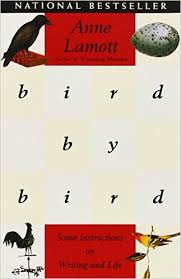
In her book on writing, Bird by Bird, Anne Lamott wrote:bird by bird

The only way I can get anything written at all is to write really, really shitty first drafts.The first draft is the child’s draft, where you let it all pour out and then let it romp all over the place, knowing that no one is going to see it and that you can shape it later. You just let this childlike part of you channel whatever voices and visions come through and onto the page… Just get it all down on paper because there may be something great in those six crazy pages that you would never have gotten to by more rational, grown-up means.

No editing on a first draft?

 So does that mean that you should never edit as you go. Of course not.

I get momentum for a new chapter by going into the previous chapter—not back to the beginning of the novel— to read it and often edit it. That’s productive. You get into the voice of your characters again, you renew your sense of place in the story. And the time invested is not huge. More importantly, you do it as a way to move forward, not as an excuse to not move forward.

Perhaps like me, part way through your manuscript, you feel that the wrong character is telling the story, or that the POV should be first person instead of third person. I think it makes sense at this point to go back to a previous chapter or two—again, not necessarily the beginning—and rewrite and decide. But make that decision and move on.

girl-1563986_640Time and circumstance play a role too. If all I have is the forty minutes on a noisy train, likely editing is a better use of my time.But maybe not. Maybe just thinking through a plot hole or a character’s reaction in an upcoming scene would be better for keeping the novel moving forward.

It’s definitely tempting to go back to edit when you can’t think of  what to write next. I do it all the time. But I’ve found some effective ways to overcome that urge:

  • Go for a walk and think my way through the plot or character problem and then write forward again.
  • Use targeted writing prompts
  • Freefall write
  • Write a brief summary of the scene I’m stuck on, and go on to the next scene.
  • Persuade myself to write just one sentence…then one more…then…

It all comes down to how much your editing loops are preventing you from writing new material. We all create and work differently. If a bit of editing gets the creative juices flowing, go right ahead. But if it’s a procrastination tactic, fight the urge. The main goal of your first draft is to get the whole story down.

How do you stop yourself from using editing as procrastination? Share your tactics in the comments below.


One-on-one Feedback

One-on-one Feedback

September 10. Gwynn Scheltema and Ruth E. Walker are offering the Canadian Authors’ Association, Niagara Branch, a special extra on September 10, 2016. After the 2-hour morning workshop, Finding the Muse and Kindling Your Creative Fire, this dynamic team of creative writing instructors will conduct half-hour one-on-one feedback sessions.

Sessions include:

  • written feedback from both Gwynn and from Ruth on up to 10 manuscript pages [**see below]
  • a one-on-one session with either Gwynn or Ruth to discuss the feedback
  • an opportunity to ask questions, discuss writing plans and potential markets

Interested participants must:

  • email up to 10 manuscript pages in advance to info@writescape.ca
  • provide material and payment no later than September 5

Gwynn’s and Ruth’s feedback sessions are a featured cornerstone of their annual writers’ retreat, Spring Thaw. Skilled editors, they excel at finding a writer’s strengths and offering insights to specific areas that can benefit from further development. Because they are also writers, they understand that the best feedback needs to be specific and constructive.

Maximum of 12 participants.

Fee: $30 + HST includes written feedback from both Gwynn and Ruth

$30.00 CAA Niagara Feedback

Once you select Add To Cart, your shopping cart appears in the right-hand column of this page. You don’t need a PayPal account to use this secure payment method. You will need a credit card.

$3.90 HST will be added by PayPal at the checkout.

**Standard manuscript page:

  • double spaced
  • 12 point font – Calibri, Arial or TNR
  • 1 inch margins all round
  • paginated
  • name and title in header on each page