

Gwynn Scheltema
Something I’ve learned from my yoga practice is how to calm my mind and rid it of swirling daily mental debris by focusing on my breathing. I take a few deep breaths and listen to the sound of it, notice the temperature of the air as it enters and leaves my body, feel the rise and fall of my belly as I inhale and exhale — and before I know it, my heart rate slows and a calm comes over me. Daily problems are pushed away and I feel renewed.
Mental filters
I do the same kind of mental focussing at the start of freefall writing practice. I learned this from my friend and mentor, Sue Reynolds. She explained to me that when we do this kind of breathing practice, we put ourselves in a state similar to that we experience just before we fall asleep, where we are aware but not necessarily thinking in the same rigid patterns that we would when awake.
 Medical researcher Valdas Noreika is his study “Intrusions of a Drowsy Mind” hypothesizes that when we enter sleep, the brain steadily dismantles the models and concepts we use to interpret the world, leading to moments of experience unconstrained by our usual mental filters.
I believe that, yes, this works for writing because we are putting aside our usual mental filters like the inner critic; the fears; the lack of self-confidence; the desire to be and do what others want of us and on and on…. But I also believe that the act of focussing is just as important.
Focussing
 The beauty of focussing is that we need only think about (substitute “worry about”; “imagine”; “create”) one thing—one small thing—at a time.
At our recent Writescape Turning Leaves 2018 retreat, we were talking about writing every day: how hard it is; how necessary it is; how productive it is. One of the participants said that she demands only two sentences from herself daily.
She went on to explain that having made the effort to sit down with her WIP to write “only two sentences” she invariably writes a lot more, but that having such a small focused goal is not overwhelming and easily doable, so she does it.
Go Small to go Big
In an article in Glimmer Train, Jane Delury uses the technique of writing just one sentence to get unstuck.
 She says: “This sentence doesn’t need to have anything to do with the work that you are wrestling. Maybe it’s about the chip in the coffee mug on your desk. Maybe it’s about a phone call with your mother last night. Or the patter of rain against the window. Maybe it’s about the doubt that your story or novel has stirred in you, concretized in an image that will form if you stay long enough between capitalized letter and period for the clichés to flow away, long enough for the appearance of magical corpuscles.”
Just one Sentence
There is power in writing just a sentence or two. When I attended a retreat with Peter Carver and Kathy Stinson, we did an exercise that I use often now to get my writing flowing. It combines the principles of continuous writing, like freefall, with the focused goal of “just one sentence”.
 Set a timer for one minute (when you get good at this, increase to longer times) and write without ending your sentence. Use any and all conjunctions and other methods of joining phrases, such as: and; and then; but; until; because; however; etc. Just keep writing and writing and writing. Afterwards, it is easy to erase the bits you don’t want and fix the sentence structure.
I find that this exercise forces me to stay with a topic, character or scene and go further with it than I would normally have done, and that is when the good stuff comes—when the mental filters are gone and I’m focused.
Try it!
.


 I remember a piece of old wood with termites running around all over it the termite men found under our front porch.
 Here is an excerpt from “A”
 Excerpt from PETALS
 by Gwynn Scheltema
 I walk down the garden paths,
 I walk down the garden-paths,
 Wallace Stevens wrote a poem called
  Poet
Poet 
 Start with an open mind and playful attitude. Mind mapping is a “brain dump.” Expect that many of the ideas you produce will not be useful. That’s not important. You can harvest the valuable nuggets later.
 Begin with one central keyword or concept in the centre of the page. Starting in the middle of the page gives the creative right brain a head start, as our non-creative left brain is used to starting in the upper left-hand corner.
 Keep your hand moving. If ideas slow down, take your hand back to the central concept and begin a new branch. Draw empty lines, and your brain will move to fill them automatically; or inject more energy with a different colour pen.

 The phrase DOCTORS OFFICE has me curious. I follow the branch back towards the centre, trying to work out what PINK and SUGAR have to do with it. Then it hits me… when I was a child, our doctor used to hand out tiny cylindrical candies that smelled like scented geraniums. I realize that I haven’t seen them in decades. What other sweeties from that era are no longer around? Hmmm….. Another article? A scene for my novel? A short story? Things are brewing now.
 The perfect spot to be creative – and mind map to your heart’s content – is at


 I live in a tiny granny suite in the southwestern corner of BC, where space is at a premium. I can no longer keep physical archives, and I didn’t have enough empty file storage space on my existing computer. My archive still had to exist in a form that was
 A quick poke through Staples and London Drugs websites unearthed the perfect solution: a hefty 2 terabyte Passport drive that plugs in to a USB port on my computer, and holds LOTS of files. All I needed was a sale and less than $100 to end my space challenge.
 Consistent folder names across the various storage, email, and social media platforms make retrieval much easier. Folder structures work best for me if they are named in the ways that I think, so I created my own. A couple of hours saw my folders labelled and matched on every platform.
 Emails (in individual folders OR across the entire inbox and all sub-folders) are searchable by subject line, content, keyword, date and sender and by some or all of the above in every mail program out there. You just have to learn how. Every email program is slightly different, and not everyone uses my beloved Outlook. For Gmail, I read the search
  Leah Murray operates
 Whenever I travel, I visit gardens; I seek them out in concrete-jungle cities and have a vast one of my own. My mother and grandmother taught me to create landscapes that worked with nature, not against it. They taught me how to create a green space with soul. And I realized as I looked at this tiny urban gem on my walk, that creating a garden that has a heart is very much like writing.
 We all have big writing dreams: maybe the next best seller, perhaps an award or earning enough to live on. But on any given day, don’t worry about what seems unattainable. Work with what you have.
 Not everything we write is worth keeping, but often you write a really good scene or stanza that just doesn’t fit with the piece or poem you’re working on. It might even be one of your proverbial “darlings.”
 But you’ll find that you get more out of your writing community when you contribute: give of your time, your expertise and your encouragement and support. We all have high and low times as writers and whether you need someone to help you with a practical plot problem, to celebrate a success or just give you a kick in the pants to submit or get writing, your writing tribe are the best people to do it. But, offer the same to other writers. I know that over the years, I’ve learned more about the craft by talking to fellow writers and giving feedback to others than from any book.
 Without planning and fertilizing, weeding and maintaining, gardens wither or become something else you have no use for. Your writing, like any art form, is the same. You wouldn’t expect to play the piano well without practising regularly. Writing is no different. Write, write and write some more. Plan writing time into your schedule. Fertilize your craft with workshops, reading and communing with fellow writers. Weed out all your negative attitudes about not being good enough. And fill your creative well often.
 There are many things you can do on your artist’s date. Because our creative brain is a sensory brain, anything that stimulates the senses or fires up the imagination will work: a walk in the park, making soup, lying on your back and watching clouds, going to a food or music festival. It doesn’t matter as long as you do it mindfully.
 This Crime Writers Festival showcases nine Canadian women authors of crime and mystery. On Friday evening at “The Mysterious Affair,” a table-hopping event introduces each of the authors in turn:
 Often when you begin writing about the subject of the prompt — say swimming in a lake — it can take you somewhere else — say an experience of drowning or crab baskets in Italy or how your father never believed in taking vacations. Go there. Forget the prompt and go where the energy is.
 Switch it up
 Write what you know
  Be specific
 Lists
Lists




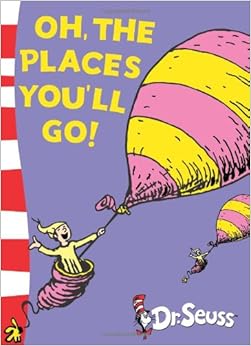
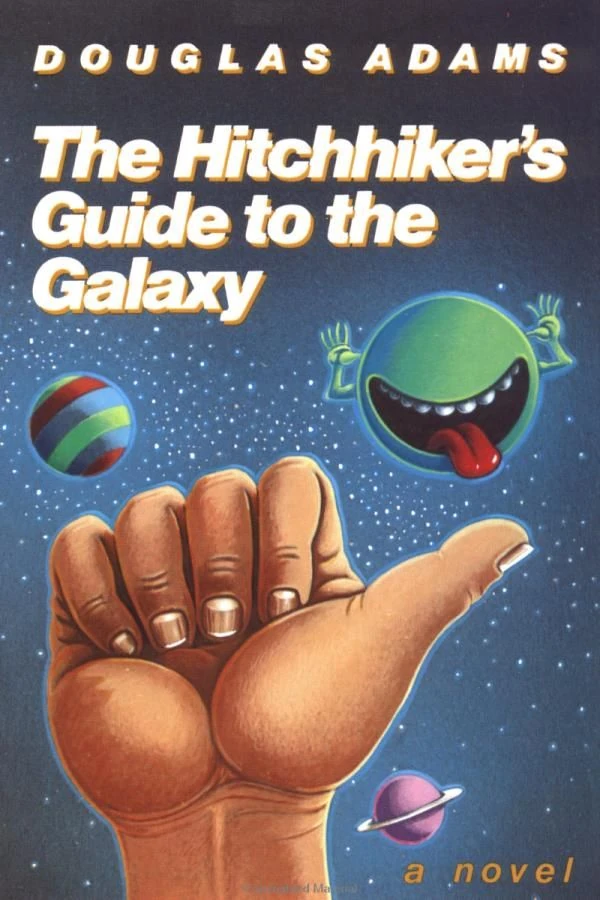 Edward Lear and Lewis Carroll popularized the form in the late 1800s, but more contemporary examples can be found in the “Vogon” poetry found in Douglas Adams’s
 The people of Spain think Cervantes
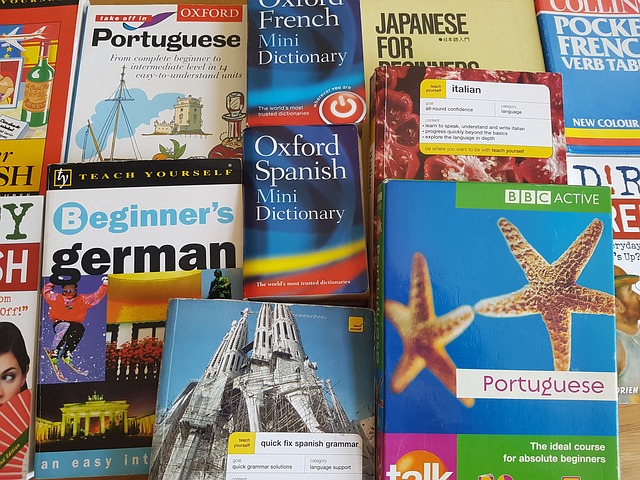 This sample from