
It’s winter. Ah yes. There’s no escaping it, but guest blogger Felicity Sidnell Reid sees it as a chance to indulge in books. And she tells us how a particular book turned a cold day into a warm experience.
Felicity Sidnell Reid
When the wind is whipping snow around my garden and even my dog is reluctant to brave the cold outside, it’s time to read without guilt.
My Christmas, this year, has been filled with books. And the weather is cooperating, encouraging me to stay home and read… and read.
An intimate conversation
 At present I am perusing Penelope Lively’s memoir, Dancing Fish and Ammonites. Penelope Lively is the author of 17 novels, 3 collections of short stories and several memoirs. She won the Booker Prize for Moon Tiger (1987) and has been awarded many other honours.
Dancing Fish and Ammonites is full of insights for writers, as well as, a passionate defence of reading and books.Its discursive nature demands such attention. Written when she was 80, she reflects, in a series of essays, on Old Age, her Life and Times, Memory, Reading and Writing, and Six “Things”.
Her book is not a chronological narrative, but more of a conversation, which bewitches the reader into silent — or sometimes out-loud debate. I found myself commenting, questioning, agreeing and disagreeing as though she were sitting across from me by a flickering fire, surrounded by her personal library of books—which seemed a little odd because Penelope Lively is not a cosy author.
Sympathetic to the human condition, in her fiction she creates complicated, engaging characters with a masterful brush and brings her narratives to a satisfying conclusion. But a certain detachment and a satiric eye also contribute to the style of her writing. Not surprising then that her memoir turns out to be an examination of the ideas that have shaped her life, rather than a chronicle of it— but, though I’ve finished the book, I still don’t know how she made this discussion so intimate.
A tethered life
 Lively has always been deeply interested in time, memory and context. “A lifetime is embedded; it does not float free; it is tethered to certain decades, to places, to people…” Though she read history at University, she has had a life-long interest in archeology. Artefacts and the physical evidence of the past which she examined in The Presence of the Past; An Introduction to Landscape History (Harper Collins, 1979) as well as personal and contextual history, have inspired much of her writing.
She explains that, “age, memory, time and this curious physical evidence of what I’ve been up to—how reading has fed into writing” are the topics of this meditation on her life.
Lively writes passionately about the importance of memory, both individual and collective. Of collective memory she says, “We all need…the ballast of the past, a general past, the place from which we came.” The study of history enables us to see ourselves as part of a narrative; the “understanding of time and a respect for memory…” prevent us from being “afloat, untethered.”
A mass of lurking material
 She explores the operation of memory, and how it affects people, in her novels. “You can make lavish use of it, allowing it to direct what happens or simply evoke what has once happened to flesh out a character, or give added meaning to what a person does or thinks. It is the essential secret weapon for a novelist.”
And personal memory is a “mass of lurking material” which frequently inspires or colours one’s fiction. “Time itself maybe inexorable, indifferent, but we can personalize our own little segment; this is where I was, this is what I did.” So is it memory which makes us who we are?
Books are a central part of the writing experience
 Then Lively considers the importance of reading and how that has shaped her life. Living, always, in a house full of books, she knows that the “inferno of language” sitting on her shelves, is sorted by the mind; much is discarded, forgotten, but a “significant amount, becomes, that essential part of us—what we know and understand and think about above and beyond our own immediate concerns. It has become the life of the mind.
What we have read makes us what we are…” A survey of a lifetime’s eclectic reading illustrates how it refines a writer’s taste and allows the exploration of a myriad of possibilities. She recalls the wonder of wandering in libraries, of how the “reading of a lifetime—has been [a] marriage of the fortuitous and the deliberate, with the random, the maverick choices tipping the scale and serving up, invariably, the prompts for what would next be written.” This is not to say that writing is a direct response to what we read for it may be years before it becomes the prompt for a story or a novel.
She concludes that we write fiction out of “every aspect of experience” but as far as she’s concerned, “books are a central part of that experience…” Her fear in old age is that, one day, she may not be able to read or keep her books around her, that she may lose her “familiar, eclectic” collection that “hitches me to the wider world; that has freed me from the prison of myself; that has helped me to think, and to write.”
Leap out of your own timeframe
 In her final chapter, Lively returns to the topic of identity. In picking out six objects she values and which “articulate something of who I am” she gives the reader another look at herself, the interests of a lifetime and how her imagination works.
None of the “six things” is of great monetary value, but each object, lovingly described, provokes recollections, associations and is a “vivid, tangible reminder of people who have been here before, making things, and using them and discarding them…” for, from ammonites to a sherd of pottery, decorated with dancing fish, these objects have enabled her to make “imaginative leaps out of [her] own timeframe and into other places—places where things were done differently.”
Meet our guest blogger – Felicity Sidnell Reid

 Felicity Sidnell Reid is an author, poet, artist and broadcaster. Her historical novel Alone: A Winter in the Woods was published in 2015. She is a co-host on the radio program “Word on the Hills” on Northumberland 89.7FM .
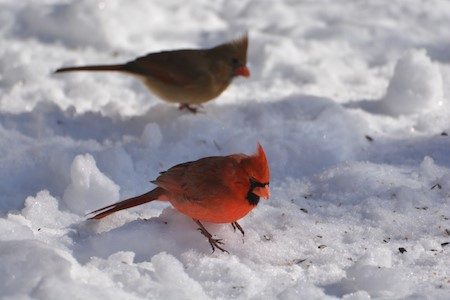
Title picture of cardinals courtesy of Anne Sidnell
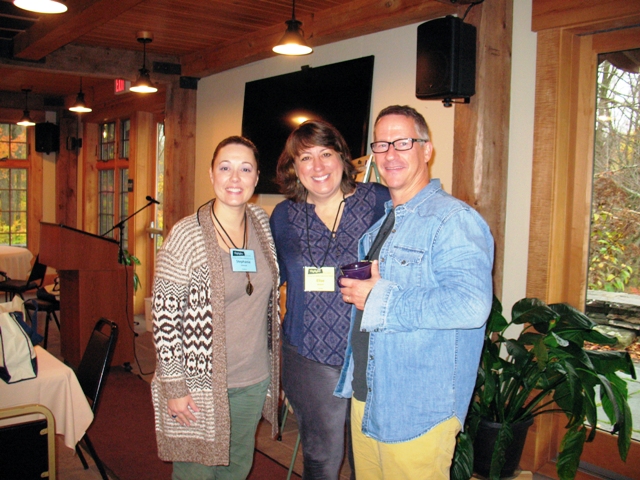
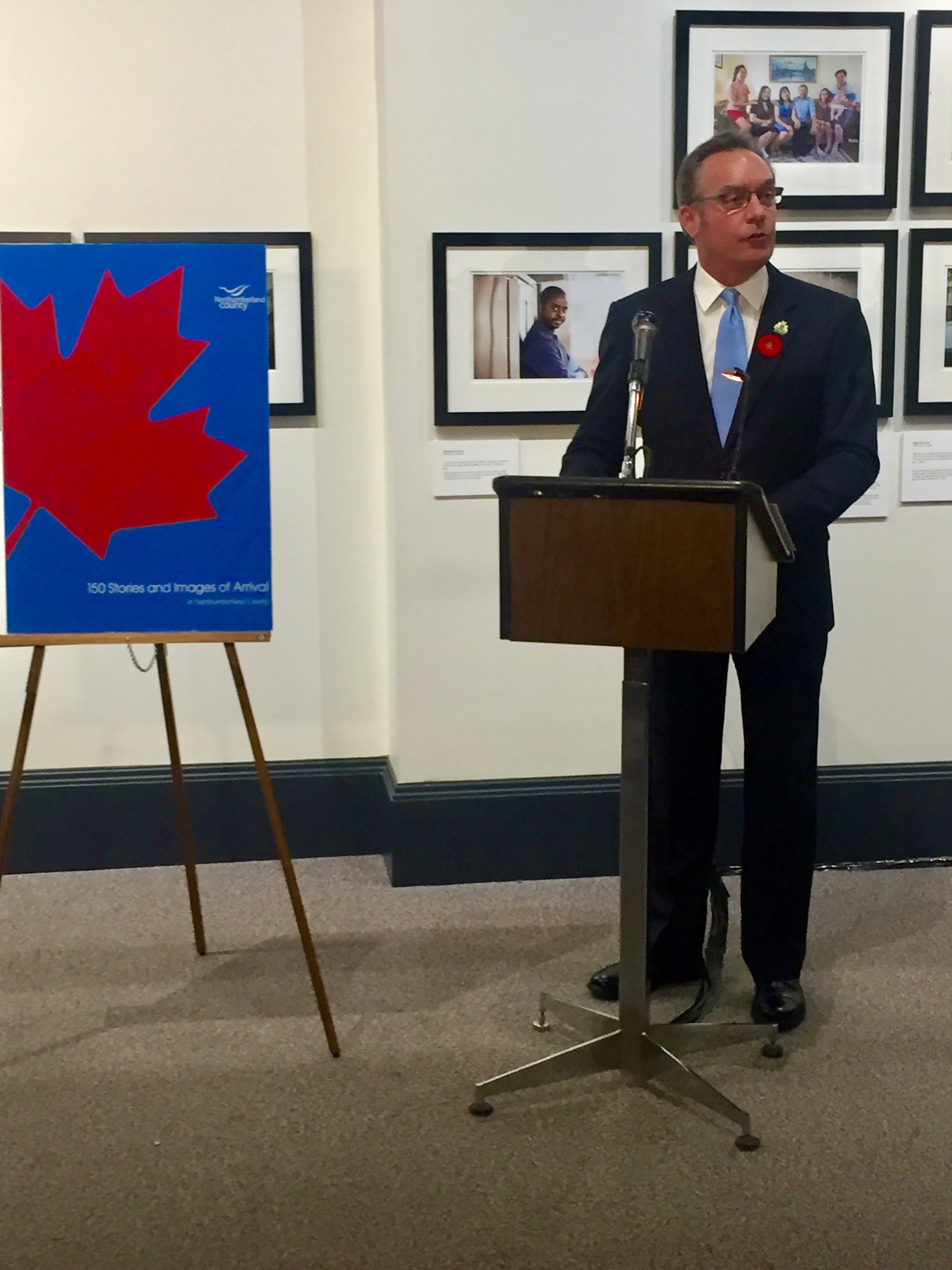 We were gathered at the
 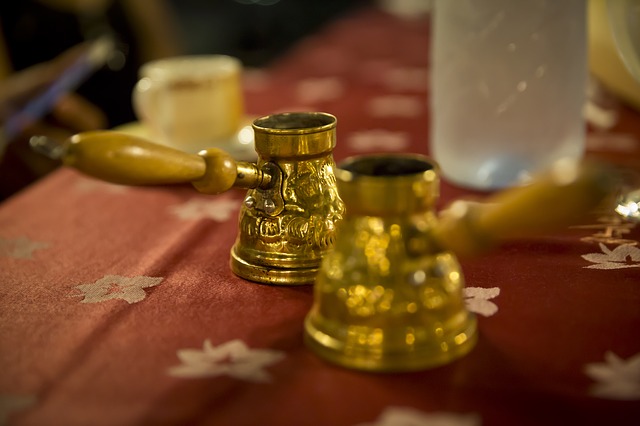 The objects chosen by the contributors ran the gamut of wooden carvings to a chess set; from a mason’s picks to a hand-made hammered brass coffee pot; from a document of Settlers’ Effects to a framed record of a family tree going back seven generations to 1730.
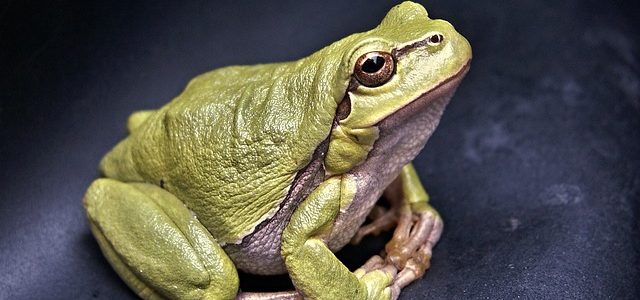
 A little green frog
 The whole process of choosing my symbolic object and then writing the story of how it had formed a transition from one period of my life to another was humbling. I was forced to strip way so many layers, to decide what was important to me—then and now.




 Whenever I travel, I visit gardens; I seek them out in concrete-jungle cities and have a vast one of my own. My mother and grandmother taught me to create landscapes that worked with nature, not against it. They taught me how to create a green space with soul. And I realized as I looked at this tiny urban gem on my walk, that creating a garden that has a heart is very much like writing.
 We all have big writing dreams: maybe the next best seller, perhaps an award or earning enough to live on. But on any given day, don’t worry about what seems unattainable. Work with what you have.
 Not everything we write is worth keeping, but often you write a really good scene or stanza that just doesn’t fit with the piece or poem you’re working on. It might even be one of your proverbial “darlings.”
 But you’ll find that you get more out of your writing community when you contribute: give of your time, your expertise and your encouragement and support. We all have high and low times as writers and whether you need someone to help you with a practical plot problem, to celebrate a success or just give you a kick in the pants to submit or get writing, your writing tribe are the best people to do it. But, offer the same to other writers. I know that over the years, I’ve learned more about the craft by talking to fellow writers and giving feedback to others than from any book.
 Without planning and fertilizing, weeding and maintaining, gardens wither or become something else you have no use for. Your writing, like any art form, is the same. You wouldn’t expect to play the piano well without practising regularly. Writing is no different. Write, write and write some more. Plan writing time into your schedule. Fertilize your craft with workshops, reading and communing with fellow writers. Weed out all your negative attitudes about not being good enough. And fill your creative well often.
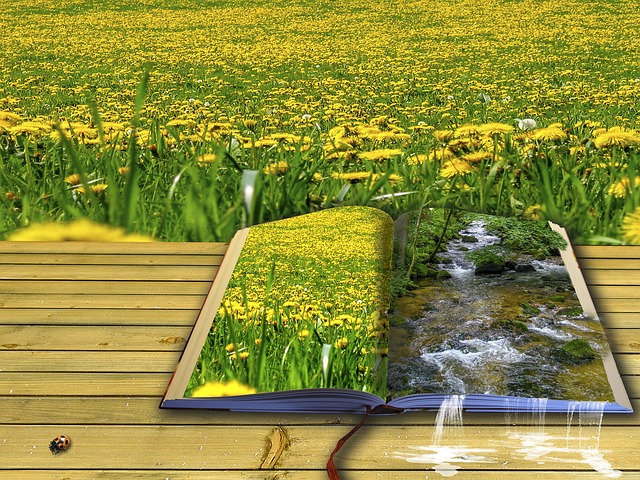 I also like the books I read to be set in exotic places, in other cultures, and affected by political or natural turmoil that I am never likely to be faced with. I like to learn about other customs and occupations.
  The first one:
 The next:
  And the third:
  Who knows, you may discover a new genre that really speaks to you. Perhaps that coming-of-age story you’ve been struggling with as an historical romance might be better reworked as a dystopian YA. But you have to read some dystopian YA to find out.


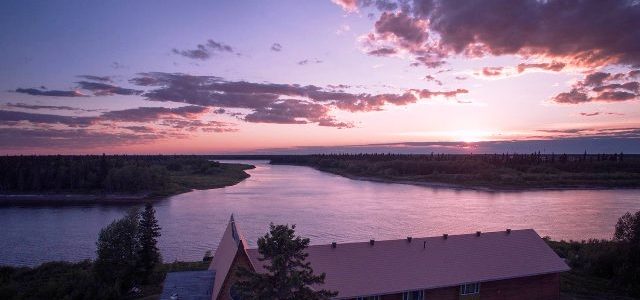


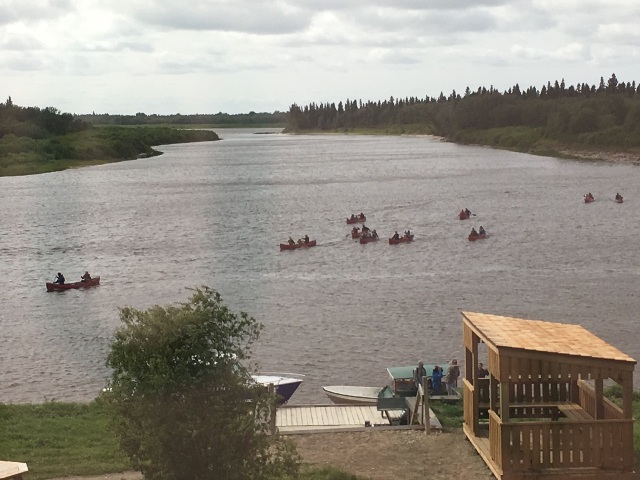


 There are many things you can do on your artist’s date. Because our creative brain is a sensory brain, anything that stimulates the senses or fires up the imagination will work: a walk in the park, making soup, lying on your back and watching clouds, going to a food or music festival. It doesn’t matter as long as you do it mindfully.
 This Crime Writers Festival showcases nine Canadian women authors of crime and mystery. On Friday evening at “The Mysterious Affair,” a table-hopping event introduces each of the authors in turn: