Ten Ways to Get the Most from Writing Prompts

Ten Ways to Get the Most from Writing Prompts

Gwynn Scheltema

At the recent Just Right at Glentula Retreat, we used a number of writing prompts. Most writers have tried them at some point in their writing journeys. Some love them; some not so much. I find them invaluable. I’ve used written, verbal, visual, and textural prompts. I’ve even used smell and taste prompts.

Some writers resist prompts, because they feel that their writing time is limited and they should be writing the “real stuff.” But remember that “completing the prompt” is not the object. The goal is to get you writing, to get you writing what has the most energy for you, and to lead you into your writing project.

How do you do that?

Follow the energy

Often when you begin writing about the subject of the prompt — say swimming in a lake — it can take you  somewhere else — say an experience of drowning or crab baskets in Italy or how your father never believed in taking vacations. Go there. Forget the prompt and go where the energy is.

Prompts unlock memories and experiences, and when you write honestly about them, about how you felt, what you observed, and perhaps even capture some of the dialogue that was spoken, you can take that piece and adapt  it later for your “real” writing.

Prompts are not precise nor prescriptive.

Understand the possibilities of “You”

Prompts often use the pronouns “you” or “your”: “Write about your greatest fear” or “Imagine yourself beside a body of water…” Of course, you can write about your own experience, but you can also approach it as if you are one of your characters. And not just your protagonist or your viewpoint character. Often it is more revealing to pick your antagonist, or a minor character.

Switch it up

Try the same prompt from two different characters’ points of view. If the prompt says “What’s your favourite colour?”, get your character to answer. What colours does she/he have an aversion to? Perhaps you don’t know. Write about the fact that you don’t know that about your character. Why don’t you know? What else don’t you know? Or have characters answer that question about each other. What did your protagonist’s mother think were his /her favourite colours? How did that play out in your protagonist’s life? Did the mother always dress your protagonist in blue for example?

If you are a memoir writer, remember that the people in your life are your characters; they are just called Mom, or Dad or Great Aunt Mabel. And like a fiction writer, you can stretch by writing as if you are another character.


Prime the Muse

Prompts take you places you don’t expect, but I’ve also found them useful for getting into scenes that I was planning to write. Start by identifying a scene in your story you want to work on. For instance, you might want to do a scene where one character makes the first show of affection towards the other. Using the prompt “What’s your favourite colour?” as a line of dialogue could take you to a scene at a fair or in a mall where he is buying her something, or in a garden where the flowers are in bloom, or just in the kitchen choosing a coffee mug.

Write what you know  

The facts of your life may not be the stuff of wild imaginative novels, but your human reaction to events is as valid as any character in any novel. Perhaps you haven’t been in a dugout canoe in the Amazon Jungle, but you know how it feels to sweat. You also know how helpless you can feel in a strange place. Could the feeling of being swept down the river with the jungle crowding in also feel like being swept along in a crowd at a frenzied rock concert or at busy subway station? It’s not the facts from your life that connect with readers, it’s the emotions and commonalities.

The Senses

Like the things you feel, what you see, hear, touch, taste and smell also relate to what we all know. When writing from prompts, the senses will always ground you and lead you forward. Make use of ALL five senses. Also consider the temperature, the quality of the light, time of day, the weather, the seasons, the historical period.

Move into Metaphor

When you have considered the senses, move into metaphor. Ask yourself: What does this remind me of? What is it like? What is it not like? Explain it to someone who’s never seen, heard, touched, smelled or tasted it before. What would a child relate it to? What would your character compare it with?

Be specific

As you write, imagine being in your scene. Notice and write about specific sensuous details: not “a car” but “the dented yellow Edsel-Ranger taxi.” Write about unusual details, incongruous details. Write about what’s missing. Imagine the scene with and without people — general people, specific people. Listen for snatches of remembered or overheard conversation.


Opposites

Turn the prompt around and do the opposite. Substitute “hate” for “love”, try “old” in place of “young”, use “like least” instead of “favourite”. Write using both approaches and consider the similarities or juxtapositions created. If you can’t remember, start with “I don’t remember.” If you’ve never experienced the prompt, say singing for a crowd, start with “I have never sung in front of people because …” or “I have never sung in front of people but I have …”

Lists

Sometimes a topic seems too big to approach with authenticity. For instance, if the prompt asks you to write about someone you fear, and you’ve always feared your father, you may not feel comfortable diving into writing about him. Instead make a list of all the people you fear. Try to make the list really long. The items you add to the list last are often the ones buried deep. At the end of your list may be a kid from grade school. Write about him. Chances are you’ll find you feared him for many of the same reasons you feared your father.

Or make a list about all the emotions you feel about your father, and write about any one of them.

Give it a go

Prompts have been the source of many of my “keep” scenes. I may end up only using a portion of what I wrote, perhaps just one paragraph, but the prompt usually takes me where I’ve been resisting going and anything that gets me writing is a good thing.

Need a prompt now? There are lots of online sites. Here are a few for fiction, non-fiction and poetry:

Now, go and write, write, write ….

DID YOU KNOW

At Writescape retreats, we provide optional creativity sessions to tickle your muse and a companion work book full of prompts and ideas to take your writing to places it hasn’t gone before. Join us at our next retreat: Turning Leaves 2017.

7 Ways to Keep Writing Every Day

7 Ways to Keep Writing Every Day

Gwynn and Ruth are on vacation for a few weeks. So we’re bringing back a couple of our favourite Top Drawer topics to share with new readers and to nudge long-time followers. The last two blogs explored finding time to write and finding inspiration. This week Gwynn’s April 2016 post rounds out the message with tips for writing every day.

Gwynn Scheltema

We’ve all heard the old maxim, “Write every day.” In the bogaiman quoteok Outliers, author Malcolm Gladwell says that it takes roughly ten thousand hours of practice to achieve mastery in a field. Whether you believe in the 10,000 hours concept, or simple BIC [Butt in Chair], there is no denying that being a writer means actually writing—real words—lots of them.

“Write every day” is the number one piece of advice given by successful writers—and they should know. But it’s often easier said than done.

So here are 7 ways to keep you writing every day:

  1. Set aside writing time

paper-606649_960_720If writing is important to you, it needs to be built into your routine in the same way that you build in any other important activity in your life. If you need to schedule writing time like dental appointments, piano lessons, or hockey practice, do it. Think of writing as your “job” and block out set times like you would if you were going to work.

And perhaps once in a while treat yourself to really dedicated time on retreat, like Writescape’s Spring Thaw or Just Write at Glentula.

  1. Get buy in

Talk to your family and friends about how important your writing time is to you. More importantly, talk to yourself about honouring that time. Are you the one who gives up your creative time to do extra chores, or make way for what someone else wants to do? Ask yourself, “Would I take a day off work to do chores?”

  1. Know yourself

The right time to write is different for everyone. You know when you are most creative. If you feel guilty taking “family time”, get up earlier, or reserve after-bedtime time for yourself.

  1. Have a dedicated writing spacewriting-828911_960_720

If you learn to play the piano, you invest in a piano. If you play hockey, you buy skates and sticks and all the rest of the hockey paraphernalia. Yet so many writers believe that perching on the end of the kitchen table and clearing up when someone else needs the space is okay. It’s not. Claim a writing space that is yours. It doesn’t have to be a whole room, but it should be a place where you can be alone when you want to, and where you can leave things in progress.

  1. Get dressed and show up

While it’s comfy to write in your jammies, getting dressed to go to write lends a validity to the activity, like getting dressed to go to work. And as Woody Allen said, “Eighty percent of success is showing up”. If you can physically get your butt in the chair, then writing that first word is that much easier.

  1. Know your writing style

Stephen King says he writes ten pages a day; Hemingway wrote 500 words a day. Some writers set a fixed time—write for 3 hours. It doesn’t matter what writing goal you set for yourself, as long it is achievable, and doesn’t set you up for failure. Start small. Even 3 paragraphs done every day will get you further ahead than a full chapter not even attempted because it is too overwhelming.

  1. Use prompts, timers or ritualsteapot-574025_960_720

To make the transition from the practical world to your creative world, have a ritual: light a candle, play music, or make tea in a special pot. To get the words flowing, make use of writing prompts or timers or idea files. Anything that will get you started. Think of them as warm-up exercises.

From the picture at the top of this post, it looks like that writer channels Star Trek to get started. My writing ritual is to clear my desk, get a coffee and win three hands of solitaire. What’s yours? Share it in the comments below.

Other articles you might like to explore:

Strange Writing Rituals of Famous Authors

Daily Routines of 12 Famous Writers

Sit Down, Shut Up and the Muse will Come.

Seven Tips for Finding Inspiration

Seven Tips for Finding Inspiration

Gwynn and Ruth are on vacation for the next couple of weeks. So we’re bringing back a couple of our favourite Top Drawer topics to share with new readers and to nudge long-time followers. This week is Ruth’s May 2016 post on finding inspiration. So get out there this summer and give your muse a change of scenery too.

Ruth E. Walker

I recently delivered a workshop at a writers’ conference: From Inspiration to Publication. In 2.5 hours, I was supposed to shine a light on the path almost every writer dreams about: being published. Frankly, this path can never be illuminated in such a short time. In fact, I could plug in a dozen klieg lamps and have an infinite amount of workshop time, and I’d still leave the bulk of that path in shadows.

No two writers have identical pathstunnel-237656_640

shrine-1031662_640That’s because for each writer, the path to publication is individual and endless. And it is filled with missed opportunities, wrong turns and dead ends. But for successful writers “publication” is not a single event. It is a series of acceptances, right turns and new paths that keep them inspired through all the rejections and disappointments.

Successful writers keep shining their headlights down that path because they know two things:

  1. getting published should not be a one-time goal, and
  2. they only need to shine their light forward to keep going

signs-416444_640For even the best writers, it is a frustrating journey.

It’s beyond discouraging to repeatedly receive rejections. So how to keep your muse motivated? Finding and then holding on to your inspiration can be key to keeping your light shining down the writer’s path.

So let’s get started.

  1. Leave your comfort zone behind: a change of place, space or pace can allow inspiration to sneak up and surprise you; if you can’t change your environment (travel or try out writing in a coffee shop, for example) give freefall writing a try (timed writing with no editing, no stopping, no internal editor allowed.) You’ll be amazed with what happens when you let yourself go to follow the energy.
  2. Visit a used bookstore and browse: old book titles, names of authors, a line from a book and even the smell of old paper can trigger ideas.
  3. Find contests with deadlines: a contest theme can trigger plenty of writing or, even better, remind you that you have a story on file to fit that theme!
  4. People watch with a notepad: keep to reportage (just the facts) to record the behaviour, clothing, dialogue that passes by. Pull it out and flip to a random page when you need to nudge your muse.
  5. Visit graveyards and museums: imagine the stories behind all those dates and names (old gravestones and small local museums can be especially intriguing.)
  6. Read outside your interests: essay collections, science journals, biographies, and so on will let you tap into a rich vein of interesting topics.
  7. Get out into nature and leave technology behind. If the landscape doesn’t trigger your muse, being in the open air with only scenery to distract you just might be the space your creativity needs to surface.

Inspiration for writing can come from so many places that I could keep writing this post for weeks. But what these tips all have in common is encouragement to explore. Writers are the adventurers on the open seas of life: we travel in our imaginations and write all about it. If you keep your light pointed into the distance then you should always be ready to find your stories.

About Freefall Writingtourism-776587_640

Freefall writing was first coined as “Mitchell’s Messy Method” by W.O. Mitchell (Who Has Seen the Wind) when he taught creative writing at university. It became “freefall” over time. There are variations used by many creative writing teachers, but when Gwynn or I lead a freefall, these are our main points:

  • Be present (meditation before you start is helpful) and follow the energy
  • Write what comes up
  • Use the senses — taste, touch, smell, sound and sight
  • Be specific — not “the car” but “the fire engine red two-door convertible”
  • Keep writing even if all you can start to write is: I can’t write. This is dumb. Why am I doing this? –eventually, the tension will trigger new energy for you to follow
  • Resist the editor — don’t stop to “fix” things
  • Go Fearward — W.O. Mitchell’s best advice ever

Freefall prompt and exercise: Set your timer for 20 minutes. Close your eyes and allow yourself to be quiet and still. Count backwards slowly to zero from fifteen. When you get to zero, start your freefall writing with this opening sentence:

The door opened and I stepped inside.


Smile Poetry 101

Smile Poetry 101

Gwynn Scheltema

In last week’s post based on Irene Livingston’s humorous poem, “I Cannot tell a Lilac”, I spoke primarily about light verse and nonsense rhyme, but along the way, mentioned a few other poetic forms connected with humorous poetry. Here’s a quick explanation again of the general forms, light verse and nonsense rhyme, followed by an alphabetical primer on 5 other specific humour forms.

Light Verse

Poetry on light-hearted or playful themes written primarily to amuse and entertain. Although the genre often uses elements of nonsense verse, like made up words and grammatical play, it is technically competent and possesses a sophisticated level of wit.

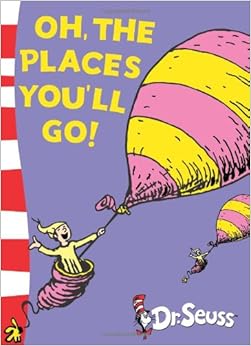
Image result for oh the places you'll goDr Suess is a master at light verse. Sales seminars use the Green Eggs & Ham story to illustrate the 5 most important selling techniques. Oh, The Places You’ll Go! is a popular adult graduation gift.

You have brains in your head.
You have feet in your shoes.
You can steer yourself 
any direction you choose.
You’re on your own. And you know what you know.
And YOU are the guy who’ll decide where to go.

 Nonsense Rhyme

Poetry that subverts language conventions and logical reasoning. Humour comes from its nonsensical nature, rather than wit or a punchline. Uses elements like rhythm and rhyme and is whimsical and humorous in tone. Although these poems are also known for the use of made-up words, these words are still used with recognizable grammar and syntax, and each nonsense word is a clear part of speech.

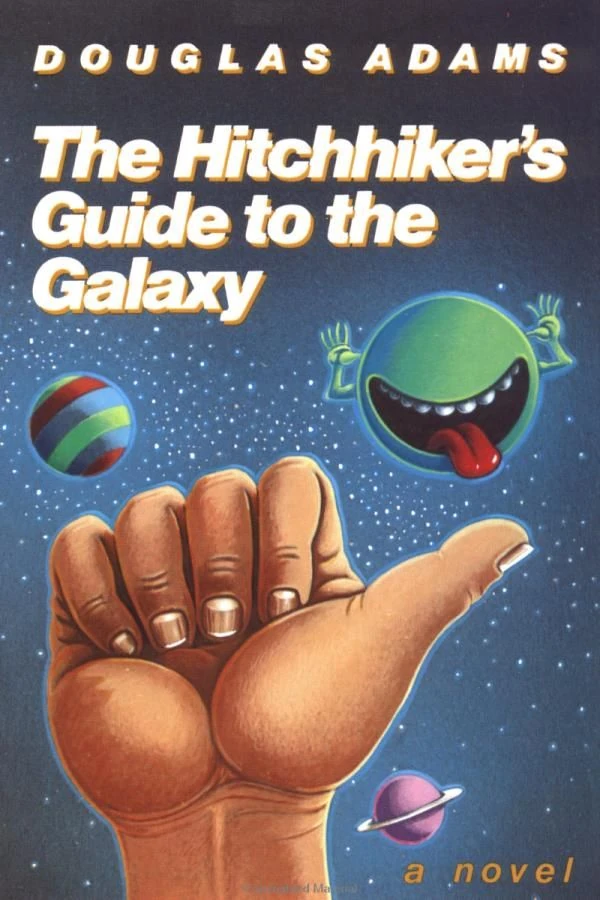
Image result for hitchhiker's guide to the galaxyEdward Lear and Lewis Carroll popularized the form in the late 1800s, but more contemporary examples can be found in the “Vogon” poetry found in Douglas Adams’s The Hitchhiker’s Guide to the Galaxy and in this sample from John Lennon’s “The Faulty Bagnose”:
The Mungle pilgriffs far awoy
Religeorge too thee worled.
Sam fells on the waysock-side
And somforbe on a gurled,
With all her faulty bagnose!

Bouts-rimés 

Bouts-rimés (French: “rhymed ends”) originated from a literary game invented in the early 1600s. They are verses created when the poet receives a list of rhyming words from another person and uses them in a given order to produce a result that makes at least partial sense.

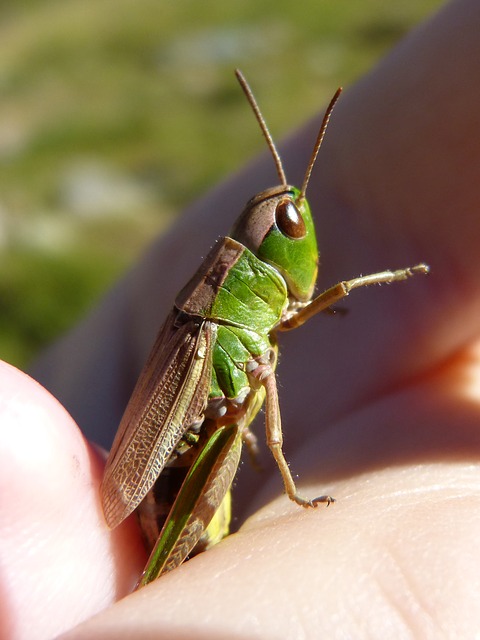
John Keats produced “On the Grasshopper and Cricket” (1816) in a bouts-rimés competition with his friend Leigh Hunt. Here’s an excerpt:

The Poetry of earth is never dead:
When all the birds are faint with the hot sun,
And hide in cooling trees, a voice will run
From hedge to hedge about the new-mown mead;
That is the Grasshopper’s—he takes the lead
In summer luxury,—he has never done
With his delights; for when tired out with fun
He rests at ease beneath some pleasant weed.

Clerihew

A Clerihew is a comic biographical verse invented by Edmund Clerihew Bentley in 1905. Clerihews are written as four-line verses of two rhyming couplets, the first line almost invariably ending with the name of a person. A form of roasting, the humour comes from putting the listener’s sense of rhythm on edge with its purposeful varied line length and awkward rhyme as well as its off-the-mark treatment of the named subject. Here is an example by Edmund Bentley called “Cervantes”:

The people of Spain think Cervantes
Equal to half-a-dozen Dantes:
An opinion resented most bitterly
By the people of Italy.

Epigram

Epigrams in poetry (they appear also in prose formats) were originally meant as an inscriptions suitable for a monument, but now the term refers to any short, pithy verse especially if it is sharp and moralistic.

Samuel Taylor Coleridge (1772–1834 produced an epigram that neatly sums up the form:

What is an Epigram? A dwarfish whole,
Its body brevity, and wit its soul.

Limericks

These days, limericks are probably the best known form of humorous poetry. Limericks first appeared in medieval times, but were popularized in 1846 by Edward Lear in his Book of Nonsense  We all recognize the distinctive form and “punch-line” ending. They are often bawdy too.

In terms of form, a limerick consists of five lines. The first, second, and fifth lines rhyme and must have seven to ten syllables and the same verbal rhythm. The third and fourth lines are always shorter (five to seven syllables) and have to rhyme with each other and have the same rhythm.

Image by CSG Kids Ski Gear

Here’s a fun example from Rudyard Kipling:

There was a small boy of Quebec,
Who was buried in snow to his neck;
When they said. “Are you friz?”
He replied, “Yes, I is—
But we don’t call this cold in Quebec.”

 Macaronic

This form dates back to the a comic Latin verse form that incorporated common dialect words and gave them mock Latin endings for effect. The same technique is now applied to combinations of modern languages.

This sample from Charles G. Leland called “To a Friend Studying German” plays with English and German:

Vill’st dou learn die Deutsche Sprache?
Den set it on your card
Dat all de nouns have shenders,
Und de shenders all are hard.

Your turn

Although these forms produce verse that is light and makes us smile, I’m sure you can appreciate the work that goes into creating them. Fancy trying your hand? How about posting a limerick below about writing.

DID YOU KNOW

In addition to a bouts-rimés being a form of humorous verse, it is also a form of constraint poetry: poems written within strict conventions. Gwynn gave a workshop on “Playing with Constraints” in Ottawa for the Tree Seed Reading Series. If you would like to organize a poetry workshop for your group, check out our On-Demand Workshops options.

I Cannot Tell a Lilac

I Cannot Tell a Lilac

Gwynn Scheltema

Now that the blooms are spent, I’ve been pruning my lilacs. I miss their heady scent and pendulous flowers, but each year when they are in blossom, I think of Canadian poet Irene Livingston’s poem “I Cannot Tell a Lilac.”. Ruth and I chose that poem as the first place winner in a contest for a poetry book collection called Open Window 111 (Hidden Brook Press 2002)—sadly now out of print.

I Cannot Tell a Lilac

I remember being intrigued by the playful title and hoped that the poem would not be overloaded with cliché references to the lilac blooms and scent we all know so well. But like the Stephen Leacock Poetry Prize winner that she is, Irene Livingston delivered surprise and delight!

The poem was fun, light-hearted. Livingstone played with semantics and form; she invented words. The poem danced to a happy bouncy rhythm; it had a quiet humour. The rhyme was subtle and skilled. None of it was forced. Everything from the images to the word choice was deliberate, but had the feeling of a careless, happy-go-lucky throwing together of thoughts and feelings. And at the end of it, I could smell the lilacs, see the ponderous blooms hanging low and feel the promise and warmth of spring. It remains one of my favourite poems.

Here are the first few lines of Livingston’s poem:

I’m cycling along so nicely, in brightfully
spritzing four o’clock sun-stream, when I suddenly
spy, with my little eye, a bushlet of fabulous lilacs

“Oh lilacs!” I cry to the halcyon Sunday street.
“Methinks I will toodle on up to the door,
give a light tap-tap and inquire as to
whether I might be permitted to snap off
some sprigs of vosnifferous, luminous blooms……

Is it Nonsense?

Words like “brightfully” and “vosnifferous” take me back to childhood nonsense poems that were fun to read but seemingly made no sense. Like: “”Hey diddle, diddle / The cat and the fiddle / The cow jumped over the moon…” and Lewis Carroll’s “The Jabberwocky”:

Twas brillig, and the slithy toves
Did gyre and gimble in the wabe:
All mimsy were the borogoves,
And the mome raths outgrabe

But “I Cannot Tell a Lilac” isn’t nonsense. It’s the story of a young child riding a bike through the neighbourhood and being so overcome by the lilacs that he wants to pick them… with funny results.

So if it’s not a “nonsense poem”, what is it? Nonsense rhymes and “I Cannot Tell a Lilac” are both forms of light verse, a genre that includes a myriad of “fun” verse forms from epigram and clerihew to boute-rimes and macaronics.

Encyclopædia Britannica, defines light verse as “poetry on trivial or playful themes that is written primarily to amuse and entertain and that often involves the use of nonsense and wordplay. [It’s] frequently distinguished by considerable technical competence, wit, sophistication, and elegance.”

Light Verse Grows Up

Light verse has been around since Greek and Roman times. The Greek Anthology contains many epigrams. The Roman poets Catullus and Horace used innuendo, wordplay and satire.

In Medieval times light verse took on a narrative form and was often bawdy and irreverent but with a moral undertone. The limerick also made its debut around this time as did fable stories like Pierre de Saint-Cloud’s 40,000-line Le Roman de Renart  [Reynard the Fox] written in 1174.

In the 18th century, mock-epics joined the genre, like Alexander Pope’s “The Rape of the Lock”, and Lord Byron’s verse novel Don Juan. Light verse was still filled with innuendo and moral judgement, but took on a sardonic and casual tone.

In 1846 Edward Lear’s Book of Nonsense  popularized the limerick form:

There was an Old Man with a beard,
Who said, “It is just as I feared!
Two Owls and a Hen,
Four Larks and a Wren,
Have all built their nests in my beard!”

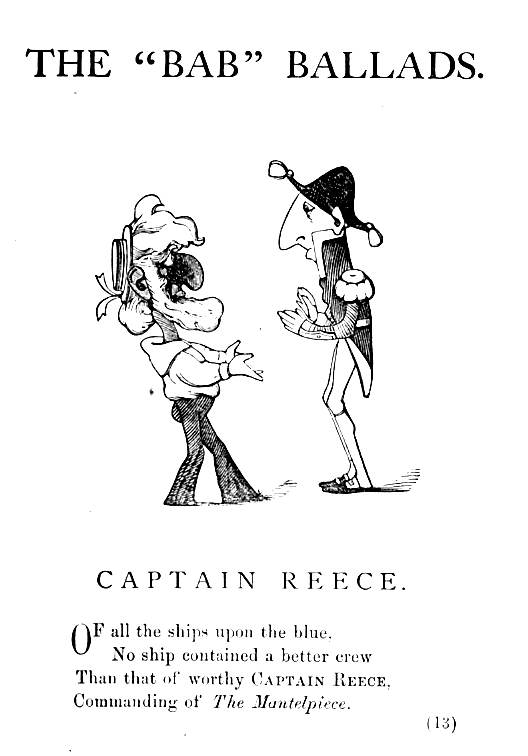
IImage result for captain reecen the late 1800s Lewis Carroll introduced nonsense poems, like “The Jabberwocky” I mentioned earlier. W.S. Gilbert’s Bab Ballads introduced absurdity like in this excerpt from “Captain Reece.”
Of all the ships upon the blue,
No ship contained a better crew
Than that of worthy CAPTAIN REECE,
Commanding of THE MANTELPIECE.

A feather bed had every man,
Warm slippers and hot-water can,
Brown Windsor from the captain’s store,
A valet, too, to every four…..

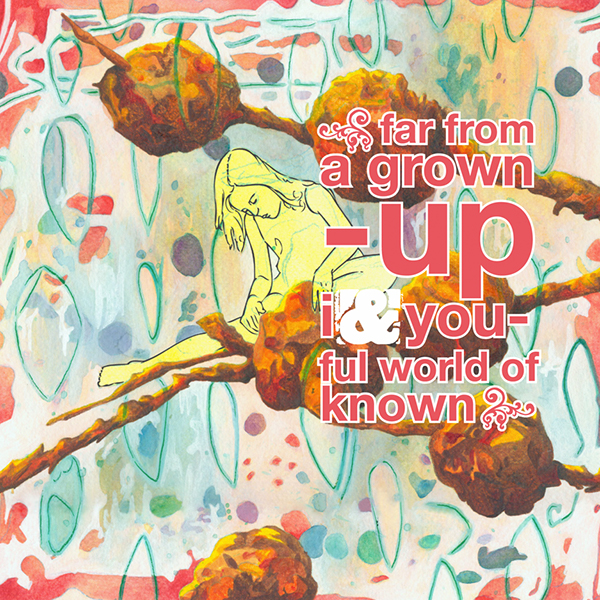
IImage result for 2 little whos by e. e. cummingsn the 1900s, poetic forms introduced by Dadaists, Futurists, and Surrealists, and the distinctive techniques of the Beat poets and e.e. cummings confused the boundaries between light verse and serious poetry. Flippant and irreverent tones were actually seriously intended. Poetry that began in an amusing way ended sometimes in bitterness or terror. What had been playfulness with grammar and syntax became forms of their own such as this excerpt from e.e.cumming’s poem “[2 little whos]”

(far from a grown
-up i&you-
ful world of known)
who and who

(2 little ams
and over them this
aflame with dreams
incredible is)

Today, I believe the line between serious humorous poetry and light verse is firmly blurred. Wit and satire, absurdity and irreverence abound in both forms. But for me, in light verse, I still look for the elements I found originally in “I Cannot Tell a Lilac”:

  • a quiet understated humour
  • playing with semantics and form
  • inventing words
  • a happy bouncy rhythm
  • subtle, skilled rhyme
  • evoking a feeling of entertainment and delight.


DID YOU KNOW

Irene Livinston won her Stephen Leacock Poetry Prize in 2001 at the Orillia International Poetry Festival. But did you know that the first winner of the Stephen Leacock Memorial Medal for Humour also honoured poetry (with a satirical twist) —Paul Hiebert’s novel Sarah Binks (1947), a fake biography of “The Sweet Songstress of Saskatchewan”. The Canadian Encyclopedia describes the book as “a comic creation which derives from Canadian literature while simultaneously making a contribution to it.”

A Poet’s Gift: Patience

A Poet’s Gift: Patience

Ruth E. Walker

Ingrid Ruthig

At a Spring Thaw retreat, one participant spent much of her time squirreled away in her room, papers spread across her bed, editor’s pen in hand. Poet and artist Ingrid Ruthig was completely focused on her manuscript and surfaced occasionally for meals and evening chats.

After the retreat, Ingrid continued to refine her manuscript. A poetry collection is meant to be far more than the sum of its parts. Not only does each poem have to stand on its own, but there needs to be an cohesive “whole” that pulls together the entire work and leaves readers changed.

As poet Emily Dickinson would have it: If I feel physically as if the top of my head were taken off, I know that is poetry.

Right on, Emily.

Eventually, Ingrid’s manuscript was accepted by Canadian publisher Fitzhenry & Whiteside. And the collection, This Being, was launched in 2016. And then, just last month, Ingrid was awarded the Gerald Lampert Memorial Award. This League of Canadian Poets’ prize recognizes the best first book of poetry published in Canada, and This Being fits that bill completely.

We are thrilled for Ingrid. She’s an artist on many levels and brings an architect’s precision into everything she does: from curating collected works and shepherding insightful essays on Canadian poets, to designing exquisite chapbooks of her poetry and textwork, to preparing solo shows of her outstanding art — all of it, perfected before she releases it to the public.

So what drives a poet — this poet, in particular — to be committed to exactitude? And what happens to that clear direction when creativity pushes its inevitable way in? A recent interview on her publisher’s website intrigued us, so we’re sharing it with you today…

Congratulations, Ingrid. What was your initial reaction on hearing that your first collection of poetry,This Being, was awarded the League of Canadian Poets’ Gerald Lampert Memorial Award?

I punched the air and whoohoo’d! And I knew for a fact, then, that patience can pay off.

You worked many years as an architect and have written a fair deal of criticism. How has this affected your writing of poems?

It is all related, I suppose, but it’s not easy to measure or describe – it’s a way of thinking, of approaching the task at hand, which is to order and resolve something that is, at first glance or in a sense, chaotic. By inclination and training, I’m used to connecting dots – I notice things on a number of levels and begin to sort, align, or discard them, paying as much attention to detail as context. Then I set out in one direction, following clues, trying to keep sight of the big picture or the intended plan, hoping I will arrive at some kind of resolution. Sooner or later the creative process takes over, and I have to give in to it. Without that willingness to relinquish a measure of control, there would be no discovery. And it’s at this stage that writing poems veers away from kinship with raising a building off paper and up out of the ground. In architecture, surprises are usually costly and unhappy ones!

The opening poem in the collection is “Ten Mile Point”, which starts at a stop on a journey – Manitoulin Island – with car doors flung open and “water far as you can see.” But as you turn the reader back to land, with its gift shop and model tepee and our commercialized habits we’re led to something gently epiphanous, that we are somehow standing at a brink. Why did you choose this poem to start the collection?  (Click here to see the poem Ten Mile Point.)

Although the poem was written much earlier than others in the collection, it seems even more timely now. It’s a recognition of the most important moment – always and ever the present moment, because we can’t go back and change what has passed, and the future is impossible to grasp. So, here we are, teetering on the edge of a precipice, surrounded by all this apparently endless beauty which also sustains us, but rather than pay attention, we let ourselves be distracted by the shiny stuff. The land’s continuance, and ours as well, hinges on the choices we make from here on in, individually and collectively. This piece set the right tone for what follows – an invitation to the reader to look around and see where we’re standing at this moment in time. To see how we change, and can change. Hopefully in time.

In terms of change and its possibilities, what can you tell us about the title, This Being?

A title, in my view, is like a key that unlocks the door of the book. This one rose slowly to the surface and insisted on staying put. Those two words brought together weave a mystery, and the meaning remains fluid. While it points at humans as beings, it also points to the act of being, of understanding we’re only able to exist in the present, and there’s no living in the past or future. So much about us, about our habits, doesn’t change. Nevertheless we remain fluid as we move from moment to moment. In fact, we’re always changing. And in those small, sometimes imperceptible alterations lies the possibility that we might yet become something better.

Is that the ultimate goal of poetry, to help us become something better?   

W.H. Auden, who is quoted excessively from his tribute poem to Yeats, wrote, “poetry makes nothing happen.” Of those who read poetry, many, including me, will disagree – it can strike a chord and resonate long after the book is closed; it reveals things we’ve become blind to; it settles or unsettles by mirroring shared human experience; it stirs thought and emotion. It changes the reader. If we look again at Auden’s poem, it goes on to say “it survives, / A way of happening, a mouth.” Maybe that’s as close to an answer as any. A poem offers a different way of being. It’s an open mouth providing a way to speak and the words for what’s next to impossible to say, even if it’s only a trace of what we really mean. Yet, we keep trying.

DID YOU KNOW?

Revered American renaissance poet Emily Dickinson (1830 to 1886) was known for her reclusiveness, remaining much of her later years in her bedroom and refusing most visitors. Maybe the reception her poems received from publishers contributed to her solitary lifestyle.

Fewer than a dozen of her nearly 1,800 poems were published in her lifetime. That’s probably because nobody really knew what to do with her poetry at the time. The ones that got published were edited to fit what constituted “true poetry” at the time (you know: pure end rhymes, regular stanzas, no darn dashes…)

She probably just gave up in frustration. And can you blame her?

What would Emily make of how her poetry is viewed today? Her work is studied in schools and universities throughout the United States and beyond, and you can’t pick up a decent anthology of English language poetry without a Dickinson poem or two in there. The renowned critic, Harold Bloom, cites Dickinson as one of 26 central writers of Western civilization. Her poems and her strange, solitary life have inspired music, plays and feature films.

Is there a lesson here? Emily Dickinson wrote her poetry, her way. The world wasn’t ready. Eventually, the world woke up. Patience, as Ingrid Ruthig notes, can pay off.

The lesson for you: stay true to your creative vision and your voice. Hope that others get it but if they don’t, that doesn’t mean it isn’t exactly what the world needs.

A Boy, His Words, His Way

A Boy, His Words, His Way

Ruth E. Walker.

This time last year, I wrote about my annual experience at Durham Integrated Arts Camp, an 8-day arts-infused camp for Grades 7 – 12 students. Run by my local school board, DIAC is held at a private camp fairly close to my cottage.

I love going there. I teach an elective “Creative Words” where my students are encouraged to leave behind grammar and spelling worries and just focus on writing their words, their way. I tell them, “This is school but our focus together is on being creative with words. Exploring the craft of writing. Stretching our pens into richer territory as writers. Not worrying about the three-point paragraph.”

Daily Wordplay

I had 54 students split over three periods — and each day, we played with words. Exercises, experimentation and sharing work with each other. Partnered or in small groups, they would read selected excerpts to one another. I wanted them to gain confidence in reading their work aloud and offering each other feedback.

Every day, we ended with at least one timed freefall writing exercise. Freefall, originated by the great W.O. Mitchell (Mitchell’s Messy Method), means they follow the energy, don’t stop writing, don’t fix anything and even if they can’t think of what to write, that is exactly what they write.

I can’t think of what to write. I don’t know why Ruth is making me do this. I can’t stand it when people make me do stuff like this. Just like when…

And before they know it, they’re writing about something that catches their imagination. It’s great to watch them drop deeper and deeper into the zone of writing in freefall.

The Challenge

But there was one student who caught my attention.

Day One, he came into our old workshop building and sat himself as far as possible from all the others. Arms crossed, hood up and over his head and cowl raised to cover his mouth was a clear signal to the rest of us: I am not comfortable. And I’m not at all sure about this.

I’ve met this boy before. Well, not him exactly, but others who seemed like him. As a visiting artist at an alternative high school, many students would greet me in just this way. I was hopeful that my eventual success with them would help me here.

During the first freefall, I saw that he wrote very little. So I asked him quietly if I could help. “I can’t write without paying attention to grammar and spelling. It matters to me,” he said.

Spelling and grammar matter?!? I could have kissed him right there and then. But besides getting me fired for being completely inappropriate, it would have freaked him out. So I said “Write in whatever way works for you. I say it doesn’t matter about spelling and grammar to free people up but if it matters to you, then go ahead, pay attention to it. Remember: your words, your way.”

Day Two. Hood and cowl off. Still sitting separate but not as far away. Seems to be writing more.

Day Three. He comes into class, smiling over something someone had just said to him. Sits next to another student. I thought to myself, when this boy smiles, the room lights up. Cliché, I know. But it is exactly what I thought. Because it was true.

And here’s the best part of this day. It came time for sharing. By now, a few students volunteer to read to the whole room.

And he raises his hand. “I’ll read,” he says. Stands. Speaks his truth as captured on the page by his pen. Three seconds of silence as he sits back down and the room erupts in table thumping and cheers, and so many comments, we ran overtime. And his smile? Surely the glow illuminated the whole camp.

His Art, His Way

That glorious moment. That alone would have been enough to fuel my workshopping heart for years to come. But it was at Talent Night on Day Four that I learned as strong as his voice is on the page, there is another art that will claim his soul.

Imagine. A full set of drums, glistening red sides, gleaming cymbals and so on, on an otherwise bare stage. And my grammar-and-spelling camper sits at those drums, illuminated by the single spotlight. Nearly 450 campers in the audience, along with various instructors and staff. I recall thinking to myself “Oh, he drums. Hmm. That explains the excellent rhythm in his reading…”

The background music starts up. Something jazzy, if I recall. A moment spent thinking, well, isn’t this a nice surprise — he likes music with some depth, maturity…and then his drumsticks dive into the call and answer of the music. And the music, quite frankly, ceases to matter.

Have you ever seen Gene Krupa or Buddy Rich battle it out at the drums? Were you mesmerized by the 2014 film “Whiplash”? Have you felt the magic of TorQ Percussion vibrate into your bones?

Well, you may then have an inkling of what we experienced in that auditorium. His sticks flew, so fast, so hard, so exquisitely staccato that when one splintered off, part of it cartwheeling into the air, the cheers rose to the ceiling and came back down again. He didn’t stop for a nanosecond. His joy. His passion. His complete immersion in the zone was for us to watch and marvel at. This was no Grade 8 boy taking his first tentative steps on stage. This was a musician on the path to mastery and we were his witnesses.

The spontaneous standing ovation from his peers invited another glorious smile. More than acceptance, all of us in that auditorium were connected with the artist and he knew it. Many of us know what we saw that night. Years from now, we can say we were there when…

And how does this creative writing teacher feel about a young man’s clear gift as a writer being second fiddle to his drum kit? Fantastic. Who know what other gifts he’s harbouring? I’ll be back next year to see what I can discover.

Did You Know?

So many artists didn’t start out knowing they were meant to work in a particular medium. Or they were obligated to follow family footsteps while their hearts really belonged elsewhere. And some artists have more than one career.

The great American poet, William Carlos Williams was, for much of his life, Chief of Pediatrics at Passaic General Hospital. Vincent van Gogh tried being a missionary, teacher and art dealer before he discovered art school at age 27; ten years later, he committed suicide but left behind a remarkable legacy of iconic art.

Some writers take time to achieve publication. Nobel Prize winner Toni Morrison (The Bluest Eye) and ahead-of-her-time rule-breaker George Eliot  (a.k.a. Mary Anne Evans) both published their first books at age 40. Much beloved Dr. Seuss (a.k.a. Theodore Geisel) was 33 when his first children’s book arrived on the shelves.

And some writers take a long time to find their voice. Anna Sewell was 57 years old when her first and only novel, Black Beauty was published. She died the following year but lived long enough to see the book’s initial success.

Whether you’re a teenager with a brilliant writing career mapped out or nearing retirement and thinking about that novel you always wanted to write, remember this great advice I got from an agent recently. “Age doesn’t matter very much in the publishing world. It’s the quality and marketability of the writing that matters.”

Stories of Life

Stories of Life

Gwynn Scheltema

As often happens in life, birth and death go hand in hand. Last week I wrote about the birth of my baby granddaughter, Elle, and all the wonderment and creative promise that comes with that.

But our family has also been touched these past weeks with the news of terminal cancer. Many of us in this situation feel the helplessness of not knowing what to do or what to say.

And then an email from an oral story-teller I know told me about a “storyteller-in-residence” at Baycrest Health Sciences.

Storycare

For the past three years, Dan Yashinsky has been telling and listening to stories at Baycrest as part of their “storycare” program. He explained in an article for The Toronto Star that: “Storycare means creating times and places in the hospital for people to tell, hear, imagine, and remember stories.”

His article explained that storytelling encourages imaginative responses even from dementia patients who have forgotten the names of their loved ones; that suspenseful wondertales can help patients with severe depression “regain their desire to discover what happens next — in the story, and in their own lives.”

He recalls that Yukon Elder Angela Sidney once told him, “I have no money to leave my grandchildren. My stories are my wealth.” For patients in palliative care and their families, telling their life stories can be a comforting and enriching experience.

Life Stories

When I was a young woman, it seemed to me that biographies and to a lesser degree, autobiographies, were the only source of “life stories.” And to make it into book form, the subject life had to be a famous one: great achievement, great adversity, great discovery and such. Today, I have noticed that memoir stories abound. Stories still of great achievement, great adversity and great discovery, but stories from “ordinary” people. The kind of people I might know. The kind of lives I can recognize.

What I like about this trend is the underlying inference that everybody’s life matters. That we all have something to offer. And that in each life I read about I find echoes of my own. This connection through story can, at different times, inspire, comfort, educate, amuse, awe or humble me. It’s all good.

The Power of Story

An article in The New York Times says “Telling and listening to stories is the way we make sense of our lives.” The article tells of a study on the positive effects of storytelling on people with high blood pressure. Dr. Thomas K. Houston, lead author of the study said, “That natural tendency may have the potential to alter behaviour and improve health.”

The International Storytelling Centre (ISC) based in Tennessee, agrees with that power of story, and not just for health, but for attaining any goal because it is the most effective way to communicate both with others and with ourselves.

ISC began a movement to revive oral story telling over forty years ago. The cornerstone of their belief is that “People crave, remember and honour stories.” They say, “We are an organization dedicated to inspiring and empowering people across the world to accomplish goals and make a difference by discovering, capturing, and sharing their stories.”

Tell your story

Many cultures have a rich and active oral storytelling tradition, and increasingly oral storytelling groups are forming the world over. Each year, March 20 marks World Storytelling Day, a global celebration of the art of oral storytelling. World Storytelling Day began in Sweden in 1991 and Canada joined the event in 2003.

On this day, people tell and listen to stories in many languages and at as many places as possible, during the same day and night. This event has been important in forging links between storytellers and in drawing attention to the art of storytelling.

Isak Dinesen said, “To be a person is to have a story to tell.” So throw off any thoughts of “my story isn’t worth telling.” It is. In writing or orally, tell your story as only you can tell it.

And when I next visit the hospital, I think I might ask, “Tell me about…”

Explore this topic further:

Storytellers of Canada/ Conteurs du Canada: Devoted to connecting people, reflecting culture, and inspiring discovery through the art of Storytelling.

First nations Storytelling.  Storytelling is a traditional method used to teach about cultural beliefs, values, customs, rituals, history, practices, relationships, and ways of life. First Nations storytelling is a foundation for holistic learning, relationship building, and experiential learning.

Oration, singing and storytelling are a source of both of delight and solace within the Maori culture.  ‘Healing Through Storytelling’ is a grief support programme created with Maori and delivered alongside Maori authors.

Healing Story Alliance explores and promotes the use of storytelling in healing. Our goal as a special interest group of the National Storytelling Network is to build a resource for the use of story in the healing arts and professions.

Paula Abood, a Community Cultural Development (CCD) worker, writer and educator, discusses the importance storytelling in developing confidence, empathy and communities.

Nicole Stewart started the live storytelling series Oral Fixation (An Obsession with True Life Tales). She has produced 19 shows, each with a different theme and featuring regular Dallas folks reading aloud their stories

Dave Lieber is a newspaper columnist, a prize-winning author and storytelling expert. For his investigative newspaper column, Dave receives 50 pitches a week for story ideas – and takes the best two. He knows how to find and identify memorable stories that people care about.

DID YOU KNOW

Among the many workshops offered by Writescape is a corporate workshop called “Sell with Story” that explores effective marketing and promotion through storytelling.

Are We Born Creative?

Are We Born Creative?

Gwynn Scheltema

When I looked at the perfect little face of my new born granddaughter, Elle Irene, I saw my son in her blue almond eyes. I saw my daughter-in-law in her pretty bow mouth. And as I played with her extraordinarily long fingers, I wondered if the old wives tale that long fingers were portents of being a creative was true.

There are a lot of artistically creative people in my family. My son is a fine artist and graphic designer; I am a writer, dabble in visual arts and spent years as a ballet dancer; my mother is a commercial artist by profession and our house was hung with her oil, pastel, watercolour and pencils pieces. But here’s the kicker. My artist mother is in fact my step mother. My biological siblings are not noticeably artistic. So was I born artistically creative, thus passing on creative genes to my son and possibly my granddaughter, or did the artistic and imaginative environment I grew up in and tried to create for my own children nurture creativity? The old nature vs. nurture maxim.

Nature vs. Nurture

 Picasso said, “Every child is an artist. The problem is how to remain an artist once he grows up.” Ursula LeGuin said, “The creative adult is the child who has survived.”

I believe that both statements speak to the uninhibited ability of children to express themselves. The older we get the more our actions are governed by social expectation, by self-assessment, by perceived judgement by others and by personal emotional baggage. Sometimes that frees us. Sometimes it restricts us. Whatever the outcome, that aspect of being creative is a learned attitude, a product of our environment and experience. It’s “nurture” at work.

But I think those quotes are also saying that we all are born with ability to be “childishly creative.” That we are “naturally” creative. Science backs it up:

Brain hemisphere specialization

Our two brain hemispheres are joined by a bundle of fibres called the corpus callosum. A study at the Department of Neurology and Neuroscience at Cornell University discovered that the brains of artistically creative individuals had a smaller corpus callosum. This, according to the study, allows each side of the brain to develop its own specialization.

Enhanced hemispheric specialization “benefits the incubation of ideas that are critical for the divergent-thinking component of creativity, and it is the momentary inhibition of this hemispheric independence that accounts for the illumination that is part of the innovative stage of creativity.”

In the genes

Another study from the University of Helsinki looked at musical creativity. They found the presence of a particular gene family involved in “plasticity”: the ability of the brain to reorganize itself by breaking and forming new connections between cells.

The team also noticed increased creativity in subjects with duplicate DNA strands affecting the processing of a neurotransmitter called serotonin. Elevated serotonin levels in the brain increase connectivity in the posterior cingulate cortex of the brain, an area that communicates with other brain networks, and is involved with memory retrieval.

The verdict

 So in the end, it seems we all can be creative, but we have to make sure we encourage and preserve that child’s ability to let loose without reservation and judgement. We have to nurture our natural abilities.

One of the best writing books about being creative I’ve read (and read again and again) is The Artists Way by Julia Cameron. She has worked with many creatives over the years and her book is a wonderful aid to finding your own creative self and nurturing it back to its full potential.

My creative granddaughter

 So has my granddaughter “inherited” creativity? I hope so, but I’m not going to sit back and assume so. I’ll be reading to her and telling stories, singing, doing crafts and playing music and anything else I can to help her along. I will encourage curiosity, confidence and flexible thinking and most of all, imagination.

Here are a few links with suggestions on encouraging creativity in children. Why not treat your own inner child to some fun too…


DID YOU KNOW

Escape to write… is one way to nurture your creative self. Registration is now open for Writescape’s Turning Leaves 2017 retreat at Fern Resort on Lake Couchiching. November 3, 4 and 5, 2017.


A Play’s the Thing

A Play’s the Thing

Ruth E. Walker

Recently, a writing colleague asked for my help. She was excited about an upcoming playwriting opportunity. My friend is a gifted emerging writer. And she enjoys theatre productions. She knew I’d written a few plays and had some of them produced, so she asked for advice.

The following is based on some of that advice. And, of course, I offer it with the proviso that I am not a full-time playwright. It’s one of the forms I’ve explored and learned from — and will expect to continue to learn from in the years ahead. So here’s just a few points to ponder when thinking about writing a play.

Just actors talking, right?

It’s easy to fall into the trap of it’s just dialogue, right? Because it is and it isn’t.

Think “poetry” when you are writing a play. A poem is an economy of language that expresses far more that the words on the page. Less is more. White space is as loud as a sentence. Meaning builds, word by word, until the end is reached and you return to the beginning with a new understanding.

A play operates in a similar manner.

Not one word wasted. Not one word that doesn’t build on the next and combine to offer layers, possibilities, surprises. And here’s the most important word in that last sentence. Offers. An excellent play offers directors, actors and set, costume, sound and lighting designers room. Room to be creative. To interpret. To “play” with the words. To develop their own vision of what those words can create on the stage.

Consider Come From Away, the international smash hit born out of the sacrifice and kindness of remote Gander, Newfoundland in caring for planeloads of strangers during the 9/11 crisis. The dialogue in that fast-paced musical took the actual words of residents and 7,000 passengers to build a compelling human drama. Was it every word from every interview? Nope. Just a very few that left room for a minimalist stage to support a talented troupe of actors playing multiple roles.

Brilliant. I’d see it again if I could get tickets.

Pay attention to the classics

I still remember seeing Anton Chekhov‘s The Cherry Orchard many years ago. A “simple family drama” with light comedic twists becomes an critical examination of the classes. It is profound. It is also a lot of talk, talk and more talk. And there is repetition. Has Lopakhin, the former peasant now merchant, proposed to the now impoverished family’s adopted daughter, Varya? How can the family’s beloved estate, especially the cherry orchard, be saved?

Repetition is deadly. Except when it matters. And in this play, the repetition underscores the lack of will and clear thinking that defeats the formerly wealthy family. Along the way, it builds a tension in the audience. In our heads, we’re yelling at the fools on the stage. And powerless to do anything but watch the progress of social change.

Remember the smoking gun

Chekhov’s quote is often paraphrased in writing classes.

Remove everything that has no relevance to the story. If you say in the first chapter that there is a rifle hanging on the wall, in the second or third chapter it absolutely must go off. If it’s not going to be fired, it shouldn’t be hanging there.

He takes this approach in his plays as well. When you read them, his scripts can appear dense with heavy monologues. But look closer. Give your imagination room to see the bigger picture that Chekhov’s developing.

The Bard in the 21st Century

Many of William Shakespeare‘s plays, on the other hand, are full of fast-paced intrigue, action and character complexities. Swordfights, battlefields and royal processions are on stage. No wonder over 420 films have explored The Bard’s greatest plays. But check out some of the intimate stage productions at Ontario’s Stratford Festival. Minimalist staging makes for modern connections.

 Durham Region-born Driftwood Theatre Group revels in non-traditional outdoor settings as they travel throughout southern Ontario. Remarkably, they can recreate Verona in a barnyard or Venice in an urban park. And show audiences that Shakespeare is as relevant today as he was centuries ago.

 From the darkest of hearts to innocent-sweet, Shakespeare’s characters talk, talk, talk. But, like Chekhov, Shakespeare gives room throughout his dialogue for contemporary directors and actors to imagine something remarkable: a way to bring classical theatre to modern audiences.

Quick Tips for modern playwrights
  • Limit your stage direction only to what is integral to the play’s meaning and plot
  • Create characters that represent your themes and fit the plot
  • A play is not a movie script — there are no camera angles or editing rooms, just the stage
  • Start in action; scene by scene, keep upping the stakes
  • Read aloud for timing
  • Challenge yourself — go for the unexpected and inspire your muse

Here are some resources you might find useful as you hone your playwrighting craft:

An article in The Guardian is ostensibly about technical aspects but there are subtle, important bits there about expectations.

Playwright/screenwriter Jonathan Dorf has some basic tips designed for kids, but truly useful for any age and they’re not just about format.

And the Playwrights Centre has great tips based on scripts they’ve had submitted. Learn how to get directors and producers interested in reading your work.

DID YOU KNOW

William Shakespeare’s birth date is presumed to be April 23, three days before his baptism on April 26, 1564. Coincidentally, that’s the same date as the day he died, April 23, 1616. He wrote 14 comedies, 11 histories, 12 tragedies and hundreds of poems. His work continues to be studied in thousands of schools, colleges and universities. His plays have been translated into many languages, including French, German, Punjabi, Welsh, Polish, Catalan, Danish, Tagalog and Latin, and are produced worldwide.

Not bad for 52 years on this planet.