

Gwynn Scheltema
I call it mind mapping. You might call it clustering or brainstorming. It doesn’t matter. What does matter is that this visual technique works to generate ideas and get subconscious thoughts down on paper before you lose them.
What is mind mapping?
Mind mapping is a my non-linear way to organizing thoughts without my internal critic getting in the way. At the same time it allows me to link and organize those ideas, so that the finished exercise is something I can work with.
Sound contradictory?
Perhaps, but it is based on some interesting studies on the way we think. Ralph Haber’s study of memory, found that we have nearly 90% success rate recalling images rather than words. Tony Buzan’s research found that those who took notes using key words learned more effectively. Mind mapping combines keywords and visual representation.
Mind map mind set
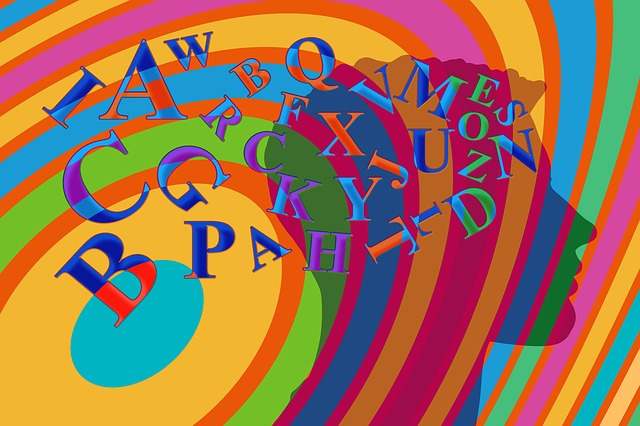 Start with an open mind and playful attitude. Mind mapping is a “brain dump.” Expect that many of the ideas you produce will not be useful. That’s not important. You can harvest the valuable nuggets later.
Your brain works best in short, intensive bursts (5 minutes or so), so once you begin, work fast and write down only key words, symbols, images, phrases … not sentences. Strive for an explosion of ideas.
Write with a pencil, your favourite pen, coloured markers, crayons or whatever helps to make you feel creative. Same goes for the paper you choose: with or without lines, coloured, big or small.
Where do you start?
 Begin with one central keyword or concept in the centre of the page. Starting in the middle of the page gives the creative right brain a head start, as our non-creative left brain is used to starting in the upper left-hand corner.
You can put the keyword in a circle or a cloud shape or not enclose it at all (this is a creative process, so there are no “rules.”)
You can use an idea you want to work with or a random word picked from a book or given to you by someone else.
Then what?
I started with the word GERANIUM.
Write down/draw anything that keyword suggests to you, and then a word or symbol associated with that new thought, and so on, until you have a chain of linked ideas moving out from the central theme. Do not judge your ideas at this stage; simply write them down.
Put an idea down even if it seems unrelated – your subconscious probably knows more than you do. DOCTORS OFFICE showed up on one of the branches. What does that have to do with geraniums? Seemingly nothing now, but when I organized the ideas afterwards, the link became clear. (I’ll explain later).
 Keep your hand moving. If ideas slow down, take your hand back to the central concept and begin a new branch. Draw empty lines, and your brain will move to fill them automatically; or inject more energy with a different colour pen.
Eventually you’ll have several trains of thought, all different from each other and yet linked by the central concept. You can now organize them to fit your purposes.
Organizing and using your mind map ideas
Ways to use the ideas you’ve generated can be as varied as the ideas themselves.
Say I’m looking for an idea for a non-fiction article. Perhaps my first instinct around the word GERANIUM is to do an article on container gardening, I take a highlighter and highlight all the ideas that fit in any way with that slant. In the example, I’d highlight: POTS, RED, HANGING, TRAILING, VERANDAH, PATIO, SUMMER, SCENT. Hmmm….. boring!


But in the process, the word SCENT reminded me that geranium leaves can be used to scent and colour sugar. The mind trail on HERBS, TEAS, SPA suddenly becomes more interesting. A non-fiction article on “Using Flowers for Special Teas” now has possibilities. I might do another mind map now with the word TEA in the centre.
Use a mind map over and over
But don’t stop there. The same mind map can be used several times, at different times for different styles of writing.
 The phrase DOCTORS OFFICE has me curious. I follow the branch back towards the centre, trying to work out what PINK and SUGAR have to do with it. Then it hits me… when I was a child, our doctor used to hand out tiny cylindrical candies that smelled like scented geraniums. I realize that I haven’t seen them in decades. What other sweeties from that era are no longer around? Hmmm….. Another article? A scene for my novel? A short story? Things are brewing now.
Later, it strikes me as interesting that I have two trails that contain the word VERANDAH, and I’m drawn to the references to LATIN WORD; SECRETS; SCHOOL FRIENDS; IVY; OLD BUILDINGS; ENGLAND. I think I feel a poem emerging…..
Even the trail that started out with the boring POTS; RED, ended with SQUIRREL; CRINOLINE: HIBISCUS. Now I realize, that’s a story my subconscious has unearthed about a little critter that came to my garden last year. He loved hibiscus shoots, and …

When should I do a mind map?
Use a mind map whenever you want to generate new ideas. Use it to focus in on a particular problem area. Use it to expand something you are already working on. Use it to reveal hidden subconscious perspectives on a seemingly boring topic. Or just do it for fun and see where it takes you. Quick. Easy. Worth it!
DID YOU KNOW
 The perfect spot to be creative – and mind map to your heart’s content – is at Spring Thaw 2018 on beautiful Rice Lake in Keene, Ontario. Come for 3 or 5 days and escape to write with Writescape.Tailor your weekend to suit your needs.There is an agenda and formal programming, but you choose what sessions and activities will work for you.

 hope to see a crocus – frustrated with winter already – amazed at how those squirrels survive out there in the cold – awed by the beauty of everything – awed by the determination of a tiny flower pushing through all that snow – anticipation of spring coming in just a few weeks – resignation that there is still winter to live through – teased by winter – foreverness -winter teaching me a lesson in patience – promise….


 the creaking branches and knobbly branches remind me of my bony arthritic fingers – the squirrels are like busy moms dashing about making sure everyone has the things they need – layers of snow like blankets- ice is a blanket too – crocus and saffron spice – sun like a returning lover
 Trees wave knobbly fingers
 Bony tree limbs wave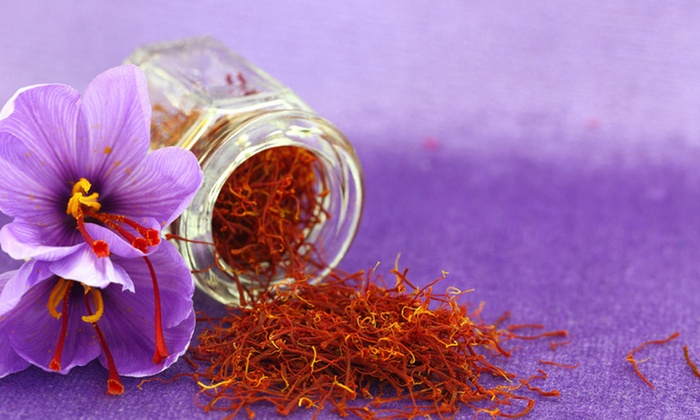


 I live in a tiny granny suite in the southwestern corner of BC, where space is at a premium. I can no longer keep physical archives, and I didn’t have enough empty file storage space on my existing computer. My archive still had to exist in a form that was
 A quick poke through Staples and London Drugs websites unearthed the perfect solution: a hefty 2 terabyte Passport drive that plugs in to a USB port on my computer, and holds LOTS of files. All I needed was a sale and less than $100 to end my space challenge.
 Consistent folder names across the various storage, email, and social media platforms make retrieval much easier. Folder structures work best for me if they are named in the ways that I think, so I created my own. A couple of hours saw my folders labelled and matched on every platform.
 Emails (in individual folders OR across the entire inbox and all sub-folders) are searchable by subject line, content, keyword, date and sender and by some or all of the above in every mail program out there. You just have to learn how. Every email program is slightly different, and not everyone uses my beloved Outlook. For Gmail, I read the search
  Leah Murray operates
 The writing critique group I belong to understands this perfectly. We meet every two weeks and at the end of each meeting we all set a writing goal for the next two weeks only. We each set our own goal depending on what we are working on at the time and what is happening in our lives.
 When I’m trying to avoid that “frog”, I play solitaire, disappear into social media or sort the kitchen junk drawer or….. I’m sure you have equally pointless—and time consuming—avoidance tactics.
 Now this may seem contradictory to the “eat the frog” principle, but getting through your to-do list and achieving your goals begins with making your bed.
 So there you have it.
 Whenever I travel, I visit gardens; I seek them out in concrete-jungle cities and have a vast one of my own. My mother and grandmother taught me to create landscapes that worked with nature, not against it. They taught me how to create a green space with soul. And I realized as I looked at this tiny urban gem on my walk, that creating a garden that has a heart is very much like writing.
 We all have big writing dreams: maybe the next best seller, perhaps an award or earning enough to live on. But on any given day, don’t worry about what seems unattainable. Work with what you have.
 Not everything we write is worth keeping, but often you write a really good scene or stanza that just doesn’t fit with the piece or poem you’re working on. It might even be one of your proverbial “darlings.”
 But you’ll find that you get more out of your writing community when you contribute: give of your time, your expertise and your encouragement and support. We all have high and low times as writers and whether you need someone to help you with a practical plot problem, to celebrate a success or just give you a kick in the pants to submit or get writing, your writing tribe are the best people to do it. But, offer the same to other writers. I know that over the years, I’ve learned more about the craft by talking to fellow writers and giving feedback to others than from any book.
 Without planning and fertilizing, weeding and maintaining, gardens wither or become something else you have no use for. Your writing, like any art form, is the same. You wouldn’t expect to play the piano well without practising regularly. Writing is no different. Write, write and write some more. Plan writing time into your schedule. Fertilize your craft with workshops, reading and communing with fellow writers. Weed out all your negative attitudes about not being good enough. And fill your creative well often.
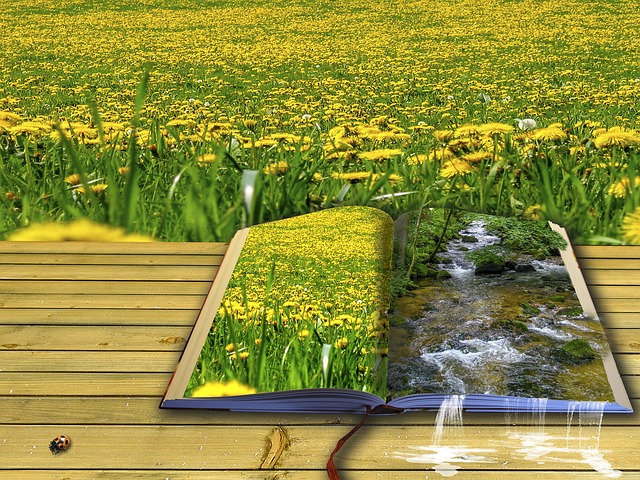 I also like the books I read to be set in exotic places, in other cultures, and affected by political or natural turmoil that I am never likely to be faced with. I like to learn about other customs and occupations.
  The first one:
 The next:
  And the third:
  Who knows, you may discover a new genre that really speaks to you. Perhaps that coming-of-age story you’ve been struggling with as an historical romance might be better reworked as a dystopian YA. But you have to read some dystopian YA to find out.


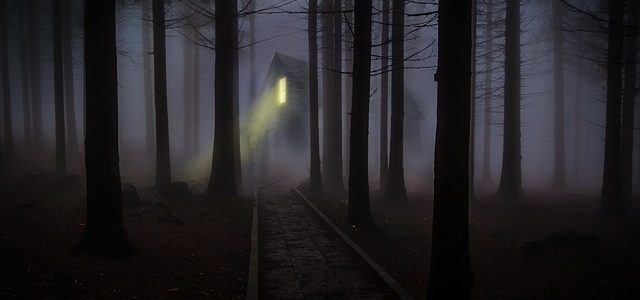
 There are many things you can do on your artist’s date. Because our creative brain is a sensory brain, anything that stimulates the senses or fires up the imagination will work: a walk in the park, making soup, lying on your back and watching clouds, going to a food or music festival. It doesn’t matter as long as you do it mindfully.
 This Crime Writers Festival showcases nine Canadian women authors of crime and mystery. On Friday evening at “The Mysterious Affair,” a table-hopping event introduces each of the authors in turn:
 Often when you begin writing about the subject of the prompt — say swimming in a lake — it can take you somewhere else — say an experience of drowning or crab baskets in Italy or how your father never believed in taking vacations. Go there. Forget the prompt and go where the energy is.
 Switch it up
 Write what you know
  Be specific
 Lists
Lists
 ok
ok  If writing is important to you, it needs to be built into your routine in the same way that you build in any other important activity in your life. If you need to schedule writing time like dental appointments, piano lessons, or hockey practice, do it. Think of writing as your “job” and block out set times like you would if you were going to work.
