Secrets of a Good Radio Interview

Secrets of a Good Radio Interview

Gwynn Scheltema

The other day, this message came up on my Facebook stream:facebook-radio-cropped

northumberland-89-7Well, I may not have a word for that, but I do understand it. I’ve been interviewed as a writer several times on the radio, and I’m a co-host for a weekly radio program, Word on the Hills, that airs on Northumberland Radio 89.7FM. In the three years we have been running, I’ve learned a thing or two, and here’s the tips I have to offer:

Understand why are you doing the interview.

Why did the radio station ask you? Why did you agree?

Our station promotes all things local. We want to showcase people from our region doing interesting things. Word on the Hills narrows that focus to local people connected with the writing world. We love personal stories, relaxed chatter and slice-of-life humour is always welcome. We don’t just want to hear about the book. We want to hear about you. Your writing journey, your struggles, your triumphs. We want the human face on the book.

You are presumably looking at the interview as a promotional opportunity. But are you clear about what it is you want to promote? Yourself as a writer? An upcoming event? Your new book? All these things?

We are happy to be a promotional outlet for you, but you need to give us entertainment in return.

Arrive early

radio-1475055_640Before your program can air, we need to settle you in the studio, get you set up with your mic and test your voice quality. I like to go over the format with my guests and make sure all their questions are answered. Even if you are doing the interview by phone, we still need to prepare you and test the voice quality of the connection. At your end you need to minimize background noise and get comfortable.


 Understand the format

Our half-hour show is really 22 minutes. Done in two 11-minute segments. Occasionally we can go over that a bit, but we need to leave 5 minutes  at the start for news and weather updates and ads, and then a 3 minute ad break in the middle. Now consider that during the show, we need a couple of minutes up front to introduce the show and you our guest. At the end we need wrap-up time, and before and after the break we need to reacquaint listeners with what they are listening to. All that takes time too.22-minutes

What this means is that you really only have 8 to 10 minutes per segment devoted to you.Use it wisely.

Use your time wisely

The first step in using your time wisely is being prepared. We always offer our guests the opportunity to supply any questions they want to be asked. It’s a win-win that way. We know that you will be enthusiastic about your answer, and you will feel more in control and we will both be serving our goals.

If the radio station you are dealing with doesn’t make this offer to you, then make it to them.Or ask them what they will be asking you so you can come prepared. At the very least, arrive at the interview with some questions prepared in case.

town-sign-1699957_640Of course, hand in hand with that, make sure you prepare your answers. Don’t rote learn a script or plan to read. That is deadly! Instead know the points you want to make and practise talking about them out loud to yourself in a mirror, or with a friend or family member. Bring your notes with you. Radio is “blind” so no one will know you are using cues.

Most importantly, link whatever you talk about to what you want to promote. Almost any question can be steered to the topic you want to talk about provided you are clear about what that is.

Especially come with factual information written down. Event dates and times. Contact info. Website URLs. Not only will this help you remember during the interview, but it makes it easier for the radio host to echo the information because it’s handy.

Choose appropriate readings

If your interview will include readings, keep to short complete excerpts. Pick the same kind of things that you would for a live reading: funny bits, action and suspense. Not long descriptions or introspective musings. Make sure your piece is in context. If you have to supply a lead in, fine, but count it in the allotted reading time. If you are promoting your book, choose a bit that represents it so we get a flavour of the rest.

Always practise your readings out loud at a slower pace than the speed you talk. And time them. I’ve had to cut people off in mid-reading because the program was out of time. I’ve also edited recorded pieces so they will fit, and the author didn’t get a say in my edits.fel-gwynn

Although people love to hear stories, their listening focus isn’t very long. If you have been allotted more than 5 minutes of reading time, break your reading into two shorter pieces. And make them different. Leave them wanting more.

If you are reading from typed pages, bring them in plastic sleeves so they don’t rustle. If you are reading from a book, mark the pages so there is no dead air or mindless mumbling while you find your spot.

It’s all about you

The most important thing to remember is that this is about you—not the radio station, not the presenters—you! Take control. Know and push your agenda. Just do it in a way that pleases listeners, and you’ll have the radio hosts—and listeners—eating out of your hand. And with any luck, buying your book.

Have you ever been interviewed on radio? Any more advice to offer?

NaNoWriMo 101

NaNoWriMo 101

Gwynn Scheltema

What is NaNoWriMo

nano-logoNational Novel Writing Month is an Internet-based challenge to write 50,000 words of a new novel in one month. It started in 1999 with only 21 participants. By 2012, there were over 340,000 who collectively wrote over 3.2 billion words.

To win, participants must write an average of just over 1,667 words per day. Organizers of the Nano event say that the aim is simply to get people to start writing, using the deadline as an incentive to get the story going and to put words to paper. There is no fee to participate and anyone who reaches the 50,000 word mark is declared a winner.

Writing in Community

timeChurning out over 1600 words will keep you busy–and alone–most days, but you can also connect with fellow participants and participate in daily challenges, pre-Nano prep sessions and post-Nano activities. You can connect through Twitter [@nanowrimo], on Facebook  or follow their blog.sudbury-nano

Many people run their own groups locally and regionally to support one another through the month. Tips, printable schedules, and advice is all over the Internet.

NaNoWriMo programs

Nano has spilled out into communities around the world. Writescape got in on the fun when we led weekly prompts and writing sessions in partnership with the Whitby Public Library a couple of years ago.

There are three formal programs listed on the Nano website:

  • The Young Writers Program promotes writing fluency, creative education, and the sheer joy of novel-writing in K-12 classrooms. We provide free classroom kits, writing workbooks, Common Core-aligned curricula, and virtual class management tools to more than 2,000 educators from Dubai to Boston.
  • The Come Write In program provides free resources to libraries, community centres, and local bookstores to build writing havens in your neighbourhood.
  • Camp NaNoWriMo is a virtual writing retreat, designed to provide the community, resources, and tools needed to complete any writing project, novel or not.
Does it work?

nano-cartoonIt sure does. Even if participants don’t complete the 50,000 words, they get words written, lots of words. And anything that helps you write is worth trying. Sometimes just the tension of knowing you have a deadline combined with being part of a larger global event can bring inspiration and focus to the creative process.

But don’t take our word for it. Consider this: there are bestsellers that were born through NaNoWriMo.

The NaNoWriMo website says that more than 250 NaNoWriMo novels have been traditionally published. They include Sara Gruen’s Water for Elephants, Erin Morgenstern’s The Night Circus, Hugh Howey’s Wool, Rainbow Rowell’s Fangirl, Jason Hough’s The Darwin Elevator, and Marissa Meyer’s Cinder. See a full list of published authors.

Maybe NaNoWriMo is “write” for you.

Let us know if you’ve participated in NaNoWriMo and what it did for your writing.

Benefits of Bravery: Going Public Fear(less)ly

Benefits of Bravery: Going Public Fear(less)ly

In the middle of August, I took a big risk and made a somewhat rash and public pledge on this blog: Finish my novel by September 30 or…

…well, I didn’t say what the “or” might be. Only that you, dear reader, would hold me accountable. And yes, you certainly did.

Just a reminder: I compared my sluggish progress on my novel in progress to how I dropped out of aquafit some years ago (the old “life gets in the way” excuse) but that returning to regular exercise was finally showing some results.

person-947709_640I reasoned the same could happen for my novel, if I only made it a regular habit to write…the novel. (I write almost every day, just not always the novel.) In fact, there have been times I’d slipped so far away from the story that I couldn’t recall important plot elements.

On Friday, September 30, I “finished” The Last Battlewipe. And then spent the next four days making it better.

I’m still not done with the editing but I can happily report that my self-imposed kick in the pants has generated much more than a full draft. I also gained three other important results.

Result Number One:

woman-41201_640Once I made the commitment to get the darn thing done, I had to shift my thinking from write to reach the finish to a much more challenging finish to reach the writing. Accordingly, I became far more focused on the vital pieces of the novel: character arc, story structure, logic/plot glitches and glossovers.

The very act of committing to finishing the work meant I had to think deeply about what I was trying to achieve and ensure that this was foremost as I wrote those final scenes.

Result Number Two:

kisses-1039533_640I’m excited again. Like a teenaged love affair, writing is often all starry eyed and passionate at the start. It’s an adventure following those characters, letting them surprise me, discovering personality quirks and adorable idiosyncrasies.

Until the “adorable” wears off and I realize I’ve let my characters and story run off the rails following a lot of useless material. And I’m bored.

For a lot of writers, it’s at that point that the murky, muddy middle of the book wears you down.

Enter the panic of a public deadline coupled with the realization that I have a lot more novels waiting for me to write. I had to finish this one. And all that panic stuff – it made the writing exciting for me once more. But because of Result Number One, I brought focus to the rekindled love affair. So much better to be a grown up.

Result Number Three:
black-84715_640Last month, I had a fantastic pitch session at North Words Literary Festival. A query letter and the first ten pages resulted in an enthusiastic agent asking to see the rest.

I left that festival on a tremendous high: someone gets me and what I’m trying to do with The Last Battlewipe. So how was it that the first ten pages so intrigued the agent when I was still building the last quarter?

First, to keep working on the ending I had to revisit the beginning. Again. And again. Those ten pages that agent read were shaped and pared and rewritten dozens of times. Every time I set a stone in place at the end of the book, I had to return to the foundation and ensure it could hold that stone.

Second, I believe if I hadn’t got back to the story, I wouldn’t have been clear in my mind about the themes and ideas I am exploring in The Last Battlewipe. And I think my heightened focus and restored passion for my novel is contagious. I was able to carry that focus and passion into the session. It’s no guarantee that my wonderful fifteen minute pitch time will land me that agent but it sure was the 2 a.m. rocket fuel that has kept me focused on perfecting the finish line.

One more thing.

My aquafit regime? Ooops. I’ve let that one slip and my recent BIC woman-1539087_640(bum in chair) has done little to get my physical energy back on track. So I am still “a work in progress” on more than one front. But I guess we all are.

I’ll keep you posted. Meanwhile, back to the edit chair.

Do You Know…what an agent will see when they look at your query letter? Register for our November retreat when a top Canadian literary agent, Hilary McMahon, is Writescape’s special guest and she’s staying for the weekend to share insights, inspiration and a morning workshop.

Up Close & Personal: Writer Jenny Madore

Up Close & Personal: Writer Jenny Madore

Jenny Madore pictureJenny Madore didn’t always know she wanted to be a writer. It took packing up husband and kids for a move to the rainforest of Panama for a year and a single copy of “Twilight” to nudge out the writer in her. Shifting from “I could write Bella into a better situation” to “I could write my own stories”, Jenny discovered her passion before moving back to Canada in 2008.

Now the author (J.L. Madore) of a self-published, urban fantasy series where alpha women kick butt and devour the gorgeous male warriors around them, Jenny is working on becoming a hybrid writer and breaking into the traditional publishing market. She is also in her second term as President of The Writers’ Community of Durham Region, a 280+ member umbrella organization that offers networking, promotion and education opportunities to its members.

Writescape caught up with Jenny this week to learn more about her as a writer:

What is the most important thing a self-published writer needs to consider?

That creative minds aren’t always the best prepared to tackle marketing, or websites, or newsletters. Points to self. The effective marketing of a novel once you’ve self-published takes a gazillion hours, dedication, and a thoroughness that some of us just don’t come by naturally. It can be learned, or hired out, but you have to identify your weaknesses and make allowances for them.

For example, I know I have to keep current content on my website to sweet-talk the algorithms of online booksellers and search engines, but when I pull up my website, my last post was for May 30th . . . of 2015. Yikes. If earning a living at writing was my goal, I’d be upset at how badly I drop the ball at times. Thankfully, writing is my goal. Growing as a writer. Improving. I’ll get back to marketing at some point. Maybe soon. Maybe not.

What does being a “hybrid writer” mean to you?

Honestly, I picture ‘Hybrid’ as being the best of both worlds but can’t say for sure . . . yet. What I like about the idea of straddling the indie and traditionally published worlds is the freedom of one, while coveting the guidance of the other. I’d like to work with house editorial staff and have people picking at the minutia of a story that they see hitting the mark of the ever-changing market. I want to grow. Know what they know. See the things they’re looking for in my own work for future reference.blaze-ignites-front-cover-promo-image

But not all stories are going to hit the appeal of publishing houses and that’s where indie rules. When I first wrote Blaze Ignites, I shopped it around first. I received rejections saying “great writing but fantasy is in a downturn,” or “Elves just aren’t sexy.”

Hello? Legolas Greenleaf isn’t sexy?

I beg to differ. That’s why I went ahead and independently published that series. I’ve got so many stories circling in my head, I want them out there entertaining people. Well, I hope they’re entertaining people.

What are you working on now and how different is it from the urban fantasy series you started out with?

female-316703_640I’m currently editing the finished first draft of a Roman time-slip historical romance. The working title is, In The Shadow, and I’m very pleased with how it’s shaping up. I found it very different to write historical, because it is an actual moment in time which has been documented and studied by academics and enthusiasts for hundreds, if not thousands, of years.

I put a great deal of pressure and author responsibility upon myself to get the details right. Did a Praetorian wear a white toga or a violet one? What flowers bloomed in ancient Rome in 79CE? When would a patrician woman wear her hair down? What did the streets of Pompeii look like, sound like, and smell like before the eruption of Vesuvius?

The dialogue is crucial to selling the time period (Latin sentences often omit pronouns), as is the setting and, most importantly, how the love story evolves under the stresses and strains of a violent and unhindered society (Sin and shame are concepts which evolved much later in history).

The fantasy series I write allows me freedom to make things up to suit the story. As long as I justify what’s happening in the world, there’s really no wrong answer. It’s freeing and fun. Writing historical fiction offers me a sense of personal satisfaction I hadn’t realized before. When I get it right, it’s really right, and even if the reader doesn’t know it, I do.

How do you balance family life, the volunteer leadership role for a dynamic organization and your needs as a writer?

Balance is the operative word, though it has recently become easier. With my kids grown and newly establishingborg_dockingstation themselves out in the world as successful young adults, I’m finding my hours are my own for the first time in 23 years. As a full-time, at-home mother and wife, I became accustomed to working with crazy schedules and multi-tasking for the benefit of the collective.

We are Borg.

Those skills translate perfectly into running an organization like The Writers’ Community of Durham Region (WCDR). I want the members to strive for their dreams and have what they need for success. That’s why I initiated Bookapalooza, Skip The Slush Pile Pitches, Blue Pencil Bonanza, Novel Whisperer, etc. I’m available to help if I can, organize events, make concessions if obstacles arise, and ask for help if things get complicated. I love the WCDR and its members. In my mind, the organization is simply an extension of family.

As for my writing . . . well, I’d like to say I set aside time every day, but that’s not always possible. The WCDR is an active, vital organization and when events approach, there is no end to the preparations to be made or work to be done. I can safely say, that I work on my writing often. Sometimes mornings. Sometimes nights. Sometimes just a few moments before I have to start dinner or leave for a meeting. Stories are always in the back of my mind, ideas, characters, and conflicts percolating until I can get back in front of my laptop.

Describe your favourite writing space — what does it look like?

Easy, (looks left and right). I’m on my bed, knees up with my laptop in front of me, a mass of pillows behind me, and a dozen reference books and novels scattered across my comforter and end table. Stryder, my Panamanian dingo dog I brought home from living in the rainforest, is lying beside me, snoring through his doggie dreams, the tip of his tongue slightly out. Perfection.

If you could have dinner with anyone (living, dead or fictional) who would that be?amy-sherman-palladino-02

Ooh, tough one. So many names come to mind for so many reasons. I think it would have to be Amy Sherman-Palladino, writer of Gilmore Girls. Not only is she quirky and odd, (which would make dinner a hoot), she wrote one of the greatest, wittiest, fastest paced, most-heart-warming collection of moments ever seen on television. (Newsroom and West Wing also in that category) The writing of Gilmore girls hits all my buttons: intelligent characters, flawed relationships, unconditional acceptance, family love, romantic love, loyalty, off-beat humour . . . the list is endless. Yep. Amy Sherman-Palladino for sure.

Wow, over so soon. Thank you, Writescape, for inviting me to participate, I had a blast. Annnnnd . . . are you arranging my dinner with Amy? I’m really looking forward to that now.

Sharpening your creative edge

Sharpening your creative edge

Gwynn Scheltema

This weekend, Ruth and I spent a few hours with a motivated and talented group of writers in St. Catharines. Some were beginners, some seasoned professionals, but all of them dived in and challenged themselves and took creative risks. It was thoroughly energizing.

boots on rail lineWriting is, for the most part, a solitary act. Sometimes lonely, sometimes blissfully peaceful. But I find that too much alone time as a writer is not always good. Yes, I might get more written, but it can also sometimes skew my writing perspective.

I can get rooted in bad writing habits, forgetting to use fundamental writing skills I have used before. My writing challenges can start to feel insurmountable. Or I can relax into my writing comfort zone and stop taking risks…dulling my creative edge.

Being with other writers this weekend, feeling that energy that emerges when writers get together, reminded me that I need to build that into my writing life. I also need to hone my creative edge by deliberately taking regular creative risks.

So how can you take regular creative risks and re-energize?

Give voice to non-POV characterseyes-141363_640

Write a scene from a non-POV character‘s perspective. This reminds you that each character has their own motivations. You don’t have to use the piece you write, but in the act of writing it, that character may give you insights about your regular POV character or about the events in the scene. Perhaps there are even connections to other characters you were missing.

Approach description differently

addict-84430_640Challenge yourself to use visual description sparingly, and increase the use of the other senses instead. Try also to limit scene description to just two or three details. (And make sure that the details are ones that the characters would naturally notice and not just things the author wants the reader to notice.)

 

Use prompts

Using prompts forces you to come at things from different entry points. They stimulate memories and experiences that can be adapted to fiction and can be a springboard to new ideas. Here are three links to get you started.

Freefall writestamp-895380_640

Freefall writing is one of the best and most satisfying ways I know to stay ahead of your internal editor and left analytical brain and give your right creative brain and your subconscious a chance to surface. By writing without stopping for a set time, and having no expectations of what will be written is extremely freeing, and time and time again I’ve seen wonderful writing emerge from the practice.

Get together with other writers
Dining at Turning Leaves

Even if you have a wonderful writing space at home, getting together with other writers to write is a different and energizing experience. I live next to a lake, but look forward to going on retreat whenever I can. It allows me to “leave the world behind” for a short while and concentrate on being creative. Being with a group of people who understand the writing world is invaluable and seeing others around me writing motivates me to write too. Try it. Join Ruth and me at our annual fall retreat Turning Leaves 2016 this November.


To edit or not to edit…

To edit or not to edit…

Gwynn Scheltema

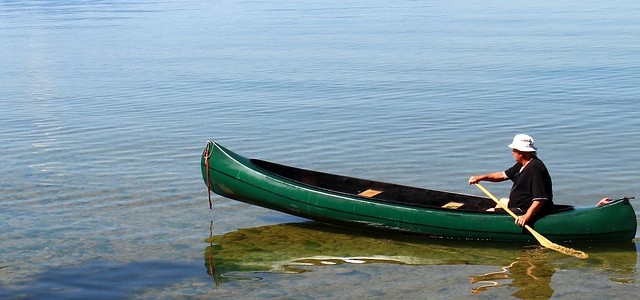
You write Chapter 1. It flows like paddling a canoe in a strong current, a few J strokes and you are heading forward fast. Yes!

Chapter 2 starts out that way too, still moving well, still splashes of enthusiasm and creativity, but the current flows a little slower now. You think back to Chapter 1. Did you start in the right place? Perhaps you should go back to the beginning and make sure?

So you retrace your steps back to the start and paddlecanoe-1082130_640 through Chapter 1 again. For the moment you are convinced that, yes, you started in the right spot. But you find a short cut on an upper stretch that improves the trip, so you make it. Chapter 1 feels really good now.

Back on the route of Chapter 2, you look for similar shortcuts, note the beautiful spots you don’t have time to explore, make notes about bad spots you’ll avoid if you come this way again.

In Chapter 3, your writing river opens into a lake. You’re not sure exactly which way to point the canoe, so you figure you’ll go back to Chapter 2 and explore those beautiful spots before you continue.

And while you are in Chapter 2, you figure you probably missed a couple of beautiful spots in Chapter 1, so you go back to Chapter 1 and….

Sound familiar?

The internal editor

It’s certainly the story of my writing life. But I know I’m not alone. The urge to rewrite before you’ve finished the story is powerful. Many discarded, unfinished manuscripts have polished first chapters that would keep readers reading…if there was more to read.

It’s all the fault of that dastardly writers’ internal editor. The one that tells us that our writing is “crap”; that we are disillusioned at best and arrogant at worst to think anyone would want to read what we write. The one that tells us we need to be perfect.

man-286477_640And the truth is, most first drafts are not publishable. As Hemingway so succinctly said, “All first drafts are shit.” First drafts will have strong parts and weaker bits, and bits that should be axed and areas where more needs to be written. That’s NORMAL. That’s what the editing process is for.
But if you heed your rational, analytical, internal editor, and constantly loop back out of the writing process and into editing, you will run out of creative energy. And you will push the unconscious creative writer in you further and further away.

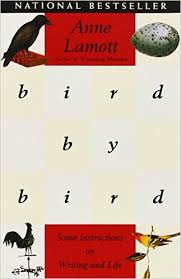
In her book on writing, Bird by Bird, Anne Lamott wrote:bird by bird

The only way I can get anything written at all is to write really, really shitty first drafts.The first draft is the child’s draft, where you let it all pour out and then let it romp all over the place, knowing that no one is going to see it and that you can shape it later. You just let this childlike part of you channel whatever voices and visions come through and onto the page… Just get it all down on paper because there may be something great in those six crazy pages that you would never have gotten to by more rational, grown-up means.

No editing on a first draft?

 So does that mean that you should never edit as you go. Of course not.

I get momentum for a new chapter by going into the previous chapter—not back to the beginning of the novel— to read it and often edit it. That’s productive. You get into the voice of your characters again, you renew your sense of place in the story. And the time invested is not huge. More importantly, you do it as a way to move forward, not as an excuse to not move forward.

Perhaps like me, part way through your manuscript, you feel that the wrong character is telling the story, or that the POV should be first person instead of third person. I think it makes sense at this point to go back to a previous chapter or two—again, not necessarily the beginning—and rewrite and decide. But make that decision and move on.

girl-1563986_640Time and circumstance play a role too. If all I have is the forty minutes on a noisy train, likely editing is a better use of my time.But maybe not. Maybe just thinking through a plot hole or a character’s reaction in an upcoming scene would be better for keeping the novel moving forward.

It’s definitely tempting to go back to edit when you can’t think of  what to write next. I do it all the time. But I’ve found some effective ways to overcome that urge:

  • Go for a walk and think my way through the plot or character problem and then write forward again.
  • Use targeted writing prompts
  • Freefall write
  • Write a brief summary of the scene I’m stuck on, and go on to the next scene.
  • Persuade myself to write just one sentence…then one more…then…

It all comes down to how much your editing loops are preventing you from writing new material. We all create and work differently. If a bit of editing gets the creative juices flowing, go right ahead. But if it’s a procrastination tactic, fight the urge. The main goal of your first draft is to get the whole story down.

How do you stop yourself from using editing as procrastination? Share your tactics in the comments below.


Expert advice

Expert advice

Heather M. O’Connor

When Richard Scrimger came to Turning Leaves a couple of years ago, he told us, “Writers are liars and thieves.”

He meant, of course, that the best stories are partly made up, and partly built on stolen bits of real life. Readers want to believe your lies. You can tell the most outrageous whoppers, from a theme park with cloned dinosaurs to a school for wizards. As long as the stolen bits ring true.

Steal what you know, research what you don’t

Take my novel Betting Game, for instance. It’s the story of an elite soccer player who gets mixed up with illegal gambling.

I could lie and steal with panache about soccer. I play. My kids play. I watch the sport on TV. But illegal gambling? That was a central part of my novel’s plot and characters, and I didn’t know a thing about it. Nada. Zip. How could I make my story believable?

Who ya gonna call?

I needed a subject matter expert. Someone in the biz. But not the gambling biz. A “reliable narrator” if you know what I mean. Someone in law enforcement. It took time to track down an expert, but what he told me was invaluable.

Looking for an expert of your own? Here are the steps to follow.

Go surfing

Begin your search online. I started by studying news stories. Who was quoted on the topic? Who went to court?

Your expert may speak at industry events and conferences. Check continuing education classes and LinkedIn, too.

network of peopleTap your network

Have you asked your friends and family if they know an expert? I was stunned to learn that one of my teammates was once a CSI investigator in New York City. (She now teaches forensic science and invited me to a crime scene class. Coolest writer field trip ever!)

Don’t forget your local librarians—they’re walking encyclopedias.

Do a little diggingman-1483479_1920

Once you locate subject matter experts, don’t waste their time. Pick your own brains before you pick theirs.

Prepare a list of open-ended questions that require more than a yes or no answer. Try to think up a couple of questions they may never have answered.

Email your questions and a short synopsis of your story a day or two before the interview. This gives the person time to mull over answers and think of interesting anecdotes.

Don’t be shy

Relax. Chatting with a subject matter expert is easier than it looks.

People like talking about their jobs. Though they find their work fascinating, their friends and family may not. You provide a rare treat—an enthusiastic audience.

office-336368_1920Take note!

I prefer to interview in person or by phone. People have more to say when they don’t need to write it all down. You also have a chance to ask follow-up questions when you’re talking live. Email interviews are very limiting. They’re best for confirming facts.

I usually record my interviews, as long as there’s no objection. Most smartphones have an app for that. I also take detailed notes.

Say thank you

Remember to thank your expert for taking the time to share their knowledge and expertise. Send a thank you note. If their help was significant, include them in the acknowledgements, and consider sending them a copy of your book.

In Conversation with…literary agent Hilary McMahon

In Conversation with…literary agent Hilary McMahon

Hilary McMahonToday, we chat with Hilary McMahon, Executive Vice President of Westwood Creative Artists (WCA), one of Canada’s oldest and most respected literary agencies. Hilary maintains an extensive and diverse list of adult and children’s writers. She also represents WCA authors on trips to American and British publishers and the Frankfurt and London Book Fairs. 

Why did you become a literary agent?

I earned a degree in journalism and English, but soon realized that I wanted to read other people’s stories far more than I wanted to write or teach. I’m an obsessive book reader, an extrovert interested in people and relationships, and a tough negotiator with a head for details and numbers. This job allows me to combine all those different skills.                                                                                                    

books-20167_640 (1)Being an agent is a tough job. So what is it that has kept you in the field for more than 20 years?

Nothing compares to the magic of being engrossed in a great book. I love being part of the process that begins with an idea or rough manuscript, and ends with a finished product that can be shared, enjoyed, discussed around the world. And working with writers can certainly be challenging at times, but it’s never dull…

If we were to spend some time in a typical day with Hilary McMahon, what would it look like?letters-286541_640

That’s one of the many wonderful things about this job, there is no typical day! It’s an illusion that I read all day. Today for example, I have reviewed a section of an author’s revised novel and then shared it with an interested publisher, worked on some blurbs for our Frankfurt catalogue, checked a film contract and sent it off to the author, given a non-fiction author feedback on her proposal, spent time crafting a tactful rejection letter, done the deal memo for a middle-grade series I’ve just sold, addressed a picture book writer’s concerns about the illustrations for her new book, and followed up on some projects out on submission. I had hoped to make a dent into my towering pile of submissions but I don’t know if I’ll get to it…

What do you like to see in a query from a writer? And is it different for a fiction versus a non-fiction query?

You’d think it’s obvious, but I need to see excellent writing! A skillful, original, compelling pitch.

For fiction, you need to hook me with a brief description of the work and draw me in with a short sample. It certainly doesn’t hurt if you include some details about places you’ve been published and any relevant awards or education.

For non-fiction, your expertise in the field is going to be important, to me and to publishers – I need to know that you have some authority about your subject. Most simply, I need to be compelled to move from the query to a writing sample.

hand-861275_640What is the one piece of advice you want writers to know once they land that elusive agent?

That just because you have an agent it doesn’t guarantee your work will sell! There’s still a lot of hard work ahead, but at least you aren’t doing it alone.

What are you reading now and how do you feel about it?

I’m reading a really intriguing submission, clever and sparely written and definitely original in story and in the telling.  But I’m still trying to decide if it’s something that I could sell…

If time, place and money are no object, who is the one person or character you’d like to have dinner with…and why?Jane Austen

I’d love to have dinner with Jane Austen, after she’d spent a bit of time in 2016 – I would love to hear her take on this modern world!

Want to get up close and personal with one of Canada’s top literary agents? Come to our fall retreat, Turning Leaves 2016.

Hilary is our special retreat guest, joining us for meals, evening chats and sharing insights and expertise in a Saturday morning workshop on catching and holding an agent’s attention. She’ll also review Turning Leaves 2016 participants’ query letters in advance and hold private one-on-one feedback sessions.


Get Fearless. Go Public.

Get Fearless. Go Public.

Years ago, I was a committed aquafit attendee. Underwater lunges, leg lifts by the jets, jogging through chlorinated pools—it all turned my crank. I went twice a week with my best friend, Linda. We had a blast, challenging each other to push harder, harder. We churned up big waves with our enthusiasm and built up some wonderful stamina and energy. Aquafit helped keep me healthier and decidedly thinner.

pensive-female-580611_640But life got in the way. I lost interest. And, you know, aquafit just moved to the backburner of “I’ll sign up next year.”

Several years and pounds later, I find myself back in aquafit. A new year’s resolution I opted to actually keep. But man oh man, what happened to make water churning so much harder? Linda and I were iron-women back in the day. Now, I’m feeling far more like rubber-woman. Sometimes even like sopping wet cardboard-woman. I swear they added molecules to the pool.

But I will say that several weeks in, I recognized some of the old iron-woman coming back to me. And by the end of June, I had more energy and fewer pounds. Don’t get me wrong. It will be a long time before I can jog in the pool like a whirlpool on steroids. If ever. But my confidence is up. And I’ve managed to keep a quasi-schedule over the summer with a less strenuous program in the cottage river. I’m looking forward to signing back up in September at the local pool.

And that, believe it or not, gives me hope on an unfinished manuscript that lingers in my computer. This 79,000+ word novel started out like most of my writing. I always write because I want to know the answers that I set up whenever I start a story or poem. And I set up a lot of thematic questions with this one: gender, politics, genetics and nature versus nurture. I was pumped to explore them and it was going great.writer-1421099_640

But sometimes —just like why I had to give up aquafit years ago—life gets in the way of writing. And sometimes, a writer can lose confidence. And then lose the connection to the heart of the story. And finally, simply lose interest. And that combination is deadly. My poor muse has been whispering in my ear for weeks and I just kept shrugging my shoulders and looking for distractions.

Man, I sure needed a kick in the pants. This post is my public announcement and thus, my self-kick in the pants. You, dear Top Drawer reader, will hold me accountable. Like my return to aquafit, I’m diving back into the pool of novel completion.diving-885906_640

I’ve given myself a deadline. September 30: a complete manuscript ready for beta readers. Until then, I’ll be doing the backstroke, butterfly, crawl, freestyle…anything I can do on the keyboard to swim to the finish line. And the only record I’m looking for is to achieve completion on or before September 30.

I’ll let you know if I make it.


Holding History in My Hands

Holding History in My Hands

My great-great-great-grandfather, Edward R. Umfreville, wrote a book about The Hudson’s Bay Company. An exposé by an 18th-century whistleblower, my ancestor’s book was a bestseller.

And what is even more amazing is that The Present State of the Hudson’s Bay, published 1790 in London, England, is still in libraries.

1024px-Library_and_Archives_CanadaWell…in certain libraries. I’m delighted to say it is housed in Library and Archives Canada (LAC), a short walk in Ottawa from the Parliament Buildings and the Supreme Court of Canada. But LAC is not much like your neighbourhood library.

Not your ordinary library

Our national library and archives provides “services to members of the public who wish to consult the documents of its collection or order photocopies and reproductions.” Researchers don’t even need to visit. Indeed, almost all of their material is accessible online—I’ve read Umfreville’s book several times that way. But I was going to Ottawa on a trip and I wanted to actually see the darn thing.

I called the library and the helpful voice of Natalie confirmed the book was there but cautioned that I was outside request timelines of 7 days. Nonetheless, she helped me put in my order request and wished me luck.

Planning to visit the Library and Archives Canada?

Here are the protocol basics:

  • Pre-register online for a user number; you need it to clear Security
  • Step into the impressive first floor foyer — all marble and a great high ceiling and lots of windows pouring in light everywherenlc011725-v6
  • Stop at Security to show your ID, sign in, lock up stuff in little lockers, and put all pens and pencils and notebooks into clear plastic bags to carry with you. (I was allowed to also carry my purse and cell phone separately and not in plastic bags.)
  • Take the elevators up one floor to visit Reception in a glass-walled room off the main hallway to have the user card checked
  • Up one more floor to the glass-walled Special Collections admin room (it had a velvet rope queue area outside the entry and a sign: Wait to be called in before entering.)

It was here that I got the bad news. My 4-day request to have the book brought in from storage hadn’t been in time. (darn deadlines—ever the writer’s bane.)

At heart, all libraries are the same

But here is where Library and Archives Canada is exactly like a community library. The woman in admin suggested I go to the Special Collections room and ask the staff there. “You never know,” she said. (How many times have we writers benefited from the suggestions and guidance of library staff?)

Special Collections is a huge room, brightly lit by a full wall of windows and fairly sparsely furnished. Two or three office desks were spaced apart against the window wall and three or four very long worktables sat apart in the middle. A man was sorting through a box of index-type cards at the far end. He wore white cotton gloves. Gulp, I thought; no way will they let me even breathe on Umfreville’s book.

The two staff—a pair of lovely women—searched the shelves in the room. If my book was there, it would be with my name attached. Nope. No Walker treasures waiting. I was ready to give up when one of the women asked me, “Is this a rare book?”

Librarians are a writer’s friend

“Yes,” I replied. “I assume so. It’s over 225 years old.”

20160624_103339“Ah, it probably is held off site,” she said. “Let me look back here and see if it’s arrived.”  As she opened a side door, I caught a glimpse of locked wire cages with shelves of boxes and file boxes behind the wire.

They came out smiling, one of them holding a book-sized sturdy cardboard container. On the spine of the container: Umfreville The Present State of The Hudson’s Bay. And inside, wrapped in protective beige paper, an original copy of my great-great-great-grandfather’s book.

Time travel is possible

Thank you Natalie. Your kindness when I called just four days before arriving meant that I didn’t have to travel back to Ottawa to hold history—my history—in my hands. And it is because of the determined staff in Special Collections that I could turn those pages (without gloves!) to gain insights I’d missed in the online version.20160624_104156

Watch for a later post on what THAT experience felt like and what it meant for the book I’ll be writing in the months ahead.