

Ruth E. Walker
 How do you know when you have written it? You know, that elusive perfect ending? That Thelma and Louise, Ebeneezer Scrooge, Harry Potter finish that completes the character arcs, ties up all the loose ends and leaves you longing for more but knowing that it’s all over?
Darned if I know.
Well, that’s not exactly true. I have some ideas, most of them gleaned from novels, stories and even poems that I’ve loved over the years. I also have some words of wisdom on the subject from other writers. And maybe, between them and me, you might glean some good ideas that you can use to help with finding a satisfactory ending to your work.
Paulo Coelho, Brazilian writer and philosopher offered me a clue: “It is always important to know when something has reached its end. Closing circles, shutting doors, finishing chapters, it doesn’t matter what we call it; what matters is to leave in the past those moments in life that are over.” (The Zahir) I needed to be ready to leave my novel as if I were leaving the past of my own life: imperfect but inevitable. That led me back to my ingredient list.
Check your ingredient list
 In a previous post (Write the Elusive End), I suggested that you need at least one of three essential ingredients for good endings. Either:
- Change (either your POV character or in the reader themselves);
- Inevitibility (sure, surprise me but that surprise MUST make sense); or,
- Tragedy (don’t fear an unhappy ending if it seems right)
I also noted that I had written/sketched out three distinctly different endings. All three had change and inevitability and one was full of tragedy.
I liked all three. So which one is the best one?
I went back to the beginning
An overarching theme in my current WIP is duality. I fretted about the ending until I finally accepted that I am writing a duology. Not a trilogy. Instead, a two-book series.
I know that each book must stand on its own, so I still needed that “perfect” ending. However, I now must ensure that I have planted sufficient treasures in the current narrative that will leave room for readers to achieve their ah-ha moments. And hints that will logically support my plans for the second book.
Accordingly, I’ve been editing.
Surprisingly, many clues were already in my manuscript and I just had to refine here and there. And some of the connections to the second book naturally flow from the ending as I continue to work on it. I just didn’t know it until recently.
Consider your passions
I’m profoundly interested in why people do things. Motivation, yes. But what else is in place to push people into horrific actions? And is there room for forgiveness? Redemption? If so, what must be in place for that to occur?
My character has to undergo a huge arc. From mindless killing machine to a compassionate deep thinker. And I have to show that arc to my readers so that they will know, without question, that she is not the same character as the killer on page one.
 My readers will not be satisfied with a neat bow or happy ending. And my narrative will fall flat if I try to be kind to the characters I’ve grown to care about. So there must be tragedy. And there must be self-sacrifice. And there must be a choice to be made with only two options, neither of them immediately happy ones.
When I accepted that, I knew what had to happen at the end. So, I’ve been busy and by the end of this month, I will be writing those two words on my manuscript. The. End.
And then back to a new manuscript while I wait for feedback from my beta readers. Because, as Frank L. Baum said in The Marvelous Land of Oz “Everything has to come to an end, sometime.” Of course, this is rather ironic given that Baum wrote 15 more Oz books after that one.
I can only hope to live so long.
DID YOU KNOW
Writescape is on the move this June when Ruth and Dorothea Helms travel to Haliburton County to offer Write to Win, their popular workshop on the art and skill of entering and winning writing contests. These two skilled presenters are writing contest judges, contest administrators and contest winners. It’s a full day of insider tips, resources, hands-on exercises and creative activities. Saturday June 17 at the Minden Library. Come prepared to write and win. Details.


 Don’t fight the writer within. Your best, most authentic stories come from that place deep in you and will resonate with readers when you allow the distilled essence of your life, your experience, your passions and your attitudes come through.
 One of the many hats I wear, is that of a tax preparer at a local accounting office, which I have done for decades, so I do know a thing or two about filing Canadian taxes. And since 2009, Writescape has periodically offered a
 That depends on whether you are, by
  Foreign T slips you may receive include a
  Most contest winnings are considered “
 During her childhood, she was a romanticized Katherine, dressed by her misty-eyed, fussy mother in dresses that looked like ruffled pillowcases. By high school, she’d shed the frills and emerged as a bouncy, round-faced Kathy, with gleaming freshly washed hair and enviable teeth, eager to please and no more interesting than a health-food ad. At university she was Kath, blunt and no-bullshit in her Take-Back-the-Night jeans and checked shirt and her bricklayer-style striped denim peaked hat. When she ran away to England, she sliced herself down to Kat. It was economical, street-feline, and pointed as a nail.
 Playing with names is a useful and powerful tool to add to your writing toolkit. Names have meanings, ethnic histories, associations with myth and stories, famous people, gods and family ties. Choosing the right name is the key.
 Devyani Borade
 The facilitator was
  And the day delivered—in spades. There were many “ah ha” moments. Here’s one about paradox:

 A unicorn is a symbol of purity and also, paradoxically, of lust. In the play, “


 “…to the ROM a royalty-free, irrevocable, perpetual, transferrable, non-exclusive license to use, reproduce, modify, publish, create derivative works from, and display his/her wildlife photo (the “Work”), in whole or in part, on a worldwide basis, and to incorporate it into other works, in any form, media or technology now known or later developed, including for promotional or marketing purposes; in connection with the Contest.“


 The distinction between past back story and present, or future action and plot, is a cornerstone for understanding pacing. The plot and action is what moves the story forward and keeps the pace up (and the reader engaged). The moment you indulge in a flashback (back story; the past), your pacing stands still. Sure we learn things about the characters, but the storyline is momentarily halted. Stay in the past too long, and the reader will lose interest.
 We all know that stories have a beginning, middle and end, but it’s more than that. Like Janus, we need to be aware of the beginning and end simultaneously wherever we are in the writing of the story. Everything is causal. Nothing happens without a reason.
 The two-faced Janus reminds us, too, that our characters also have dual aspects. They are at once good and bad. Readers relate to villains who have redeemable qualities. Readers like heroes with flaws. It makes them rounded and believable, not cardboard.


 I include a record of submissions that I send out —whether they come to fruition or not— because even the act of submitting is a positive and motivating step for any writer. I list writing events I attend. I list open mic opportunities, readings, interviews or panels I participate in. I paste copy from encouraging emails about my work. I record the completion or start of writing projects, or even segments within writing projects— “finished Chapter 3!”. I record workshops attended or given, and retreats and writer’s breakfasts. I fill in the dots on the calendar for every B.I.C session I complete.
 Seeing where you were a year ago and where you are today can be revealing. Priorities and goals can change over the course of the year. Projects can fizzle or get sidelined by new projects (and life) unimagined at the start of the year, and that is not necessarily a bad thing. Just because something on your goal list doesn’t get completed doesn’t mean you’ve failed. Reflect on what you’ve learned. Adjust and move on. Go with the flow.
 Achieving writing goals is all very well, but if they are achieved at the expense of your health or your family relationships and other important aspects of life, then perhaps you need to reconsider your life balance. As Ruth said in her blog,

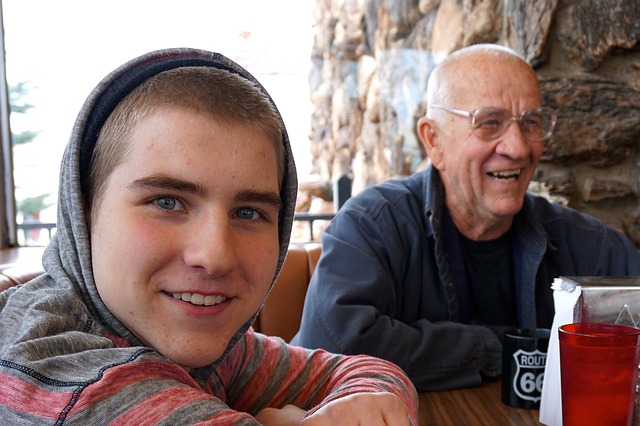 Whenever you are out and about, pay attention. In cafés, in waiting rooms, at the supermarket or on a lonely country road. Notice with all the senses. I listen in on conversations at Tim Hortons, or between the cashier and the shopper, moms at baseball games and GO train passengers. I notice the words and phrases they use, the topics they discuss and the reactions of those around them.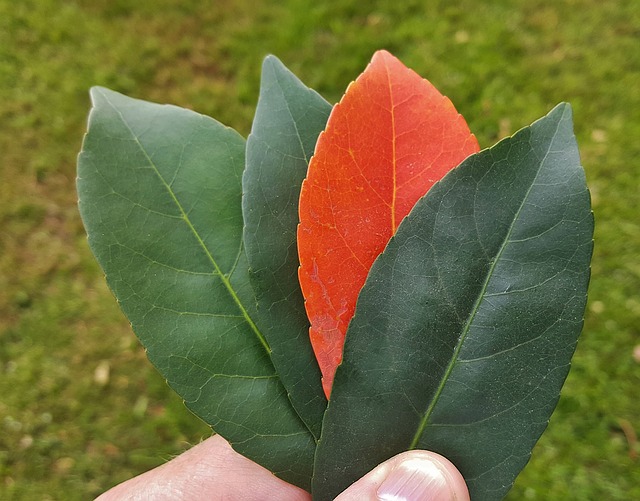
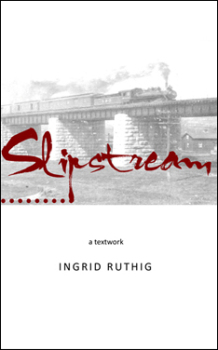 My good friend, Ingrid Ruthig taught me an important lesson about observation: the same thing can be different. The basis of her book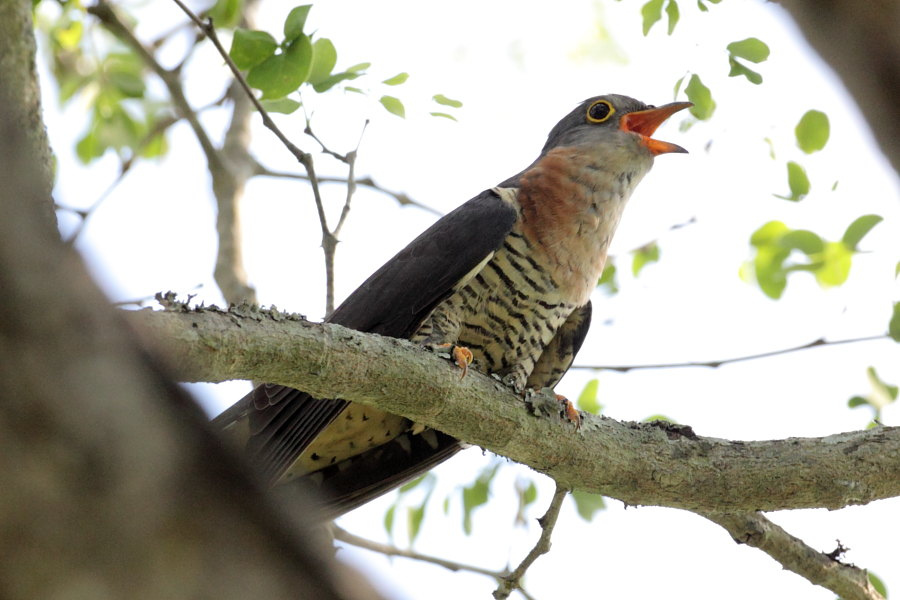

 And I’m waiting to see if, like the lilac Jacarandas, the red flamboyant trees will lose their blossoms in the storm that is now brewing on the horizon.