Copy that!

Copy that!

Gwynn Scheltema

My Access Copyright notification came the other day to say that the Writers and Artists Payback Claim period for 1997 to 2016 opened on April 1 (closing date is May 31). I’ve also received several updates about the ongoing battle for creator rights in our Canadian Courts and what we as writers can do to help. The Writers’ Union of Canada (TWUC) also sent an update on the court cases and the advocacy they are doing.

I’ve watched my Access Copyright cheque shrink drastically over the last few years because of the education sector’s refusal to pay royalties, as has every other writer. Access Copyright and TWUC, along with other national writers organizations, are working hard on our behalf to address this issue, but ultimately, we the creators should also take action.

I’ll bring you up to date on the legal situation, and tell you how you can help.

What is Access Copyright?

Access Copyright is a non-profit, national organization representing Canadian writers, visual artists and publishers, and the work they create. Access Copyright also partners with similar organizations around the world doing the same thing abroad. Together they represent our creative works when it comes to those who want to copy and share those works in schools, corporations, governments and research situations.

Access Copyright manages the licenses and the collection of licensing fees for copied, shared and remixed content and passes those royalties on to the copyright holders. These royalties have traditionally formed around 20% of writers’ and 16% of publishers’ income. Advocacy around intellectual property is also an important part of the services Access Copyright offers to creators.

Background to the current court action

Prior to an amendment to the Copyright Modernization Act in November 2012 adding “education” as an allowable purpose under fair dealing, the education sector assured Canadian writers, visual artists and publishers they had nothing to be worried about and that this change would not impact their royalty income negatively.

Then in 2013 the ministries of education and post-secondary institutions walked away from long-standing licensing agreements. According to Access Copyright, over 600 million pages are now copied FOR FREE each year by that sector. Education’s new copying policies have devastated royalty income for creators and publishers resulting in a whopping 80% decline.

And it goes further: Course packs containing entire chapters of books, full short stories from collections and anthologies and shared online digital book copies have reduced primary book sales so that publishers receive less and, in turn, writers receive less in royalties from their publishers.

Taking the matter to court

Access Copyright felt it was time to take the matter to court. They sued York University for non-payment of mandatory fees (known as the Interim Tariff) and York counterclaimed that they did not have to pay because their actions constituted “fair dealing” under Fair Dealings Guidelines.

Finally, in 2017, the court ruled in favour of Access Copyright on both claims, but York immediately appealed.

Then at the end of 2017, the Federal Government launched a Parliamentary Review of the Copyright Act. There was now hope that the review would rebalance the law allowing creative professionals to earn the income they were due.

The big surprise, and disappointment, came in February of this year when most of Canada’s provincial education ministries and all of Ontario’s school boards launched legal action against Access Copyright.

It becomes vital now that we make our voices heard by the policy makers conducting the review, so that the legislation can be made stronger to ensure that creators are fairly compensated.

So what can you do to help?

  1. Start by understanding the issue fully. Go online and check out Access Copyright, TWUC, I Value Canadian Stories and Focus on Creators.
  2. Watch and share this video to learn how present copying practices impact the creation of content for tomorrow’s classrooms, and create a value gap for creators.
  3. Write a letter to your MP urging them to support creators during the ongoing Federal Parliamentary Review. Several of the sites listed in #1 have letter kits to guide you.
  4. Make a personal submission, to the Standing Committees from both Canadian Heritage (CHPC committee) and Innovation, Science, and Economic Development (INDU committee) who have begun considering witnesses and submissions as part of the Parliamentary Review.
  5. Tell other writers and urge them to get involved. 

Want to learn more about copyright in Canada?

(links and explanations thanks to Access Copyright website)

Celebrating Poetry during NPM

Celebrating Poetry during NPM

Gwynn Scheltema

I love April. It’s a month of budding trees, long-asleep bulbs poking through the earth, warm sun on my back and the promise of summer to come. And April is National Poetry Month (NPM)—a chance to read, write, share and support poetry on a national scale. I love it!

I also love the story that started it all: Back in 1996, members and staff of the Academy of American Poets headed to the steps of a post office in New York City where individuals waited in line to mail their tax returns. The story goes, that they handed out copies of T.S. Eliot’s poem, The Waste Land, which begins, “April is the cruellest month….”

In 1998 Canada followed their lead and today, NPM brings together schools, publishers, booksellers, literary organizations, libraries, and poets from across the country. This year, 2018 will celebrate the 20th anniversary of NPM in Canada!

Reading poetry

If you don’t have poetry on your bookshelves, there is plenty out there to sample. You might want to start with the Poetry Foundation website where you can search poems by poet or poem title or explore their collections by topic. You can listen to audio clips of poetry read aloud and browse their magazine Poetry, the oldest monthly poetry magazine in the English-speaking world.

Another great website for classic poetry and prose is Project Gutenberg. This volunteer-based site offers over 56,000 free eBooks mostly of older works for which copyright has expired. Here is a great spot to sample poets like Keats, Wordsworth, and Robert Frost.

Or consider having a poem delivered to your inbox each day. Sign up at Academy of American’s Poets.org to receive original new poems during the week and classics on weekends. Poetry Foundation also offers a poem a day by email or via an app on your phone. If you’d rather begin small, try Carol Rumen’s Poem of the Week published in The Guardian.

Writing poetry

Just like the reading version of a poem a day, Writer’s Digest runs a Poem-A-Day challenge each year curated by Robert Lee Brewer, author of the blog Poetic Asides. Each day during April, Robert posts a prompt and invites poets from around the world to write and post their poems and comments on the postings. He also chooses a daily winner and an overall winner for the month. Writescape’s Ruth E. walker won one of the daily challenges with a poem she wrote at our Spring Thaw retreat that year.

If you are new to poetry, perhaps consider taking an online course to get you started and inspired. MOOC (Massive open online courses) offers a wide variety for studying poets or writing poetry like this one from California Institute of the Arts.

Sharing poetry

During poetry month, poets and lovers of poetry encourage activities to celebrate poetry. In my region, Poetry in Cobourg Spaces (PICS), along with convenor James Pickersgill, worked with Ted Amsden, Cobourg’s poet laureate, to create a poetry event on Earth Day.

The public plus local schools were invited to submit to a poetry contest. The poems had to be on topics directly related to Earth Day, like the environment, our planet, ecology, nature, organic gardening and/or farming, evolving human awareness of other living organisms, climate change, greenhouse effect, and pollution. The poems were to be 24 lines or less and the winners read their poems at ceremonies at Cobourg’s Ecology Garden on April 22, Earth Day at dawn!

Also in my area, a group of poets, equipped with vintage typewriters brought people’s stories to life through poetry in a unique public art installation.

At the Shelter Valley Folk Festival five Green Wood poets talked with people and created poetry, non-stop, for over three hours. Beginning with the question “what brought you here to this moment?” the poet and person talked for 15 minutes before leaving the poet to capture the essence of the conversation. It was all pecked out on a typewriter in public view. Identified with a number for anonymity, the poem hung on a clothesline, both as a public art installation and a personal gift for the person to take away.

I love it!

One of the spin-offs that came out of NPM is something called Poem-in-Your-Pocket Day. Also celebrated in April—this year on April 26—Poem-in-Your-Pocket Day encourages people to carry a poem with them, and share it with others throughout the day. This day is celebrated not just in North America, but in Europe and Australia too. Some of the activities that everyone (not just poets) are encouraged to get involved with are:

  • Start a “poems for pockets” giveaway in your school or workplace
  • Urge local businesses to offer discounts for those carrying poems
  • Post pocket-sized verses in public places
  • Start a street team to pass out poems in your community
  • Distribute bookmarks with your favorite lines of poetry
  • Add a poem to your email footer
  • Post lines from your favorite poem on your Facebook, Instagram, Twitter, or Tumblr
  • Send a poem to a friend

Supporting Poetry

Of course, like writers, poets struggle to make a living from their art. So I challenge you to buy a book of poetry this April. No idea what to buy?

Visit some of Canada’s poetry publishers: Brick Books; Black Moss Press; Hidden Brook Press and Guernica Editions. Or check out these 16 collections recommended by CBC last fall. Or the 10 best of 2017 recommended by Canadian League of Poets. When in doubt, head to your nearest independent book store.

Poets also appreciate attendance at their poetry readings. A quick Google search of “poetry reading” and “Northumberland” gave me 3 readings in the next three weeks I could attend including this one at the Cobourg Poetry Workshop.  Notice boards in coffee shops often have reading flyers, and if your city boasts a university, there are bound to be readings connected with them too.

Let us know in the comments how you intend to celebrate National Poetry Month. So much poetry to explore. Only 30 days in April. Better get busy!

DID YOU KNOW

A Writescape retreat alumnus, Ingrid Ruthig, recently won the 2017 Gerald Lampert Memorial Award for the best first book of poetry, This Being. This national award, sponsored by the League of Canadian Poets, places Ingrid firmly in the midst of such well-known poets as George Elliott Clarke, John Newlove, John Barton and Pearl Pirie.

And she spent her Spring Thaw retreat time focusing on her poetry. We think it was time well spent.

What’s on the 49th Shelf?

What’s on the 49th Shelf?

Gwynn Scheltema

My spring email notification from the 49thshelf.com arrived today and it got me thinking about what an amazing treasure of Canadian literature this website is—one that every Canadian writer (and reader) should know about.

49thshelf.com is the largest collection of Canadian books on the Internet. They are also likely the most fully realized collaborative website in the world celebrating one nation’s books and authors.

How did the 49th Shelf get started?

Rather than complain about Canadian books and authors often being overshadowed in the marketplace by the sheer volume of books from the US, a community of Canadian publishers of all sizes, across the country, got together and created this site.
Funding came from the Association of Canadian Publishers (ACP), in partnership with the Canadian Publisher’s Council, and from the Department of Canadian Heritage and the Ontario Media Development Corporation (OMDC). Amazon.ca is currently the lead sponsor for the project.

What’s on the 49th Shelf?

The 49th Shelf has one purpose: “to make it easier for readers to discover Canadian books. Canadian books in all genres, from bestselling authors to new talent, from publishers large and small, from all regions of the country.” Each week the homepage highlights new releases.


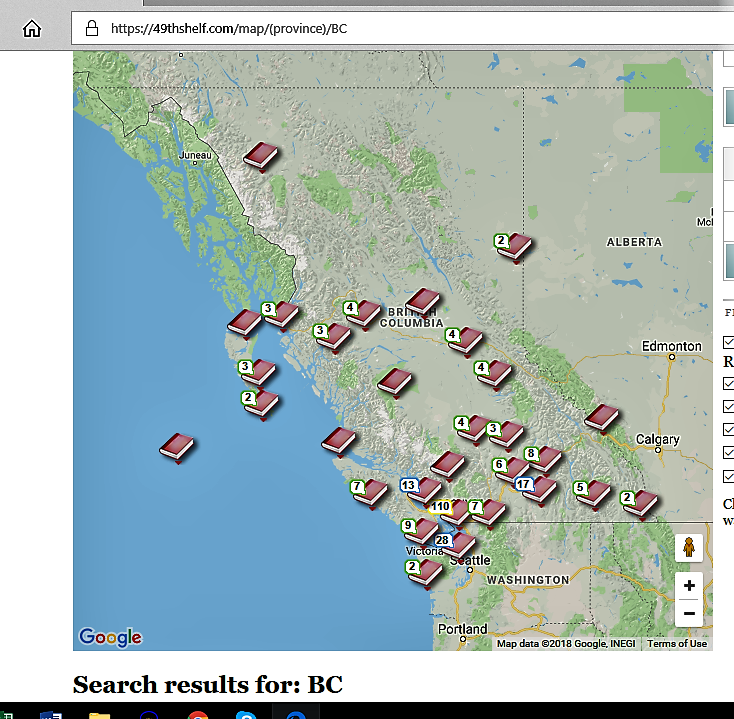
To date, they have assembled more than 100,000 Canadian titles from all types of authors, publishers, and genres including self-published authors. The search function allows you to search by those categories as well as by region with their Local Map function (which you can add to if you are a member).


Reading Lists

My personal favourite feature on the site is the reading list feature. Everything from 2018 award lists like 2018 Finalists for BC Book Prize and the 2018 RBC Taylor Prize Finalists to perennial genre lists like Cozy Mysteries to lists linked to current happenings in the world like this one in response to #National Walkout Day last week:.

Inspiring Stories of Fighting Injustice

#NationalWalkoutDay, where school children and teachers across the US protested gun violence by walking out of their schools for 17 minutes this morning – part of a larger, powerful movement organized by kids – inspired us to share this list with you. The books are all about recognizing injustice, finding ways to fight it, being inspired by real-life heroes, and becoming powerful in important new ways.
And what I love is that I can create my own personalized reading list to bookmark new releases I’m interested in reading, as well as recommend books to others.

Off the Page Blog

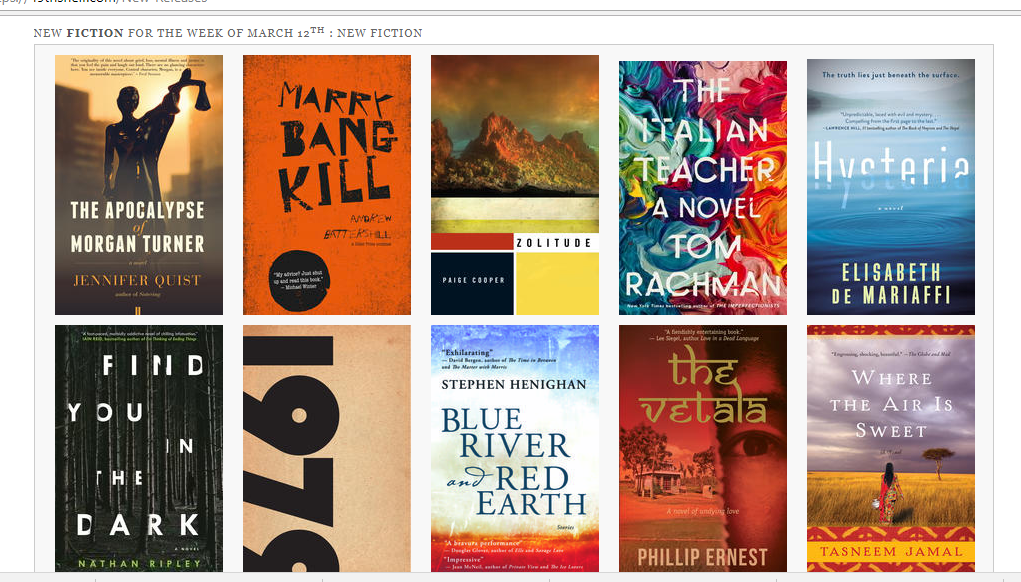
They also have a great blog, “Off the Page” with insights into Canadian authors, books and publishing as well as cool stuff in and around Canadian books. For instance, these new releases included The Apocolypse of Morgan Turner by Edmonton author, Jennifer Quist. The book is set in Edmonton and Jennifer blogs on what other authors, books and literary institutions Edmonton has to offer.

Can I add my book to the site?

49thShelf.com imports publisher-supplied data from the national database: BNC BiblioShare: including eBooks, from all publishers, and self-published titles. There is no charge to have books listed on 49th Shelf.

If you don’t have an ONIX data file for your book, you can find out how to make that happen by going to BookNetCanada.ca. There you’ll find the necessary webform to fill out as well as tutorials and manuals to help you.

Any data that you add to the system via the webform will automatically be imported to 49th Shelf as long as you add the country code for Canada (“CA”) in the Contributor section.

Can I sell my book or buy books on 49thShelf.com?

49thshelf.com does not sell books. Instead it supports bookstores across the country, providing direct buy links to retailers’ sites and publishers’ websites on every book page.


Oh! And one more thing!

Every week, 49th Shelf posts #giveaways and #bookgiveaways on Twitter and also for members on their website. Free books! You gotta love it!

DID YOU KNOW

Gwynn recently interviewed Beth Bruder, Vice President at Dundurn Press and a founding member and chair of the ACP committee that launched The 49th Shelf. Listen to that interview on Word on the Hills radio program on Northumberland 89.7FM.

GPS for the subconscious

GPS for the subconscious

Gwynn Scheltema

I call it mind mapping. You might call it clustering or brainstorming. It doesn’t matter. What does matter is that this visual technique works to generate ideas and get subconscious thoughts down on paper before you lose them.

What is mind mapping?

Mind mapping is a my non-linear way to organizing thoughts without my internal critic getting in the way. At the same time it allows me to link and organize those ideas, so that the finished exercise is something I can work with.

Sound contradictory?

Perhaps, but it is based on some interesting studies on the way we think. Ralph Haber’s study of memory, found that we have nearly 90% success rate recalling images rather than words. Tony Buzan’s research found that those who took notes using key words learned more effectively. Mind mapping combines keywords and visual representation.

Mind map mind set

Start with an open mind and playful attitude. Mind mapping is a “brain dump.” Expect that many of the ideas you produce will not be useful. That’s not important. You can harvest the valuable nuggets later.

Your brain works best in short, intensive bursts (5 minutes or so), so once you begin, work fast and write down only key words, symbols, images, phrases … not sentences. Strive for an explosion of ideas.

Write with a pencil, your favourite pen, coloured markers, crayons or whatever helps to make you feel creative. Same goes for the paper you choose: with or without lines, coloured, big or small.

Where do you start?

Begin with one central keyword or concept in the centre of the page. Starting in the middle of the page gives the creative right brain a head start, as our non-creative left brain is used to starting in the upper left-hand corner.

You can put the keyword in a circle or a cloud shape or not enclose it at all (this is a creative process, so there are no “rules.”)

You can use an idea you want to work with or a random word picked from a book or given to you by someone else.

Then what?

I started with the word GERANIUM.

Write down/draw anything that keyword suggests to you, and then a word or symbol associated with that new thought, and so on, until you have a chain of linked ideas moving out from the central theme. Do not judge your ideas at this stage; simply write them down.

Put an idea down even if it seems unrelated – your subconscious probably knows more than you do.  DOCTORS OFFICE showed up on one of the branches. What does that have to do with geraniums? Seemingly nothing now, but when I organized the ideas afterwards, the link became clear. (I’ll explain later).

Keep your hand moving. If ideas slow down, take your hand back to the central concept and begin a new branch. Draw empty lines, and your brain will move to fill them automatically; or inject more energy with a different colour pen.

Eventually you’ll have several trains of thought, all different from each other and yet linked by the central concept. You can now organize them to fit your purposes.

Organizing and using your mind map ideas

Ways to use the ideas you’ve generated can be as varied as the ideas themselves.

Say I’m looking for an idea for a non-fiction article. Perhaps my first instinct around the word GERANIUM is to do an article on container gardening, I take a highlighter and highlight all the ideas that fit in any way with that slant. In the example, I’d highlight: POTS, RED, HANGING, TRAILING, VERANDAH, PATIO, SUMMER, SCENT. Hmmm….. boring!

But in the process, the word SCENT reminded me that geranium leaves can be used to scent and colour sugar. The mind trail on HERBS, TEAS, SPA suddenly becomes more interesting. A non-fiction article on “Using Flowers for Special Teas” now has possibilities. I might do another mind map now with the word TEA in the centre.

Use a mind map over and over

But don’t stop there. The same mind map can be used several times, at different times for different styles of writing.

The phrase DOCTORS OFFICE has me curious. I follow the branch back towards the centre, trying to work out what PINK and SUGAR have to do with it. Then it hits me… when I was a child, our doctor used to hand out tiny cylindrical candies that smelled like scented geraniums. I realize that I haven’t seen them in decades. What other sweeties from that era are no longer around? Hmmm….. Another article? A scene for my novel? A short story? Things are brewing now.

Later, it strikes me as interesting that I have two trails that contain the word VERANDAH, and I’m drawn to the references to LATIN WORD; SECRETS; SCHOOL FRIENDS; IVY; OLD BUILDINGS; ENGLAND. I think I feel a poem emerging…..

Even the trail that started out with the boring POTS; RED, ended with SQUIRREL; CRINOLINE: HIBISCUS. Now I realize, that’s a story my subconscious has unearthed about a little critter that came to my garden last year. He loved hibiscus shoots, and …

When should I do a mind map?

Use a mind map whenever you want to generate new ideas. Use it to focus in on a particular problem area. Use it to expand something you are already working on. Use it to reveal hidden subconscious perspectives on a seemingly boring topic. Or just do it for fun and see where it takes you. Quick. Easy. Worth it!

DID YOU KNOW

The perfect spot to be creative – and mind map to your heart’s content – is at Spring Thaw 2018 on beautiful Rice Lake in Keene, Ontario. Come for 3 or 5 days and escape to write with Writescape.Tailor your weekend to suit your needs.There is an agenda and formal programming, but you choose what sessions and activities will work for you.

One way I write a poem

One way I write a poem

Gwynn Scheltema

Outside my window the snow is piled layer upon layer. It’s quite beautiful, but it does seem like winter has been here FOREVER. There is a spot near the pathway where bulbs will poke through in spring, and although it is mid-winter, I still look there in the hope of seeing a crocus nudging its way to the sun. But, nope! Not today. It’s as if winter knows how I feel and is teasing me, telling me to be patient. I feel a poem coming on…..

Poems are inspired by many things, and each poet usually has a preferred way of entering into a poem. For me it is an image, often an image from landscape, an image that evokes an emotion in me, an image that begins to tell a story…

Emotion first

Painting a pretty picture with words is all well and good, but if the picture is flat and emotionless, you don’t have a poem. I believe a poem’s prime function is to connect with the human heart, to evoke a reaction in the reader, to find common ground with emotions and experiences we all know.

So I work with the emotion first. I mentally or physically jot down what emotions the scene evokes in me and what that makes me think of. Even if my thoughts don’t seem to “match” or if they “fight” with each other, I just let the random subconscious thoughts bubble and land on the page:

 hope to see a crocus – frustrated with winter already – amazed at how those squirrels survive out there in the cold – awed by the beauty of everything – awed by the determination of a tiny flower pushing through all that snow – anticipation of spring coming in just a few weeks – resignation that there is still winter to live through – teased by winter – foreverness -winter teaching me a lesson in patiencepromise….

 
Emotion in context

Then I ask myself if there other times in my life that I have felt some of these emotions? This helps me relate what I’m seeing and feeling to “universal” themes.


waiting for Christmas as a child – anticipation of anything exciting – my mother telling me that “patience is a virtue”- watching a small child struggling with shoelaces – waiting for a lover who has gone away – bad dreams and how they are gone in the morning

Sensory details next

Then I list all the specific details I notice about the physical scene or image using all the senses and remembering extensions of the basic five senses like texture, quality of light, and temperature. And I always ask myself “What is missing?”


layers of snow – fluffy – heavy, bare knobbly branches – purple shadows – black squirrels – lake covered in ice that will leave soon – grey sky – cold – no warm sun- no crocus poking through – imagined honey smell of crocus – chatter of squirrels – creaking branches …

 
Metaphor

Then I ask myself what some of those images remind me of. Again, I don’t worry about it “fitting”. Just let the subconscious thoughts fall on the page

the creaking branches and knobbly branches remind me of my bony arthritic fingers – the squirrels are like busy moms dashing about making sure everyone has the things they need – layers of snow like blankets- ice is a blanket too  – crocus and saffron spice – sun like a returning lover

Finding nuggets

I read through my notes and see what jumps at me; first impressions, no overthinking:

  • hope to see a crocus- foreverness- anticipation of spring
  • waiting for a lover who has gone away
  • bare knobbly branches- ice that will leave soon
  • arthritic fingers – sun like a returning lover – saffron spice

Reading through this list I’m starting to get a feeling about spring being almost human like a lover – how that lover is gone but will return when the time is right if I can just be patient and determined like a crocus. And I really like the word “foreverness”.

First pass

Trees wave knobbly fingers

ice on the lake fades against grey sky

it bides its time

before it moves on

so my love can return

I will be a honey scented crocus

waiting under the purple shadowed snow

foreverness

waiting for spring and my love’s return

waiting for the saffron sun to warm me

once more


Hmmm. It’s got some decent images, but it’s too wordy and too obvious. I need to let the images speak for themselves. Style is too linear and conversational. I need to get rid of unnecessary articles and other words. Knobbly is too soft a word. Images need focus to give the contrast of cold colourless hard winter (lover gone) and softer brighter spring (person in love waiting and hoping) And as much as I love the word foreverness, I’m not sure it fits. I also need to give it a title (a well-chosen title will set up expectations and help with defining what the poem is about).

Refining

SAFFRON LOVER

Bony tree limbs wave

gnarled knuckled fingers

lake ice stretches to grey sky

bides its time

before moving on


as the patient honey saffron crocus

nudges to the sun

beneath purple shadowed snow

I wait for spring

and your return


So there it is for now. It’s got a way to go, for sure, but it’s started and on the page.  Now, I’ll let it rest a couple of days or weeks and come back to it. Distance will tell me what changes – if any –  to make next.

DID YOU KNOW

Image result for saffron crocus flower

Saffron spice is harvested from the stigmas of a crocus flower. Each saffron crocus bulb produces only one flower and each flower produces only three stigmas.  To get 1lb of dry saffron requires 50,000–75,000 flowers which require about 20 hours of labour to pick. 

It reminds me of counting words!

Add to your word count this spring with 5 days away at Spring Thaw retreat. Get written feedback and a one-on-one consultation with Ruth and Gwynn.  You can tailor your weekend to suit your needs.There is an agenda and formal programming, but you choose what sessions and activities will work for you.

Rinse and repeat

Rinse and repeat

Gwynn Scheltema

Okay, I know; I know. New Year is yelling out “GOALS” and “RESOLUTIONS”, and no one really wants to hear it, least of all me. But when I got to thinking about it, I realized I have a few ongoing goal-setting and goal-achieving tools in place already. And they work! So I thought I’d share them with you.

Little and often

While I’m a great supporter of having big long-term goals and a vision of where you want to go in life, I find that sometimes the big picture can be overwhelming. I believe that those big concepts should be the background canvas on which you paint in the details as you go—and re-paint them if you choose.

The writing critique group I belong to understands this perfectly. We meet every two weeks and at the end of each meeting we all set a writing goal for the next two weeks only. We each set our own goal depending on what we are working on at the time and what is happening in our lives.

We encourage specificity— “5000 words” or “edit 3 chapters” or “fill plot hole in Chapter 7 or “four meaningful bum-in-chair sessions”. At the next meeting if we miss our goal, we pay up to a charity fund. But we also encourage life balance. It’s okay to not set a goal if your life dictates. We also recognize that sometimes “thinking about” a plot or character qualifies as long as sooner or later that turns into “writing about.”

This system works because it is frequent, achievable, and there is accountability. Small goals and small successes that add up over time.

Eat that Frog

Mark Twain once said that if you start the day by eating a frog you will have the satisfaction of knowing that this was probably the worst thing you had to do that day. The frog is a metaphor for your biggest and most important task of the day and has become a popular procrastination-busting technique.

When I’m trying to avoid that “frog”, I play solitaire, disappear into social media or sort the kitchen junk drawer or….. I’m sure you have equally pointless—and time consuming—avoidance tactics.

Learning the skill of attacking the most important task first (writing related or not) and getting it out of the way frees you up. You’ll have more time, less guilt and a clear mind to be creative. It’s a skill that helps you accomplish whatever you set as your priorities—including your goals.

It does take practice, but like anything in life, the more you consciously do it, the easier it becomes. Most writers can perform to a deadline. Perhaps putting your own deadline on your “frogs” will help?


Make your bed

Now this may seem contradictory to the “eat the frog” principle, but getting through your to-do list and achieving your goals begins with making your bed.

Your mom probably drilled that in to you, but the idea came back into popularity with Navy SEAL Admiral McRaven’s speech to grads in 2014: “If you want to change the world, start off by making your bed. If you make your bed every morning, you will have accomplished the first task of the day. It will give you a small sense of pride, and it will encourage you to do another task, and another, and another.”

All I know, it works for me.

Your frog for today

So there you have it.

Today, go make your bed, then sit down and decide on a reasonable achievable goal to be accomplished within the next two weeks. Then break it down into what needs to be done first, and then next, and next after that….

Tomorrow, make your bed, look to see what is #1 on that list and eat that frog.

Day after tomorrow, eat frog #2

Rinse and repeat…rinse and repeat…

DID YOU KNOW

A writing retreat is a great way to focus on your writing projects and goals and registration for Writescape’s Spring Thaw 2018 is now open, and already half full.

This all-inclusive writing retreat is held at the fabulous Elmhirst’s Resort on Rice Lake in Keene. Stay for the weekend or treat yourself to an extra two days of writing.

    • 10-page manuscript evaluation with written feedback from Ruth and Gwynn
    • one-on-one manuscript consultation with either Gwynn or Ruth
    • private writing time
    • optional daytime creativity sessions to fire up your pen
    • a companion workbook with inspiration, prompts and supports
    • optional evening activities to network and share ideas and inspiration with retreat colleagues
    • comfortable cottages with wood-burning fireplace
    • first-class amenities and delicious meals

Brochure-Spring Thaw-2018

When we came from away

When we came from away

Gwynn Scheltema

The first blizzard of the season descended a few weeks ago, but it didn’t matter. I was in the company of heart-warming people from all over the world and their stories.

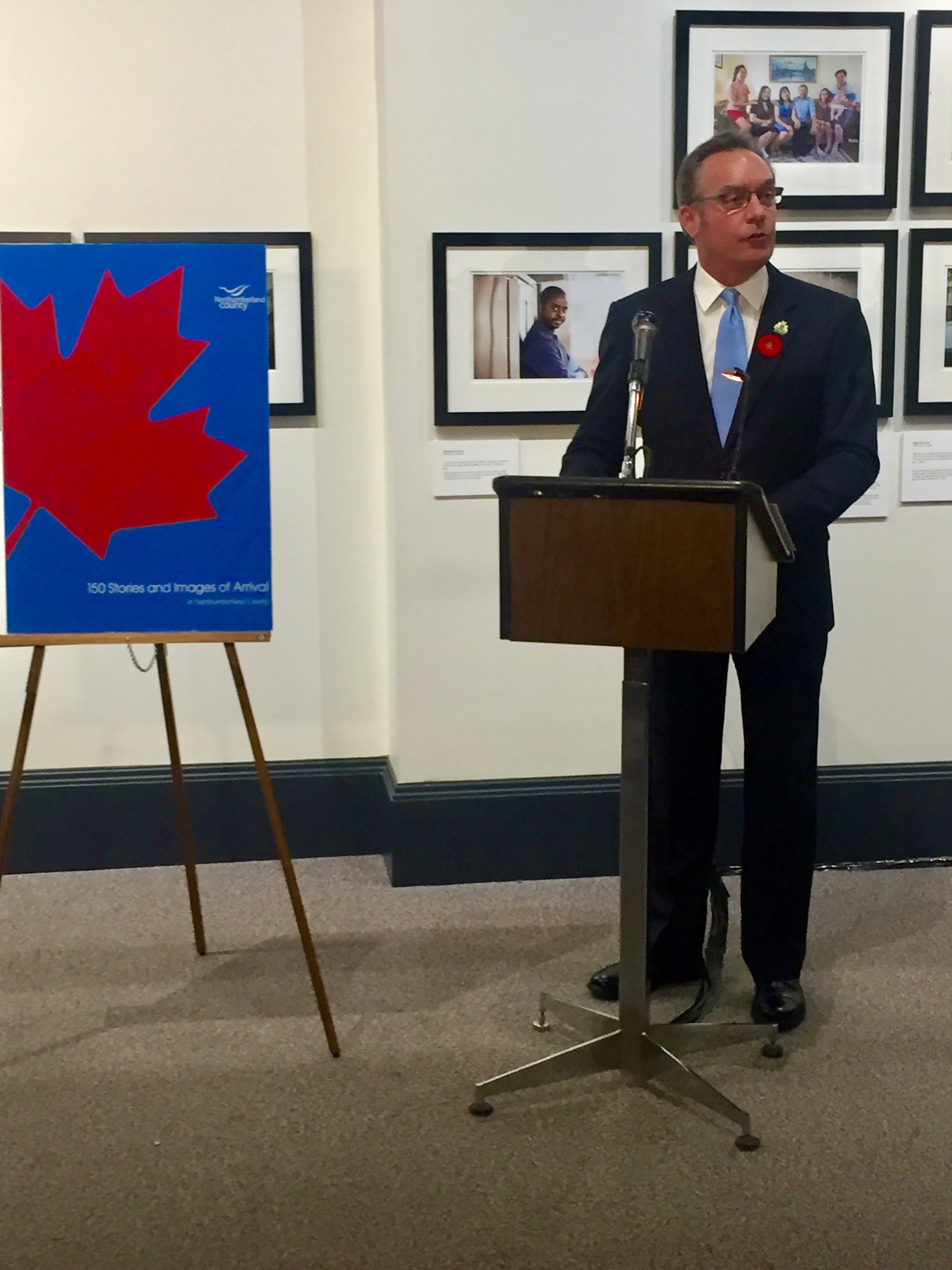
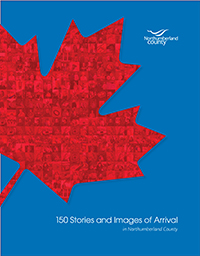
We were gathered at the Art Gallery of Northumberland for the official launch of 150 Stories and Images of Arrival. This book of immigrant stories and photographs was a Canada 150 project undertaken by Northumberland County, Ontario and I was privileged to be part of it.

The call for submissions asked for first- or second-generation immigrants in Northumberland County to identify a memento brought to Canada from the immigrant’s birthplace that represented the intersection between a former way of life and a new beginning as each individual integrated into a new community. Then to tell the story of that memento’s symbolism in the transition.

A gift from the past

The objects chosen by the contributors ran the gamut of wooden carvings to a chess set; from a mason’s picks to a hand-made hammered brass coffee pot; from a document of Settlers’ Effects to a framed record of a family tree going back seven generations to 1730.
Some of the accompanying stories were tragic, some amusing, some incredible. But all of them spoke to the importance of connection and family and an overwhelming gratitude for the chance to live in Canada.

It wasn’t the object itself that had value, but its connections to the past—and the present. For the people in that room, the opportunity to live here in Canada was the greatest gift.

A little green frog

I am a person deeply affected by landscape. I need a connection to the earth wherever I go. So for my memento, I chose a small green frog sculpted by my mother.

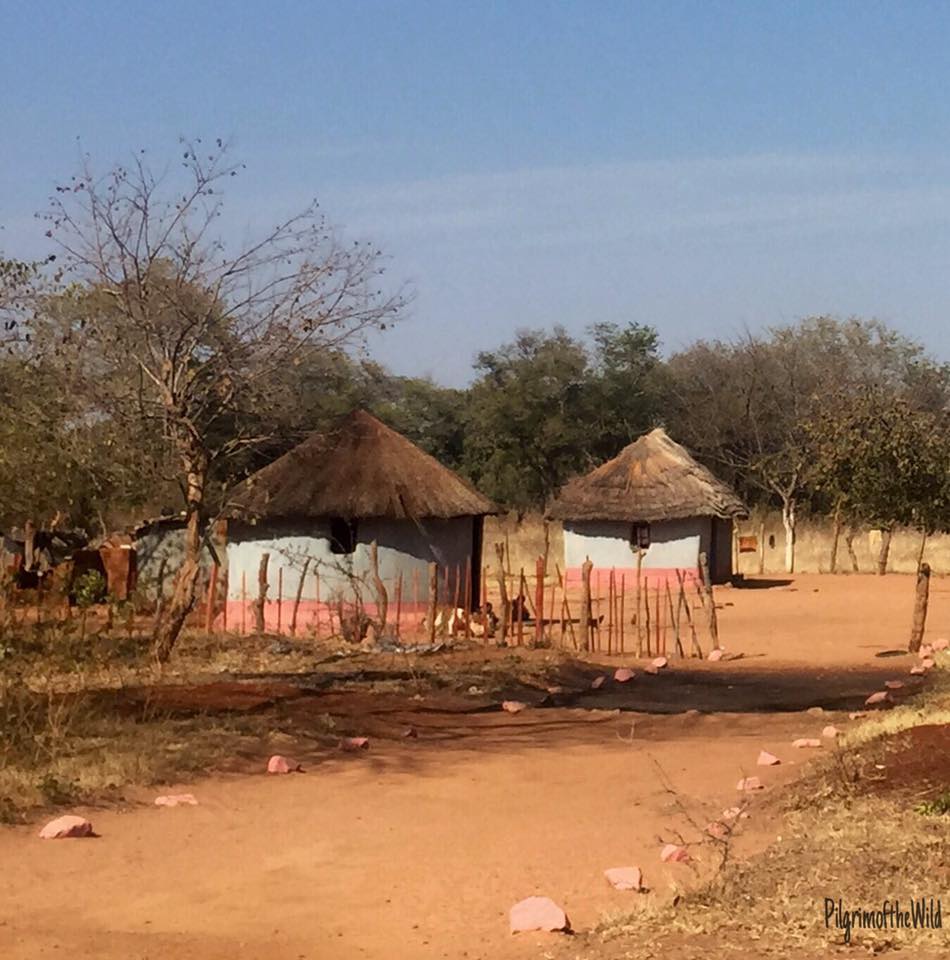
My mother is an artist, so a piece of her art became a connection to family left behind. The frog sculpture also represented a connection to the African landscape as well as the new Canadian landscape I have come to love.

A humbling experience

The whole process of choosing my symbolic object and then writing the story of how it had formed a transition from one period of my life to another was humbling. I was forced to strip way so many layers, to decide what was important to me—then and now.
It confirmed, as I said before, the importance of family and connection. It confirmed that my decision to leave what I knew and loved for the unknown was a good decision. It confirmed that Canada has indeed become my home. And it confirmed that safety, hope and peace trump any item that you could possibly find under a Christmas tree.

The Canada 150 year has had its controversy, but it has also sparked a lot of creative efforts and brought a lot of people together. And hopefully, it has reminded all of us what a wonderful country we live in. As Joni Mitchell so rightly said, “You don’t know what you’ve got. Till it’s gone.” So this Christmas perhaps give a thought to gratitude not so much for what is or isn’t under the tree, but for what you already have.

DID YOU KNOW

The exhibit ‘When We Came From Away’ is being featured from November 10th to December 31st at the Art Gallery of Northumberland, located in Victoria Hall, 55 King Street West, Cobourg. For more information:  www.ArtGalleryOfNorthumberland.com.


Gardening with words

Gardening with words

Photo credit woodenearth.com

Gwynn Scheltema

I was out on a walk and practicing the art of noticing, when I was drawn to a garden and stopped to look at it a little more closely. It was functional: a small patio under a huge maple, a swing for the kids hanging from an overhanging branch, herbs growing in an old wheelbarrow, flowers, veg and a patch of lawn.

Given that it’s autumn, the fallen leaves, frosted hostas and general state of waning made it messy and a little sad. But it wasn’t the kind of yard that looked as if it had been delivered from the local big box store: linear and precise, shallow and predictable – in other words: no message, no heart. This garden had soul.

I’m addicted

Whenever I travel, I visit gardens; I seek them out in concrete-jungle cities and have a vast one of my own. My mother and grandmother taught me to create landscapes that worked with nature, not against it. They taught me how to create a green space with soul. And I realized as I looked at this tiny urban gem on my walk, that creating a garden that has a heart is very much like writing.

Let it speak

To create a garden that lives and breathes, a gardener must understand that fine line between control and releasing what is already there. This example on my walk was not about control or even taming the wild. It was about using what was already there, unearthing it and allowing it to blossom. To speak. That maple tree killed the grass but welcomed a small shaded patio sitting area. The overhanging branch was perfect for a swing.

Like writing – don’t control and delineate as you write. Allow your characters to speak as they want to, to do things you could never dream up. Allow the story to unfold. Let the subconscious through.

 Work with what you have

We all have big writing dreams: maybe the next best seller, perhaps an award or earning enough to live on. But on any given day, don’t worry about what seems unattainable. Work with what you have.

This garden made the most of limited space. If you only have limited writing time, write bits that are already in your head, finish something you started, or plan or research or edit. If a novel seems overwhelming, begin with a single scene, or a short story.

If the dialogue you are producing seems flat, or you don’t really know how to punctuate it, write it anyway. You can always read up or take a course on dialogue later. And you can come back to your piece and edit it when your skills improve. But if you are always waiting for the perfect time or the perfect ability or the perfect story, you’ll be waiting a long time. And as Wayne Gretzky famously said, “You miss 100% of the shots you don’t take.”

And keep things manageable. Better to finish small projects or one large one than to have twenty projects that never see the light of day. There’s nothing like being able to write “The End” to motivate you to write some more.

Don’t throw good bits away

Not everything we write is worth keeping, but often you write a really good scene or stanza that just doesn’t fit with the piece or poem you’re working on. It might even be one of your proverbial “darlings.” Keep it. It may well be the start of another piece or fit into another project. Or it may serve as inspiration and impetus for a new piece that—like the wheelbarrow used as an herb garden—is very different from its original intention.

Give to get

I belong to online gardening swap sites, picking up free rhubarb plants and giving away hostas. I scour the roadside ditches for day lilies and black-eyed Susans and give them new homes. As a writer, you need to have a writing community—maybe just a writing buddy, maybe a critique group or membership in several writing organizations, or perhaps all of them.

But you’ll find that you get more out of your writing community when you contribute: give of your time, your expertise and your encouragement and support. We all have high and low times as writers and whether you need someone to help you with a practical plot problem, to celebrate a success or just give you a kick in the pants to submit or get writing, your writing tribe are the best people to do it. But, offer the same to other writers. I know that over the years, I’ve learned more about the craft by talking to fellow writers and giving feedback to others than from any book.

Tend and nurture

Without planning and fertilizing, weeding and maintaining, gardens wither or become something else you have no use for. Your writing, like any art form, is the same. You wouldn’t expect to play the piano well without practising regularly. Writing is no different. Write, write and write some more. Plan writing time into your schedule. Fertilize your craft with workshops, reading and communing with fellow writers. Weed out all your negative attitudes about not being good enough. And fill your creative well often.
Dare to be different

The garden on my walk was different from all the others on that street. Not necessarily better or worse, but different. The gardener (maybe a young mother?) created what was personally important and meaningful to her, created what was within her creative and maintenance capabilities at the time, what was pleasant and functional for her family’s lifestyle. I’m sure she also hoped that others would like it, but I doubt she created it based on what others wanted. She followed her creative path, made a garden that spoke with her voice and embodied her heart and soul.  Let your writing do the same.

DID YOU KNOW

My garden at Glentula reflects my heart and has served as inspiration to many writers. Custom “Just Write” retreats and one-day escapes are offered every summer. Gather your group, pick your date and contact Writescape to put together what you need to get writing and stay writing.

Feature photo credit by woodenearth.com https://www.woodenearth.com/

Reading outside your genre

Reading outside your genre

Gwynn Scheltema

My last post was about defining what genres we write in. Which got me to thinking about what genres we read. And the value of reading outside our usual genres.

Books that move me

I love language and wallowing in words. I love to reread evocative passages, to stop mid story to share a sentence with my husband that I find particularly beautiful or thought-provoking. I like skilled play with fiction forms. Consequently, I often gravitate to literary fiction. Story is important to me, but plot is not. I prefer internal character struggles rather than thrilling events, or fast-paced action. I’m happy to spend time in people’s heads, seeing the world from their perspectives. Recent reads (which I highly recommend) have been: The Orenda by Joseph Boyden. All the Light We Cannot See by Anthony Doerr and Cutting for Stone by Abraham Verghese.

I also like the books I read to be set in exotic places, in other cultures, and affected by political or natural turmoil that I am never likely to be faced with. I like to learn about other customs and occupations. The Bonesetters Daughter by Amy Tan (historical fiction), Three Cups of Tea by Greg Mortenston (non fiction/memoir) and In the Shadow of the Banyan by Vaddey Ratner (historical fiction) fit that bill.

Broadening my reading horizons

But I’ve also had to spend a fair amount of time this year away from home, and have found myself reading books passed on to me or chosen for me by others, books I likely would have walked right by in the bookstore.

I learned a lot in the process. Reading time is limited and with the books I have to read for a variety of reasons, the time left for reading for enjoyment is really limited, but I was reminded that broadening my reading horizons was a necessary—and enjoyable— part of being a well-rounded writer and editor.

What I learned from the books that found me

Of the books that found me, let me tell you about just three of them. Turns out, I enjoyed them all, and reading as a writer, I learned a lot too:

The first one: Spud by John van der Ruit is a YA humorous coming-of-age story set in a fictional private boys school in South Africa in 1990 around the time of the release of Mandela. It’s written in a diary style like The Secret Diary of Adrian Mole.

Apart from bringing back a lot of memories of my own schooling in an Anglican Church School in Zimbabwe, Spud reminded me that humour is a great foil for addressing tough and often brutal circumstances. This book tackled bullying, attempted rape, mental illness as well as the usual problems of growing up, boarding school and relationships. It showed me that sometimes less is more, and that young boys and girls face many of the same problems. Structurally, the diary format allowed much to be said without embellishment or long drawn-out scenes. It allowed room for things to be left unsaid.

The next: The Casual Vacancy by JK Rowling, listed as a contemporary mystery thriller, is a multi-voice fiction about a seemingly ordinary small-town and what really goes on behind closed doors.

Rowling’s dialogue in this book is superb. She handles the dialogue of different ages, cultures and socio-economic characters in way that their speech and dialect is distinct, authentic and utterly believable. I had a hard time getting into the book because there is an enormous cast of characters, and Rowling “head-hops” a great deal, but once in, I was hooked. From this book, I learned that multiple viewpoints can work well as long as each voice has their own story not more or less important than the others.

And the third: Some Girls, Some Hats and Hitler is a memoir by Trudy Kanter, an Austrian Jew who used her connections as a hat designer to escape events in World War II and find safety for herself and her husband Walter. Like Spud, this book handled grave situations with humour. What really struck me though, was how Trudy spent a lot of time talking about hats and fashion and parties and décor and other things that at first seemed frivolous and inappropriate for the dire war situation and terrible and frightening circumstances she was facing. But then I realized that that was Trudy’s coping mechanism. It got me thinking about the different ways different people use to handle a given situation. Just because I might handle a situation one way, my characters (and readers) might do something completely different.

Other reasons to read out of your usual genre

Stephen King famously said, “If you don’t have time to read, you don’t have the time (or the tools) to write. Simple as that.”

Yes, you should read extensively in the genre you write to become familiar with it on all levels, but reading on a regular basis outside your genre, outside your comfort zone, makes you a better well-rounded writer. It clears the cobwebs away in your creative brain. Gets you out of a rut. New perspectives, new craft approaches and new possibilities. Same-old-same-old in your reading leads to same-old-same-old in your writing.

Who knows, you may discover a new genre that really speaks to you. Perhaps that coming-of-age story you’ve been struggling with as an historical romance might be better reworked as a dystopian YA. But you have to read some dystopian YA to find out.

And not just different genres, but different writing forms: short stories, poetry, plays…  Each form can teach you different writing skills that will help with your novel. Plays are excellent for studying dialogue, poetry can remind you about image and metaphor and the economy and power of words.

So take the plunge, be adventurous, make a pact with yourself to include a new genre or new form when you pick up your next book. You’ll be glad you did.

DID YOU KNOW

Ruth and Gwynn are off to the Niagara Region this month to deliver a workshop that explores writing in different styles and genres, called What’s in Your Writing Closet. If your group is interested in this or any of our workshops, explore our on demand workshop options.


What Genre do You Write?

What Genre do You Write?

Gwynn Scheltema

Seems like a simple question, but increasingly these days it can be confusing. Genres not only have subgenres, but subgenres have sub-subgenres: Steampunk is a sub genre of science fiction (or science fantasy) but steampunk itself has sub genres like steamgoth, gaslight romance, clockpunk and dieselpunk.

Then of course, you have the age cross-overs and cross-genres like paranormal romance, crime fantasy, or action comedy.

The mind boggles.

Why does knowing your genre matter?

Initially, it doesn’t matter. When you begin your first draft, story is key and the story will land in the genre it fits best. But once that draft is done, knowing your genre is important. You’ll need to know so you can fine tune your manuscript and pitch it to the right agent or publisher.

It’s a marketing issue. How many places will your book fit? Knowing your genre shows a better understanding of the market, which can only help your submission. If you don’t know where your book fits, you’re saying you don’t know your target audience.

We all like to think that our book is unique, but the reality is, if we can correctly categorize it, readers can access it and agents and publishers will know immediately whether it potentially fits their market.

Genre and editing

And because knowing genre is a marketing issue, it becomes an editing issue, so you can mould your submission to fit publishing needs and reader expectations.

Let’s take the crime/mystery genre as an example and the typical “dead body”. In a cosy mystery, your readers will expect to spend a few chapters meeting the inhabitants of a cosy community and getting to know the protagonist and her friends before the “dead body” is discovered. The actual killing will be off stage. In a police procedural mystery, the “dead body” is there by the end of chapter one. Readers may even witness the murder. It will be important to follow real police investigative and forensic procedures.

Some publishers have well-defined expectations that can help tremendously at this editing stage. Harlequin, the world’s largest publisher of romance, provides clear, detailed guidelines on their website for each of their genre imprints, from the word count to the level of sexual content.

So what is my genre?

Genre definitions are constantly changing and evolving, but you have to start somewhere.

1. Prepare a book jacket blurb

Once the first draft is done, prepare a book jacket blurb (the paragraphs on the back cover that entice readers to buy because they answer the question “What is this book about?”.)  Writing the jacket blurb helps to distill the thrust of the story: the conflict, the stakes and the character arc.

It also helps define what genre it is, because it focuses on the main thread of the story.

2. Define the main genre

With your book jacket blurb in hand, you have your main dominant story thread. Use that main thread to define the main genre. For instance, if your book involves a mystery and a romance, is the dominant story thread a classic “who done it” with a bit of romance thrown in for character growth? (mystery) Or is it really about a relationship blossoming between two people who happen to be solving a mystery together? (romance)

Here’s a list of some of the main genres to get you started:

  • Action/Adventure — epic journeys, lots of conflict/pursuit, high stakes, some violence.
  • Crime/Mystery — stories that involve solving a crime, usually a murder.
  • Fantasy —magic, other worlds, myths and mythological/mystical figures.
  • Historical — fictional characters and events in an historical setting
  • Horror— stories that invoke dread or fear.
  • Thriller/Suspense — harm/danger about to befall a person or group and the attempts to evade the harm/danger, high tension.
  • Romance —love/intimacy/relationships.
  • Sci-fi —impact of technology, aliens, science-related alternative worlds, often futuristic
  • Women’s fiction — stories about women experiencing emotional growth

Once you have your main genre, you can explore subgenres. This link on the definition and characteristics of the main genres is worth looking into.

3. Define your reader

Nail down the age group your book is aimed at: children, young adult, new adult or adult. If your manuscript appeals to more than one group, you have an age cross-over. (Think Harry Potter (children/adult) or Hunger Games (YA/adult).)

Imagine your ideal reader. If you were that reader looking for your book, where would you look? Again, focus on the main narrative thread. Is your ideal reader looking for a romance with a bit of mystery thrown in, or are they problem solvers who like mysteries and might like some relationship stuff thrown in?

Ask your beta readers where they would expect to find your book. Ask your critique group. Tell other writers your blurb and then ask them, “What section of a bookstore would you look in to find my book?”

4. Visit a book store

Go to a bricks & mortar bookstore or hop on the Net. Identify half a dozen books similar to yours and find where they are shelved. Go to Goodreads and check the Listopia recommendations for your main genre, like “Best Science Fiction.” That will lead you to the sub-genres like “Best Steampunk Books.” Read the blurbs on the back covers. Does your book jacket blurb follow a similar pitch?

One way to do this is to have two windows open, one on Amazon and the other on Goodreads. Read the blurb on Goodreads and then search the book on Amazon to see its classification.

I always like the section below the “purchase” button with the phrase “People who bought this also bought….” It’s a great way to find other novels that are categorized the same way. Could your book fit here?

Still not sure?

You’re fine as long as you know your main genre and reader age. Agents will be able to spot a crossover even if you haven’t mentioned it. If your query letter has a good hook and good comparables, the sub-genre will be apparent to them.

However, the time you spend on defining your genre will help you make a better connection between your story and your reader. And your well-crafted blurb will be ready for those moments when someone (maybe an agent or publisher) asks “So what are you writing?”

DID YOU KNOW?

Vicki Delany, our guest at this year’s fall retreat, Turning Leaves  2017, writes in several subgenres of the crime/mystery genre. As  Eva Gates she writes the cosy Lighthouse series, and as Vicki Delany she writes a Police Procedural series featuring Constable Molly Smith.