Fun with Terminology

Fun with Terminology

Gwynn Scheltema

National Punctuation Day

“Yes, Virginia, there really is a National Punctuation Day!”

National Punctuation Day (NPD) claims September 24 for a celebration of punctuation and its importance—a sentiment close to this editor’s heart. Founded by Jeff Rubin in 2004, he encourages people who value correct punctuation and spelling to post pictures of errors spotted in everyday life.

Just a bit of fun, to be sure, but good things have come out of NPD too. StudioSTL,(a non-profit that brings together authors, educators and artists with youth ages 6–18 to develop writing skills to be used in life, work, and school) raises money each National Punctuation Day for their free writing programs and raises awareness for the value of correct punctuation.

The return of the interrobang‽

FontFeed credits National Punctuation Day with the revival of the interrobang. For those, like me, who have no idea what an interrobang is, Wikipedia defines it thus: “A sentence ending with an interrobang (?!  or  !? or ‽ ) asks a question in an excited manner, expresses excitement or disbelief in the form of a question, or asks a rhetorical question. For example: You call that a hat‽” To create one in calibri, press alt8253. Well, who’d’ve thought‽


CAPS LOCK DAY

And as if that’s not enough, on October 22, it will be CAPS LOCK DAY?! This day was the brainchild of Derek Arnold of Iowa who was peeved by people using ALL CAPS to emphasize themselves on the web. He proposed that on this day EVERYONE USE ALL CAPS FOR EVERYTHING TO SHOW HOW ANNOYING IT IS and to poke fun at people who use this annoying typing style, in the hopes of bringing some sanity to the Net.

Of course, CAPS LOCK DAY has an underlying humour, but as with a lot of humour, there is a kernel of truth (sometimes a whole nut tree) to be unearthed.

A Sky Full of Poems

The use of humour reminded me of a poetry book I had as a child called A Sky Full of Poems by Eve Merriam (American poet and writer; 1916 – 1992). She had a series of rhymes and poems to help understand grammar and poetic terms.

Here are a few excerpts for you to enjoy that speak to homonyms, homographs, cliché, simile and metaphor:

From the poem “Nym and Graph”

A sound-alike is a homonym
Sing a hymn, Look at him.

A spell-alike is a homograph
A general staff, A walking staff.

//
Said Homograph, “From my point of view
I once saw a saw saw then a sink sink,
I saw a fly fly and a rose that rose up,
I sat down upon down,
I felt a felt hat,
And met a fair maiden at the fair.”

//
“Now tell me Homograph, can you
See things from my point of view?
For I, sir, aye, yes I eye a dear deer
And a hare with hair that is half of a pair
While I pare a pear beside a new gnu
And shoo a bare bear away from my shoe—
And all this I do at ten to two, too!”

From the poem “A Cliché”

//
Warm as toast, quiet as a mouse
Slow as molasses, quick as a wink.          

Think.
Is toast the warmest thing you know?
Think again, it might not be so.

//
Is a mouse the quietest thing you know?
Think again, it might not be so.
Think again: it might be a shadow.
Quiet as a shadow
quiet as growing grass
quiet as a pillow
or a looking glass.

From the poem “Simile: Willow and Ginkgo”

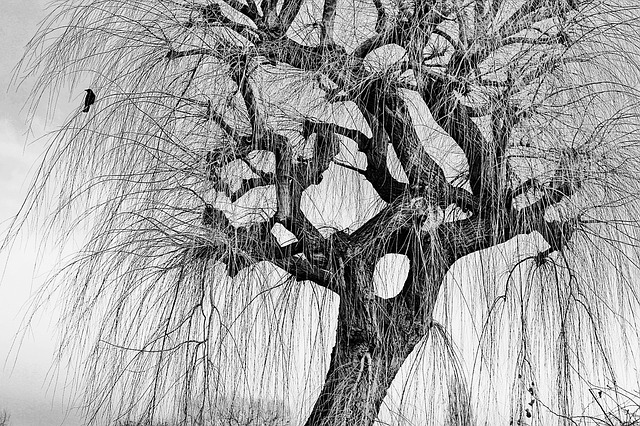
The willow is like an etching,
Fine-lined against the sky.
The ginkgo is like a crude sketch,
Hardly worthy to be signed.

The willow’s music is like a soprano
Delicate and thin.
The ginkgo’s tune is like a chorus
With everyone joining in.

//
My eyes feast upon the willow,
But my heart goes to the ginkgo.
 

From the poem “Metaphor”

Morning is
A new sheet of paper
For you to write on.

Whatever you want to say,
all day,
until night
folds it up
and files it away.

The bright words and the dark words
are gone
until dawn
and a new day
to write on.


DID YOU KNOW

Eve Merriam was a pen name. She was born Eva Moskovitz. Another author who writes under a pen name is our guest author at Turning Leaves 2017, Vicki Delany who also writes under the pen name Eva Gates.

Women Killing It

Women Killing It

Gwynn Scheltema

When I read Julia Cameron’s seminal book The Artist’s Way, she introduced me to the concept of a writer’s date: a block of time set aside to nurture your creative inner artist.

The idea behind this concept is that as we create, we run the risk of emptying our creative well, so we need to constantly refill that creative well by consciously experiencing new things, taking time to observe, taking time to breathe and reflect.

The Artist’s Date

There are many things you can do on your artist’s date. Because our creative brain is a sensory brain, anything that stimulates the senses or fires up the imagination will work: a walk in the park, making soup, lying on your back and watching clouds, going to a food or music festival. It doesn’t matter as long as you do it mindfully.

This coming Labour Day weekend, my artist’s date will take me to a new writing festival being held in Picton, Prince Edward County. It has the fun title of “Women Killing It.”

In the morning, I’ll be taking a workshop titled “So You want to Write a Mystery?” with author Mary Jane Maffini. In the afternoon I’ll join four writers of mystery and suspense for “Murder at the Vicarage”, an afternoon of readings, discussion and sumptuous Victorian high tea at Macaulay House.

Women Killing it

This Crime Writers Festival showcases nine Canadian women authors of crime and mystery. On Friday evening at “The Mysterious Affair,” a table-hopping event introduces each of the authors in turn: Mary Jane Maffini, Susanna Kearsley, Nazeen Sheikh, Elizabeth J. Duncan, Melodie Campbell, R.J. Harlick, Barbara Fradkin, Maureen Jennings and Robin Timmerman.

Saturday features the workshop and event at Macaulay house I mentioned earlier, and the day finishes with an evening event, “Appointment with Death (and Dessert).” Here, authors writing on the darker side will discuss murder, motives and MOs.

Why have this festival?

The festival was the brain child of mystery author Janet Kellough and Vicki Delany, also a crime writer and then Chair of the Crime Writers of Canada. They felt that Canada’s talented pool of women crime writers needed to have more exposure. I’m glad they did. What a treat! All this talent in one place, right in my backyard.

Perhaps you’ll take yourself on an artist’s date to “Women Killing It.” Find out details online or on Facebook.

You might also like to listen to two recent interviews with the organizers Janet Kellough and Vicki Delany on Word on the Hills radio program hosted by Felicity Sidnell Reid and me. These two prolific writers talk about the festival and their latest books.


DID YOU KNOW

Co-organizer of Women Killing It, Vicki Delany, will be our guest author at this fall’s Turning Leaves 2017 Retreat. Vicki is one of Canada’s most varied and prolific crime writers. Her newest cozy series is the Sherlock Holmes Bookshop Mystery Series. The first volume Elementary She Read was published in March 2017, and the next in the series, Body on Baker Street will hit the shelves on September 12.

Ten Ways to Get the Most from Writing Prompts

Ten Ways to Get the Most from Writing Prompts

Gwynn Scheltema

At the recent Just Right at Glentula Retreat, we used a number of writing prompts. Most writers have tried them at some point in their writing journeys. Some love them; some not so much. I find them invaluable. I’ve used written, verbal, visual, and textural prompts. I’ve even used smell and taste prompts.

Some writers resist prompts, because they feel that their writing time is limited and they should be writing the “real stuff.” But remember that “completing the prompt” is not the object. The goal is to get you writing, to get you writing what has the most energy for you, and to lead you into your writing project.

How do you do that?

Follow the energy

Often when you begin writing about the subject of the prompt — say swimming in a lake — it can take you  somewhere else — say an experience of drowning or crab baskets in Italy or how your father never believed in taking vacations. Go there. Forget the prompt and go where the energy is.

Prompts unlock memories and experiences, and when you write honestly about them, about how you felt, what you observed, and perhaps even capture some of the dialogue that was spoken, you can take that piece and adapt  it later for your “real” writing.

Prompts are not precise nor prescriptive.

Understand the possibilities of “You”

Prompts often use the pronouns “you” or “your”: “Write about your greatest fear” or “Imagine yourself beside a body of water…” Of course, you can write about your own experience, but you can also approach it as if you are one of your characters. And not just your protagonist or your viewpoint character. Often it is more revealing to pick your antagonist, or a minor character.

Switch it up

Try the same prompt from two different characters’ points of view. If the prompt says “What’s your favourite colour?”, get your character to answer. What colours does she/he have an aversion to? Perhaps you don’t know. Write about the fact that you don’t know that about your character. Why don’t you know? What else don’t you know? Or have characters answer that question about each other. What did your protagonist’s mother think were his /her favourite colours? How did that play out in your protagonist’s life? Did the mother always dress your protagonist in blue for example?

If you are a memoir writer, remember that the people in your life are your characters; they are just called Mom, or Dad or Great Aunt Mabel. And like a fiction writer, you can stretch by writing as if you are another character.


Prime the Muse

Prompts take you places you don’t expect, but I’ve also found them useful for getting into scenes that I was planning to write. Start by identifying a scene in your story you want to work on. For instance, you might want to do a scene where one character makes the first show of affection towards the other. Using the prompt “What’s your favourite colour?” as a line of dialogue could take you to a scene at a fair or in a mall where he is buying her something, or in a garden where the flowers are in bloom, or just in the kitchen choosing a coffee mug.

Write what you know  

The facts of your life may not be the stuff of wild imaginative novels, but your human reaction to events is as valid as any character in any novel. Perhaps you haven’t been in a dugout canoe in the Amazon Jungle, but you know how it feels to sweat. You also know how helpless you can feel in a strange place. Could the feeling of being swept down the river with the jungle crowding in also feel like being swept along in a crowd at a frenzied rock concert or at busy subway station? It’s not the facts from your life that connect with readers, it’s the emotions and commonalities.

The Senses

Like the things you feel, what you see, hear, touch, taste and smell also relate to what we all know. When writing from prompts, the senses will always ground you and lead you forward. Make use of ALL five senses. Also consider the temperature, the quality of the light, time of day, the weather, the seasons, the historical period.

Move into Metaphor

When you have considered the senses, move into metaphor. Ask yourself: What does this remind me of? What is it like? What is it not like? Explain it to someone who’s never seen, heard, touched, smelled or tasted it before. What would a child relate it to? What would your character compare it with?

Be specific

As you write, imagine being in your scene. Notice and write about specific sensuous details: not “a car” but “the dented yellow Edsel-Ranger taxi.” Write about unusual details, incongruous details. Write about what’s missing. Imagine the scene with and without people — general people, specific people. Listen for snatches of remembered or overheard conversation.


Opposites

Turn the prompt around and do the opposite. Substitute “hate” for “love”, try “old” in place of “young”, use “like least” instead of “favourite”. Write using both approaches and consider the similarities or juxtapositions created. If you can’t remember, start with “I don’t remember.” If you’ve never experienced the prompt, say singing for a crowd, start with “I have never sung in front of people because …” or “I have never sung in front of people but I have …”

Lists

Sometimes a topic seems too big to approach with authenticity. For instance, if the prompt asks you to write about someone you fear, and you’ve always feared your father, you may not feel comfortable diving into writing about him. Instead make a list of all the people you fear. Try to make the list really long. The items you add to the list last are often the ones buried deep. At the end of your list may be a kid from grade school. Write about him. Chances are you’ll find you feared him for many of the same reasons you feared your father.

Or make a list about all the emotions you feel about your father, and write about any one of them.

Give it a go

Prompts have been the source of many of my “keep” scenes. I may end up only using a portion of what I wrote, perhaps just one paragraph, but the prompt usually takes me where I’ve been resisting going and anything that gets me writing is a good thing.

Need a prompt now? There are lots of online sites. Here are a few for fiction, non-fiction and poetry:

Now, go and write, write, write ….

DID YOU KNOW

At Writescape retreats, we provide optional creativity sessions to tickle your muse and a companion work book full of prompts and ideas to take your writing to places it hasn’t gone before. Join us at our next retreat: Turning Leaves 2017.

7 Ways to Keep Writing Every Day

7 Ways to Keep Writing Every Day

Gwynn and Ruth are on vacation for a few weeks. So we’re bringing back a couple of our favourite Top Drawer topics to share with new readers and to nudge long-time followers. The last two blogs explored finding time to write and finding inspiration. This week Gwynn’s April 2016 post rounds out the message with tips for writing every day.

Gwynn Scheltema

We’ve all heard the old maxim, “Write every day.” In the bogaiman quoteok Outliers, author Malcolm Gladwell says that it takes roughly ten thousand hours of practice to achieve mastery in a field. Whether you believe in the 10,000 hours concept, or simple BIC [Butt in Chair], there is no denying that being a writer means actually writing—real words—lots of them.

“Write every day” is the number one piece of advice given by successful writers—and they should know. But it’s often easier said than done.

So here are 7 ways to keep you writing every day:

  1. Set aside writing time

paper-606649_960_720If writing is important to you, it needs to be built into your routine in the same way that you build in any other important activity in your life. If you need to schedule writing time like dental appointments, piano lessons, or hockey practice, do it. Think of writing as your “job” and block out set times like you would if you were going to work.

And perhaps once in a while treat yourself to really dedicated time on retreat, like Writescape’s Spring Thaw or Just Write at Glentula.

  1. Get buy in

Talk to your family and friends about how important your writing time is to you. More importantly, talk to yourself about honouring that time. Are you the one who gives up your creative time to do extra chores, or make way for what someone else wants to do? Ask yourself, “Would I take a day off work to do chores?”

  1. Know yourself

The right time to write is different for everyone. You know when you are most creative. If you feel guilty taking “family time”, get up earlier, or reserve after-bedtime time for yourself.

  1. Have a dedicated writing spacewriting-828911_960_720

If you learn to play the piano, you invest in a piano. If you play hockey, you buy skates and sticks and all the rest of the hockey paraphernalia. Yet so many writers believe that perching on the end of the kitchen table and clearing up when someone else needs the space is okay. It’s not. Claim a writing space that is yours. It doesn’t have to be a whole room, but it should be a place where you can be alone when you want to, and where you can leave things in progress.

  1. Get dressed and show up

While it’s comfy to write in your jammies, getting dressed to go to write lends a validity to the activity, like getting dressed to go to work. And as Woody Allen said, “Eighty percent of success is showing up”. If you can physically get your butt in the chair, then writing that first word is that much easier.

  1. Know your writing style

Stephen King says he writes ten pages a day; Hemingway wrote 500 words a day. Some writers set a fixed time—write for 3 hours. It doesn’t matter what writing goal you set for yourself, as long it is achievable, and doesn’t set you up for failure. Start small. Even 3 paragraphs done every day will get you further ahead than a full chapter not even attempted because it is too overwhelming.

  1. Use prompts, timers or ritualsteapot-574025_960_720

To make the transition from the practical world to your creative world, have a ritual: light a candle, play music, or make tea in a special pot. To get the words flowing, make use of writing prompts or timers or idea files. Anything that will get you started. Think of them as warm-up exercises.

From the picture at the top of this post, it looks like that writer channels Star Trek to get started. My writing ritual is to clear my desk, get a coffee and win three hands of solitaire. What’s yours? Share it in the comments below.

Other articles you might like to explore:

Strange Writing Rituals of Famous Authors

Daily Routines of 12 Famous Writers

Sit Down, Shut Up and the Muse will Come.

The Truth about Finding Time to Write

The Truth about Finding Time to Write

Gwynn and Ruth are on vacation for the next couple of weeks. So we’re bringing back a couple of our favourite Top Drawer topics to share with new readers and to nudge long-time followers. This week is Gwynn’s January 2016 post on writers’ procrastination. Come on. Admit it. Who hasn’t delayed getting BIC (Butt In Chair)?

Gwynn Scheltema

When people ask me, “What’s the biggest barrier to finishing your novel?”, I tell them, “Lack of writing time.”

And indeed, the demands of life often—in fact, usually—trump the ability to set aside writing time. Yet when I look back at my life and the things I’ve accomplished, I realize that somehow I’ve always “made” time for the things I really wanted to do.

At various times I’ve wanted something badly enough that I’ve worked three jobs at once as well as studying part-time by correspondence; I’ve negotiated deals to allow me to fast track programs over three years rather than five; I’ve run several businesses at once, often going months without a day off, working till 2 a.m., or driving three hours one-way for a one-hour speaking opportunity.

So what does that say about my writing? If I can’t find the time to write, does it mean that I don’t want to write?

If I’m honest with myself, the answer is probably “yes”.

Yikes! How can that be? I love words and language. I love books. I love stories. And I have a story to tell, one that occupies my mind constantly, one that I think is important enough to be told. So how can the answer be yes?

It’s yes, because I’m afraid. It’s yes because the pressure I put on myself to write something meaningful is so great, that it is safer to not write anything at all. When I plan and dream and “write in my head”, I’m not opening myself up to judgement, to failure, to rejection, to mediocrity, or even to the pressure of success. I don’t have to risk anything.

Time is not the problem

So it’s not time that is my barrier; it’s the inability to risk, the fear of taking that step into the unknown, the unwillingness to “do it anyway”. It’s a hard thing to admit. It’s an even harder thing to overcome.

My logical mind knows this and has all kinds of practical things to do to combat procrastination, but the answer ultimately lies in my emotional mind. Until I am emotionally ready to write, there will never be enough time.

Name it to turn it

So what can I do? Tackle the real problem. Tackle my emotional fear.

In any recovery program, recognizing the problem is always the first step. In this case, I need to recognise that time is not the problem, but not writing is. Time is not the problem, but not allowing myself to write badly and thinking negatively about what I write is.

The first step

So, I will re-name my fears as affirmations and post them where I can read them often. This will help train my emotional self to think differently.

Photo credit: Epos.de

So:

  • I can find time to write.
  • It doesn’t matter what I write, as long as I write often
  • I can always re-write, but just getting it down in first draft is the most important thing.

It’s a small first step, but an important one. I’m glad I’ve taken that small step. Wish me luck.

I’m sure I’m not the only one out there procrastinating and blaming it on lack of time. Anyone else have this problem? Post your experience and advice in the comments below.


Smile Poetry 101

Smile Poetry 101

Gwynn Scheltema

In last week’s post based on Irene Livingston’s humorous poem, “I Cannot tell a Lilac”, I spoke primarily about light verse and nonsense rhyme, but along the way, mentioned a few other poetic forms connected with humorous poetry. Here’s a quick explanation again of the general forms, light verse and nonsense rhyme, followed by an alphabetical primer on 5 other specific humour forms.

Light Verse

Poetry on light-hearted or playful themes written primarily to amuse and entertain. Although the genre often uses elements of nonsense verse, like made up words and grammatical play, it is technically competent and possesses a sophisticated level of wit.

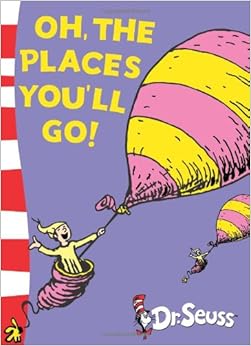
Image result for oh the places you'll goDr Suess is a master at light verse. Sales seminars use the Green Eggs & Ham story to illustrate the 5 most important selling techniques. Oh, The Places You’ll Go! is a popular adult graduation gift.

You have brains in your head.
You have feet in your shoes.
You can steer yourself 
any direction you choose.
You’re on your own. And you know what you know.
And YOU are the guy who’ll decide where to go.

 Nonsense Rhyme

Poetry that subverts language conventions and logical reasoning. Humour comes from its nonsensical nature, rather than wit or a punchline. Uses elements like rhythm and rhyme and is whimsical and humorous in tone. Although these poems are also known for the use of made-up words, these words are still used with recognizable grammar and syntax, and each nonsense word is a clear part of speech.

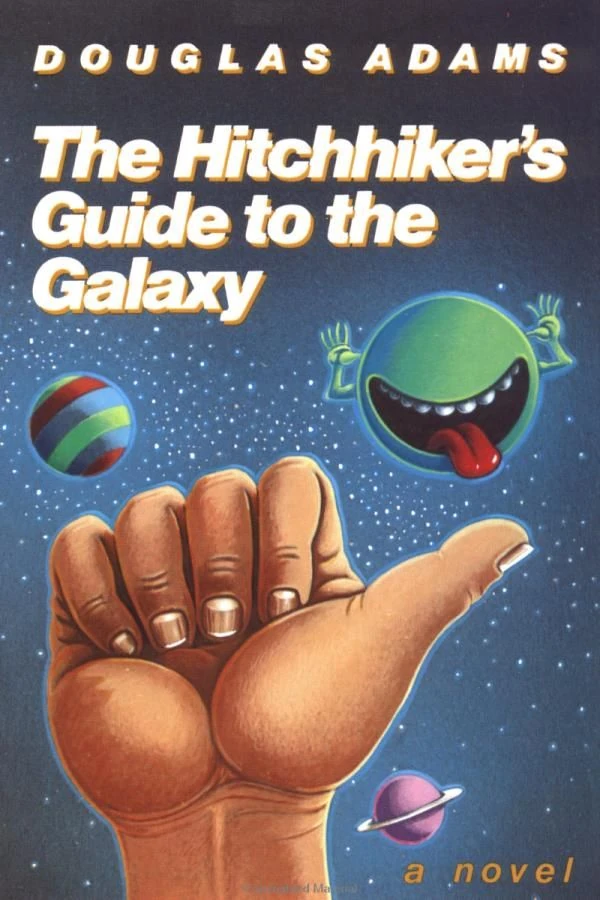
Image result for hitchhiker's guide to the galaxyEdward Lear and Lewis Carroll popularized the form in the late 1800s, but more contemporary examples can be found in the “Vogon” poetry found in Douglas Adams’s The Hitchhiker’s Guide to the Galaxy and in this sample from John Lennon’s “The Faulty Bagnose”:
The Mungle pilgriffs far awoy
Religeorge too thee worled.
Sam fells on the waysock-side
And somforbe on a gurled,
With all her faulty bagnose!

Bouts-rimés 

Bouts-rimés (French: “rhymed ends”) originated from a literary game invented in the early 1600s. They are verses created when the poet receives a list of rhyming words from another person and uses them in a given order to produce a result that makes at least partial sense.

John Keats produced “On the Grasshopper and Cricket” (1816) in a bouts-rimés competition with his friend Leigh Hunt. Here’s an excerpt:

The Poetry of earth is never dead:
When all the birds are faint with the hot sun,
And hide in cooling trees, a voice will run
From hedge to hedge about the new-mown mead;
That is the Grasshopper’s—he takes the lead
In summer luxury,—he has never done
With his delights; for when tired out with fun
He rests at ease beneath some pleasant weed.

Clerihew

A Clerihew is a comic biographical verse invented by Edmund Clerihew Bentley in 1905. Clerihews are written as four-line verses of two rhyming couplets, the first line almost invariably ending with the name of a person. A form of roasting, the humour comes from putting the listener’s sense of rhythm on edge with its purposeful varied line length and awkward rhyme as well as its off-the-mark treatment of the named subject. Here is an example by Edmund Bentley called “Cervantes”:

The people of Spain think Cervantes
Equal to half-a-dozen Dantes:
An opinion resented most bitterly
By the people of Italy.

Epigram

Epigrams in poetry (they appear also in prose formats) were originally meant as an inscriptions suitable for a monument, but now the term refers to any short, pithy verse especially if it is sharp and moralistic.

Samuel Taylor Coleridge (1772–1834 produced an epigram that neatly sums up the form:

What is an Epigram? A dwarfish whole,
Its body brevity, and wit its soul.

Limericks

These days, limericks are probably the best known form of humorous poetry. Limericks first appeared in medieval times, but were popularized in 1846 by Edward Lear in his Book of Nonsense  We all recognize the distinctive form and “punch-line” ending. They are often bawdy too.

In terms of form, a limerick consists of five lines. The first, second, and fifth lines rhyme and must have seven to ten syllables and the same verbal rhythm. The third and fourth lines are always shorter (five to seven syllables) and have to rhyme with each other and have the same rhythm.

Image by CSG Kids Ski Gear

Here’s a fun example from Rudyard Kipling:

There was a small boy of Quebec,
Who was buried in snow to his neck;
When they said. “Are you friz?”
He replied, “Yes, I is—
But we don’t call this cold in Quebec.”

 Macaronic

This form dates back to the a comic Latin verse form that incorporated common dialect words and gave them mock Latin endings for effect. The same technique is now applied to combinations of modern languages.

This sample from Charles G. Leland called “To a Friend Studying German” plays with English and German:

Vill’st dou learn die Deutsche Sprache?
Den set it on your card
Dat all de nouns have shenders,
Und de shenders all are hard.

Your turn

Although these forms produce verse that is light and makes us smile, I’m sure you can appreciate the work that goes into creating them. Fancy trying your hand? How about posting a limerick below about writing.

DID YOU KNOW

In addition to a bouts-rimés being a form of humorous verse, it is also a form of constraint poetry: poems written within strict conventions. Gwynn gave a workshop on “Playing with Constraints” in Ottawa for the Tree Seed Reading Series. If you would like to organize a poetry workshop for your group, check out our On-Demand Workshops options.

I Cannot Tell a Lilac

I Cannot Tell a Lilac

Gwynn Scheltema

Now that the blooms are spent, I’ve been pruning my lilacs. I miss their heady scent and pendulous flowers, but each year when they are in blossom, I think of Canadian poet Irene Livingston’s poem “I Cannot Tell a Lilac.”. Ruth and I chose that poem as the first place winner in a contest for a poetry book collection called Open Window 111 (Hidden Brook Press 2002)—sadly now out of print.

I Cannot Tell a Lilac

I remember being intrigued by the playful title and hoped that the poem would not be overloaded with cliché references to the lilac blooms and scent we all know so well. But like the Stephen Leacock Poetry Prize winner that she is, Irene Livingston delivered surprise and delight!

The poem was fun, light-hearted. Livingstone played with semantics and form; she invented words. The poem danced to a happy bouncy rhythm; it had a quiet humour. The rhyme was subtle and skilled. None of it was forced. Everything from the images to the word choice was deliberate, but had the feeling of a careless, happy-go-lucky throwing together of thoughts and feelings. And at the end of it, I could smell the lilacs, see the ponderous blooms hanging low and feel the promise and warmth of spring. It remains one of my favourite poems.

Here are the first few lines of Livingston’s poem:

I’m cycling along so nicely, in brightfully
spritzing four o’clock sun-stream, when I suddenly
spy, with my little eye, a bushlet of fabulous lilacs

“Oh lilacs!” I cry to the halcyon Sunday street.
“Methinks I will toodle on up to the door,
give a light tap-tap and inquire as to
whether I might be permitted to snap off
some sprigs of vosnifferous, luminous blooms……

Is it Nonsense?

Words like “brightfully” and “vosnifferous” take me back to childhood nonsense poems that were fun to read but seemingly made no sense. Like: “”Hey diddle, diddle / The cat and the fiddle / The cow jumped over the moon…” and Lewis Carroll’s “The Jabberwocky”:

Twas brillig, and the slithy toves
Did gyre and gimble in the wabe:
All mimsy were the borogoves,
And the mome raths outgrabe

But “I Cannot Tell a Lilac” isn’t nonsense. It’s the story of a young child riding a bike through the neighbourhood and being so overcome by the lilacs that he wants to pick them… with funny results.

So if it’s not a “nonsense poem”, what is it? Nonsense rhymes and “I Cannot Tell a Lilac” are both forms of light verse, a genre that includes a myriad of “fun” verse forms from epigram and clerihew to boute-rimes and macaronics.

Encyclopædia Britannica, defines light verse as “poetry on trivial or playful themes that is written primarily to amuse and entertain and that often involves the use of nonsense and wordplay. [It’s] frequently distinguished by considerable technical competence, wit, sophistication, and elegance.”

Light Verse Grows Up

Light verse has been around since Greek and Roman times. The Greek Anthology contains many epigrams. The Roman poets Catullus and Horace used innuendo, wordplay and satire.

In Medieval times light verse took on a narrative form and was often bawdy and irreverent but with a moral undertone. The limerick also made its debut around this time as did fable stories like Pierre de Saint-Cloud’s 40,000-line Le Roman de Renart  [Reynard the Fox] written in 1174.

In the 18th century, mock-epics joined the genre, like Alexander Pope’s “The Rape of the Lock”, and Lord Byron’s verse novel Don Juan. Light verse was still filled with innuendo and moral judgement, but took on a sardonic and casual tone.

In 1846 Edward Lear’s Book of Nonsense  popularized the limerick form:

There was an Old Man with a beard,
Who said, “It is just as I feared!
Two Owls and a Hen,
Four Larks and a Wren,
Have all built their nests in my beard!”

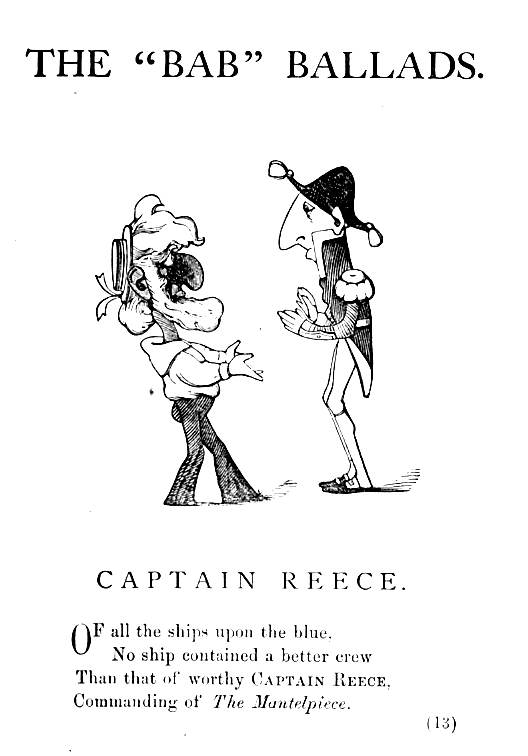
IImage result for captain reecen the late 1800s Lewis Carroll introduced nonsense poems, like “The Jabberwocky” I mentioned earlier. W.S. Gilbert’s Bab Ballads introduced absurdity like in this excerpt from “Captain Reece.”
Of all the ships upon the blue,
No ship contained a better crew
Than that of worthy CAPTAIN REECE,
Commanding of THE MANTELPIECE.

A feather bed had every man,
Warm slippers and hot-water can,
Brown Windsor from the captain’s store,
A valet, too, to every four…..

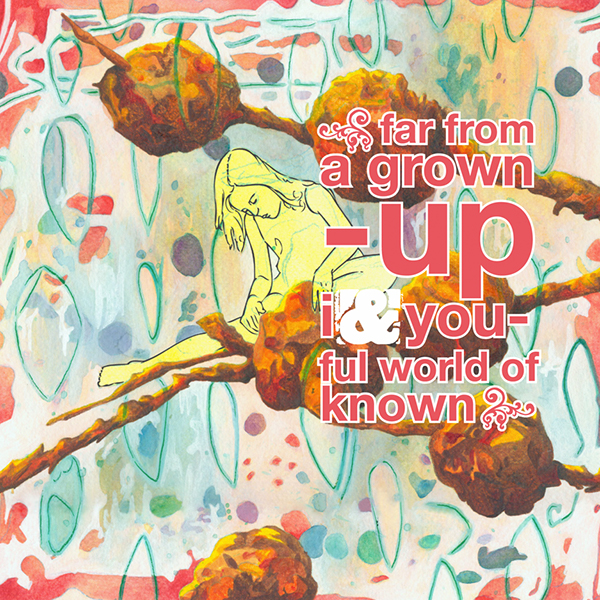
IImage result for 2 little whos by e. e. cummingsn the 1900s, poetic forms introduced by Dadaists, Futurists, and Surrealists, and the distinctive techniques of the Beat poets and e.e. cummings confused the boundaries between light verse and serious poetry. Flippant and irreverent tones were actually seriously intended. Poetry that began in an amusing way ended sometimes in bitterness or terror. What had been playfulness with grammar and syntax became forms of their own such as this excerpt from e.e.cumming’s poem “[2 little whos]”
(far from a grown
-up i&you-
ful world of known)
who and who

(2 little ams
and over them this
aflame with dreams
incredible is)

Today, I believe the line between serious humorous poetry and light verse is firmly blurred. Wit and satire, absurdity and irreverence abound in both forms. But for me, in light verse, I still look for the elements I found originally in “I Cannot Tell a Lilac”:

  • a quiet understated humour
  • playing with semantics and form
  • inventing words
  • a happy bouncy rhythm
  • subtle, skilled rhyme
  • evoking a feeling of entertainment and delight.


DID YOU KNOW

Irene Livinston won her Stephen Leacock Poetry Prize in 2001 at the Orillia International Poetry Festival. But did you know that the first winner of the Stephen Leacock Memorial Medal for Humour also honoured poetry (with a satirical twist) —Paul Hiebert’s novel Sarah Binks (1947), a fake biography of “The Sweet Songstress of Saskatchewan”. The Canadian Encyclopedia describes the book as “a comic creation which derives from Canadian literature while simultaneously making a contribution to it.”

Stories of Life

Stories of Life

Gwynn Scheltema

As often happens in life, birth and death go hand in hand. Last week I wrote about the birth of my baby granddaughter, Elle, and all the wonderment and creative promise that comes with that.

But our family has also been touched these past weeks with the news of terminal cancer. Many of us in this situation feel the helplessness of not knowing what to do or what to say.

And then an email from an oral story-teller I know told me about a “storyteller-in-residence” at Baycrest Health Sciences.

Storycare

For the past three years, Dan Yashinsky has been telling and listening to stories at Baycrest as part of their “storycare” program. He explained in an article for The Toronto Star that: “Storycare means creating times and places in the hospital for people to tell, hear, imagine, and remember stories.”

His article explained that storytelling encourages imaginative responses even from dementia patients who have forgotten the names of their loved ones; that suspenseful wondertales can help patients with severe depression “regain their desire to discover what happens next — in the story, and in their own lives.”

He recalls that Yukon Elder Angela Sidney once told him, “I have no money to leave my grandchildren. My stories are my wealth.” For patients in palliative care and their families, telling their life stories can be a comforting and enriching experience.

Life Stories

When I was a young woman, it seemed to me that biographies and to a lesser degree, autobiographies, were the only source of “life stories.” And to make it into book form, the subject life had to be a famous one: great achievement, great adversity, great discovery and such. Today, I have noticed that memoir stories abound. Stories still of great achievement, great adversity and great discovery, but stories from “ordinary” people. The kind of people I might know. The kind of lives I can recognize.

What I like about this trend is the underlying inference that everybody’s life matters. That we all have something to offer. And that in each life I read about I find echoes of my own. This connection through story can, at different times, inspire, comfort, educate, amuse, awe or humble me. It’s all good.

The Power of Story

An article in The New York Times says “Telling and listening to stories is the way we make sense of our lives.” The article tells of a study on the positive effects of storytelling on people with high blood pressure. Dr. Thomas K. Houston, lead author of the study said, “That natural tendency may have the potential to alter behaviour and improve health.”

The International Storytelling Centre (ISC) based in Tennessee, agrees with that power of story, and not just for health, but for attaining any goal because it is the most effective way to communicate both with others and with ourselves.

ISC began a movement to revive oral story telling over forty years ago. The cornerstone of their belief is that “People crave, remember and honour stories.” They say, “We are an organization dedicated to inspiring and empowering people across the world to accomplish goals and make a difference by discovering, capturing, and sharing their stories.”

Tell your story

Many cultures have a rich and active oral storytelling tradition, and increasingly oral storytelling groups are forming the world over. Each year, March 20 marks World Storytelling Day, a global celebration of the art of oral storytelling. World Storytelling Day began in Sweden in 1991 and Canada joined the event in 2003.

On this day, people tell and listen to stories in many languages and at as many places as possible, during the same day and night. This event has been important in forging links between storytellers and in drawing attention to the art of storytelling.

Isak Dinesen said, “To be a person is to have a story to tell.” So throw off any thoughts of “my story isn’t worth telling.” It is. In writing or orally, tell your story as only you can tell it.

And when I next visit the hospital, I think I might ask, “Tell me about…”

Explore this topic further:

Storytellers of Canada/ Conteurs du Canada: Devoted to connecting people, reflecting culture, and inspiring discovery through the art of Storytelling.

First nations Storytelling.  Storytelling is a traditional method used to teach about cultural beliefs, values, customs, rituals, history, practices, relationships, and ways of life. First Nations storytelling is a foundation for holistic learning, relationship building, and experiential learning.

Oration, singing and storytelling are a source of both of delight and solace within the Maori culture.  ‘Healing Through Storytelling’ is a grief support programme created with Maori and delivered alongside Maori authors.

Healing Story Alliance explores and promotes the use of storytelling in healing. Our goal as a special interest group of the National Storytelling Network is to build a resource for the use of story in the healing arts and professions.

Paula Abood, a Community Cultural Development (CCD) worker, writer and educator, discusses the importance storytelling in developing confidence, empathy and communities.

Nicole Stewart started the live storytelling series Oral Fixation (An Obsession with True Life Tales). She has produced 19 shows, each with a different theme and featuring regular Dallas folks reading aloud their stories

Dave Lieber is a newspaper columnist, a prize-winning author and storytelling expert. For his investigative newspaper column, Dave receives 50 pitches a week for story ideas – and takes the best two. He knows how to find and identify memorable stories that people care about.

DID YOU KNOW

Among the many workshops offered by Writescape is a corporate workshop called “Sell with Story” that explores effective marketing and promotion through storytelling.

Are We Born Creative?

Are We Born Creative?

Gwynn Scheltema

When I looked at the perfect little face of my new born granddaughter, Elle Irene, I saw my son in her blue almond eyes. I saw my daughter-in-law in her pretty bow mouth. And as I played with her extraordinarily long fingers, I wondered if the old wives tale that long fingers were portents of being a creative was true.

There are a lot of artistically creative people in my family. My son is a fine artist and graphic designer; I am a writer, dabble in visual arts and spent years as a ballet dancer; my mother is a commercial artist by profession and our house was hung with her oil, pastel, watercolour and pencils pieces. But here’s the kicker. My artist mother is in fact my step mother. My biological siblings are not noticeably artistic. So was I born artistically creative, thus passing on creative genes to my son and possibly my granddaughter, or did the artistic and imaginative environment I grew up in and tried to create for my own children nurture creativity? The old nature vs. nurture maxim.

Nature vs. Nurture

 Picasso said, “Every child is an artist. The problem is how to remain an artist once he grows up.” Ursula LeGuin said, “The creative adult is the child who has survived.”

I believe that both statements speak to the uninhibited ability of children to express themselves. The older we get the more our actions are governed by social expectation, by self-assessment, by perceived judgement by others and by personal emotional baggage. Sometimes that frees us. Sometimes it restricts us. Whatever the outcome, that aspect of being creative is a learned attitude, a product of our environment and experience. It’s “nurture” at work.

But I think those quotes are also saying that we all are born with ability to be “childishly creative.” That we are “naturally” creative. Science backs it up:

Brain hemisphere specialization

Our two brain hemispheres are joined by a bundle of fibres called the corpus callosum. A study at the Department of Neurology and Neuroscience at Cornell University discovered that the brains of artistically creative individuals had a smaller corpus callosum. This, according to the study, allows each side of the brain to develop its own specialization.

Enhanced hemispheric specialization “benefits the incubation of ideas that are critical for the divergent-thinking component of creativity, and it is the momentary inhibition of this hemispheric independence that accounts for the illumination that is part of the innovative stage of creativity.”

In the genes

Another study from the University of Helsinki looked at musical creativity. They found the presence of a particular gene family involved in “plasticity”: the ability of the brain to reorganize itself by breaking and forming new connections between cells.

The team also noticed increased creativity in subjects with duplicate DNA strands affecting the processing of a neurotransmitter called serotonin. Elevated serotonin levels in the brain increase connectivity in the posterior cingulate cortex of the brain, an area that communicates with other brain networks, and is involved with memory retrieval.

The verdict

 So in the end, it seems we all can be creative, but we have to make sure we encourage and preserve that child’s ability to let loose without reservation and judgement. We have to nurture our natural abilities.

One of the best writing books about being creative I’ve read (and read again and again) is The Artists Way by Julia Cameron. She has worked with many creatives over the years and her book is a wonderful aid to finding your own creative self and nurturing it back to its full potential.

My creative granddaughter

 So has my granddaughter “inherited” creativity? I hope so, but I’m not going to sit back and assume so. I’ll be reading to her and telling stories, singing, doing crafts and playing music and anything else I can to help her along. I will encourage curiosity, confidence and flexible thinking and most of all, imagination.

Here are a few links with suggestions on encouraging creativity in children. Why not treat your own inner child to some fun too…


DID YOU KNOW

Escape to write… is one way to nurture your creative self. Registration is now open for Writescape’s Turning Leaves 2017 retreat at Fern Resort on Lake Couchiching. November 3, 4 and 5, 2017.


The Making of a Short Story

The Making of a Short Story

Gwynn Scheltema

I wrote a short story last week that forced me to write outside my real-life comfort zone. My story was for an anthology being put together as part of the many commemorative events to celebrate Canada 150. The submission call was for an “immigrant story”.

I’m an immigrant. I came to Canada in 1982 to escape a country that had been embroiled in a civil war for more than ten years and which had recently gained independence. Unfortunately for my family, the other side won and leaving seemed the best option on many fronts. But this blog is not about that and I didn’t want my immigrant story to be about that.

The story I wanted to tell was how it’s the little details in a new life that are the hardest. Finding jobs and a place to live are huge, seemingly insurmountable problems, but they are expected hardships, things you can brace yourself for and work to overcome. But just when you think it is all going well, that you’re getting ahead, some small detail surfaces and derails you. That’s what I wanted to write about.

I’m a private person, not given to public displays of affection or emotion. I cry in private. But for this story, I wanted to zero in on an emotional moment and portray it without being melodramatic or cliché. But how to do that?

The emotional mirror

Most readers, even though they may not realize it, read to mirror their own lives. Have they felt that way before? What would they do in a similar situation? How is this situation different from their lives? A story about events of that civil war would be different from an average reader’s life, but would it connect with readers on a human, emotional level? The key to making my story work was to focus not the events the reader couldn’t relate to, but on the emotions the reader could relate to. The emotional mirror.

To resonate with the reader, I had to identify the emotion I wanted the story to illustrate and the reader to feel. In this story, I wanted to show the feeling of being out of control, disoriented and emotionally afraid when the logical mind tells you there is nothing to fear. All emotions that everyone has felt at some point in their lives.

Let it unfold…slowly

Peter Selgin, writer and professor at Antioch University’s MFA Creative Writing Program, gives his writing students an exercise: Write two pieces each about 250 words long. Piece One should rivet the reader; Piece Two should bore the reader stiff. Each student reads both pieces out loud.

“In almost every instance the result is the same,” he says, “The ‘riveting’ piece bores, while the ‘boring’ piece holds interest.”

Why? Peter explains that, “In their effort to grip us, beginning writers tend to rush: They equate their own adrenaline with that of the reader. Conversely, when trying to bore, the same writers take their time; they don’t hesitate to lavish 250 words on the subject of a wall of white paint drying. And—to their consternation—the result holds our attention.”

So for this story, I chose a small incident that happened over a short period of time, but I slowed down the telling, letting it unfold moment by moment. By not hurrying, there was room for the emotion to build, for inner thought as well as outer action.

Envision it

As I wrote, I closed my eyes and imagined the scene in my mind. What could I see above, below, to the sides? What people and things were in my periphery? What could I hear, smell, touch, what was the quality of the light, temperature of the air? What emotion was I feeling at each point and what did that emotion look like in gestures, actions and reactions? Show don’t tell.

Match style to purpose

Writers have two roles in every piece they write. One to tell a story; two to craft it well. Having decided on the subject matter and how to let the story unfold, I summoned up craft I’ve learned over time.

To heighten the feeling of disorientation, of not fitting into a new world, of being out of control, I edited to make the sentence structure disjointed in places, short and fragmented in others and even syntactically out of step at times.

I made sure to use smell and texture or touch where I could as these senses tend to be more emotionally charged than sight and sound. I used setting details to echo the atmosphere of the fear that the narrator was feeling.

Whether my story was successful, I won’t know until it’s accepted and published, but I felt good about it when it was finished and that’s always a good sign.

DID YOU KNOW

Among the workshops Writescape has offered is one on writing short fiction, “Does Size Matter?” Gather your group. Pick your topic and your date. And we’ll bring Writescape’s workshops to you. Choose from our Workshop Catalogue, or contact us to provide a custom workshop to fill your needs.