Gwynn Scheltema
My recent blog Digging up Archives explored how to find archive repositories that might hold the material that is key to your research. But then what? What if the record exists on another continent? How do you know if the photos or maps they hold are the ones you need?
Since every archive is different in terms of size, staffing, regulations and collections, the first step is to find out what exactly what they hold. If they have a website, start there:
 Catalogues and Databases
Do a topic search and find the relevant collections the repository holds. With luck the list of collections will have links to catalogues or databases similar to those in a library. Here you can search by subject, keyword, title, author, etc. At Toronto University Archives I put in “Baffin Island.” The result showed 9 collections (3 of them digital). One that caught my eye was:
- Al Purdy Papers: 28 tapes of Purdy reading his poetry (Cariboo horses; Pressed on sand). Typescripts and drafts of poems. Typescripts and mimeographs of articles and plays for television and radio.
 Finding Aids:
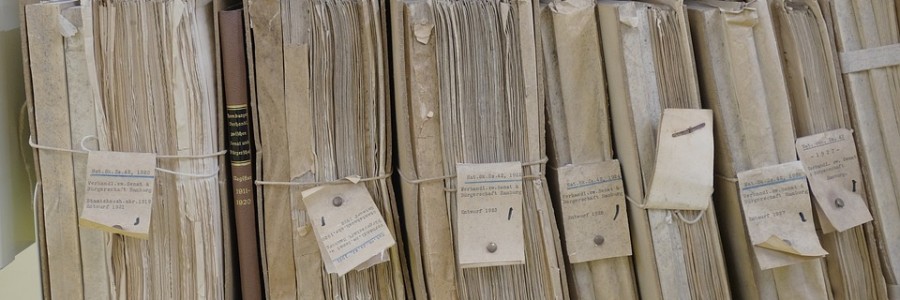
Many catalogues and databases will then link you to finding aids. A finding aid (sometimes called inventory, collection listing, register, or calendar) provides a description of the contents of a collection just like a table of contents outlines the contents of a book. Finding aids sometimes also give background information on the collection, like when and from where it was acquired as well as how the archival staff have ordered the materials in the collection, and their physical nature.
With luck, the finding aids will be viewable at the website, but if not, some archives have paper copies on site, or will provide copies on request.
The finding aid for the Al Purdy Papers was 5 pages long. Here’s a sample of page 1.
Digital Collections:
More and more, archives are digitizing materials (photographs, meeting minutes, reports, letters, audiovisual recordings, etc.) making them more easily accessible, but beware. Often digital documents represent only a fraction of the total repository. You will have to ask the archival staff for assistance in accessing non-digitized content.
 Archival Staff
Which brings me to probably the most precious asset in any archive, the archival staff who curate the collections. After you have examined the catalogues, finding aids, and website of an archive, archival staff can point you toward resources you may have missed. Write down the titles, call numbers, or other identifications from the materials you have sourced before you call or email. If an archive does not have a website, contacting the staff will be your only option.
In either case, if you are able to visit in person, set up an appointment time first. This will give the archival staff time to access the records you need, as they may be in another building or shelved in the basement stacks. Letting them know the background and scope of your project will help them better find appropriate materials.
If you can’t visit
 Policies differ archive to archive, but here are possibilities for access if you can’t visit in person.
- interlibrary loan – some archives lend printed materials or microfilm, but seldom primary or original documents like letters or diaries
- scans or photocopies – be prepared for fees and limits
- retain a research assistant – archives may recommend assistants or even provide paid research services
- ask the archival staff – archivists routinely answer reference questions for researchers. Obviously it cannot be a great volume of material and you need to have specific questions.
For many of us, the research part of the writing process is the most fun, and a visit in person to your chosen archive can be a highlight in that process. In Ruth’s previous blog, Holding history in my hands, she tells of her trip to the National Library and Archives to find her great-great-great-grandfather’s book. Published in 1790, it was a tell-all about The Hudson’s Bay Company, and a bestseller in its day. Ruth shares some of the protocols she encountered at the archives. It was a visit she will always remember.

 What good is writing a wonderful poem, a brilliant short story, an entire novel manuscript, only to leave them forgotten in the digital drawer? A big part of being a writer is submitting your work. Agreed, not everything you write should see the light of day, but you know in your heart which pieces should be sent out into the world. It’s hard, yes. It takes courage to expose yourself to possible rejection, but you can only enjoy success if you take this important step. So, this fall, dig out those finished pieces, brush them off, pretty them up and decide where they can find a home. Then—the important bit—actually send them out!
 As we near the end of the year, reflect on what you achieved in your writing life. Was it more or less than you hoped for? If, like me, you didn’t get as much done as you planned, don’t beat yourself up about it. Take action instead.
 I am terrible for starting projects and not finishing them. Are you? Is there even one project you could finish up and clean off your list before the end of the year? What about your writing space and daily habits? Are they “cleaned up” enough for you to feel creative, to have the time you need? Should you be throwing some habits out and replacing them with new?
 Now is the time to plan a winter schedule for your writing. What project/s do you want to tackle? Are there courses you need to sign up for in 2019? Conferences or retreats you want to attend next year that you must register for or save for now. A writing residency? A grant application? A submission schedule?
 While I’m not suggesting you stalk big names in your field of interest, we often meet experts (and other novelists) at book readings, symposiums, conferences or casually at other events. Asking about their research and the collections they may have used is a good conversation opener, and you might just learn something. If you are interviewing them, make it one of your questions.


 Want to find an opposite, a rhyming word, a word for a phrase? Head to
  Is your research article “Too Long Didn’t Read” or TLDR? Add
  Instead of hitting the backspace key multiple times to erase a word., hit crtl + backspace to erase the whole word at once. It works the same for deleting a whole word with crtl + delete.
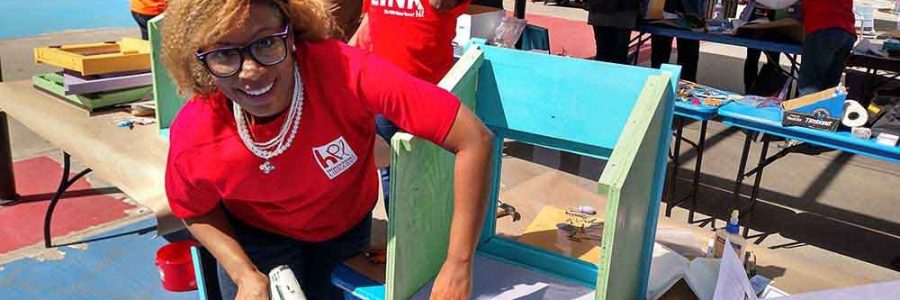
 I especially love “pop-up libraries” or “little libraries” on people’s front lawns. I love that people have taken the time to make them, to stock them with free books, and to trust that other book lovers will use them. This one at the end of my street is nestled in long grass and the sign inside suggests that you take a book, swap a book or donate a book.
 Turns out, there are no “rules”. The organization exists to spread the concept across the world and to support those who want to start a little library. They maintain a
  If you want to create a Little Free Library, the organization offers
  This funky little mushroom-shaped kids Library is installed at Grant Place Reserve playground in Flinders Park, Australia. The builders of this library say, “Our ‘Reading Spots’ give a fun place for kids to read in an awesome playground! We did some fun community art with the kids when we launched the Library, and we put a fabulous sign up on the fence.”
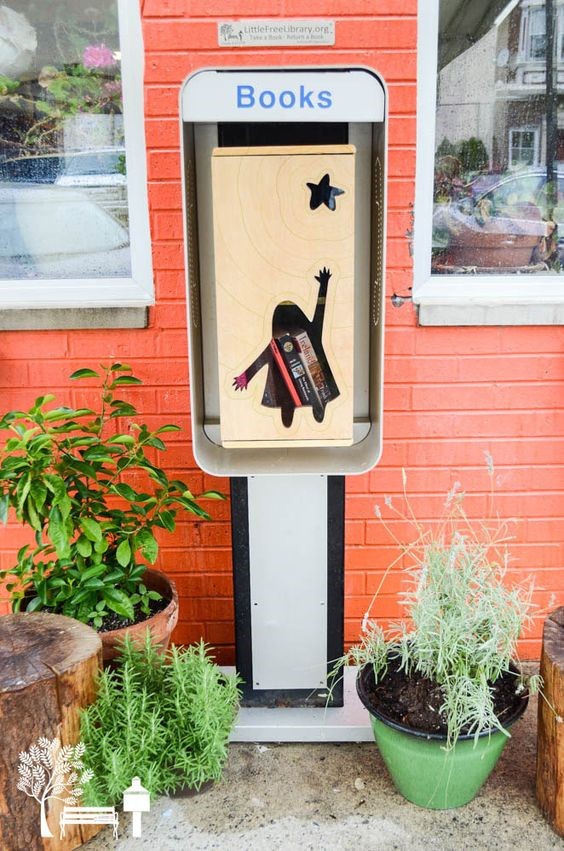 In Philadelphia, Pennsylvania teacher Johnny Buckley felt that abandoned pay phones could take on a new life of storytelling by transforming them into Little Free Libraries for pre-schoolers.
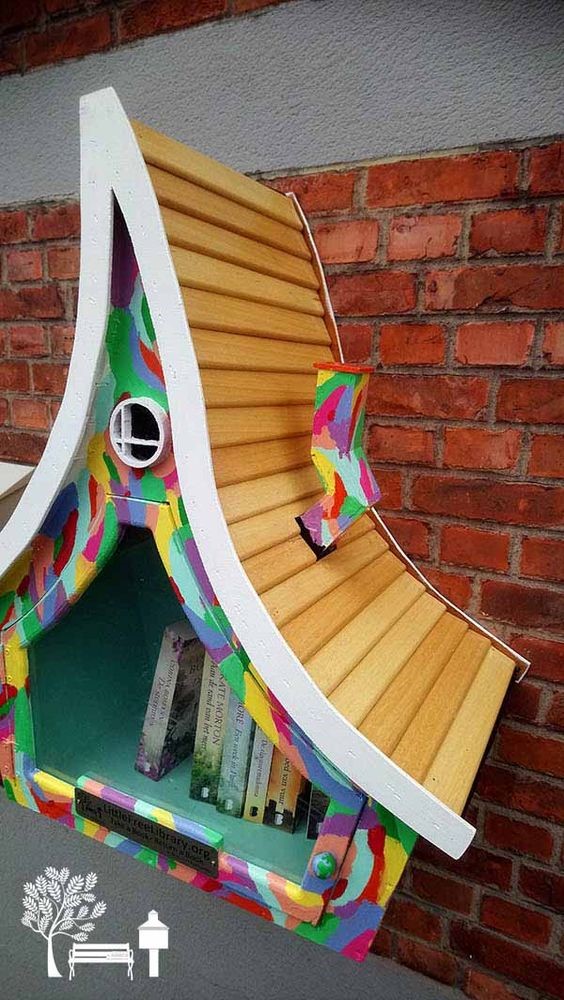 And across the pond in Oostakker, Belgium, the makers of this Little Library say, “The model fits our house perfectly, because our house is a hundred years old and has no straight walls, just like the Library. It has the charm of a place with a soul. It reminds us of our childhood, too, with all the colours.”
 According to
  Pinterest is not a point of sale. It drives people to click through to your website or to Amazon or wherever your point of sale is. It’s great for building an author presence, (see how below) but never lose sight of the fact that your end goal is sales!
 You can still have multiple boards, but keep them associated with the book or you as an author. In a business account, Pinterest allows you to have “featured boards” and “latest pins” that show up when you first go to the Pinterest page.


 Once you’ve created your Pinterest author account, don’t forget to grow your audience by


 Looking for another way to describe hair colour? Words to use instead of “amazing”. Pinterest has pins for that. Also pins for commonly misused words, when to use what kind of hyphen, and avoiding clichés—including cliché characters.
 If you like to be social, you can follow other pinners, join group boards or comment on pins. There are even hilarious “Pinterest Fail” pins.
 I remember a piece of old wood with termites running around all over it the termite men found under our front porch.
 Here is an excerpt from “A”
 Excerpt from PETALS
 by Gwynn Scheltema
 I walk down the garden paths,
 I walk down the garden-paths,
 Wallace Stevens wrote a poem called
  Poet
Poet 
 What is your story about?
 Character’s name
 When the story happens
 Genre
Genre A representative line from the text
 Go against expectation
 A Play on words: double meanings, puns
 Single words
  The promise of a story

 But the theme of a novel goes deeper. Theme in a novel is not just that one word, say LOVE, but the statement the author makes about the motif with the story.