
Gwynn Scheltema
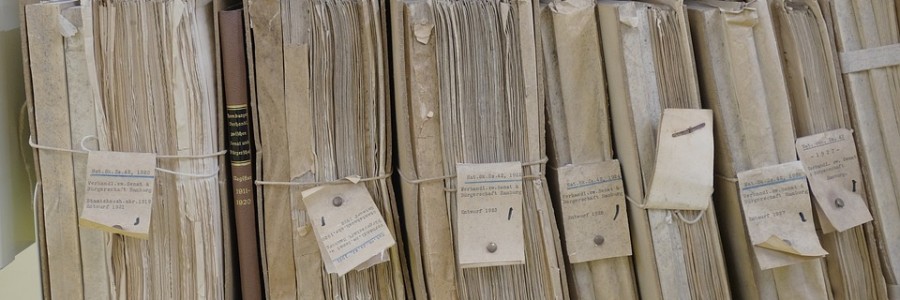
My recent blog Computer Hacks for Writers and Researchers got me thinking more about research, and in particular about how to locate archive materials.
Of course, you can always start with Google, but beyond that, you might try:
Bibliographies
Look in the bibliographies at the back of books that you are already consulting for research. Where did those authors go to get information? Even if you don’t read all the books they consulted, you can still check out what sources they used. Likewise with any essays you read. Even websites dedicated to your topic may list archives they used. Sometimes the dedications at the beginning of books also thank people who helped with research.
Experts
 While I’m not suggesting you stalk big names in your field of interest, we often meet experts (and other novelists) at book readings, symposiums, conferences or casually at other events. Asking about their research and the collections they may have used is a good conversation opener, and you might just learn something. If you are interviewing them, make it one of your questions.
Libraries
Your local reference librarian is bound to be a treasure house of information, especially about local archives.
But beyond that, ask your local library about accessing the WorldCat database or Archive Grid, with close to a million listings for archival materials stored in libraries, archives and museums all over the world. Many of the libraries within that network offer inter-library loans. Your library may also have access to the subscription site Archive Finder which has over 22000 listings of historical collections of primary source material in American and British archives. For American publications, the Library of Congress is America’s national library, and the world’s largest.
College and university archives

Apart from theses archiving, educational institutions often have “special collections”. University of Toronto, for instance, has a collection called “The Barren Lands: J.B. Tyrrell’s Expeditions for the Geological Survey of Canada, 1892-1894” which includes over 5,000 images from original field notebooks, correspondence, photographs, maps and published reports covering two exploratory surveys of the Barren Lands region west of Hudson Bay, in northern Manitoba and Saskatchewan and the area now known as Nunavut.
Corporate archives

Large corporations often have archives, like the General Motors Heritage Centre, that preserve the history of their corporations and industries. Collections of videos, photographs, and corporate records have varying degrees of public access depending on the company’s policies and archival staff availability.
Canadian archives
Our National Archives known as Library and Archives Canada (LAC) are housed in Ottawa. (read about Ruth’s research visit there). Among their collections are:
- Canadian censuses from 1640 to 1926, and for Newfoundland from 1671 to 1945
- Military records dating back to New France
- Immigration records such as passenger and border entry lists from 1865 to 1935
The Canadian Council of Archives (CCA), in partnership with LAC, maintains ArchivesCanada.ca which lists over 800 repositories across Canada and has links to databases by province.
Other web sites to check
Explore the Smithsonian Institution Archives , the record keeper of the Smithsonian’s 19 museums, nine research centers, and the National Zoo.
The American Historical Association sponsors Archives Wiki which gives information on (and links to) archives around the world from a researcher’s perspective.
The National Archives and Records Administration (NARA) looks after US Federal government materials, regional archives, and presidential libraries.
And then what????
Of course, locating the archive that holds the documents or other materials you need is only the beginning. Accessing that information and dealing with archival staff is the subject of another blog. Stay tuned.
Last Word
This twitter quote comes from this year’s author guest at Writescape’s Turning Leaves 2018 retreat in November, Andrew Pyper (@andrewpayper). And it’s so true!
 Want to find an opposite, a rhyming word, a word for a phrase? Head to
  Is your research article “Too Long Didn’t Read” or TLDR? Add
  Instead of hitting the backspace key multiple times to erase a word., hit crtl + backspace to erase the whole word at once. It works the same for deleting a whole word with crtl + delete.


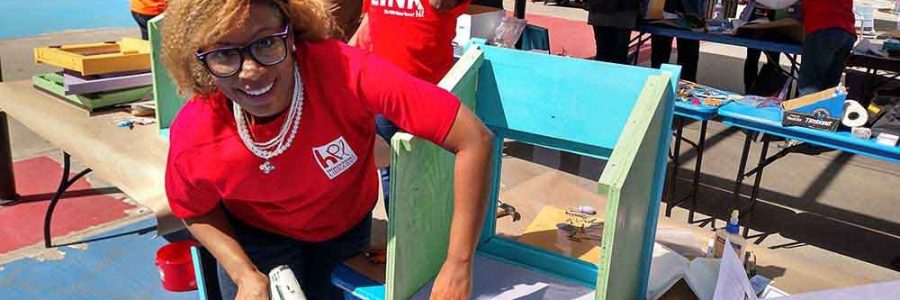
 I especially love “pop-up libraries” or “little libraries” on people’s front lawns. I love that people have taken the time to make them, to stock them with free books, and to trust that other book lovers will use them. This one at the end of my street is nestled in long grass and the sign inside suggests that you take a book, swap a book or donate a book.
 Turns out, there are no “rules”. The organization exists to spread the concept across the world and to support those who want to start a little library. They maintain a
  If you want to create a Little Free Library, the organization offers
  This funky little mushroom-shaped kids Library is installed at Grant Place Reserve playground in Flinders Park, Australia. The builders of this library say, “Our ‘Reading Spots’ give a fun place for kids to read in an awesome playground! We did some fun community art with the kids when we launched the Library, and we put a fabulous sign up on the fence.”
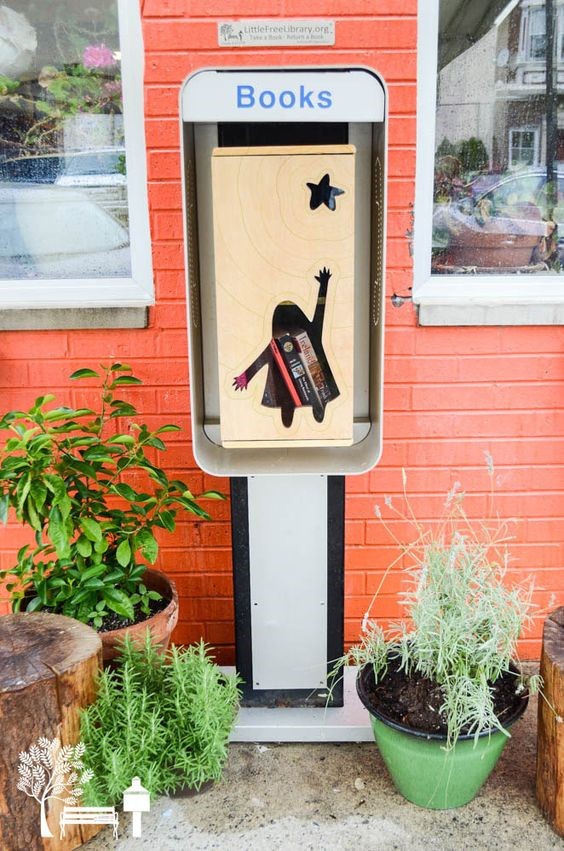 In Philadelphia, Pennsylvania teacher Johnny Buckley felt that abandoned pay phones could take on a new life of storytelling by transforming them into Little Free Libraries for pre-schoolers.
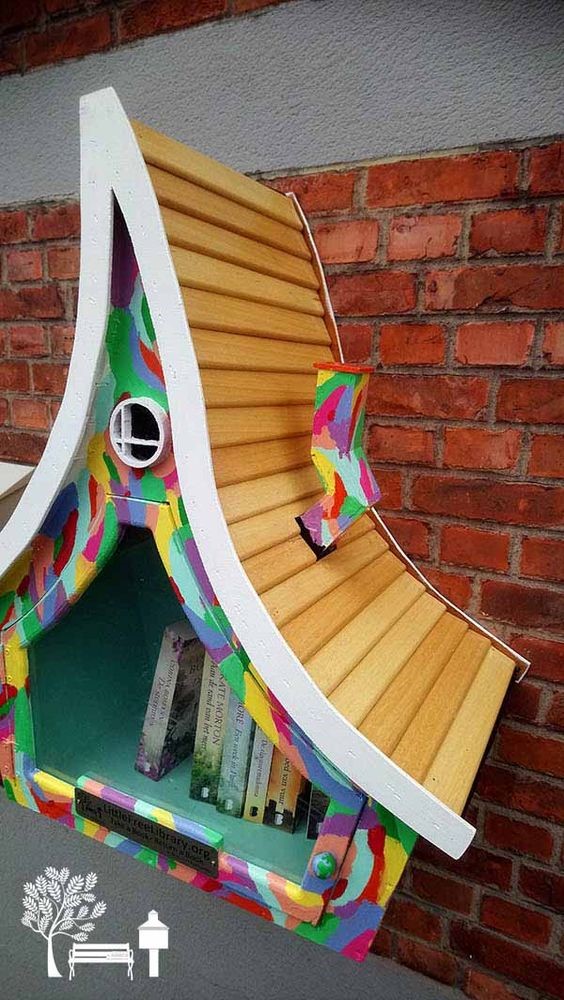 And across the pond in Oostakker, Belgium, the makers of this Little Library say, “The model fits our house perfectly, because our house is a hundred years old and has no straight walls, just like the Library. It has the charm of a place with a soul. It reminds us of our childhood, too, with all the colours.”


 Writing Down the Bones
 Passion for Narrative


 The Emotional Craft of Fiction

 Fruitflesh


 Looking for another way to describe hair colour? Words to use instead of “amazing”. Pinterest has pins for that. Also pins for commonly misused words, when to use what kind of hyphen, and avoiding clichés—including cliché characters.
 If you like to be social, you can follow other pinners, join group boards or comment on pins. There are even hilarious “Pinterest Fail” pins.


