Written in the Dark

Written in the Dark

Ruth E. Walker

At night, when the objective world has slunk back into its cavern and left dreamers to their own, there come inspirations and capabilities impossible at any less magical and quiet hour. No one knows whether or not he is a writer unless he has tried writing at night.

H.P. Lovecraft, early 20th century horror writer

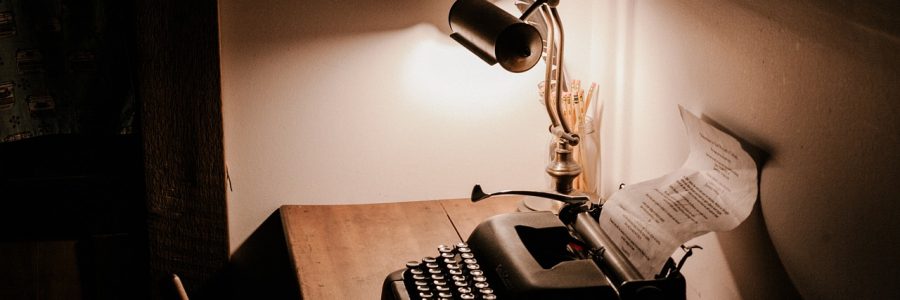
H. P. Lovecraft had a point. There is something magical about writing when the rest of the household is fast asleep. It’s like a space “between” where creativity vibrates just on the edge of sound, and artists of all kinds allow their minds to search the shadows for change and possibility.

Given last week’s post by Gwynn on light, it made me wonder about the ideas, images, stories and characters that arise from turning out the lights and just sitting still in the dim after the sun has set. As I write this, I’m at my cottage where, if we choose, it’s easy to create a natural darkness.

But in the city, unless there’s a power out (as happened during the recent windstorm for much of Ontario and Quebec) a total absence of unnatural light is not possible. Even if you use blackout curtains and line the walls with soundproofing, knowing that beyond those walls artificial light still exists lingers in your mind.

Nonetheless, in the wee hours just past midnight, when traffic lessens and media sources and lighting shut down, the magic still happens. At least it does for me.

Nudging the muse

Some of my deepest and most satisfying writing arrives in that between stage. Is my tired mind more open to my muse? Is the silence charging up my right brain? Are the distractions no longer pulling my attention elsewhere?

  • No thanks, honey. I don’t need a cup of tea right now…
  • Can somebody let the dog out please…
  • Oh sure, I’m happy to chat. Nope. Not busy at all…

…moments from a writer’s life

Maybe some of that sounds a bit familiar, or at least, variations of the theme. Or maybe you live alone, have no family or friends or interests other than writing brilliant prose 24/7. I’m guessing not if you’re reading this blog.

So, besides H.P. Lovecraft, what do others offer us about the gifts found in the dark?

Other voices on darkness

Using the dark as a theme to develop characters, Sarah Maas gives us information on two different characters through one character’s words and the other character’s reaction to those words.

“There are different kinds of darkness,” Rhys said. I kept my eyes shut. “There is the darkness that frightens, the darkness that soothes, the darkness that is restful.” I pictured each. “There is the darkness of lovers, and the darkness of assassins. It becomes what the bearer wishes it to be, needs it to be. It is not wholly bad or good.” 

Sarah J. Maas, A Court of Mist and Fury

And before we start thinking that fear of “the dark” is a modern concept, let’s trip back to Ancient Greece and our old friend Plato’s take on it all.

We can easily forgive a child who is afraid of the dark; the real tragedy of life is when men are afraid of the light.

Plato

The Dark as a tool

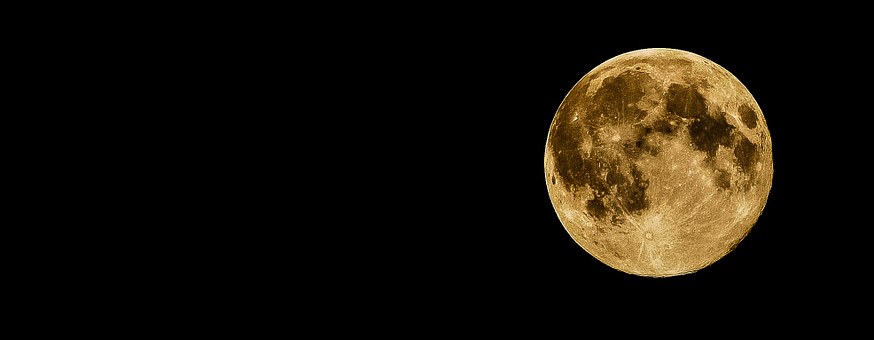
As Samuel Clemens (Mark Twain) famously said “Everyone is a moon, and has a dark side which he never shows to anybody.” So, too, the most skilled memoirists shed light on that dark side of their lives. Biographers know that no subject can be perfect, so they look for the human being behind the myth.
For writers of fiction, our characters — especially main characters and heroes — benefit from being dipped into the dark.

Here’s an exercise adapted from our workshop vaults. See if it brings a bit more light onto the dark side of your character’s moon:

A moral compass

Imagine a scene in which one of your characters must make a moral choice:

  • To kill or set free
  • To steal or resist the impulse
  • To enter a forbidden place or walk past

Allow your character to make a choice. And then rewrite the scene with them making the opposite choice.

After you’ve given this a try, let us know if you made any discoveries. At the very least, you might have uncovered some secrets your character was holding back.

Celebrate light

Celebrate light

Gwynn Scheltema

In these stressful times, Diwali, the five-day Festival of Lights, celebrated by millions of Hindus, Sikhs and Jains across the world November 13 to 18, seems like precisely the sentiment I want to occupy my brain at the moment. This festival of new beginnings and the triumph of good over evil, and light over darkness and knowledge over ignorance is such a hopeful state, it lifts my spirit, gives me a break from the stresses that seem ever present in the shadows.

One of the ways people celebrate Diwali is with strings of celebratory lights and with fireworks. For this week’s blog, I decided that I would lighten up too and celebrate by giving you a fireworks display of writing prompts based on light and shadow.

So fire up your pens, and have fun!

“Someone I loved once gave me a box full of darkness. It took me years to understand that this too, was a gift.”   Mary Oliver

  • Write a scene that “shines light” on something to see it as it really is.
  • Story starter: What appeared in the flames was certainly not what she was expecting.
  • Write a scene where “It’s always darkest before the dawn.”
  • “It’s okay,” she said. “There’s light at the end of the tunnel.”
  • What imagery does the word “fireworks” evoke?

“When you light a candle, you also cast a shadow.”  – Ursula K. Le Guin

  • Story starter: The light blinded her….
  • It’s the holiday season and outdoor lights are everywhere…
  • Write a scene around the campfire.
  • Write a scene that takes place during an eclipse
  • Write a scene involving the lighting of a candle.

“There is the darkness that frightens, the darkness that soothes, the darkness that is restful. There is the darkness of lovers and the darkness of assassins. It becomes what the bearer wishes it to be, needs it to be. It is not wholly bad or good.”       Sarah J. Maas

  • Ask your character, “What’s the most evil thing you’ve ever done, thought or said?”
  • Is darkness a lack of light or a conscious decision to stay out of it? Write about someone who chooses the dark to hide from the world.
  • Are dark and light symbiotic? Write about a character who believes “It’s only in darkness you can see the stars.”
  • Every hundred years, the seven deadly sins meet for a tournament. The winner gets to be humanity’s most prominent sin for the next century. Who won in the year 2000?
  • Story starter: On Tuesday I discovered I had no shadow…..

“Monsters are real, and ghosts are real too. They live inside us, and sometimes, they win.”  – Stephen King

Virtually, a Conference

Virtually, a Conference

Ruth E. Walker

To suggest that this year, in particular, has been a challenge for all of us is an understatement. Disappointments, detours and disruptions govern all aspects of our lives, from the mundane to the extraordinary. And in some weird way, that upside-down-ness is becoming ordinary. Perhaps that’s why more and more, people are finding ways to deliver what we once took for granted.

I signed up for this fall’s Canadian Society of Children’s Authors, Illustrators and Performer’s annual conference, Packaging Your Imagination. It’s been a few years since I attended my last PYI, so I was ready to learn what’s new. But with a switch to virtual, I confess to wondering if sitting all day in front of my laptop was going to be worth it.

I was not disappointed

Beforehand, I worried about video quality. I was at the cottage where our satellite internet is not always great connection-wise. But the cyber gods were smiling, and I had almost no issues on that front. Each of the sessions – from the opening remarks through to the final sign off – were presented from the homes and/or offices of the speakers. Overall, they were delivered issue-free through a live-streamed broadcast.

The day before, I was sent links for each of the sessions I’d registered for as well as links for the opening and closing keynote speakers, the after party and the trivia game. There were no glitches.

The one-to-one I booked with an editor was scheduled in advance, and Katie Scott from Kids Can Press and I chatted privately over the Zoom platform at the end of the day.

I learned

photo by John Fredericks

Each session presented me with new ideas and a couple were absolutely inspiring. Children’s author and journalist, Monique Polak’s dive into research had me scribbling like mad to capture everything she offered. And that was between laugh-out-loud moments because Monique is, frankly, hilarious, engaging and slightly off the wall.

And I learned:

  • Get excited and engaged when interviewing & sometimes quiet people open up
  • Be like a buzzard on roadkill – real life situations can be ridiculous but also inspire your muse
  • When people drink something warm (tea, coffee) they’re more likely to reveal more than when they’re drinking something cold – when we can return to in-person interviews, I’m going to test that one out

Multiple award-winning author and senior editor, Shelley Tanaka focused on finding the theme in our book. She started with exploring what many of us face when we sit down to write a book.

We start strong and in love with our story, and we go merrily along, writing with our authentic voice. We’re on a roll, we’ve sorted out all the wants, the obstacles and the stakes in our story, it’s going great.

And then…thud.

We’ve lost our way, lost interest and admit to ourselves that the story is simply not working. She suggests this is a good time to sit back and ask ourselves: What is this story about? In writing for children, she says we should consider the following when thinking about a story’s theme.

And I learned:

  • Theme is not a “message” or moral
  • It’s also not simply entertainment
  • Whatever it is, it should inspire kids (and adults in my opinion) to ask questions about themselves

Industry insights

The professionals’ panel shared what three different publishers were looking for. They discussed the pleasure of seeing a growing market for BIPOC books and they briefly discussed trends. Forget about trends, they encouraged – write the story you want to write. By the time you finish writing to a trend, readers have moved on.

From a focus on Nadia L. Hohn‘s Malaika series, I learned what goes into an illustrated picture book that is linked to another: collaboration. Between the author, the illustrator and the editor/publisher, they build on each other’s ideas and artistic qualities to connect the books in the series while bringing in freshness with each new publication.

Beginnings and endings

Both keynote presenters were perfect for their respective tasks: storyteller and author Adwoa Badoe brought the music and literary flavours of her birthplace Ghana into her opening remarks. From her welcome song to the consistent thread of “Story is an Old Woman”, we were shifted in time and place, ready to absorb what the rest of the day offered.

by Matthew Wiley

Teresa Toten, on the other hand, took us through her journey of ups and downs, sharing rejections and personal difficulties but always offering a counterpoint of touchstone music and joyful celebrations. An award-winning author of 10 books for young adults, Teresa was remarkably candid and inspiring at a time when many writers are facing challenging times. It was a perfect closing keynote.

Virtual is not in-person

Of course, there were so many conference elements that couldn’t be replicated. Networking with colleague writers, chatting directly with industry professionals over lunch, and browsing the book tables were sorely missed. While we could post questions online, the energy of a live Q&A in the same room with others wasn’t there.

Pixabay

Bio breaks, on the other hand, didn’t mean a rush down crowded hallways to the cafeteria or standing in line outside the bathroom. Nobody cared if I brushed my hair or had spill stains on my homestyle attire. And yes, I could stand up, stretch, pace the room for exercise and not miss a single detail. And I didn’t disturb a single soul.

I look forward to more conferences and gatherings with real live people in the same room with me, breathing the same air and no one wearing a surgical mask. As I said last week to my six-year-old grandson: When this is over, Reid, I’m going to hug you for 27 hours straight. He just grinned but he knew exactly what I meant.

In the interim, I’m sticking with virtual. Gwynn and I are dipping our toes in as presenters next week with our Find & Fix editing masterclass. Sponsored by The Writers’ Community of Durham Region, you can find out more about it here.

Quirky websites for historical fiction writers

Quirky websites for historical fiction writers

Gwynn Scheltema

I’m a genealogy junkie. I admit it. Digging into my past is my favourite procrastination tactic. But in the process, I’ve come across a few quirky sources of historical information, that are useful not only to geni’s but to writers of historical fiction too.  We all know about Google and Worldcat and History.com, but have you ever explored these sites?

David Rumsey Map Collection

This site has over 64,000 maps and cartographic images. His focus is on rare 18th and 19th century North American and South American maps, but you’ll also find materials from Africa, Europe and Asia. Not only can you view maps side by side, but you can also overlay historical maps over modern ones to see how an area has changed over time.

Facebook

Did you know that there is a Genealogy on Facebook list, a 173-page PDF file containing 5,700-plus links, published by Katherine R. Willson. A Canadian version by Gail Dever includes French-speaking groups and pages.

These genealogy groups are great for requesting help with foreign record translations or asking about specific eras and ancestral villages like Ballymena, County Antrim in Northern Ireland during the Irish famine of the 1840s.

HistoryPin  &  WhatWasThere

If you’re looking to compare a modern UK street view with an old one or see if an historical site survives today, try Historypin. This is a free collaborative site with over 400,000 old photo and story submissions plotted on Google Maps.

For North America, try What­WasThere. It works the same way. For instance, a search for Pueblo, Colorado gives images of the late 1800s and early 1900s and then the aftermath of a 1921 flood.

WolframAlpha

Need to know the weather for a specific date? What about calculating a birth date based on a death date from a gravestone? WolframAlpha is a computational knowledge base that accesses more than 10,000 databases to return information based on your calculation requests.

IrelandXO

Ireland Reaching Out website is a treasure trove of all things Irish, from westward Trans- Atlantic crossings records during the great famine to why the names Flan, Florry, Finn and Fitheal are actually all the same name. Similar websites exist for many countries. I have South African ties, so I use the South African sites eGGSA.org and Stamouers .

Cyndi’s List

Cyndi’s List is a cornucopia of useful information arranged by topic on EVERYTHING, not just historical information. In the genealogy category alone, you can find everything from records of Canadian Military casualties to South African gravestones search sites, from information on workhouses in the UK to transcribed diaries.

So there you have it. Hours and hours of procrastination facination. This list is of course, by no means exhaustive, just some of my favourites. Share quirky historical sites that you use in the comments below.

Copyright heads to the Supreme Court

Copyright heads to the Supreme Court

Annual cheques from Access Copyright were distributed this week and so was a news release from the association.

Check out Writescape’s previous blogs about the long struggle that Access Copyright has fought of behalf of creators. Today we continue to keep you updated.

  • April 2018 – background to the legal struggle
  • May 2018 – the Parliamentary Review and Submission to the Industry Committee
  • August 2018 – How writers can get involved and help
  • January 2019 – update as we wait for a decision
  • January 2020 – The courts side with creators and order payment by March 9 2020

Unfortunately, despite a favourable decision from the courts, no payment was forthcoming and the appeal process began. This month, the matter heads to the Supreme Court of Canada.

Here is the complete and unedited release that was emailed to members:


TORONTO [October 15, 2020] – The Supreme Court of Canada announced today that it will hear the appeals of both Access Copyright and York University in the litigation between the two parties that began in 2013.

This decision is another chapter in a decade-long struggle by creators and publishers to be fairly paid for the copying and use of their works by the education sector. As a result of the sector’s self-interpretation of changes made to the fair dealing sections of the Copyright Act in 2012, they adopted and have continued to follow copying guidelines that have resulted in hundreds of millions of pages of copyright-protected works being copied per year without payment. Both the Federal Court at trial and the Federal Court of Appeal determined these self-interpreted guidelines are not fair in either their terms or application. To date, Canada’s creators and publishers have been deprived of over $150 million in royalties owed to them by the education sector under tariffs approved by the Copyright Board of Canada that the sector has overwhelmingly refused to pay.

This protracted legal proceeding is reflective of a copyright system that users have badly broken. This wasn’t always so. Prior to the changes to the Copyright Act in 2012, through collective licensing and a functioning tariff system, educational institutions paid creators and publishers for the works they copied.

At a time when our country is focused on economic recovery from the impact of COVID-19, our creative sector has been hit harder as a result of the education sector’s refusal to pay for the use of creators’ works. The federal government needs to take decisive action to remove any uncertainty surrounding our copyright laws and restore a well-functioning marketplace for copyright-protected works that is predictable and transparent where creators can be paid fairly and promptly.

“Canadian creators and publishers have been deprived of fair payment by the education sector for almost a decade,” said Roanie Levy, President & CEO of Access Copyright. “COVID-19 has made the wound of not being paid even more painful. Our copyright system is not working. It is fraught with uncertainty and the federal government needs to roll up its sleeves and take immediate action.”

If you haven’t done so already, we encourage you to get informed. Visit
Access Copyright’s website or take the time to read the posts we’ve shared
here with the timeline of this long and difficult road to prove our work is
valuable and worth protecting.

The Changing World of a Freelance Writer

The Changing World of a Freelance Writer

Dorothea Helms, Guest Blogger

Picture it … 1994. I drove my Geo Metro to the downtown Toronto Reference Library to conduct research for an article I was writing about the evolution of downtowns across North America. I read through what seemed like miles of microfiche reels and spent several dollars making photocopies of pertinent documents.

I live in Sunderland, Ontario, so that process took the better part of a day. The following day, I drove to Oshawa to interview people who agreed to be quoted in the piece. During the next couple of days, I wrote the article, saved it onto a diskette and drove to Oshawa again to deliver it in person. (That was before I got a fax machine.)

To research that same article today, I’d hop online, read through websites while still in my jammies and eating Miss Vickie’s original chips, email people for quotes, write the piece and email it to the editor. That’s one way that freelance writing nowadays is a lot easier than it was 26 years ago.

It is also possible to take writing courses and workshops online to advance your craft. It’s not as much fun as in-person gatherings, but it is convenient. Writers can market services online, conduct surveys, even attend distant in-person writing events virtually. And yes, today we have Zoom, but remember that people SEE you during those sessions. I can look like the bride of Frankenstein when I wake up, so check in the mirror before you choose to open your video option.

As the cliché goes, there’s good news, and there’s bad news. Google and other search engines are breeding grounds for excellent information and for “facts” that are about as reliable as me answering the question “How much do you weigh?” And speaking of the Internet, with so many writers providing blogs, the amount of reading material online makes the necessity to pay for writing less necessary. Why do writers do it? They want to reach out to readers and see their names and words in print. It is their prerogative, and for some writers, blogging is a form of marketing.

Earning a living is not shameful

The idea that somehow a byline is payment is one of the basic reasons why so many publications have received writing for free or hardly any money for decades … that, and the pervasive attitude that writing for money is “selling out.”

What a handy misconception for the higher-ups in for-profit publishing who are too cheap to do a proper business plan that covers the cost of doing business—namely, writing. Having said that, the virtual reality of the Internet has contributed to the death of a lot of print publications. I have lost clients for this reason and had to add other sources of income. When I participated in an entrepreneurship program in 1994, I learned that having “multiple sources of income” is one pathway to success.

On average, writers in Canada are paid pitifully, and statistics have validated this. In 2006, the Professional Writers of Canada conducted a survey showing how earnings for freelancers in Canada went DOWN between 1995 and 2005—from $26,500 to $24,035 (https://bit.ly/3iyhv6S). In 2018, a Writers’ Union of Canada survey reported that incomes from writing dropped 78 percent from 2014, from $12,879 to $9,380 per year (https://bit.ly/32DKzVE).

Other sources vary. These quoted figures are average, so imagine what writers on the lower part of the scale are making.

Price for profit and stick with it

In the face of all of that, until I semi-retired a couple years ago, I pulled in revenues of six-digit figures yearly. Here are a few practices that can help you succeed.

  • Learn about business and how to price to make money—and remember that you are worth it!
  • Say NO to for-profit publications that pay nothing or little.
  • Claim everything you can legitimately on your income tax forms.
  • Expand the scope of the services you offer. Perhaps you can edit or teach.
  • Keep an open mind to accepting writing jobs in the business, advertising and public relations fields.
  • Advance your craft through professional workshops and courses.
  • Respect word counts and deadlines. Editors prefer to work with reliable writers.
  • Pay attention to rejections, but not too much. Usually, ideas and pieces are rejected because of timing or poor fits for upcoming editorial calendars—something you’d have to have ESP to predict.
  • Persevere in the face of naysayers.
  • Help other writers when you can.

If writing is more of a calling than a career for you, remember that you can earn money using your gift without shame. Things change, and we can adapt to thrive during all conditions. There are many ways to make money writing. I encourage you to be curious, ask questions and think outside the book. N

From a college creative writing course to a freelance writer earning six-digit figures yearly, Dorothea Helms has come a long way, baby. Now semi-retired, she is still in demand for her writing/editing services and teaching. Her work has appeared in dozens of publications including Chatelaine, CBC.ca/Parenting, The Globe and Mail, Canadian Architecture & Design magazine, LICHEN Arts & Letters Preview, Stitches the Journal of Medical Humour, and Homemakers, to name a few. Yes, four of those publications are no longer in existence, but Dorothea accepts no responsibility for their demise. Wherever Dorothea goes, humour follows.

10 ways to Nano-prep for writing your novel

10 ways to Nano-prep for writing your novel

In a few weeks, writers around the globe will commit to writing 50,000 words of the first draft of a novel in 30 days. Will you be one of them? National Novel Writing Month or NaNoWriMo begins on November 1, and if you don’t know much about NaNoWriMo, check out our previous blog post NaNoWriMo 101.

That means that October, affectionately known as “Preptober” is a month for getting all your ducks in a row, so you’re ready to actually write on November 1. Below are 10 ways to get ready to write, for NaNoWriMo or indeed for any new novel project.

  1. Create a project hold-all to keep all research, writing, notes and ideas for your new novel. This could be a new folder in your computer, or a “new project” in Scrivener. Try a three-ring binder scrapbook, with sections for research notes, character sketches, random ideas, checklists lists etc. Handy for quick reference, for validating research used, for trying out rough writing, for reference as you write. More than that, though, it is a tangible way to make the project real and a good way to stay focused and organized.
  1. Decide what you are going to write. Easier said than done. We all have stacks of ideas of what we could write about, but choose something that interests you. If you’re not passionate about your project you will find it hard to live with it daily and write productively. Choose a story you are spilling over to get out, or write a story that involves something you really want to spend time with. If you love Russian history, set a story in Russia during the revolution. If you’ve always wanted to know about perfume making, write a story where the protagonist is a perfumer. To help make it more real, choose a working title.
  1. Start with sketching interesting characters. If you’re a character-driven writer, begin with writing profiles of your protagonist and antagonist. Then as you work through your plot ideas (step 5) and new characters emerge, do character sketches of them too. If you’re a plot-driven writer, you may want to do step 5 first and return to this step afterwards. Remember these profiles are not just physical, but include your character’s history, flaws, emotional baggage, hopes, dreams, fears and relationships. You might find yourself returning repeatedly to these sketches to add details as you get to know them better.
  1. Ask yourself whose story you are telling and how it would best be told. Whose POV will best tell that story? One POV or multiple? What tense and person? Who is the reader you are aiming at? What genre? As you start to write, you may change these decisions, but start with a plan.
  1. Write your book jacket blurb. This may seem like it’s putting the cart before the horse, but it’s not. The book jacket blurb answers the all-important question “What is this book about?” The answer to that question helps to distill the thrust of the story: the conflict, the stakes and the character arc. It also helps define what age group and genre it is, because it focuses on the main thread of the story.
  1. Brainstorm story ideas. Outline potential plots. Ask yourself the simple but effective “What if?”, or use the base of all ancient myths and tales: the three act structure. If you know how you want your story to end, consider working backwards too. You might want to check out these tried and true variants of the three act structure too.
  1. Define your story world: place and time. This could be as simple as “Russia pre 1917 revolution” or “Haliburton 1956”, or as complex as a new fantasy world or imagined planet. Or it might be a mix, say a fictitious town called Halbury based on Haliburton. Setting is important to ground your story and your readers. The more complex your setting, the more up-front “world-building” you need to do: Government? Religion? Rules of magic? Climate? Etc. Prep work can include maps and floorplans.
  1. Outline potential subplots. Make sure they serve the thrust of the main story, that they have their own story arc and that there are no dropped threads.
  1. Sketch important secondary characters. Make sure they exist as a counterpoint or foil or supporter of your main characters. Like main characters, they too should have their own wants and needs and motivations. Ask yourself if one secondary character can do the work of two to keep the number of characters to a minimum, and to make each one stronger.
  1. Work on character arcs for all characters, primary and secondary. Each character must have their own motivations for doing what they do.

And one thing more

Get support. We all have lives to live and people in those lives. Talk to them about what you want to do and get them to realize you are serious. Enlist their help, whether it is to honour the time you set aside as uninterrupted writing time, or whether it is practical help like supervising a session of the kids’ online learning, cooking dinner or creating a separate writing space for you during November. Prepare them for your plan and then……START WRITING!

Characters Can Stick Like Glue

Characters Can Stick Like Glue

Ruth E. Walker

Recently, I filled out a Query Manager form as part of my search for an agent for my YA sci-fi manuscript. Query Manager is an online form that writers complete with samples, query letter, synopsis – whatever the agent’s submission guidelines state.

Most agents’ Query Manager forms are similar, with generic questions designed to get information on the book, the writer, etc. This particular agent had some interesting additional questions, such as: Are you a Marvel or DC fan? That was a no-brainer: Marvel all the way. Except, I added, I still had room in my heart for Superman and Batman. (Call me old-fashioned but classic DC had a steadiness that served as a nice counterpoint to Marvel’s edge.)

Back to the agent. For me, that question was an intriguing insight to the agent’s personality. A response time of 8 to 10 weeks means it will be a while before I can ask her why she uses that particular question. But I’d like to thank her for another couple of questions on her online form. It’s a question that reminded me of the power a character or storyline can have, even if it’s been abandoned for some time.

What inspired you to write this book?

Character, I answered. (It’s always been my entry to almost all of my writing.) But then I went on to explain how my protagonist Garnet was a character rattling around in my brain while I worked on literary manuscripts. Some years before, I imagined this young feisty female in a warrior role she’s born for despite the odds. She’s a battlewipe – a job loosely combined with field medic, battlefield scavenger and skilled assassin. Don’t ask me how. She just was—and still is. I wrote a single paragraph to get her out of my system and filed it.

Despite the intervening manuscripts, Garnet wouldn’t leave me alone. And finally, I had a chance to dust off her one-paragraph character study and see if she could sustain a longer work. I signed up for the Muskoka Novel Marathon, a 72-hour writing marathon to fundraise for literacy in the Muskoka Region.

Garnet could – and did – sustain the longer work: 27,000 words approximately. By the time I’d worked and reworked her over the years, she now fills 98,000 words and is clearly part of a duology. (and yes, I’ve started the sequel.)

Why are you the author to write this book?

My fingers quivered at this one. My published poetry, stories and novels are in the literary stream. I have no stories in The Magazine of Fantasy and Science Fiction or Strange Horizons. And I’ve published nothing in the Young Adult genre up to now. Was I kidding myself?

I hope not.

I’d loved science fiction as a young reader, and continued to selectively read sci-fi over the years. Ray Bradbury’s R is for Rocket (which I stole from the school library–and still have) and The Martian Chronicles kick-started my interest. And then Star Trek and James T. Kirk, et al, captured my idealistic heart. The stories told in science fiction are stories about the human condition, even those termed “hard science” novels. From Asimov’s Foundation series to Andy Weir’s The Martian, science is the brain but characters form the heart.

And I had a character who happened to exist on a planet with two suns. This feral teen had hopes and dreams that she kept whispering in my ear until I had the chance to breathe more life into her. That early draft I wrote at the marathon won the YA category, high praise from the editor judge and, later on, a Works-in-Progress grant from the Ontario Arts Council.

When characters insist

Notice I used the relative pronoun “who” in the paragraph above instead of “that” which is what you are supposed to use for non-human things. My character is quite real to me and I won’t be able to let her go until she has a home inside a book.

So she’s a who.

And that’s what I mean about a character who sticks like glue. I’ve got a few more rattling around in my brain but Garnet is one insistent voice. She even shows up when I’m focusing on other things. And that’s a good thing because one other question this agent asks in her Query Manager form: If your book was a movie, who would play your main character? That one was easy: Maisie Williams (Game of Thrones) or Millie Bobby Brown (Stranger Things.) Fierce and vulnerable.

I may only get a “no” from this query. But that’s okay because it let me dive even deeper into the who of my character and firm up my confidence on being the one to tell this story. The heck with all the rest. As my friend Sue Reynolds says: follow the energy. So I did. Do you?

Butterflies, Frogs and Tadpoles

Butterflies, Frogs and Tadpoles

Gwynn Scheltema

I’m an organized person. I set big-picture goals and break the big plan down into small achievable pieces. I’ve always made a daily to-do list and I get great satisfaction from ticking them off – done!

But I also put my obligations to others waaaay ahead of my own wants and needs, especially creatively. Even when I “schedule” creative time, or add “finish chapter 5” to my to-do list, you can be sure that it’s the one item on that list that doesn’t get done.

Sound familiar?

New strategy needed

The pandemic gave me a gift this year. Unused commuting time. So, I gave myself another gift: I cleared the deck of a number of outside obligations, told people “no” for a change and decided to make my own health and creativity more important in my life.

At first, predictably, my creativity intentions became the same undone items on the daily to-do list. I needed a new approach, a whole new rethink. It took time, some trial and error, but I found a new strategy for giving creativity a more meaningful—and attainable—place in my life. I developed what I call my “Butterflies, frogs and tadpoles” approach.

Ditch the daily to-do list

I’ve stopped making a daily to-do list!

Yes, that’s right. No more daily chances to feel like I’ve failed. No more only crossing off the obligations and neglecting the things I want to do. No more setting myself up for guilt, and disappointment at myself and the world. No more dwelling on the negative.

My new approach involves a master list each for butterflies, frogs and tadpoles – in that order!

Butterflies, Frogs and Tadpoles?              

BUTTERFLIES are the things I WANT to do: creative things, personal things, social things, family things, hobbies, relationships and anything else that will feed my soul, make my life pleasant or feed into the achieving of my chosen personal goals. And while it may not be intuitive to goal setting in any way, I include things that are not necessarily “good for me” like eating a chocolate bar, or a third cup of coffee or a Netflix binge.

Okay okay! I hear you. That’s all very well, but what about all the stuff that HAS to get done. Be patient Young Grasshopper. I’m coming to that.

A FROG is something that MUST be done because it has a time restraint on it. The term comes from the “eat that frog” concept originated by Mark Twain who once said that if you start the day by eating a frog (your biggest and most important task) you will have the satisfaction of knowing that this was probably the worst thing you had to do that day.

But for me, there is a difference. My frogs are not necessarily my biggest or most important tasks. They are not necessarily things I don’t want to do. They are simply tasks governed by time deadlines. A frog can be as simple as reordering my prescription or calling Aunt Mable about the food for next weekend or as big and complicated as filing my taxes or meeting a client deadline.

I also often take big frogs and break them into smaller frogs. For instance, “filing my taxes” could be broken down into finding my paperwork, sorting receipts, compiling my mileage log; printing off my online charitable receipts etc etc. I prefer this approach, because it makes the frogs less intimidating, and I get to “complete” more things along the way. I can see and feel the progress.

A TADPOLE is an item that SHOULD be tackled soon because it will become a frog in the near future. Like frogs, tadpoles can be obligations or not, big or small. Tadpoles might be things like cleaning out my clothes closet, buying new boots or Christmas shopping, updating my website, getting the propane tanks refilled, filling out that grant application, finishing chapter 5, or submitting to a contest.

Some tadpoles can remain tadpoles for a very long time, but I know in my heart of hearts that if I don’t turn them into frogs at some point, I will regret it. So, yes, I may miss moving the writing contest entry to the frog list, but I know that if I don’t do it and the deadline passes, I will be upset with myself. And that if I continue to let those tadpoles die, my chosen goals will not be realized. I also recognize that many psychological reasons probably exist for my resistance, and so I cut myself some slack on tadpoles.

The process

As I said earlier, I run a master list each for butterflies, frogs (with deadlines) and tadpoles – in that order!

I add to those lists whenever I think of something I want, must or should do. Remember these are master lists, not “to-do” lists, so I no longer get overwhelmed by how long they are.

When I started this, my Frogs list ran to several pages, my tadpoles were plentiful, but I could only come up with a scant list of butterflies.

I realized that I was so used to gearing my actions to what I “should” do that I was out of touch with what I really wanted to do. Over time, I’ve asked myself questions like: What makes me happy? What would a perfect day look like? If I died tomorrow, what would I regret not having done?

Monthly

Each month, I pick from the master lists for my monthly tasks and activities. Note, I work by month, not by day. I have 3 sections in my day book for each of the categories: Butterflies, Frogs and Tadpoles.

I begin with a Butterfly choice. That’s right, put what’s important to you first! That goes on my monthly list of Butterflies. Then I pick a Frog or Tadpole and put them on my monthly Frog and Tadpole lists. I repeat the process until I have three lists that will fill my month with time left over for unexpected happenings that always arise.

Admittedly, the number of Frogs on the Frog list is often governed by deadlines. If it is a formidable list, I consider the old Ditch, Delegate or Defer approach to make it more manageable. But whatever I do, I make sure to have as many butterflies on my list as I have frogs and tadpoles combined.

Weekly

Once a week I grab a highlighter and decide which Frogs need to be done by the end of the week.  With the same colour highlighter, I highlight an equal number of Butterflies. Those are the ones I concentrate on that week. I forget about the others on the list. The next week I use a different colour highlighter and do the same thing.  Spreading my expectations of myself over a week instead of a day means six less opportunities to feel like I failed, time to make up for a slow day and a better sense of achievement over time.

Daily

I always start my day with a Butterfly. This sounds counter-productive if there are Frog deadlines looming, but it isn’t. I’ve found that I procrastinate far less and I don’t fill my time with pointless activity because I’m getting my wants up front and not feeling overwhelmed by musts. Today for example, I had this blog to write, a report to finish and email around to colleagues and an editing assignment due tomorrow. Those three things I knew would eat up a big piece of my day, so I chose butterflies that would not take a big time grab but would leave me feeling fulfilled: A 20 minute yoga session at the lake; a video call to my brother overseas and time to read a poetry collection I have just bought. Tomorrow I have only one Frog deadline, so I will choose a large butterfly, like working for a full morning on my poetry, before I tackle that one frog.

Successes

While this may not work for everyone, it’s working for me. Slowly my mind is learning to put what’s important to me at the forefront of what I do. I feel less frustrated with tasks I have to do because I’m balancing them with things I want to do rather than trying to fit my wants in or neglecting them altogether.

Foreshadow the Future

Foreshadow the Future

Ruth E. Walker

I enjoy the outdoors. I get pleasure in working in the garden, especially at my cottage. I’m not afraid to get my hands dirty or derive pleasure when my plants flower or produce fruit. Nighttime calls of spring peepers in the far-off swamp or critters hopping under the shade of the hosta remind me of renewal. Even the cold hand of winter offers pleasures, albeit frigid and at times, deadly.

I tell you this – my affection for the natural world and my respect for it — to set the stage for what is to follow. In fiction, this is referred to as foreshadowing.

Humane Humans

Nature has a way of reminding cottagers that flora and fauna were here first. Anyone who has struggled with fallen trees, poison ivy infestations or rodent incursions can confirm that. As much as is possible, we avoid herbicides for irritant flora. We use live traps for the rodents, my kind husband trekking over to the swamp to release the pesky mice.

It’s not to say we don’t target poison ivy with Round Up when the hillside is awash in the stuff and there’s been no deer around to help control it. And yes, snapping traps and even Warfarin has been pulled out when humane methods can’t keep up. But it’s never the first choice. And we hate the result.

A Murder Most Foul

Despite knowing that death is part of nature, I get upset when I find a dragonfly crushed on the sidewalk or drive past roadkill on the highways. Poor things, I think.

Nonetheless, I became the dealer of death at the cottage. Those gardens I like to tend? They’re all edged with a variety of rocks. Attractive to look at until the grass grows up around them. The lawnmower can’t trim that. So I get up close and personal with my garden shears.

Last month, I crouched down by the rocks, snipping away at the green growth. Until my shears cut through something else. Something that felt like bunched fabric. Or worse. And it was. I decapitated an adult frog. A split second before, it was crouched in the shadow of a rock overhang, unseen. Then it sprang out at the precise moment the two sharp edges of my shears met and severed its head and life in an instant.

Man, I was sick at heart. Still am, in fact.

I’ve spent weeks trying to blot that image out of my head. Today, while once more trimming the rocks, I was so careful. I made a lot of noise, knocking my shears against the rocks. I called out: “Foreshadowing. Here I am. Pay attention, critters.” And weirdly, that got me thinking about how important foreshadowing can be in writing.

Why Foreshadow

Dropping clues into fiction arouses the interest of readers and that’s a primary benefit for any writer. Laying a foundation of foreshadowing creates anticipation that pulls readers through the story. Writers have a full set of tools to inject foreshadowing: images, character action/reaction, dialogue and setting elements, for example. From concrete objects to shadows and colours, the important part is choosing the right tool in the right place.

When you foreshadow, you tickle readers’ curiosity. When you deliver the on that foreshadow, you evoke emotions in readers. You can build internal tension by doling out that delivery bit by bit.

  • Opening scene: Shadowy figure in distance at funeral of POV character’s mother
  • Mid-point: Shadowy figure shows up trying to attack the POV character but evades capture
  • Final scene: Shadowy figure reveals she is POV character’s birth mother & wasn’t trying to attack but longed just to hold him again

That’s a powerful writing tool. But there are a few DOs and DON’Ts of foreshadowing all writers should keep in mind. Here’s three to get you started.

Don’t use a hammer when a feather is enough. An obvious foreshadow is a hammer: As she watched the overloaded pleasure boat pull away from the dock with her husband and children waving jauntily to her, she thought that she should have insisted they all wear lifejackets. Be subtle instead.

Do try to be strategic. Not all foreshadowing leads the reader to the conclusion they expected. Sometimes it is useful to have readers think they know what will happen but then you surprise them. But be careful: the foreshadow still needs to lead to the unexpected result. Be logical.

Don’t worry about foreshadow in the first draft. A bit like reverse engineering, subtle hints and deliberately placed objects or elements are part of editing that first draft. That’s not to say that you didn’t already have foreshadowing in the early writing, but often it is of the hammer variety. Your job is to refine that into the subtle variety. Edit with purpose.

Back to the Beginning

Part of working in foreshadow is returning to the beginning to find places where it can be added. But foreshadow is not restricted to the beginning of a story or novel. It can be an effective tool at the start of a new scene or to create suspense at the end of a scene or chapter.

It is, however, most effective at the start. It sets up expectations. So, what about going back to the beginning of this piece and checking it for elements of foreshadowing? In the comments, share anything you noticed.