A Boy, His Words, His Way

A Boy, His Words, His Way

Ruth E. Walker.

This time last year, I wrote about my annual experience at Durham Integrated Arts Camp, an 8-day arts-infused camp for Grades 7 – 12 students. Run by my local school board, DIAC is held at a private camp fairly close to my cottage.

I love going there. I teach an elective “Creative Words” where my students are encouraged to leave behind grammar and spelling worries and just focus on writing their words, their way. I tell them, “This is school but our focus together is on being creative with words. Exploring the craft of writing. Stretching our pens into richer territory as writers. Not worrying about the three-point paragraph.”

Daily Wordplay

I had 54 students split over three periods — and each day, we played with words. Exercises, experimentation and sharing work with each other. Partnered or in small groups, they would read selected excerpts to one another. I wanted them to gain confidence in reading their work aloud and offering each other feedback.

Every day, we ended with at least one timed freefall writing exercise. Freefall, originated by the great W.O. Mitchell (Mitchell’s Messy Method), means they follow the energy, don’t stop writing, don’t fix anything and even if they can’t think of what to write, that is exactly what they write.

I can’t think of what to write. I don’t know why Ruth is making me do this. I can’t stand it when people make me do stuff like this. Just like when…

And before they know it, they’re writing about something that catches their imagination. It’s great to watch them drop deeper and deeper into the zone of writing in freefall.

The Challenge

But there was one student who caught my attention.

Day One, he came into our old workshop building and sat himself as far as possible from all the others. Arms crossed, hood up and over his head and cowl raised to cover his mouth was a clear signal to the rest of us: I am not comfortable. And I’m not at all sure about this.

I’ve met this boy before. Well, not him exactly, but others who seemed like him. As a visiting artist at an alternative high school, many students would greet me in just this way. I was hopeful that my eventual success with them would help me here.

During the first freefall, I saw that he wrote very little. So I asked him quietly if I could help. “I can’t write without paying attention to grammar and spelling. It matters to me,” he said.

Spelling and grammar matter?!? I could have kissed him right there and then. But besides getting me fired for being completely inappropriate, it would have freaked him out. So I said “Write in whatever way works for you. I say it doesn’t matter about spelling and grammar to free people up but if it matters to you, then go ahead, pay attention to it. Remember: your words, your way.”

Day Two. Hood and cowl off. Still sitting separate but not as far away. Seems to be writing more.

Day Three. He comes into class, smiling over something someone had just said to him. Sits next to another student. I thought to myself, when this boy smiles, the room lights up. Cliché, I know. But it is exactly what I thought. Because it was true.

And here’s the best part of this day. It came time for sharing. By now, a few students volunteer to read to the whole room.

And he raises his hand. “I’ll read,” he says. Stands. Speaks his truth as captured on the page by his pen. Three seconds of silence as he sits back down and the room erupts in table thumping and cheers, and so many comments, we ran overtime. And his smile? Surely the glow illuminated the whole camp.

His Art, His Way

That glorious moment. That alone would have been enough to fuel my workshopping heart for years to come. But it was at Talent Night on Day Four that I learned as strong as his voice is on the page, there is another art that will claim his soul.

Imagine. A full set of drums, glistening red sides, gleaming cymbals and so on, on an otherwise bare stage. And my grammar-and-spelling camper sits at those drums, illuminated by the single spotlight. Nearly 450 campers in the audience, along with various instructors and staff. I recall thinking to myself “Oh, he drums. Hmm. That explains the excellent rhythm in his reading…”

The background music starts up. Something jazzy, if I recall. A moment spent thinking, well, isn’t this a nice surprise — he likes music with some depth, maturity…and then his drumsticks dive into the call and answer of the music. And the music, quite frankly, ceases to matter.

Have you ever seen Gene Krupa or Buddy Rich battle it out at the drums? Were you mesmerized by the 2014 film “Whiplash”? Have you felt the magic of TorQ Percussion vibrate into your bones?

Well, you may then have an inkling of what we experienced in that auditorium. His sticks flew, so fast, so hard, so exquisitely staccato that when one splintered off, part of it cartwheeling into the air, the cheers rose to the ceiling and came back down again. He didn’t stop for a nanosecond. His joy. His passion. His complete immersion in the zone was for us to watch and marvel at. This was no Grade 8 boy taking his first tentative steps on stage. This was a musician on the path to mastery and we were his witnesses.

The spontaneous standing ovation from his peers invited another glorious smile. More than acceptance, all of us in that auditorium were connected with the artist and he knew it. Many of us know what we saw that night. Years from now, we can say we were there when…

And how does this creative writing teacher feel about a young man’s clear gift as a writer being second fiddle to his drum kit? Fantastic. Who know what other gifts he’s harbouring? I’ll be back next year to see what I can discover.

Did You Know?

So many artists didn’t start out knowing they were meant to work in a particular medium. Or they were obligated to follow family footsteps while their hearts really belonged elsewhere. And some artists have more than one career.

The great American poet, William Carlos Williams was, for much of his life, Chief of Pediatrics at Passaic General Hospital. Vincent van Gogh tried being a missionary, teacher and art dealer before he discovered art school at age 27; ten years later, he committed suicide but left behind a remarkable legacy of iconic art.

Some writers take time to achieve publication. Nobel Prize winner Toni Morrison (The Bluest Eye) and ahead-of-her-time rule-breaker George Eliot  (a.k.a. Mary Anne Evans) both published their first books at age 40. Much beloved Dr. Seuss (a.k.a. Theodore Geisel) was 33 when his first children’s book arrived on the shelves.

And some writers take a long time to find their voice. Anna Sewell was 57 years old when her first and only novel, Black Beauty was published. She died the following year but lived long enough to see the book’s initial success.

Whether you’re a teenager with a brilliant writing career mapped out or nearing retirement and thinking about that novel you always wanted to write, remember this great advice I got from an agent recently. “Age doesn’t matter very much in the publishing world. It’s the quality and marketability of the writing that matters.”
Stories of Life

Stories of Life

Gwynn Scheltema

As often happens in life, birth and death go hand in hand. Last week I wrote about the birth of my baby granddaughter, Elle, and all the wonderment and creative promise that comes with that.

But our family has also been touched these past weeks with the news of terminal cancer. Many of us in this situation feel the helplessness of not knowing what to do or what to say.

And then an email from an oral story-teller I know told me about a “storyteller-in-residence” at Baycrest Health Sciences.

Storycare

For the past three years, Dan Yashinsky has been telling and listening to stories at Baycrest as part of their “storycare” program. He explained in an article for The Toronto Star that: “Storycare means creating times and places in the hospital for people to tell, hear, imagine, and remember stories.”

His article explained that storytelling encourages imaginative responses even from dementia patients who have forgotten the names of their loved ones; that suspenseful wondertales can help patients with severe depression “regain their desire to discover what happens next — in the story, and in their own lives.”

He recalls that Yukon Elder Angela Sidney once told him, “I have no money to leave my grandchildren. My stories are my wealth.” For patients in palliative care and their families, telling their life stories can be a comforting and enriching experience.

Life Stories

When I was a young woman, it seemed to me that biographies and to a lesser degree, autobiographies, were the only source of “life stories.” And to make it into book form, the subject life had to be a famous one: great achievement, great adversity, great discovery and such. Today, I have noticed that memoir stories abound. Stories still of great achievement, great adversity and great discovery, but stories from “ordinary” people. The kind of people I might know. The kind of lives I can recognize.

What I like about this trend is the underlying inference that everybody’s life matters. That we all have something to offer. And that in each life I read about I find echoes of my own. This connection through story can, at different times, inspire, comfort, educate, amuse, awe or humble me. It’s all good.

The Power of Story

An article in The New York Times says “Telling and listening to stories is the way we make sense of our lives.” The article tells of a study on the positive effects of storytelling on people with high blood pressure. Dr. Thomas K. Houston, lead author of the study said, “That natural tendency may have the potential to alter behaviour and improve health.”

The International Storytelling Centre (ISC) based in Tennessee, agrees with that power of story, and not just for health, but for attaining any goal because it is the most effective way to communicate both with others and with ourselves.

ISC began a movement to revive oral story telling over forty years ago. The cornerstone of their belief is that “People crave, remember and honour stories.” They say, “We are an organization dedicated to inspiring and empowering people across the world to accomplish goals and make a difference by discovering, capturing, and sharing their stories.”

Tell your story

Many cultures have a rich and active oral storytelling tradition, and increasingly oral storytelling groups are forming the world over. Each year, March 20 marks World Storytelling Day, a global celebration of the art of oral storytelling. World Storytelling Day began in Sweden in 1991 and Canada joined the event in 2003.

On this day, people tell and listen to stories in many languages and at as many places as possible, during the same day and night. This event has been important in forging links between storytellers and in drawing attention to the art of storytelling.

Isak Dinesen said, “To be a person is to have a story to tell.” So throw off any thoughts of “my story isn’t worth telling.” It is. In writing or orally, tell your story as only you can tell it.

And when I next visit the hospital, I think I might ask, “Tell me about…”

Explore this topic further:

Storytellers of Canada/ Conteurs du Canada: Devoted to connecting people, reflecting culture, and inspiring discovery through the art of Storytelling.

First nations Storytelling.  Storytelling is a traditional method used to teach about cultural beliefs, values, customs, rituals, history, practices, relationships, and ways of life. First Nations storytelling is a foundation for holistic learning, relationship building, and experiential learning.

Oration, singing and storytelling are a source of both of delight and solace within the Maori culture.  ‘Healing Through Storytelling’ is a grief support programme created with Maori and delivered alongside Maori authors.

Healing Story Alliance explores and promotes the use of storytelling in healing. Our goal as a special interest group of the National Storytelling Network is to build a resource for the use of story in the healing arts and professions.

Paula Abood, a Community Cultural Development (CCD) worker, writer and educator, discusses the importance storytelling in developing confidence, empathy and communities.

Nicole Stewart started the live storytelling series Oral Fixation (An Obsession with True Life Tales). She has produced 19 shows, each with a different theme and featuring regular Dallas folks reading aloud their stories

Dave Lieber is a newspaper columnist, a prize-winning author and storytelling expert. For his investigative newspaper column, Dave receives 50 pitches a week for story ideas – and takes the best two. He knows how to find and identify memorable stories that people care about.

DID YOU KNOW

Among the many workshops offered by Writescape is a corporate workshop called “Sell with Story” that explores effective marketing and promotion through storytelling.

Deadlines: Motivator or Barrier?

Deadlines: Motivator or Barrier?

Ruth E. Walker

Discovering Douglas Adams and The Hitchhiker’s Guide to the Galaxy was a thrill. Oh, the combination: wit, satire and science fiction comedy. As a young-ish mother of four, the escape was delicious.

And lately, I’ve enjoyed getting reacquainted with his wacky worldview in the television series Dirk Gently’s Holisitic Detective Agency. But all that is an aside (which is one of things I loved about reading Douglas Adams — the incredible digressions…but then I also enjoy Monty Python.)

What I most admire about Douglas Adams is how often his words (either from his books or otherwise) remain so smart and relevant. Here’s a gem from a speech “Parrots, the universe and everything” at the University of California in May 2001. It was just days before his untimely death at age 49:

We don’t have to save the world. The world is big enough to look after itself. What we have to be concerned about is whether or not the world we live in will be capable of sustaining us in it.

And here’s my favourite because it fits my writing world:

I love deadlines. I love the whooshing noise they make as they go by. 

Yes indeed. So today, I have no less than two writing deadlines. First, I need to finish THIS post and get it proofread and ready to launch by midnight. And second, long before midnight, I need to send the last four chapters of my novel to my critique group.

Time Management?

Look at that. My “midnight” deadline is secondary to my “long before midnight” deadline. Well, that must be because my last four chapters are ready to go.

Nope. They are “mostly” ready (Python-esque description, yes?) I’m still agonizing over plot decisions I’ve made. I’m unsure if I’ve overwritten the final few scenes, that I’ve gone for “big” when “intimate” might better serve the story.

Yes. Of course I hear you. Isn’t that what my critique group is for? To offer feedback on the writing? So what is my problem?

It’s the deadlines that are killing me and my creativity today. Add into the mix some background on another deadline, one that I’ve missed. In the past couple of years, I’ve been at a few writing conferences. At those conferences, there were optional pitch sessions with literary agents. I started with the idea that I could use those sessions as a chance to practise a real pitch for when the book is done.

So I paid attention to the questions the agents asked. I noticed what got their interest in the written query and writing sample and what put them on snooze. And I practised being comfortable sitting across from someone who might have a profound effect on my writing career. Believe me, I need that practise.

True confession

I can stand at the front of a room and deliver a workshop with passion and confidence. But offer up that compelling elevator pitch? Describe my book and its themes in 25 words or less? Open my mouth and not jam my foot directly into it?

Something terrible happens to me when I’m talking about my novel to agents and editors. My brain leaves the room. So practise is necessary, in my case.

Last September, I was at a pitch session with a well-known literary agent. I didn’t even have to open my mouth before she let me know how much she enjoyed my writing sample. In seconds, I went from Nervous Nellie to author. We had a great meeting and I imagined how lovely it would be have this woman as my agent. She asked to see the full manuscript in November. “Of course,” I said. I was only a month or so from penning “The End” so that timing was a perfect fit.

I had a deadline. I had strong interest from an agent. And a manuscript so close to being done, I could taste it. What could go wrong?

The Douglas Adams effect

Whoosh. That deadline went by so fast, I barely heard it. Sure, I have a lot of reasons that the book languished, unfinished. But I suspect that a big part of the missed deadline is related to my lack of confidence in writing the darn thing. That’s not a logical reason. Feedback from agents and editors in my practice sessions, along with my excellent (and tough) critique group’s comments, confirms that the writing is strong and the story original and engaging.

But when are we logical beings? When does our passion for our craft translate into efficiency and organization? In my case, it often doesn’t. Remember those digressions I love? Squirrel! And I’m madly off in several directions, forgetting the original goal.

Nonetheless, I’ve made it to the end of this post so that is one deadline met. As long as no squirrels pass my window and the house remains relatively quiet, I should also manage to meet the next one. And as to that November 2016 so-important-I-shouldn’t-let-it-whoosh-by deadline? I can only hope that literary agent is okay working with authors for whom deadlines are sometimes counter-productive. And that she’ll like the novel well enough to sign me.

I’ll keep you posted.

Did You Know:

You’ve got lots of time before registration deadline for Turning Leaves, our annual fall retreat. But don’t let that stop you from signing up. The first four writers who sign up get a special bonus: a suite room with a lake view. Still waiting for the deadline to creep up on you? With this year’s guest author Vicki Delany ready to share secrets on how she’s one of Canada’s top mystery writers, we expect a full house. Don’t be disappointed. November 3, 4 & 5.

The Making of a Short Story

The Making of a Short Story

Gwynn Scheltema

I wrote a short story last week that forced me to write outside my real-life comfort zone. My story was for an anthology being put together as part of the many commemorative events to celebrate Canada 150. The submission call was for an “immigrant story”.

I’m an immigrant. I came to Canada in 1982 to escape a country that had been embroiled in a civil war for more than ten years and which had recently gained independence. Unfortunately for my family, the other side won and leaving seemed the best option on many fronts. But this blog is not about that and I didn’t want my immigrant story to be about that.

The story I wanted to tell was how it’s the little details in a new life that are the hardest. Finding jobs and a place to live are huge, seemingly insurmountable problems, but they are expected hardships, things you can brace yourself for and work to overcome. But just when you think it is all going well, that you’re getting ahead, some small detail surfaces and derails you. That’s what I wanted to write about.

I’m a private person, not given to public displays of affection or emotion. I cry in private. But for this story, I wanted to zero in on an emotional moment and portray it without being melodramatic or cliché. But how to do that?

The emotional mirror

Most readers, even though they may not realize it, read to mirror their own lives. Have they felt that way before? What would they do in a similar situation? How is this situation different from their lives? A story about events of that civil war would be different from an average reader’s life, but would it connect with readers on a human, emotional level? The key to making my story work was to focus not the events the reader couldn’t relate to, but on the emotions the reader could relate to. The emotional mirror.

To resonate with the reader, I had to identify the emotion I wanted the story to illustrate and the reader to feel. In this story, I wanted to show the feeling of being out of control, disoriented and emotionally afraid when the logical mind tells you there is nothing to fear. All emotions that everyone has felt at some point in their lives.

Let it unfold…slowly

Peter Selgin, writer and professor at Antioch University’s MFA Creative Writing Program, gives his writing students an exercise: Write two pieces each about 250 words long. Piece One should rivet the reader; Piece Two should bore the reader stiff. Each student reads both pieces out loud.

“In almost every instance the result is the same,” he says, “The ‘riveting’ piece bores, while the ‘boring’ piece holds interest.”

Why? Peter explains that, “In their effort to grip us, beginning writers tend to rush: They equate their own adrenaline with that of the reader. Conversely, when trying to bore, the same writers take their time; they don’t hesitate to lavish 250 words on the subject of a wall of white paint drying. And—to their consternation—the result holds our attention.”

So for this story, I chose a small incident that happened over a short period of time, but I slowed down the telling, letting it unfold moment by moment. By not hurrying, there was room for the emotion to build, for inner thought as well as outer action.

Envision it

As I wrote, I closed my eyes and imagined the scene in my mind. What could I see above, below, to the sides? What people and things were in my periphery? What could I hear, smell, touch, what was the quality of the light, temperature of the air? What emotion was I feeling at each point and what did that emotion look like in gestures, actions and reactions? Show don’t tell.

Match style to purpose

Writers have two roles in every piece they write. One to tell a story; two to craft it well. Having decided on the subject matter and how to let the story unfold, I summoned up craft I’ve learned over time.

To heighten the feeling of disorientation, of not fitting into a new world, of being out of control, I edited to make the sentence structure disjointed in places, short and fragmented in others and even syntactically out of step at times.

I made sure to use smell and texture or touch where I could as these senses tend to be more emotionally charged than sight and sound. I used setting details to echo the atmosphere of the fear that the narrator was feeling.

Whether my story was successful, I won’t know until it’s accepted and published, but I felt good about it when it was finished and that’s always a good sign.

DID YOU KNOW

Among the workshops Writescape has offered is one on writing short fiction, “Does Size Matter?” Gather your group. Pick your topic and your date. And we’ll bring Writescape’s workshops to you. Choose from our Workshop Catalogue, or contact us to provide a custom workshop to fill your needs.


Writing Plan Meets Real Life

Writing Plan Meets Real Life

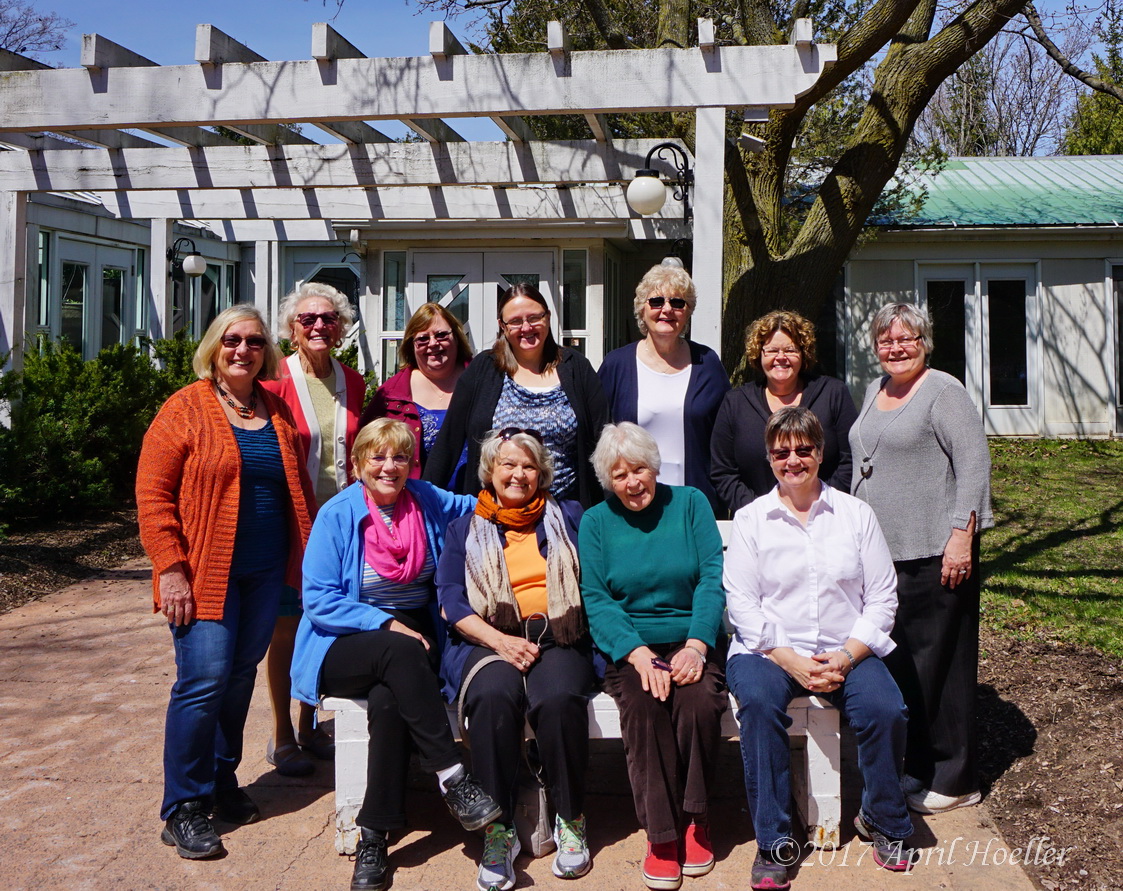
Just a few short days ago, at Spring Thaw 2017, a group of writers tucked themselves away in cozy cottages on the shores of Rice Lake. It’s what Writescape loves about our retreats: the creative energy that comes to writers when the natural world helps them dive deep into their words.

We also know that keeping that energy alive becomes a challenge when bags are packed and the road home is inevitable. So our retreats include built-in tools to help with the transition back to reality. A themed companion workbook offers pages of prompts and inspiration during the retreat and continues that role as needed. A wrap-up session is designed to ease the goodbyes and help with ideas, commitments and plans to “keep the words coming.”

About those plans. They can be general intentions or itemized lists and firmly set timelines. But then reality rears its own set of lists and timelines. Writescape retreat alumnus April Hoeller left Spring Thaw with firm plans that came to a halt the day after returning home. She shared what happened on her blog “What I’m thinking today,” and how she took a roadblock and turned it into a bridge back to her writing. With her permission, we reprint it here:

Guest blogger: April Hoeller
Monday Moanings – May 1, 2017

It’s raining.
It’s pouring.
This old scribe is…

Well, what is she up to on this first day of May?

Get out your smallest violins because I’ve got on a pair of whiney pants for this Monday Moaning.

What, pray tell, is the point of having a plan, a specific, measurable, achievable, realistic, time-based strategy for getting things done, when something as simple as a telephone call can render it so irrelevant so quickly?  Let me be clear – nobody died or was diagnosed with cancer, or lost a job. World War III has not broken out, though that has been a haunting concern of mine for a few weeks now (a whole other blog!). There is nothing tragically wrong. My world is still turning at a great clip but it’s just not doing so according to my plan.

I arrived home last Tuesday afternoon from an amazing writing retreat.

The most productive retreat ever

I found the doorway into a section of the memoir that I’ve been struggling to get a grip on for months. I not only plotted out my way through it, I also committed some 5000 words to paper, half of the chapters. Woot! Woot!
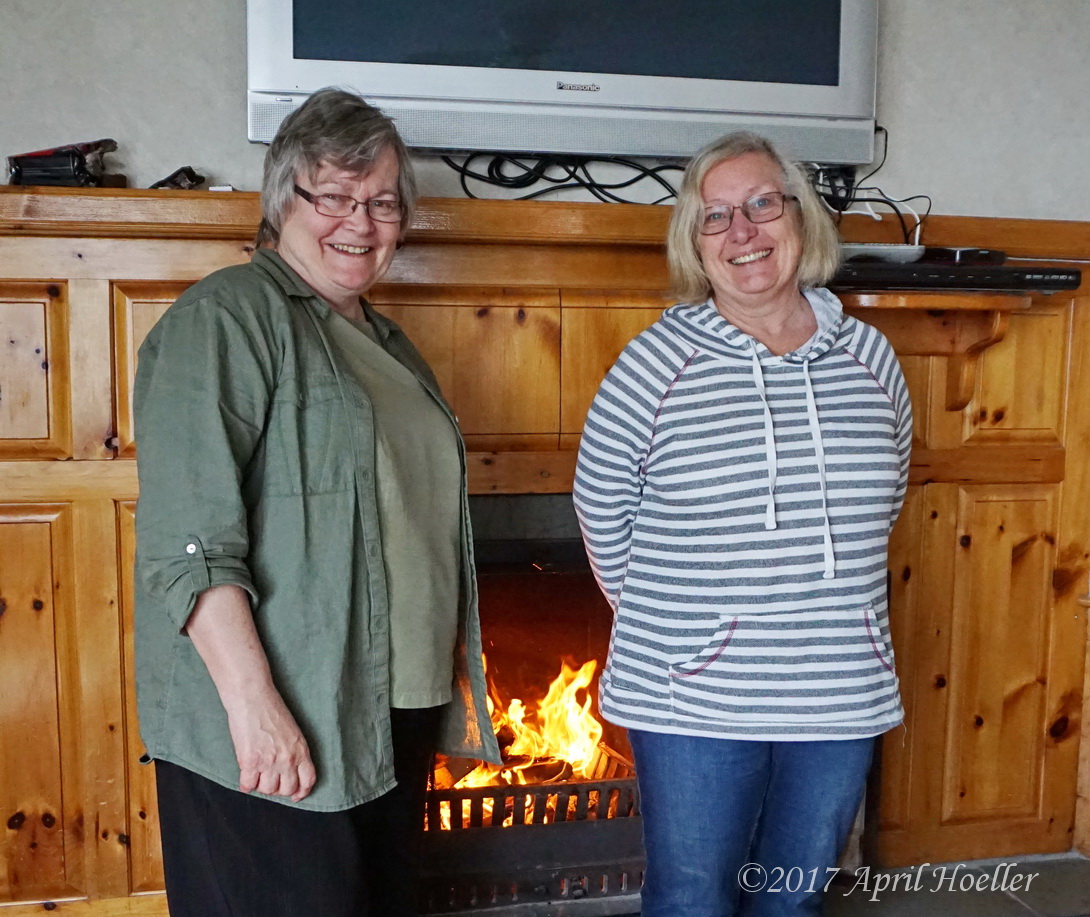
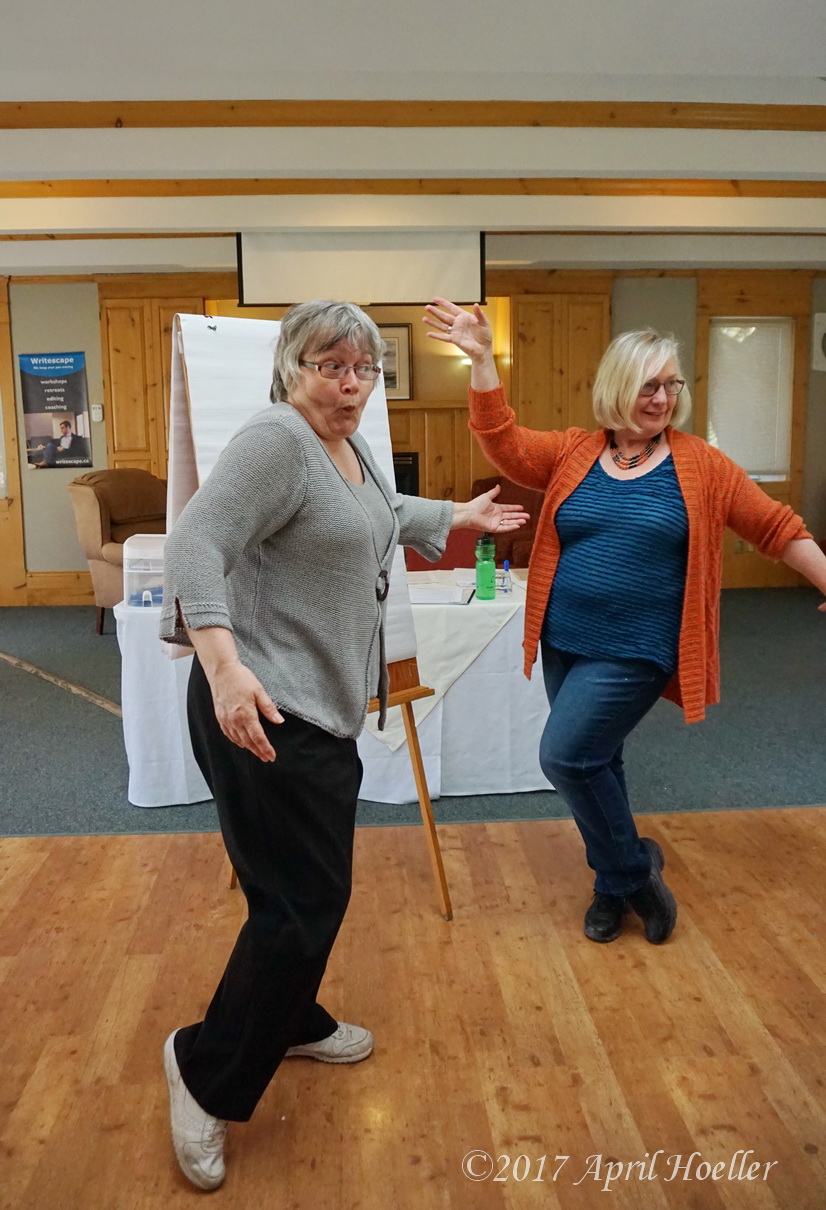
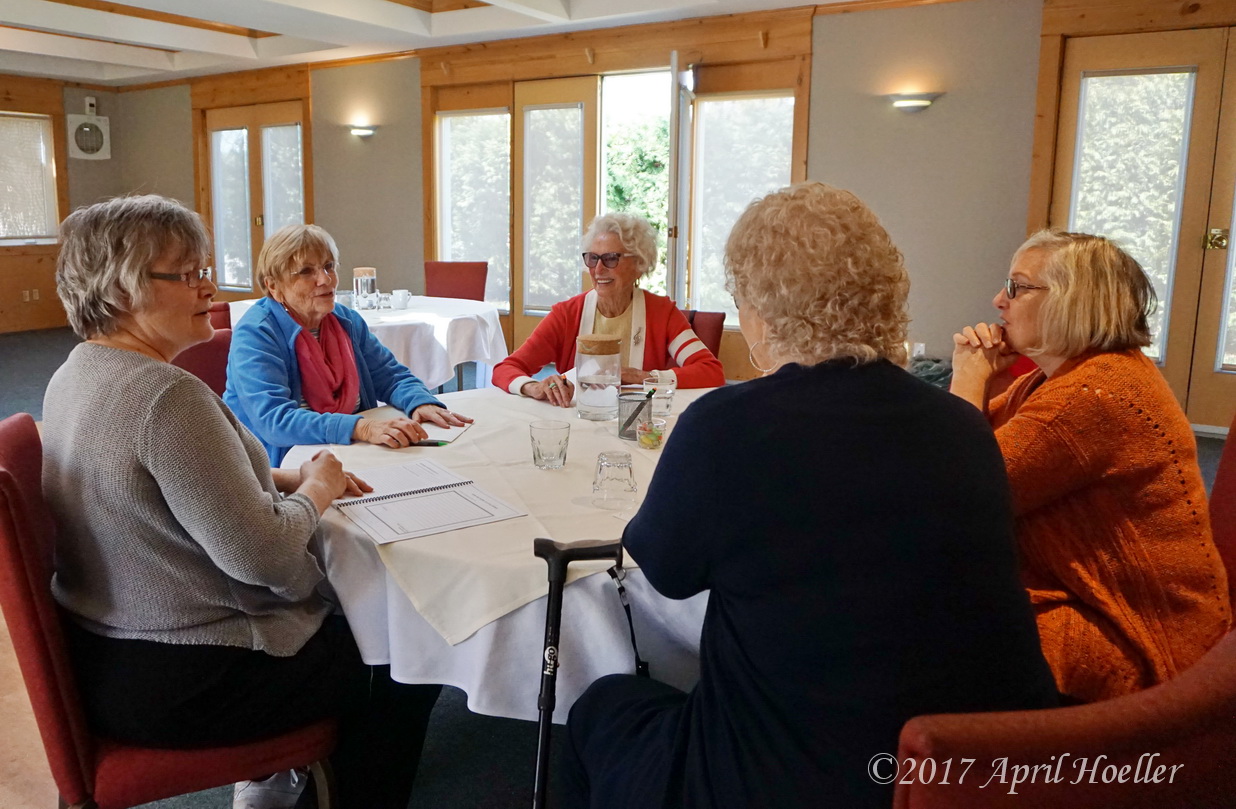
I am indebted to Ruth Walker and Gwynn Scheltema, the dynamic duo of Writescape, for their encouragement, companionship, and occasional goading.

… and a good sense of fun too!

Indispensable to the retreat is the energy and inspiration that blossoms when a group of writers gets together for a weekend. Good conversations, suggestions, laughter and affirmations abound. A big thank you to all of you!


Homecoming

I arrived home all fired up, ready to move forward at good pace. I had a plan too – always an important part of a retreat. So there I sat Wednesday at the harvest table in my kitchen with pens, paper, and mind ready, at 1 pm – right on schedule. And then the phone rang.

I ignored it, letting my guy answer it, while I put pen to paper. A whole sentence emerged. With great satisfaction, I tapped a period at the end. The next sentence was spoken by my husband.

“They want to start work on the solarium next week.”

I capped my pen and closed the book. No words have been written since. The solarium construction was not scheduled to begin until the end of June. Nowhere in my plans for the coming week, or even the coming month was there any reference to “The Solarium.” But the contractor had a cancellation and our name rose to the top.  We have been able to put them off for two weeks – because we’ve got prep work to do, none of which was on our radar – until last Wednesday.


What’s a writer to do?

This is not a derailment. It’s just a layby in a siding to let a construction train through.

So, throw off those whiney pants.

Make another plan to write my way between, around, over, through the interruptions.

Just think, in a few weeks I’ll have another writing space!

Cheers!

Did You Know?

You can read more of April Hoeller’s words on writing, travel and life at What I’m thinking today, her online blog.

Thanks, April, for reminding all of us that while life may happen (and it always does) we can find ways to keep close our writing goals. A writer needs to be ready to return to the page. Writing time is precious. Don’t waste it.

Writescape retreats are held spring, summer and fall, and deliver inspiration and support for writers.


Your Writer’s Voice

Your Writer’s Voice

Gwynn Scheltema

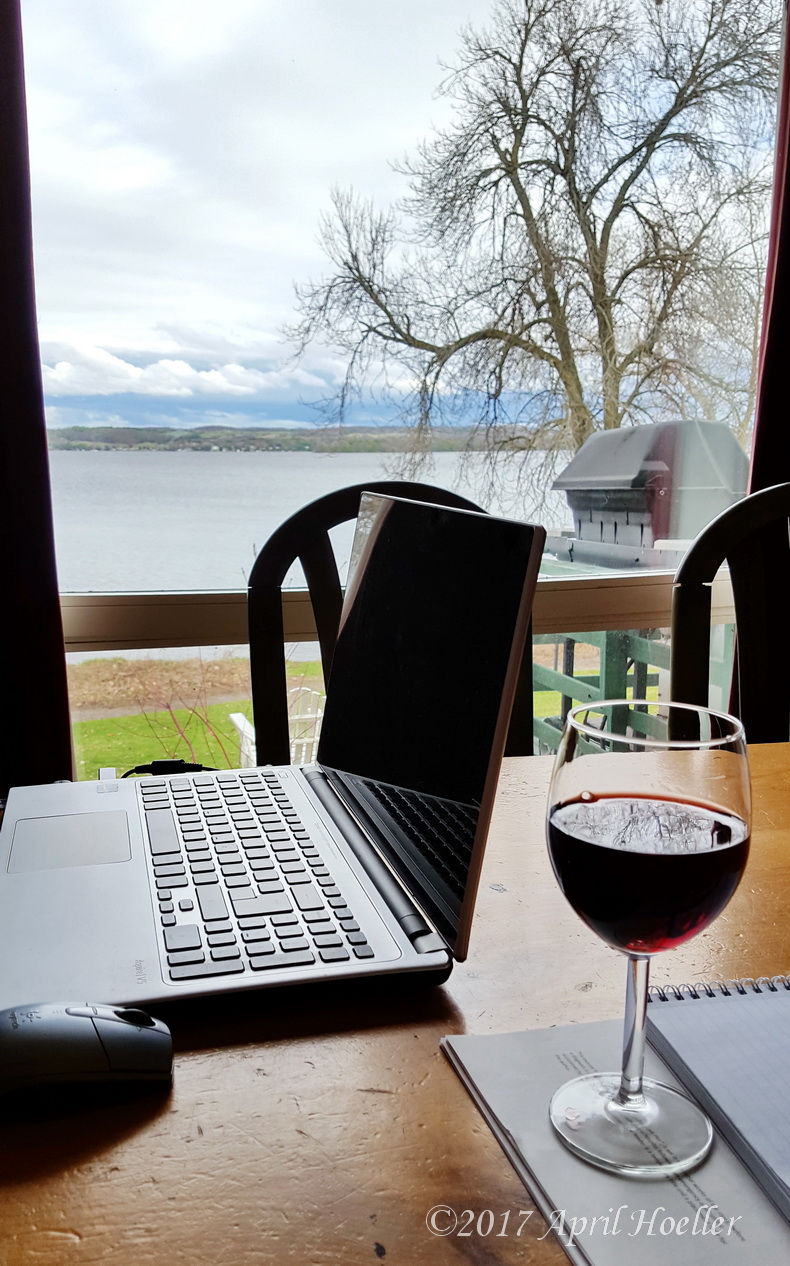
The lake inspires on this beautiful spring day. All around me words spill onto pages, fingers tap-tap on keyboards and there is an electric energy in the room. I’m among people who understand me, the writer.

photo by April Hoeller 2017

I’m here at Writescape’s Spring Thaw 2017.

On Saturday night we shared our work with each other, and as always I was blown away by the stories and the places they took me. And I was struck by the range of voices in the room, each with their own way of telling a story, of painting mood, bringing out emotion, of relaying information. Some voices were a familiar comfortable journey, some a new adventure into story.

But each voice was unique. And I’m not talking character voice here, I’m talking about that elusive quality we call the writer’s or author’s voice. The way readers recognize you as a writer. It’s partly style, partly tone and partly an undefined quality you might call your writer’s personality.

What is your style?

Style is the mechanics of how you write. Do you favour writing in short sassy sentences or long languid, contemplative ones, or something in the middle? Is your default  word choice urban or rural or academic or down to earth? Is your writing spare, with little description or do you use imagery and metaphor with gusto? Style can also be dictated by the market or genre you write in.

What is your tone?

Tone is the attitude of your writing. Do you hit readers between the eyes or are you subtle? Are you passionate, emotional, even evangelistic? Are you formal or friendly or casual? Are you obtuse or matter of fact? Do you teach or argue or merely suggest. Just like style, tone can be influenced by the market you write for.


What is your writing personality?

Your writing personality comes from who you are both as a writer and a human being. It’s molded by what you’ve experienced, the lenses through which you see the world, what you believe in, what inspires you, what influences you, your fears, your loves, your passions, your morals. It’s not dictated by anyone, but it is yours alone.


Why does it matter?

On a practical level, it helps you hone and edit your work. If you default to introspection in your telling of a story, perhaps you might need to up the energy more in places with more dramatization. If you typically create a first draft that races headlong from plot point to plot point, perhaps you need to give the reader a chance to breathe once in a while. And we all have stylistic tics: insistent words, phrases, constructions or images that bubble too often to the surface and which we no longer notice because they are part of us. I know, for instance, that I tend towards longer sentences and use the words “somewhat” and “little” a great deal in a first draft.

But it’s more than that. Recognizing that you have a voice that is uniquely yours is what helps you write authentically. Trying to write what you think you should write, or what others want you to write, often fights with the way you authentically write. We all have those moments when we feel a piece is not quite what we wanted to say. Chances are you’ve written it in something other than your own authentic voice.

Embrace your writer’s voice

Don’t fight the writer within. Your best, most authentic stories come from that place deep in you and will resonate with readers when you allow the distilled essence of your life, your experience, your passions and your attitudes come through.

The more you write, the more distinct and consistent your voice will become. Don’t worry about “finding your voice”. Just write what you are driven to write, in the way you think it is best expressed and send your writing out into the world. Your voice will be there.

DID YOU KNOW

Spring Thaw is just one of the retreats that Writescape offers each year. You can escape for a day of inspiration or settle in for a weekend or more of focused writing. Learn about what you can expect at at Writescape retreat.

Recipe for a Writing Grant

Recipe for a Writing Grant

Ruth E. Walker

Gwynn and I know firsthand what a thrill it is when someone validates us as writers. When you are told that you’ve won an award, a scholarship or a grant for your creative work, it’s not just about the money. Don’t get me wrong. For almost all of us, the “starving artist” is not a metaphor. It’s a hard reality.

Winning an award or grant is more than an income boost, however. It shows the world that others place worth on your craft. And it validates you as a working writer, one who is submitting their work for evaluation. That you are willing to risk the opinion of strangers.

So it gives us great pleasure to participate in an annual scholarship program with The Writers’ Community of Durham Region. WCDR is a 300+-member networking organization for writers of all types and levels. Heather O’Connor and I have been members for years and Gwynn was there at their very first meeting in the 90s. We all know that education is a prime focus for this non-profit group.

2017 Essay Prompt

When we were approached a few years ago to be part of their annual WCDR scholarship program we said Yes! Writescape funds a $150 scholarship.

Applicants must be members of WCDR, they must complete an online form to outline their background and budget details on their writing project/plans and, most importantly, craft a compelling essay inspired by a writing prompt. All applications are judged on their practical, logical content as well as how their passion is conveyed in responding to the prompt.

Our $150 support is not tied to taking any of our workshops or retreats. Writescape has no part in the adjudication process. We aren’t on any of the judging panels, we see none of the applications or essays, and only learn the name of the recipient a day or so before the award is announced.

A prize-winning event

It’s always been wonderful to attend the award breakfast and to hand out the prize. But this year was especially delightful for me. I’ve known the winner for twenty years. I also know he was the originator of the WCDR scholarship program and willingly volunteers his business acumen and well-honed technology skills to support the group and individual members.

In short, Rich Helms a good guy.

Rich Helms is not, however, a poet. Nor does he write mysteries or thrillers or historical romance novels. His excellent resource book Book Trailer 101 coaches writers on making their own book trailers. And if you want to understand Amazon SimpleDB, Rich co-wrote a guidebook on that as well. So I was curious and asked Rich if I could see his application and essay. What technological advance was Rich taking on this time? He willingly shared his application. Turns out, Rich reaches back to the early days of civilization for his latest topic.

Rich is baking bread. And he’s writing about it.

In his background notes, Rich shows his logical side. “…40 years in computer research and development, where I took complex ideas and turned them into marketable products.” and lays out his plan “The next thing I want to tackle is how to write a recipe – an area in which I have no expertise.”

But baking bread is his passion. Does his essay reveal any passion?

“When I retired from the company I once owned, I spent a month living by the ocean. Every day, my dog, Margaret, and I would walk the shore, then stop and fish. My all-consuming thought was, what now?

I’m a computer nerd who bakes bread and writes about it, and I’m not afraid to describe bread baking as a sensuous experience. I revel in the feeling of kneading dough into a boule of smooth, elastic food that is alive and growing. I breathe deeply the smell of the flour and yeast fermenting, breaking down the starches as well as the tantalizing aromas of caramelizing sugars…”

“…Thinking back to my walks by the ocean with Margaret …when I returned each day, our footprints were gone. Only pictures on my phone proved that we had walked the shore. The sand looked clean, and all traces of the day before were removed. What remained was a clean slate beckoning us to start the walk again.

This all makes me think about my journey with breadbaking. The traces of the journey disappear; time washes them away. But what survives are the writing, the stories, the recipes and what I learn along the way. As I move forward, I am excited to knead a deeper element of writing into the mix.”

Yup. I’d say the passion is there. And a wonderful depth and elegance to Rich’s writing that I’d not seen before.

A worthwhile gift to writers

We know that every writer who has received the Writescape scholarship has appreciated the support and used the money to deepen their craft or expand their skills into new areas. This time, it’s especially nice for us to know the recipient. And I can add that I have tasted Rich’s breads: a superb cheese loaf and dinner rolls that engaged the senses and deliciously filled the belly.

This ancient craft is even older than written language. I’ll be looking for Rich’s recipe book but in the meantime, I’ll settle for an occasional taste from the hearth. Yum!

DID YOU KNOW

Writescape offers Get That Grant, a fabulous one-day workshop on the art and skill of applying for writing grants and scholarships. Participants have a pretty good track record, and we can happily boast that Rich Helms is only the latest success story from taking the workshop this past February. Heather O’Connor offers her workshop yearly in Durham Region as well as “on demand” for groups and organizations that express interest. Email info@writescape.ca for details.

Tax tips for writing income

Tax tips for writing income

Gwynn Scheltema

A query arrived in the Writescape’s comments mailbox last week the gist of which was:

I self-published a book in 2015 and sell via Amazon.com. I received a form in the mail (1042-S Foreign Person’s U.S. Source Income Subject to Withholding). My Amazon book sales are pretty paltry (a whopping $277!). Must I report this on my Canadian tax return? 

I answered in a private email, but thought that this question and others related to writing income may be on the minds of many Canadian writers preparing tax returns this time of the year, so below is the answer to this question and a few more tips about reporting writing income to get you started.

One of the many hats I wear, is that of a tax preparer at a local accounting office, which I have done for decades, so I do know a thing or two about filing Canadian taxes. And since 2009, Writescape has periodically offered a workshop on tax tips for writers and artists.

That said, a caveat: The tips offered here are general information only. Your tax situation could be influenced by other factors not dealt with here, so if you are at all in doubt, contact your accountant or follow the links to CRA’s website for more information.

What kinds of income are considered writing income?

  • royalties/ advances for book sales 9print/e-book) from your publisher (T5)
  • independent book sales, print and e-book, (possible foreign income slips )
  • grants, bursaries and residencies (T5 or T4A)
  • school visits and speaker honorariums (possibly a T4A)
  • access copyright royalties (T5)
  • public lending rights payments (PLR) (T4A)
  • freelance earnings (possibly a T4A)
  • workshops, coaching, retreat facilitation ( possibly a T4A)
  • writing contest winnings

How much do I have to make before I have to report writing income?

Canadian taxation works on the honour system. Even if you do not receive a T slip from the entity that paid you, you are obliged to report all your income from all sources worldwide. That includes sales through Amazon, PayPal, eBay and other websites, books sold at craft fairs, honorariums for being a guest speaker, etc.

Where on my return do I report my writing income?

That depends on whether you are, by Canada Revenue Agency’s (CRA) definition, a “hobbyist” or a “writer” operating as a small business. In VERY general terms:

  • a “hobbyist” reports T slip income on the lines instructed by the T slip. Generally, hobbyists do not deduct expenses, although deductions are allowed on some grants and scholarships.
  • a “writer” operating as a small business (with an expectation of profit), reports all income including income on T5s and T4As as part of business income on form T2125. (Be aware you may have to inform CRA by letter that you are doing so, so that they do not think you forgot to report the T slip income.)
  • any T4 income as a writer or editor is employment income and should not be reported as part of a writing business.

What do I do about income from outside Canada?

  • Foreign T slips you may receive include a 1042-S for the US or a SA103S for the UK.
  • Canadian residents must file worldwide income regardless of whether a return is required or not in the foreign country where the income was generated.
  • Double taxation agreements exist between Canada and many countries, e.g. the US. This means that if you paid tax on certain income in the US, you will not be taxed again on that income in Canada. CRA may, however, charge a difference between rates.
  • Foreign income must be reported in Canadian dollars. You can use the exchange rate for the date/s the income was received, or you can use the Bank of Canada average rate for the year.

 Best for last

  • Most contest winnings are considered “prescribed prizes” and are not reportable or taxable. Yeah!!
  • Unlike employment income, writing business income and grants and bursaries can be reduced by expenses paid to generate that income. What expenses? That’s a whole other blog.

Useful links


Writing Positively and Successfully in 2017

Writing Positively and Successfully in 2017

Gwynn Scheltema

We are all familiar with setting New Year’s resolutions, or resetting the same goals we set last year and didn’t achieve. So what other positive things can we do to motivate ourselves to move forward?

Switch to a positive perspective

Never underestimate the power of positive thought. Someone once said that if you think your glass is always half full, then pour it into a smaller glass and quit whining. What they mean is: stop complaining; learn to see things from a new, more positive perspective. Don’t focus on what you haven’t achieved, but celebrate what you’ve accomplished. Don’t bemoan what you can’t do, but feel proud of what you have learned and mastered already. Self-confidence is half the battle.

Document progress and small successes

Pat yourself on the back often. My good friend, Ingrid Ruthig, introduced me to the habit of keeping a document file on my computer desktop called “Things I’ve Done in 201_” (add your own year). In it, I record every small accomplishment as it happens.

I include a record of submissions that I send out —whether they come to fruition or not— because even the act of submitting is a positive and motivating step for any writer. I list writing events I attend. I list open mic opportunities, readings, interviews or panels I participate in. I paste copy from encouraging emails about my work. I record the completion or start of writing projects, or even segments within writing projects— “finished Chapter 3!”. I record workshops attended or given, and retreats and writer’s breakfasts. I fill in the dots on the calendar for every B.I.C session I complete.

As the list grows I get a satisfying sense of what I’m doing to further my writing journey or project—or a self-kick-in-the-pants if there haven’t been any recent entries.

At the end of the year I have a real record of accomplishments and areas that need focus. I also have a decent record to refer to when completing my tax returns or updating my writing resume— but that’s another blog.

Have elastic expectations

Seeing where you were a year ago and where you are today can be revealing. Priorities and goals can change over the course of the year. Projects can fizzle or get sidelined by new projects (and life) unimagined at the start of the year, and that is not necessarily a bad thing. Just because something on your goal list doesn’t get completed doesn’t mean you’ve failed. Reflect on what you’ve learned. Adjust and move on. Go with the flow.

If you like to set goals, perhaps plan to start with short-term (monthly, quarterly) goals. Make some targets easy to complete to keep you motivated. Display them somewhere to nudge yourself and stay on track.

Also balance that with longer-term (2-year, 5-year, lifetime) goals where you reach for the stars so you have something to aspire to and something for your subconscious to envision. They say that the first step to actualization is visualization.

Strive for balance

Achieving writing goals is all very well, but if they are achieved at the expense of your health or your family relationships and other important aspects of life, then perhaps you need to reconsider your life balance.  As Ruth said in her blog, make time to not write. Take time to live. Take time to indulge in growth through retreats, conferences, workshops or just hanging out with writerly friends. Take time to notice. Take time to read. Take time to exercise. Take time to love.

Above all, be kind to yourself. Look for the good in everything. Enjoy the writing journey you’ve chosen for yourself. Enjoy life. Be positive and you’ll get there.

Here’s to your positive and successful 2017.

Six Simple Resolutions for Writers

Six Simple Resolutions for Writers

Ruth E. Walker

Resolutions can be hard to keep. Often, it’s because the resolutions we make are either too complex or too unrealistic.

And sometimes, it’s too hard to even choose a resolution. Should I resolve to submit my novel this year? And should it go to an editor or agent first? And should I resolve to start writing the sequel to that novel or maybe I should wait to hear from the publisher first?

Don’t worry. Gwynn and I are here to help. We kept it simple for you. And we kept it doable.

Here are six resolutions designed to enhance your creative skills in the coming new year. And bonus! You only need to choose one for New Year’s Eve:

#1 Resolve to devote one day exclusively to the craft

Think about it. Just one day. C’mon, you can do it. Pack a lunch and head to the library. Or stay home, unplug the phone and the Internet, and spend the day writing. Maybe you can pretend it’s a snow day. Or maybe you can book a one-day escape at a hotel or B&B, or check out Gwynn’s writing getaways at her Northumberland home on Lake Seymour.

Consider what the word “craft” means: In Old English (pre-900 CE) cræft meant strength. Giving yourself a full day to focus on the art and skill of your craft can only strengthen your words on the page. No matter what option you choose, make sure you schedule your day devoted to writing. And then make sure you show up, as scheduled.

#2 Resolve to write while travelling

We didn’t say “write a book” when travelling. We only suggested that you remember to write when on a journey. “Writing” can be a restaurant napkin with a snippet of overheard conversation recorded next to the smudge of hot sauce. “Writing” can be jot notes on a map or guidebook: stopped here and ate weird-tasting burgers at Fast Eddy’s Eatery. Nobody got sick.

The point is that there are all kinds of ways to “write” while travelling. You’re creative. In 2017, see what you can do to write while travelling.

#3 Resolve to write something different from your “usual”

Step away from the familiar and head down the rabbit hole. If your passion is fiction, go for non-fiction or poetry. If your comfort zone is poetry, try your hand at playwriting. If non-fiction is your go-to, start a graphic novel. Science fiction writers, take the time to meet romance. Mystery writers, shake hands with erotica.

There’s a strange chemistry that happens when you shake up your pen and at the very least, you’ll return to your writing nest with some fresh ideas. And maybe you might find that trying something new opened up a whole new “writer” in you.

#4 Resolve to read something different from your “usual”

This one is easy. You don’t even have to choose a book. How about a bodybuilding handbook or an article in a finance magazine? Or a graphic novel, or modern play, or a children’s board book? Or a corporation’s annual report, or a technical how-to manual.

The object of this resolution is to teach your eyes to see what you might have skimmed over in your own work. What made this particular piece of writing publishable? Where is the strength in the writing? Who is the reader or audience? And why do they need this publication? What changes, if any, might you make to improve it?

This analytical approach might prove useful in your own writing. At the very least, you introduce your eyes to a way of writing or to content that is not what you normally choose to read. An excellent exercise to expand your writing horizons.

#5 Resolve to devote at least one day to NOT writing

A counterintuitive resolution? Actually, this is a great resolution for those who have trouble leaving their desk, or pen, or computer. It’s great to be a devoted writer, one who writes every day without fail, one who will forgo lunch if a plot point needs adjustments or a character is sitting a bit too flat on the page.

Nonetheless, a daily writer might be surprised what might happen when you give up just one day of working at the craft. The tension of staying away from the writing could fire up your pen in ways you hadn’t imagined. The “day after” may be something you choose to indulge in from time to time. At the very least, it’s a worthwhile experiment for the relentless writer to try out.

#6 Resolve to pay attention. Yup. Maybe you think that you already do this just fine. But we’d like to suggest two different approaches in case there’s one you’ve not yet tried:

Be objective: I attended an Andrew Pyper workshop where he suggested that paying attention without judgement is a great way to discover characters and ideas. I think he called it “writers’ reportage.” Take a seat in a public space and people watch. Simply record the facts of what you see. No emotion. No subjective consideration. e.g.: Young woman in red halter top and white shorts pushing dark blue stroller without a baby inside. Man in yellow hat and biker jacket runs up library steps and goes inside then exits almost immediately.

Be subjective: Gwynn Scheltema suggested that there are benefits to being subjective when noticing, and that it really is a kind of art. Her “Art of Noticing” was posted to The Top Drawer a couple of weeks ago. Gwynn nudges you to bring the five senses into your observations. Can you describe the taste of coffee? Did you hear what your fellow passengers discussed on the bus? And what is the colour of snow, exactly?

No matter which approach you take to your paying attention, both Andrew and Gwynn remind writers that there is writer’s gold in observations. So take the time to mine some for yourself in 2017.

Happy New Year! May your muse stay close, may your imagination be ever ready to receive and may your pen never run out of ink.