Broken in a Good Way

Broken in a Good Way

Ruth E. Walker

In marketing a new book, there’s always groundwork to do well in advance of publication. Having early readers can help create word-of-mouth interest in upcoming titles. I had the great fortune of receiving an advance peek at Frances Peck‘s debut novel The Broken Places, coming from NeWest Press in April 2022.

Frances was a special guest at our recent retreat, arriving via Zoom from her Vancouver home for a Q&A session, followed by a short reading from the book. Frances surprised us by admitting it was her first time reading from her own novel to an audience. You wouldn’t have known it.

Author Frances Peck
Rebecca Blissett Photo

Frances’ reading was terrific and the writers at the retreat also enjoyed the opportunity to glean some insights from Frances into the process of getting published.

Networking is what Frances said made a difference for her and it is something we at Writescape encourage writers to do. You just never know who you might be seated next to.

Sneaking a peek

I didn’t want to wait to read the ARC (advanced reader copy) so the NeWest publicist sent me the book in final manuscript form, held together by a big black binding clip. This version was getting ready for a last fine-tooth comb proofreading before layout to print. Frances said I was welcome to make note of anything that needed attention, typos and so on. But I think she was more interested in my response to her book overall.

I wasn’t far into The Broken Places when I lost all interest in looking for typos. I was hooked by the preface.

The Broken Places is a rare treat. In lesser hands, it would be a great beach read or diversion for a long airport layover. But this multiple POV novel combines high-tension narrative with true literary craft, delivering characters readers will love to love, hate, pity and grieve.

Leaving the editor behind

As an editor, I am attuned to kick-out moments – those “oh dear” bits where the author shows up and the story gets lost. This is not the case in The Broken Places. It’s been a while since I’ve read a book that didn’t allow me to easily put it away and move on to other tasks. Sleep was low on the priority list when I had to read just one more chapter before turning out the lights. I shifted deadlines to let more of the characters show me their strengths and failings. And yes, all the characters have failings. Secrets. Longings. And regrets. There is laughter. And there are tears.

Vancouver Pixabay

Set against the backdrop of a devastating earthquake that rocks Vancouver, the west coast and the islands, the story of how this diverse group of people react to their new reality is beautifully delivered.

The novel is intense, the situations extreme and yet so many moments of masterful writing and sensory engagement are on offer for readers.

Delivering satisfaction can be bittersweet

The author holds her novel’s cards close to her chest, revealing layer by layer the motivations, fears and desires of her characters, doling out tidbits and clues that culminate in an explosive and heartbreaking climax. Yet the novel ends with hope. Not a sweet-sugary treat, but a hope grounded firmly in believable characters and situations that resonate.

In our lives, we all undergo change. Some of it subtle and slow. Some of it dramatic and sudden. This is a novel about all kinds of alterations – upheavals and shocks and the gradual groundswell of near imperceptible difference. It is the result of all those changes that matters. And that’s abundantly clear in The Broken Places.

A last word: typo!

A last word about typos. I actually did find one, almost at the end of the novel. The last couple of chapters of a book you don’t ever want to end are the hardest to finish. I put it down a few times, actually went about my business until I couldn’t stand it any more. That mildly distracted state is maybe why I noticed “wallking” in one sentence. It kicked me out for a few seconds. But then I dove back in and rode the pages to the very end where I reluctantly put the book away. I wish all books held that kind of pleasure. 

10 Ways to Write about War

10 Ways to Write about War

Once again on the eve of Remembrance Day, veterans of war and those who fought and died are on our minds. November 11 is just one day, but the solemnity and memories of the day carries an emotional intensity that many of us bring into our stories.

Writers have been chronicling battle stories since ancient times. Virgil’s epic poem, The Aeneid, offers us a searing immersion: so all had one longing, to let the sword decide.

We’ve been letting the sword (or gun or cannon or bomb or laser beams or…) decide ever since. Naturally enough, we writers have mined (pun intended) humanity’s predilection to fight and there’s no end to the kinds of books – biographies, histories, poetry, stories, novels – that explore that motherlode of emotion and power. Here are ten possible approaches:

1.  Heroic battles – Here the writer has a vast landscape and nobody does it better than the ancient storytellers, such as Virgil, Homer and Sophocles. Their legacy can be found in all the epic scenes of warrior hordes (Lord of the Rings, Game of Thrones) with clanging, clashing, slashing swords and axes hacking their way to the castle gates. Those scenes echo into modern history where swords are replaced with bayonets and rifles. Futurists imagine the same scenes but played out with visionary weaponry.

2. One-on-one Combat – Move beyond the broad landscape and get up close and personal with the dance between two enemies. It is a tension-filled moment that deserves a slow burn to reach a full roiling boil. Two characters, circling one another, gauging each other’s weaknesses, holding back until the moment to engage is clear. Now think beyond the battlefield and examine other kinds of fights between two characters: for example, a marriage falling apart. Warren Adler’s The War of the Roses chronicles the emotional costs of the legal battle and the soul-sucking aftermath.

3. The Homefront – Who’s left behind? How are they surviving? Pacifists, injured, too young, too old, too frightened – stories that focus on everyday people who can never forget what is happening in the wider world. Keeping the war in the background has been excellent inspiration for kidlit authors such as beloved writer Bernice Thurman Hunter and her novel The Girls They Left Behind. In adult fiction, the WWI Homefront is explored beautifully in Frances Itani’s Deafening. If you plan to write a novel set during our current and relentless pandemic, reading books about the Homefront might give you some needed distance.

4. From the Enemy’s POV – Writing through the enemy’s perspective is an exercise that can offer writers entry into their antagonist’s motivations. This is an excellent tool to breathe more life into that character. And sometimes, it might be more interesting to write the whole book with the villain as your Main Character. Oscar Wilde did it with the classic novel The Picture of Dorian Gray and more recently Gillian Flynn’s delightful Gone Girl.

5. Turf War – From schoolyards to neighbourhoods, boundaries real or imagined are instant tension points. Opposing gangs have a long history in literature: Shakespeare’s Romeo and Juliet is a classic example. In Richard Scrimger’s Ink Me, Bunny, a mentally challenged 15-year-old, gets the wrong tattoo and that gives him entry into a gang about to do a high-stakes deal. Often funny but never patronizing, readers get a glimpse into the world of gangs and that of young adults who are differently abled. In Angie Thomas’ debut novel, The Hate U Give, readers get a deep dive into complex issues of racism, police brutality, activism and social justice – all of it framed within the context of boundaries held by gangs, organizations, institutions and families.

6. Civil War – A nation divided, rebellion, cults, rumours and secrets. Any social unrest is pure gold for tension and a fascinating cast of characters. Suzanne Collins dove into that world when she created The Hunger Games and you know how that turned out for her. But if you want a lived-experience to flavour the writing, Civil War Stories by Ambrose Bierce, a veteran of the American Civil War, is great writing. Ahead of his time, Bierce has a speculative fiction touch that offers us more than battle stories.

7.  The Aftermath – From Ancient Greek playwrights (Euripides’ Trojan Women) to cold war novelists (Nevil Shute’s On the Beach) to post-apocalyptic authors (Cormac McCarthy’s The Road) much of post-war life, real or imagined, is never easy. Trauma, starvation and uncertainty can be counterbalanced with resilience, foraging and rebuilding both physically and socially. It’s up to the writer where to place the greatest weight.

8.  The Peacemaker  Diplomats, politicians and kings. Historical fiction is rich with books about peacemaking in world history. Tolstoy’s War and Peace gives us a sweeping saga plucked from history. But writers have a way of taking the known and applying it to the unknown. Erin Bow’s masterful YA novel, The Scorpion Rules, takes diplomacy onto an intergalactic scale that holds hostage the lives of world leaders’ children. No war between worlds and no kids get euthanized. Simple genius.

9. Undeclared War – Nothing underpins a story’s tension meter with more energy than a seething simmering dance between two enemies. As up close as a divorce in the making (The War of the Roses) or as broad as worlds balancing on the verge (Peter George’s Red Alert, inspiration for the classic film Dr. Strangelove: Or How I Learned to Stop Worrying and Love the Bomb). When the threat of war is constant, readers keep turning the page.

10. Tools of War – Speaking of loving the bomb, a war without weapons is a schoolyard turf war. Come to think of it, even that situation has its own weapons: taunts and gestures can ignite a war of words; fists, knees and teeth can up the scale. So, as much as big shiny boom machines can have an impact on a battle, remember that your reader’s emotional journey will accelerate with the smell of sweat, taste of blood, squeeze of skin and screams of battle, not to mention the look on combatants’ faces: jubilant in celebration or horrified in defeat.

No matter how large or how small the scale, a story of war offers writers so many possibilities and these ten musings are merely a long view with a pair of binoculars. It’s up to you to find the emotional heart in your story’s battle and bring it beating and alive for your readers.

On November 11, you will be asked to offer “a moment of silence” at 11 a.m., the date and time the Great War officially ceased in 1918. Writescape suggests that “a moment” as you well know, it merely a breath, a blink of the eye or a swallow. Those who have given their lives for their country need more than a moment to be remembered. War, no matter the cause, is hardly a reason to celebrate because the human cost is far too great and death is forever. Keep that in mind with all your war stories.

When Writers Gather

When Writers Gather

Guest Blogger: Andrea Adair-Tippins

While we are cautiously optimistic that the worst of the pandemic is behind us, and we slowly return to some semblance of how the world used to be, I hope we don’t discount everything that happened in the past year. I’d like some elements, of the virtual kind, to carry over into the future.

What? Haven’t we’ve all had our fill of Zoom and Webex and Facetime and whatever else people have found to connect with one another when we couldn’t attend in person? But there are some really good things that have come out of doing things virtually.

A virtual win

I work in a library and for each author visit I’ve hosted in the past year, I reached over 2,000 views on Facebook live. Two thousand views! In-person events max out at the room limit of 70 people. Going virtual has been a huge win for the library and my guest authors. In future, I intend to do a hybrid: in-person events while streaming on Facebook live. Something I hope organizers of writer conferences will consider.

Having just attended my second fabulous virtual Surrey International Writers Conference (SIWC) there are some things I’ve embraced about attending conferences this way that I hope will continue in some fashion.

Conferences: a virtual plus

Attendance: You can attend any virtual conference you want no matter where you live. I tried to attend SIWC in person three years ago but it sold out so quickly I didn’t have to worry about convincing my husband I should go! When it switched to virtual last year organizers opened it up to more people and I had no problem getting in.

This year alone, I’ve gone to When Words Collide in Calgary and Write Now!, a crime writing conference in Arizona. It’s a big world but virtual conferences make it feel smaller.

Events are recorded: Many conferences are recording the sessions held over Zoom and it’s fantastic! If you attend a conference in person, unless like Hermione Granger you have a time turner, you can’t physically be at every session.

But with recorded events, you can hit any session you want. With SIWC for instance, the recordings are up for a month and I can watch them at my convenience – even while making dinner!

Transcripts: With live events on Zoom or recorded, transcripts are easily available. While watching live, you can enable the transcript right away and follow along (or go back if you miss something). Zoom also gives you an option to save it. Save the transcript? Yes please!! Save my hands from cramping for an hour and a half session.

And with recorded events, you are able to copy and paste the transcript. You might get 46 pages and some odd interpretations of words but it helps you catch the gist of anything you missed.

You can duck out of recordings: Not every session you attend at a conference is perfect for you. You may be looking for nuts and bolts about how to do something and the presenter takes more of a theoretical approach. It can be awkward to walk out halfway through — but virtually, not so much. It’s even better when it’s a recording. Just end it. Or skim the transcript to see if it does get into more of what you are looking for.

Even more pluses

Pitching: Pitching your book to an editor or agent is nerve wracking, virtual or in person. Doing it over Zoom however, there is a good chance they aren’t going to see how nervous you may be. Yes, you have to remember to look at the camera but sweaty armpits aren’t going to show up across the internet. And pitching, just for the experience alone, is always a win – virtual or otherwise.

Cost: Conferences can be expensive, from airfare to accommodations to meals. Virtual? Well, you miss the adventure of a trip and restaurant meals and hanging out at the bar. But do you?

Many events have set up virtual bars to hang out in. Order food in and mingle. Network. Meet and greet online.

While I hope in-person conferences will resume again soon (New England Crime Bake in November is doing a hybrid event) — I am soaking up everything I can online whenever I can. And having a lot of fun while I’m doing it!

Andrea Adair-Tippins is a children’s librarian assistant. She is currently working on a historical mystery, attending conferences and taking online classes to improve her craft.

Returning from Retreat: Reality

Returning from Retreat: Reality

THE IDEAL

person-110303_640I will go on retreat and when I come back, I will be energized and my writing will be brilliant.


We all start a retreat with optimism, plans and hopes and dreams. But on the drive home, or maybe just as you turn the handle on your front door, something hits you.

It’s over. The planned escape to focus on your writing is done and here you are, back home, facing all that your return will mean. And it ain’t always pretty when you once again face reality.

portrayal-89189_640Some of us easily get past that return to reality and can gather back the positive energy we found on retreat. But others might get mired in one or more of the following disappointments:

  1. NOTHING HAS CHANGED

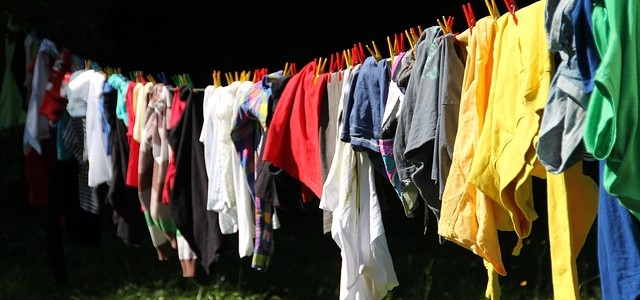
Right on. Once you add the laundry in your suitcase to the pile you didn’t finish before you left, you realize your life waited for you. And there is no escaping it.

  1. YOU DIDN’T DO ENOUGH ON RETREAT

That’s right. You lazy, good for nothing writer. You spent time staring out the window at the lake or the forest or the desert or…whatever. And some of the stuff you wrote is so lame, you won’t even look at it.

  1. THE RETREAT DIDN’T HELP YOUR WRITING

Oh yeah. This is just like the diet you started in January. Your 3 lb loss turned into a 5 lb gain in April. You are just the same writer you were when you started, so why did you even bother?

THE TRUTHtruth-166853_640

  1. MUCH HAS CHANGED
  2. YOU ACCOMPLISHED FAR MORE THAN YOU REALIZED
  3. YOU ARE A DIFFERENT WRITER

PROGRESS IS NOT ALWAYS RECOGNIZED

Don’t look at that laundry pile the same way. Consider that t-shirt you wore on retreat before you put it into the washing machine. It’s full of your writer’s sweat and you can launder that out. But even if you deleted every single word you wrote, you can’t wash your retreat away. Instead, those words you crafted will percolate in the back of your mind and two things can happen:

  • ONE, you’ll realize the writing wasn’t so awful after all. In fact, those words are looking pretty good again

OR

  • TWO, those less-than-perfect words will inspire fresh ones that will move your work forward (after all, we all know the true work of the writer is in the edit)

FEEDING YOUR CREATIVE SELF

anvil-1169340_640Even if you did very little writing, your retreat was not a waste of time because everything you experience flavours your creative self. Sometimes, we don’t recognize the new ideas and perspective a retreat gives us.  Chats over dinner with the other writers, quiet walks down country lanes, staring out the window at a completely different view — all of this has an effect on you and your writing. While it’s not bum-in-chair writing, it is a legitimate form of creative work. You’re feeding your subconscious.

Your subconscious is your best friend as a writer and none more so than when your main purpose is to create. That’s why you went on retreat in the first place. When you come home, your ugly Internal Editor may perch again on your shoulder whispering negativity into your ear, but your Creative Self is still being fed by your subconscious.  And it’s rich in retreat compost.soil-766281_640

So turn your back on any negative thinking. Start digging into your retreat compost and see what treasures are buried in your mind. And follow that energy!

For more on retreats, see Ruth’s post on preparing for a writing getaway.

Mixing Solitude with Camaraderie

Mixing Solitude with Camaraderie

By Guest Blogger, Lori Twining

What writer wouldn’t love to disappear from their life and spend an entire week hidden away at a remote location? With no other obligations other than to put fingers to keyboard or pen to paper and tell a story. Maybe, a story no one will ever read? That’s a possibility. But hey, if you are a writer, you will have a strong desire to write that story whether someone reads it or not, right? 

Disappearing to a remote location sounds fantastic, especially after the tough year or two we have experienced. My doctor said I was becoming a workaholic, even though I’m working from home now, and I should take a mental health break. She said something like, “Take a vacation.”

In my mind, I watched her scribble a prescription on her pad for me:

Go somewhere. Eat, sleep, and write from sunrise to sunset. Repeat for seven days.

So, I passed the fake message along to my family and booked a writing vacation. I realize that most writers can only dream about going to a week-long writing retreat. Sometimes, writers struggle to leave their family behind or they find it challenging to schedule time away from work, or they can’t even manage to save enough money to go away. The stress is real, but if you can achieve it, I highly recommend doing it.


Lori Twining ~ Coffee at Sunrise, Elmhirst’s Resort

At this moment, I’m finally experiencing a writing vacation that I have been looking forward to for almost two years. I booked the retreat with Writescape in the fall of 2019 to celebrate my spring birthday away from home doing something I like to do: WRITE! However, the event was postponed three times due to the pandemic happening right outside our door. Although we are not finished with the pandemic yet, I’m thankful for science and knowing everyone at this retreat is double-vaccinated, masked, and keeping their distance.

With that in mind, I cannot express how ecstatic I am to be tucked away in a bedroom on the second floor of a rustic cottage with a 4-foot wide window overlooking beautiful Rice Lake FOR SEVEN DAYS. I haven’t been setting the alarm because I’m on vacation, but I still manage to roll out of bed around 5 a.m. I make a pot of coffee, pull out my notebook and a pen, and write until the darkness gradually turns to light. 

The sunrises are breathtaking at the Elmhirst’s Resort nestled along the shoreline of Rice Lake (see photo above of me gazing out my bedroom window at sunrise). It is so peaceful and relaxing here that I can’t help but focus on the first light breaking through the early morning darkness. The vibrant red, yellow, and orange colours reflect across the serene lake, sending a tingling sensation that rockets from my toes to my earlobes. 

Usually, I’m wearing my Jack Nicholson’s grin along with my pajamas, and I think about how lucky I am and whom I might have to kill today. (I’m a fiction writer, so it is allowed.)

Lori Twining ~ Writescape Writing Retreat
Lori Twining ~ Writescape Writing Retreat, Elmhirst’s Resort

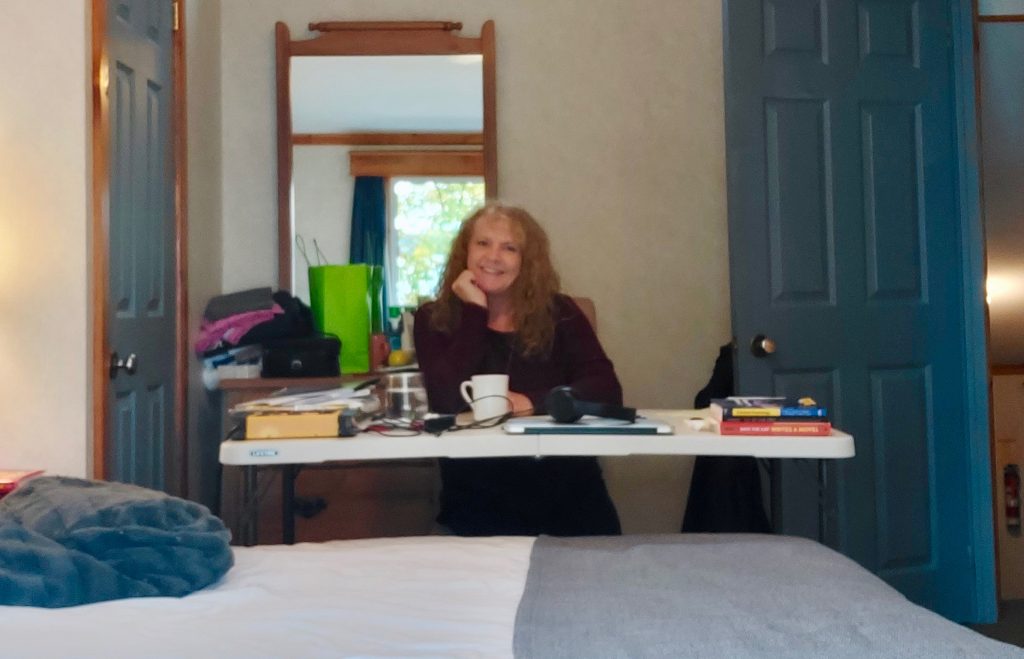
I set up a folding table beside a comfortable chair, and my job is to write ALL the words. This is my solitude time where I can immerse myself inside my novel for seven days. I can wear my pajamas all day if I want to; the same goes for the Jack Nicholson smile. I open my suitcase full of notes and reference material and scour through it for something important. I throw sticky notes up on my wall and figure out my plot holes. I read some parts aloud, looking for extra words or clunky dialogue. I slip outside for a breath of fresh air, walk to the floatplane dock, and make an apple disappear. Then, I get right back to the writing.

Occasionally, during this Writescape retreat, there are writing workshops where the instructors, Ruth E. Walker and Gwynn Scheltema, teach us something small but specific. A timed writing exercise follows this teaching moment. It is funny that when I attended my first Writescape writing retreat, I loathed participating in writing exercises. I wanted to slink out of the room and pretend I was never there. Seriously, what writer can come up with material that is worth keeping during a ten-minute interval of freefall high-pressure writing? Well, it turns out, when I use the courage buried deep inside me, I can surprise myself and find something golden in my words almost every single time. It might have something to do with the other writers’ artistic and creative energy in the room with me. It is extremely electrifying.

By participating in the workshops and partaking in the exercises, you learn that it is a process, not your finished product. It is a tiny step along the way to creating something new. It doesn’t have to be perfect, as long as the muse is nipping at your ear, pushing you to experience the magic and go where you have never gone before. The sudden release of endorphins triggers positive feelings in your body, similar to morphine. You can honestly get addicted to the high of someone saying they love your writing or trying a new concept and having it work for you.

We discussed art emerging from art by using Ekphrastic Writing, which was a fascinating workshop for me. I created six pages of new writing about a piece of art that speaks to me. With that, I will select the words, sentences, and statements I want to keep to form a poetic response inspired by the sculpture, thereby enhancing the artistic impact of the original art through synergy. I will need to do a little more research on my own to see if I’m attacking the project in a clever and creative way. I’m excited to see where it will take me.

Today, I’m reaching the halfway point of my retreat, which makes me sad, happy, and freaked out. I have so much I want to do here that I’m considering skipping the sleep portion. *Joking* I’ll just reduce the shut-eye time to five hours instead of six. That will make all the difference.

If you are a writer and you want to be more productive in your quest to finish that novel, then grab a couple of your writing buddies and plan a writing retreat vacation. 

I’m grateful for the solitude mixed with the camaraderie that is happening this week. The pleasure of attending this contemplative retreat makes me cherish every minute of this writing journey, and I’m honoured to spend it with friends who have the same passion and mindset as I do. 

Thank you to Ruth and Gwynn for running a fantastic retreat that I will miss dearly. I look forward to finding a new adventure for next year’s retreat (although I might just camp in Gwynn’s backyard, looking for poetry advice). 

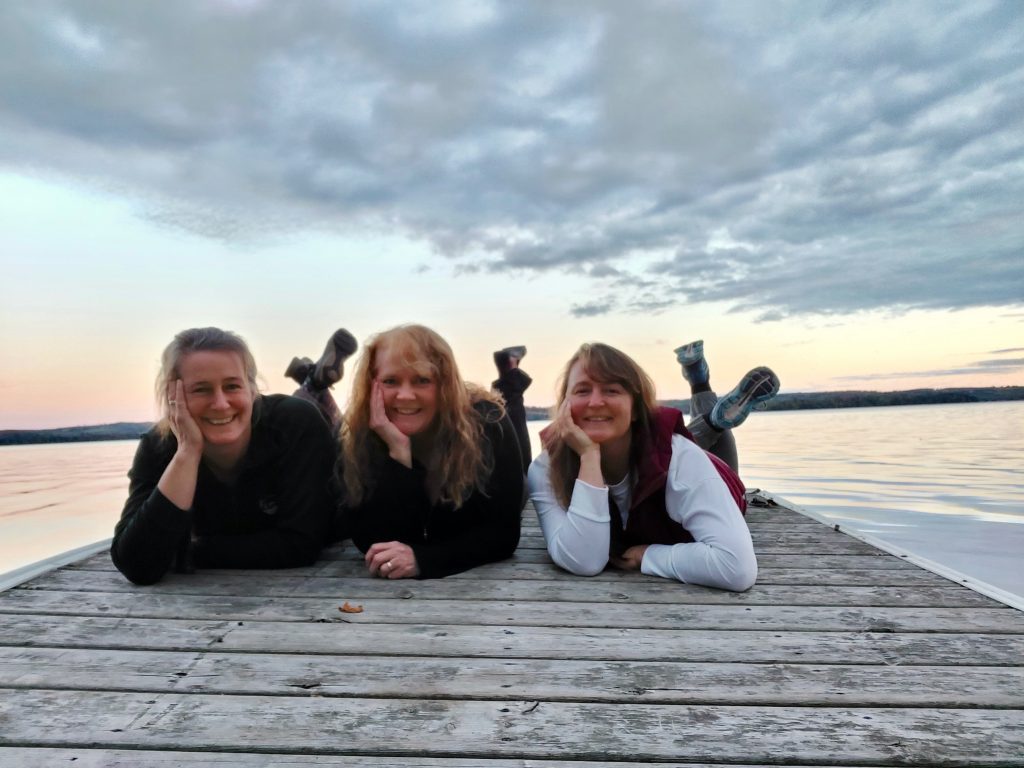
Lastly, I’m thankful to the two writing friends pictured below: Seana Moorhead and Donna Judy Curtin, for always accompanying me on these writing retreats. They are the best cheerleaders a writer could ever ask for. They remind me that I’m here to unplug, focus on my writing, and need to get my shit done.

I look forward to the day that we are successful best-selling authors, and we can tour the world together. Look at me! I’m always dreaming when I should be writing. Ha!

What could be better than going on a writing vacation with writer friends?

Nothing.

Writing Buddies ~ Seana Moorhead, Lori Twining & Donna Judy Curtin
Writing Buddies at Elmhirst’s Resort ~ Seana Moorhead, Lori Twining & Donna Judy Curtin

Meet Lori

Lori Twining writes both fiction and nonfiction, with her stories winning awards in literary competition and appearing in several anthologies. She’s an active member of many writing groups: International Thriller Writers, Crime Writers of Canada, Sisters In Crime, Toronto Romance Writers, and Ascribe Writers. She’s a lover of books, sports and bird watching, and a hater of slithering reptiles and beady-eyed rodents. Find more info at www.lvtwriter.com; Twitter: @Lori_Twining

How to Pack for a Writers’ Retreat

How to Pack for a Writers’ Retreat

Ruth E. Walker

Every time we organize a Writescape retreat, we email participants a “Useful Information & What to Pack” list. It’s full of practical advice. We remind them to bring comfortable clothes and outdoor wear for spring or fall. After all, Ontario weather can be as unpredictable as a newly discovered character for your novel. We suggest that they can bring munchies and comfort foods but our all-inclusive retreats have breakfast, lunch and dinner

compass & mapWe provide maps and directions to the resort. And we remind writers to pack anything they need for writing. Most importantly, we suggest they remember to bring their work in progress or ideas they want to develop. But if they forget those, Writescape retreats offer creativity sessions and other inspiration opportunities. We even have a companion workbook and an on-site inspiration station for those 3:00 a.m. inspiration needs.

Gwynn, and I sometimes joke that anyone coming on a Writescape retreat just needs a change of underwear, their toothbrush and jammies.

But there are some other, more subtle things that don’t fit into a suitcase but that a writer should remember to bring on retreat. And these important items are needed no matter where you are heading:

An Open Mind

I’m not talking about how you see the world, your politics or your ethics. I’m talking about some internal housekeeping — owoman-readingpening your mind to possibilities. It’s a form of mindfulness. It’s you, paying attention to what your muse is suggesting. You, being open to the five senses — taste, touch, sight, smell, sound. You, bringing those senses into your writing. When your writing includes a range of sensory elements, your readers’ memories are tickled. And that results in writing with physical and emotional resonance.

A Plan

man writingHaving a plan may sound contradictory to what I just said about mindfulness but the two are companions on any successful retreat. Gwynn reminds us in every opening session to be S.M.A.R.T. in our retreat objectives: set plans for the weekend that are Specific, Measurable, Achievable, Realistic, and that can be Timed. In short, if you don’t have a plan, how will you know what you have managed to accomplish?

Coming on retreat to “write something beautiful” is not as powerful as coming on retreat to “finish three vital scenes for the climax.” By the same token, planning to “write a complete novel” is not realistic unless you are on a 30-day NaNoWriMo retreat. Be reasonable. There’s nothing unrealistic about a plan that includes “relaxing with a daily lakeside walk and writing in my pajamas for two hours every day.”

Permission

Giving yourself permission — permission to experiment and explore, even permission to fail — offers you a delicious freedom from your inner critic. Most of us struggle with that quiet voice whispering in the background, telling us we’re not real writers. At one of our retreats, a participant told me she didn’t think she really was a writer, that her work “wasn’t good enough.”

We talked about what makes “a writer” and how we all are on a continuous journey with the writing process. When she finally was able to read her work in one of the sharing opportunities, she was thrilled by the response. She got past her inner critic, gave herself permission to risk sharing her words and discovered validation when other writers responded to her work. And she’s grown so much since as a writer, seeing her work published in anthologies, winning writing contests and submitting her novel manuscript to agents and publishers. And all that happened because she gave herself “permission” at her first writing retreat.

This Friday, a group of writers will be heading to Elmhirst’s Resort on Rice Lake. They will bring casual clothes, walking shoes, bathing suits for the indoor pool, and rain gear, just in case. They will also bring their works in progress or ideas folder, laptops or notebooks, and their pens or pencils. They will have packed a writer’s suitcase full of optimism, plans, outlines, rough drafts, objectives, hopes and dreams for their retreat.

And Gwynn and I will do everything we can to help them achieve their plans and their dreams. Because, after all, that is exactly what they will expect of us.

Let’s Get Practical:  

Packing your suitcase can be a real challenge, especially when you want to lug along your laptop and flash drives and chargers cords. Rolling clothes suitcase overflowinstead of folding can get you more space. But what about keeping it all organized and quick to pack and unpack?

Here are “13 packing hacks” from MarieClaire. You’ll gain some space for those extras and keep your clothes neat and tidy.

Do you have any packing tips?

10 Writerly Dips into Food

10 Writerly Dips into Food

Food is one of elements in writing that offers readers all five senses and it’s been featured in text for thousands and thousands of years. From the prehistoric cave paintings to early runes and hieroglyphics, we’ve recorded our key relationship with what sustains our physical bodies.

Food is a significant power tool in your writer’s kit and here are 10 ways you can use that tool in your work:

1 Establish place: You’re not going to find citrus fruit growing on a northern tundra; conversely, apple trees will wilt under a tropical sun. Geography governs what natural foods will be at the table. But, if you bring in an non-native food, it can serve to underscore the local geography:

She placed a bright yellow fruit in front of the hearth. “He says it’s a lemon,” she whispered. “The stranger had it in his pack. Said we should squeeze out the juice for Papa. Help his fever.”

2 Establish time: That microwavable dish is going to burn to a crisp when it’s stuck on a spit and roasted over a fire. Conversely, a woolly mammoth carcass is not going to fit into a standard oven.

Like fashion, there is an element of practicality in the kinds of foods consumed in eras past. They should match the time in terms of access and ability to devour.


3. Establish elements of character: Consider Dickens’ miserly Scrooge and his thin, watery gruel versus the loving and optimistic Cratchit family and their small goose for Christmas dinner.

A fussy eater can be a difficult guest, leaving room for rising tension. “Oh, I’ll eat anything” that becomes, “Well, I don’t like cucumbers. Or peppers. And no spice. It’s hard on my stomach.” A sure sign that this houseguest could prove trouble in other areas too.

4. Engage the senses: In Charlie and the Chocolate Factory by Roald Dahl, readers are treated to the delights of a cavalcade of candy, albeit with strings attached. Chocolat by Joanne Harris explores the sensory freedom that a chocolate confectioner delivers to the residents of a small French town in the 1950s. Oooh-la-la.

5. Surprise readers: Of course, we all have to eat. But what about a character who opts to eat, well, strange things? Dirt, for example. Or deep fried crickets. Or guinea pigs — a delicacy in Peru and adored family pets in North America.

6. Include a recipe or two: A nod to epistolary narrative, a recipe can be a delightful diversion to a story– a memoir could be enhanced with a recipe that relates to a scene in the book. Or a thriller novel could feature the family secret that betrays the real reason Grandpa passed on so abruptly. A pinch of salt and two tablespoons of cyanide…

7. From farm to table: Consider the satisfaction of the harvest. Tilling the soil in the first part of the story; caring for the tender shoots and vines and blossoms; finally, gathering in the bounty to preserve or devour. The backdrop this offers a story helps to ground the reader and weave a metaphor for the full circle of life.

8. Compare and contrast status: Imagine a table laden with all sorts of foods. Mountains of fancy breads, stacks of carvery choices with slabs of juicy meats, bowls of glistening fruits, platters of cheeses, pitchers of rich creams, decanters of wine — all placed on fine linen with crystal and silver and delicate china.

The domestics serve it. They tidy up afterwards. And the scullery maid sneaks a bit of leavings from the plates and slips it into her mouth. A small simple act after such excess underscores a harsh reality.

9. Deliver the fatal blow: In crime fiction and murder mysteries, food is often the method by which death is delivered. When arsenic-infused omelets are on Madame’s menu, we know it’s just a matter of “thyme.”

Seriously, food is essential to our well-being and relates directly to nurture, so to use it a vessel for murder, is to cross a sacred line. In the case of Hannibal Lecter, food becomes a motivation for murder: liver and fava beans, yum!

10. Food as an escape…or vocation: A tub of ice cream or a big bag of potato chips can be a comfort for some people in distress. Many of us have cravings that increase in intensity when we’re stressed. Food is a sanctuary for some and a curse for others, but can be a treasure trove for writers seeking interesting characters or plots.

What must it be like for a chef who is surrounded by food day in and day out: menu planning, preparation and presentation?

What if that chef develops food allergies and has to give up their life’s dream? Conversely, what if someone with no sense of smell or taste has to work in a kitchen? A chef in training who can’t read or write?

No matter the scenario, types of food, or kinds of characters, when you are working with such an essential element of life, you have the power to take your writing from lukewarm to searing hot. Bon appetit!

Why Write Short Stories?

Why Write Short Stories?

Guest Post – Seana Moorhead

Confession: For many years, I didn’t like short stories. The concept conjured memories of high school English classes where we were required to create short stories, filling lines with sweet teenage angst like a Boston cream pie donut. I used to like those donuts when I was nine. I also adored pink and blue bubblegum ice cream at that age. There are some things you grow out of and I had put short stories into that category.

Then I started taking my writing more seriously and I’ve come around to admiring the short story format, especially those under 3000 words. And I discovered there’s a reason why many short stories don’t work well for me. It’s very hard to write a good short story. You have to pack everything you could put into a novel of 70,000 words: break it down to the essential, still write beautifully, and make sense so you don’t lose your reader for lack of words.

When you find a good short story, it is like the Scotch whisky of writing.  There’s depth and multi-layered flavours from the first sniff to the last lingering taste in your mouth. Like a good Scotch, you don’t need a lot to appreciate its beauty.

Here’s my list for why every writer should strive to write a short story:

It’s Short

By definition, it’s short. You can practice the craft of writing without committing to an entire novel. If it doesn’t work out, you probably haven’t invested years of work in it. You can burn it, eat it, or recycle it and start something new.  Basically, it’s like only committing to a first date. Unlike a novel, you don’t need marry your story and then later have to suffer through a nasty divorce when it doesn’t work out.   


Yes, I dare you to write a short story on a slate!

Finding Readers

You can get other people to read it because it’s short. Getting someone to commit to reading your mega three-inch tome can be difficult. Much easier to get feedback by having your friends and family read your 1000 words of prose. 

Reworking

Despite No 1, you can invest years into perfecting your short story, and it’s easy to go back and pick up and re-work it because it’s short. Try doing that with your 120,000-word novel stuck in your bottom drawer with your socks.

Hone your skills

You will become a better writer. Being forced to keep your story to only 2000 words means you have to make every word count. You don’t have the page space to tell us about the entire history of your character or about the Napoleonic wars before the plot begins. Learning how to tell a story with only a few words will make you a better writer.

Rejection Training

You can enter short story contests and learn how to handle failure. Learning how to accept rejection will be valuable when you try to publish your novel later. This is an important life skill for a writer. Or really anyone willing to be brave and try something new. 

The Short List Creds

You can enter short story contests and get short listed. This will be a boost to your confidence and morale. You are a writer! Even better, you might actually win. You are definitely a writer! You can celebrate with cake and ice cream (but please, not bubblegum flavour).  

Publishing Creds

You can get your short story published in a magazine or anthology.  Maybe even earn cash (or at least a free copy of the book). You now have publishing credentials to add in your pitch to agents when you finish that novel. 

Experiment

You can experiment with POV, tenses, blending genre, trying a new genre (like a paranormal western). Go crazy! It’s only a short story. If it doesn’t work out, remember no 1.  

Editing Skills

You can improve your editing skills. For most writers, learning how to hone editing and revising is an essential skill. A short story is a good format to get critical. Check every word and sentence. Way easier to do this in short story and find your weakness. Do you jump around in your verb tenses? Use too much passive voice? Have favourite words? Lover of adverbs? A short story is an ideal format to polish those editing skills. 

Serendipity

You may create something beautiful and make some reader fall in love with short stories again.  

Meet Seana Moorhead

Seana Moorhead is an aspiring writer and is working on completing her first fantasy novel. She moved to Grey County in 2002, having a passion for outdoor adventures, including kayaking and wilderness camping. Suffering from a book addiction, she reads almost anything that grabs her attention, leads her into another world or teaches her something new. Seana lives in a bush lot near Owen Sound, Ontario with her partner and three dogs.

Too Close to the Sun reprise

Too Close to the Sun reprise

Ruth E. Walker

Last week, I was watching a TVO documentary “Art Detectives” about experts in art and history who team up to find undiscovered treasures, and it reminded me of a Top Drawer post I wrote five years ago. I took a quick look and discovered how remarkably current it still is. 

Like my “Art Detectives”, I focused on Pieter Bruegel’s Landscape with the Fall of Icarus that, at one point, was the subject of scrutiny thinking it might not be his work. But in the context of our current lives, the provenance of the art seems of less importance than its subject.

The painting and the various poems, plays and books it has inspired is about how terrible things happen in the middle of ordinary days and that life just carries on. And how framing that everyday reality into words–searingly brilliant words–is the work of the writer. 

Given how we were all going about our plans: trips, family gatherings, dining in restaurants, sitting in classrooms, taking in a play or movie, grocery shopping without thought of physical distancing…and then, we were not. Could not. Not as we once did.

Some of us took longer than others but eventually, most of us shifted into this “new normal.” And life continues–albeit altered in large and small ways. So with that in mind, and with W.H. Auden’s beautiful poem  underpinning the many, many losses of the past 20 months, I offer up this post from the past. 

October 2016

A friend and fellow writer posted an excerpt from a poem on Facebook. It happens to be one of my favourites, W.H. Auden’s “Museé des Beaux-Arts.” Like so many poems, it is a take on one aspect of the human condition. How truly awful things happen to people at the same time most of the world is going about their ordinary lives.

His opening lines set the tone:

About suffering they were never wrong,
The old Masters: how well they understood
Its human position: how it takes place
While someone else is eating or opening a window or just walking dully along;

XIR3675

On the surface, Auden is talking about those great old Master painters — Rembrandt,  Vermeer and Caravaggio, among them — how they understood the contradictions of life. In the poem, he focuses on a famous painting by Pieter Bruegel the Elder, “Landscape with the Fall of Icarus.”

In this tragic snippet from Greek mythology, with a pair of wings held together by string and wax, poor fated Icarus flew too close to the sun. The wax melted. The feathers fell apart. And Icarus landed in the sea. Great story inspires great poetry. (See also poet William Carlos Williams for his equally gorgeous take on the tragedy.)

I’m not going to discuss Auden’s poem, which is a masterpiece of subtlety. I’m going to talk about the painting which, for years, has hung in the Royal Museum of Fine Arts of Belgium, touted as a masterwork by Pieter Bruegel, the Elder.

They might have made a mistake. Or not.

There are inconsistencies that call into question if this painting is actually Bruegel’s work. There have been suggestions that perhaps it’s an excellent copy of the original, likely by a very talented student, perhaps even Pieter Bruegel the Younger.

people-219985_960_720

Studies show it was likely a painted wood panel, probably by Bruegel, that was later transposed onto canvas. Somebody had to do a lot of over-painting to cover up what didn’t survive the move. Over the decades, this painting has been radiocarbon dated, scanned by electron microscope, zapped by energy dispersive X-ray spectroscopy (whatever that is) and had the charcoal under-drawing examined by infrared reflectography. (Don’t ask.)

Yup. It’s a Bruegel alright. We think. Pretty much. His. Maybe.

Is the painting and the poetry it inspired any less marvellous for all its controversy-inspiring history? Of course, it is vital for art historians and museums of art to know as much as possible about the treasures in their care. It’s more than placing value (though that is an obvious factor) — it’s about the life story of the art, its provenance.

But for those of us who are inspired by beautiful art, and especially work that offers a ticket to inspiration, the who really made that part of the equation is secondary. Auden’s poem is no less brilliant if it wasn’t really Bruegel’s painting. Williams’ poem would still move me to tears.

bruegel-close-up-icarus-legs

And that painting, it’s haunted me for years. Not because I didn’t know who painted it but because of those pale white legs, way off in the bottom corner and flailing just above the surface, desperate yet completely ignored. The farmer tilling his soil. The shepherd looking off in the opposite direction. The angler, mere feet away, just working at getting a catch. The lovely ship, sailing past into the harbour…

It’s the human condition that inspires my art. Our crazy, conflicted selves who can feel compassion and contribute money and goods to help those suffering in never-ending senseless wars. And who can, that same day, head out for popcorn and a movie that glorifies shoot ’em up scenarios and terrorist car bombs. (This, of course, includes me. I am human, after all.)

We make no sense, really. Capable of stunning and original art in so many forms: music, dance, theatre, film, painting, sculpture, textiles, multi-media and yes, literature. All of our art is an overwhelming rainbow of style, voice and technique. At the same time, we are cold, cruel and self-centered.

In life, we are constantly flying too close to the sun and forgetting the rest of the world. This contradiction, this puzzle of what makes us spectacular and despicable at the same time, this is a big part of what drives me to write.

And imagine, this post came to me because my friend, artist and poet Ingrid Ruthig, posted a snippet of a poem on her Facebook page. So what inspires you to make words on the page?

Did You Know?

If you’d like to see one of Bruegel the Elder’s painting up close without taking a trip to Belgium, check out this YouTube video of how Google’s art project captured a digitized image of “The Fall of the Rebel Angels” (1502).

Is One Journal Enough?

Is One Journal Enough?

Gwynn Scheltema

Like a lot of teenage girls, I kept a diary for several years. Entries are a hodgepodge of the trivial: (we didn’t have the geography test today), funny: (my blue dress seems to have shrunk and Daddy is not amused!), and, on occasion, surprising: (I found myself sleepwalking last night).sad-woman-1055092_640

I wrote strictly about my life, what happened and how I felt about it. The diaries were hard-cover, date-at-the-top-of-the-page books, and fifty years later, I still have them. I’m glad I have them. But I know I likely wouldn’t if they had been soft-cover spiral-bound notebooks.

And now?

Yet these days, I do journal in spiral-bound notebooks—and tiny pocket notepads, on the computer and in large books with unlined paper. So why the difference?

What prompted me to think about my different journals, was a comment on my post To Edit or Not to Edit, where she mentioned the Steinbeck style of journaling (a guest post by by Kendra Levin on Brian Kelms blog) where Steinbeck had a “companion journal” chronicling his progress on his novel. I don’t have a Steinbeck companion journal (yet), but I do have a variety of journals that serve different purposes and their physical form does seem to influence their use.

female-865110_640Sadly, I have several beautiful journals—handmade paper, illustrated, filled with wise sayings, beautifully bound—and I will likely never write in them. I’m afraid I’ll “spoil” them, like everything I write in them needs to be perfect. Silly, maybe, but that’s me. Many writers are inspired by beautiful paper or pens, or illustrations and bindings. Just not me.

So here’s what I use and why:

Journal for Morning Pages

After the teenage years, I didn’t journal for decades. What got me back into it was Julia Cameron’s creative self-discovery book The Artists Way, where I discovered morning pages—three pages of uncensored writing done first thing in the morning. No rules, don’t overthink, just write three pages of something. When I first started, a lot of it was ranting or wishing and even to-do lists. But now, it’s a mix of personal and creative. Most of my poetry starts in mornings pages, and I use it to “talk out” fiction problems too, and start fiction scenes.

leather-refillable-journalI tried various sizes, lined and unlined, and finally settled on a 6 x 9 lined. It fits easily on my bedside table and filling 3 pages doesn’t intimidate me. The reality is, I often fill far more. They fill up quickly, so I invested in a leather refillable version that closes with a tab and has a pen holder. Refill notebooks are cheap and easily found at the dollar store, because it is a standard size. I’m not forced to buy refills from the original manufacturer.  As I finish each one, I label it with the dates it covers and store them on a shelf in my writing room.

B.I.C. File

Morning pages are done by hand on paper before I get out of bed. If I wrote everything by hand, however, I would waste a lot of time typing it up. So I have a computer journal too.notebook-405755_640

I house it in Scrivener, and the project name is BIC (bum in chair). I write here with the same uncensored writing attitude as morning pages: sometimes timed freefall sessions, sometimes writing prompts, all in an attempt to stay ahead of the internal critic. It works. Many blogs and fiction scenes have been birthed here. When I create something I think is useful, it’s easy to copy and paste it to the relevant writing file and keep going.

Journal for Anytime – Anywhere

This notebook has to fit in my purse, so it’s much smaller, about 3 x4, dollar store quality. In it, I record odd thoughts or observations that come to me when I’m out and about. It has no organizing method, and I make sure it doesn’t have too many pages, because if it stays rattling around too long in my purse, it tends to fall apart. This forces me to take the contents and do something with them: type them up in appropriate computer files (blog ideas; scenes for the novel; poetry ideas etc.), add them to projects, or discard them.

Visual Journal

maple-leaf-638022_640A good friend of mine keeps her journal in a large blank-paged artist’s sketch book. She writes in it, draws in it, sticks photos and leaves and feathers in it too. It’s like a giant scrapbook, and she says she likes the freedom of not having lines. I’m not so good with things that don’t have boundaries—safety edges—but I do keep a version of this. I have one for my novel, with newspaper clippings, photos, magazine cut-outs, maps of towns or plans of houses. Visual stuff. Electronically, I use Pinterest (a board for each novel) and Scrivener has great research capabilities for keeping visuals and web links.

Teeny-tiny sentence-a-day journal

flowerets-577081_640Quite by chance, I was given a pocket journal, about the size of a credit card. I wondered what on earth I could possible use it for. I decided I would force myself to observe through all the senses and each day write just a single line to describe something in a different way. The sentence-a-day part didn’t work out, but those single lines have inspired poetry and been a great exercise for my creative mind.

Whether you want to keep the personal separate from your fiction, or hate margins, or need space to draw, it’s all your choice. Ultimately, there is no right or wrong form for a journal. What’s important is that it suits your way of creating.

What journals do you keep and why?