Winners! Summer 21 Poetry Contest.

Winners! Summer 21 Poetry Contest.

Thanks to all the poets from all over Canada who entered our Summer 21 Poetry Contest. Today, the 21st we take great pleasure in announcing and congratulating the top three winners:

Drum roll please……

  • 1st Place: Marg Kropf – Coming of Age
  • 2nd Place: Les Robling – XXI
  • 3rd Place: Reva Nelson – Twenty-one and Done

Before you read the winning poems and why we chose them, here is what the contest asked for:

Compose a 21-line poem in any form, where the subject matter evokes some aspect of the number 21. Your poem does not have to actually contain the words “twenty-one”, although you are welcome to do so. The title is not considered one of the 21 lines.

Winner: Marg Kropf – “Coming of Age”

COMING OF AGE

They reproach, these stops and starts
Of children’s feet
My measured tread
Along a dusty street,
Along the hopscotch lines
So crazily bent
Around the jagged cracks
In the cement.
Children dash against the sun
And I can see
That they are at some game
And unaware of me.
Their looks cry out,
“Too late. It is too late!
You are the traveller
Who can pass this gate
But once, then vanish
In an angry sun.”
I feel old, old,
Immeasurably old.
Tomorrow I will be twenty-one.


Judges’ Comments on “Coming of Age”

On the cusp of full adulthood, our narrator is acutely aware that a return to childhood is not an option. The imagined admonishments of the children symbolize the vanished years, and their imagined taunts sting. The children can brave dusty streets and jagged cracks in the cement; indeed, they can dash against the sun. Fearless. And, of course, there’s an underlying reminder to any reader beyond the age of 21, that this too is no longer attainable. We’re reminded how, at our own age of twenty-one, we felt about aging; how each year passes and leaves us feeling old, old, immeasurably old.

On first reading, the ending comes as a surprise, despite the title, because the poet so accurately captures the heavy feeling of being old that we can imagine a much older narrator. In the first lines, are images and connotations of heaviness and age, of a life measured: feet and treads, numbers and prescribed routes in hopscotch, lines and roads that point to journeys made and the nod to the children’s rhyme “Step on a crack/ Break your mother’s back,” as well as the sensory details that feed the emotion: dusty, crazily bent, jagged cracks.

At the first turn, the mood lightens as we witness the children and their imagination game. Here the movement is fast and sunny and loud. And then the final turn back to the narrator, I feel old… setting us up for the kicker last line.

The poem is further supported by an intriguing rhyme scheme and rhythm that hearkens to the unbalanced feeling of the narrator, especially with the extra penultimate line that throws the scheme off just before the final statement.

2nd Place: Les Robling – XXI

XXI 

Just one topic comes to mind,
Bill Twenty One, cruel unkind.
A misaligned, nasty law,
No matter how it's written down
Causing many a facial frown,
An act around a social flaw.

Banning ethnic dress and symbol
Crosses, hijabs, turbans and all,
Casts a pall on a nation
Denied the right to free choice;
Discrimination all should voice
Not rejoice this indignation.

What a year, what a frightful age,
Covid pandemic, nature's rage,
A rampage across the land -
Fever, dry cough, tiredness,
Painful death from this virus
Undesirous deadly hand.

Yet, covid will be slayed, soon now;
But this Bill lives on, somehow,
Twenty one, merde, disallow

Judges’ Comments on “XXI”

Roman numerals in the title create curiosity about the poem to come. Rhyming couplets and metrical structure are tough to pull off in a poem without it reading like a greeting card. This poet wisely avoids a simple AABB scheme and opts to vary the rhythm and tone with an AABCCB for three full stanzas and then ties it nicely with a triplet stanza at the end.

A clever use of internal rhyme again keeps the greeting card element at bay: down, frown, around; choice, voice, rejoice; tiredness, virus, undesirous. And enjambment of some lines further helped to keep the rhyme from calling attention to itself because the content spans the lines and carries the reader with it: Banning ethnic dress and symbol / Crosses, hijabs, turbans and all, / Casts a pall on a nation

This poet is to be applauded for risking a topical and controversial subject, as good poets have done through the ages. In many ways this poet pulled it off. Reserving personal opinion, however, and merely presenting facts and images and possibilities so that the reader comes to that opinion on their own, would make this even stronger.

3rd Place – Reva Nelson – Twenty-one and Done

TWENTY-ONE AND DONE 

When my son was eleven
I was imparting some motherly wisdom
On choices and values
He questioned why
I was telling him this
Since his values were in place

“I’m done, Mom, you’ve told me
You don’t need to tell me again.”

“What do you mean you’re done
Are you a Christmas turkey?" I asked

By eighteen I thought now he’s done
Off to university and safe
But many new challenges emerged
And I wasn’t done either

At twenty-one I thought now he’s done
And I am finished parenting
Not so, not done

Now, years later, my grandson is turning one
I see that no one is done
Not even me

And parenting is infinite
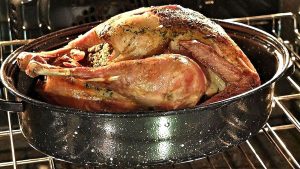
roast turkey


Judges’ Comments on “Twenty-One and Done”

There is a solid progression here with touchstones of ages 11, 18, 21 and beyond and back to 1. The last full stanza brings us full circle to the wisdom our narrator gains. As much as she wanted to impart wisdom to her young son, she (and we readers) are reminded that gaining wisdom is not something that can be measured in years. Indeed, our grandmother narrator is still gaining wisdom.

Use of actual dialogue in this poem gives the reader insights into character without having to describe or filter the view. A touch of humour lightens what could have been a dry delivery, given the prosaic style. While this narrative structure offers a useful parable, and a recognizable theme to engage readers, a stronger sensory engagement through use of poetic devices or form or use of the senses would bring the reader closer to the poem on an emotional level.

Last Word

So there you have it. Congratulations to the winners and indeed, congratulations to everyone who entered. As all writers know, submitting is the hardest part.
A True Story

A True Story

Ruth E. Walker

Mark Twain said it well: Truth is stranger than fiction. Write on, Mr. Twain. The best fiction feels real, often because it is imparting some kind of truth on human behaviour. But writers have to watch that their desire to “tell the truth” doesn’t push their stories into a place readers can’t accept.

Many a writer has met with this kind of criticism, “That’s not believable. That would never happen in real life.” But, again and again, we writers cry out, “Real life is unbelievable.”

Well sure. Sometimes so unbelievable to some as to put them in harm’s way.

Many didn’t believe certain politicians could ever rise up to achieve power – Adolf Hitler and Donald Trump come to mind here. And many people still don’t believe that COVID-19 is anything more than a flu bug.

Readers are the arbiters of what is an acceptable “unbelievable” and writers must remember that. If you receive that “unbelievable” feedback from editors or beta readers, take a closer look at how you set up what readers can’t seem to swallow.

Consider Germany in the 1920s and ’30s. Many factors were in place to allow Hitler’s hateful spewing to strike a resonant chord with much of the population. Now, consider what is unrealistic in your work. Did you offer any subtle threads early on to support it? Are there scenes where some character or characters doubt the “unbelievable” and give an opportunity for another character to explain? Did you make the illogical logical – making it fit the situation?

Dealing in “the truth” is tricky business for writers. As Mark Twain suggests, it is stranger than fiction.

Fiction becomes truth

My childhood was full of science fiction imaginings: space travel, aliens, robots, other dimensions, time travel. But it was all fiction. Until, that is, Neil Armstrong set foot on the moon and space travel became believable.

But aliens? Other dimensions? Time travel? Impossible. Imagine the US military ever taking UFO sightings as real…oh wait.

They have? Cool!

Now coined UAP (Unidentified Aerial Phenomenon), the strange documented sightings are the subject of a 2021 Pentagon report and investigative interest. The jet pilots and sonar operators were not all nuts after all. The possibilities boggle the mind. Are these elusive sightings alien technology or have foreign governments got some super secret experiments going on? Or are we being visited by our own future via time travelling tourists? “Look Mira. That’s what they called ‘cars’ back then.”

Do you see where I’m going with this? Were your writing wheels turning?

Truth becomes fiction

Strange and unbelievable truths have been an interest of mine for as long as I can remember. Odd, out-of-the-way museums and tourist traps have always offered up great stuff. In St. Petersburg, Florida, a taxidermy display of a two-headed calf was eerily intriguing. In that same over-filled museum – a true labour of love with faded typewriter labels and signage announcing each item – I puzzled over the series of plaster death masks of Beethoven and other famous folk.

All of this clutter cheek to jowl with the “world’s largest collection of seashells in North America.” How could anyone deny it. It was there in black and yellowing white, typed with the energy of righteous truth, right down to the errant “e” that always arrived a pica or two above the other letters.

One day, I’m writing a story about Elmira Everley who sits in a cramped back room, hunched over her old Underwood typewriter, unsticking the “e” key every time she has to use it. And she uses it a lot. Elmira loves Sebastian Kohl who owns this museum and he happily accepts any and all donated items, no matter their supposed provenance or condition…including the Underwood that Hemingway wrote on. Hmmm.

I’m not the only one inspired by real life. There’s been many unbelievable real situations that have found their way into books and movies.

Unbelievable facts

True crime writer Ann Rule wrote “The Stranger Beside Me” after discovering that the serial killer she was tracking turned out to be her friend, Ted Bundy. Imagine her shock to learn the sadistic murderer of at least 30 young women was the “kind” psychology student she worked with at a crisis hotline in 1971.

Life is full of intriguing situations and people. In 1928, Christine Collins reported that her 9-year-old son Walter was missing. Five months later, the Los Angeles police arrived with Walter who they found in Illinois. But Collins said it wasn’t her son. The boy said he was Walter and the police were convinced that he was. The poor mother was considered “hysterical” and ended up in a psychiatric ward for questioning. Eventually evidence connected Walter’s disappearance to a serial killer. This story – or a version of it – became the Clint Eastwood film “The Changeling.”

So many other true-life situations have been recreated in books. Emma Donohue’s novel “Room” finds its real-life roots in the story of Josef Fritzl who chained his own teenaged daughter in his basement for 18 years.

The life of five-year-old Sheru Khan who fell asleep on a train and ended up 1,500 kilometers away. Adopted by an Australian family, the now-adult Saroo Brierley used Google Earth to pinpoint his original home and family from bits of landmark memories he still held. The book “A Long Way Home” became the inspiration for the film, “Lion.”

Some real-life inspiration for you

Imagine attending a funeral for a woman, mourned by her husband and her seven children. She was brutally murdered and her husband is devastated.

But wait.

Who is standing on the sidewalk outside the funeral home? His beloved wife? Unbelievable!

You can bet her husband was truly shocked, especially after she proved not to be a ghost. But his shock wasn’t related to her being alive as much as what happened to the money he’d paid a gang to murder her. They told him they disposed of her body. Yet here she was. Who was in that coffin? What kind of hitmen choose to not murder the wife? What would happen next?

This February 2016 article in The Washington Post caught my eye. You can read all the details if you want.

OR

You can first wake up your muse and head to your creative space and see where this set up of a story takes you. What kind of hit men would take money to murder someone but then not do it? Did she persuade them to stop? Imagine what kinds of “moral codes” were motivating them. And why didn’t she just head straight to the police instead of letting the charade continue? And once again, who the heck was in that coffin?

There are so many threads to pick up without knowing the rest of story. Let’s see what you come up with. Then read the rest of the story. It’s unbelievable.

10 Ways To Use Personal Papers

10 Ways To Use Personal Papers

Paper is the writer’s friend, especially when you have a great idea in a restaurant and want to scribble down the main points but your cell phone is dead and your laptop is back at home and the idea is losing its thread and you’re desperate…ah-ha! The crumpled napkin from your lunch sits next to your pen and…you create a masterpiece outline. Too bad it fell out of your pocket as you left the restaurant. See #10 on what might become of your great idea.

There are all kinds of personal papers just waiting for writers to mine the gold found within. For July’s 10 on the 10th, here’s 10 takes on what you might discover.

1.   Excerpts from diaries and journals can fill in details in a story without being an “As You Know, Bob” moment. Be careful though — avoid info dumps or long boring passages — create excerpts that seem real while providing only the details the character (and readers) need to know.

Use this technique if it’s a logical addition and not “oh yeah, the reader needs to know there’s a secret rendezvous place so let’s have the character who can barely read suddenly have a journal with all the details conveniently hidden under her bed…”

2.   Actual diaries and journals can be a tremendous research rabbit hole for writers to fall into. Tantalizing pieces of history are on offer that often set up more questions than answers:

Today, we stopped at Aunt Mable’s farm. Cousin Dedalaus refused to come out and say hello. After we left, Papa said we weren’t to ever go back there. Mama just smiled and said We’ll see.

3.   Shopping lists can give insights to character personalities such as someone who claims to be on a diet yet has ice cream, sugary drinks, cookies and candies on their list.

Or how about a character who writes their shopping list in alphabetical order: apples, auger, bananas, bread, garden hoe, jam, measuring cup, milk, onions, plywood, yams, yellow spray paint.

Or a character who creates a shopping list by cutting out the pictures from grocery store flyers and pastes them onto a sheet of paper?

Why not just take the flyer along and circle the items to buy? Well, maybe she needs items that are not all shown on one store’s flyer. Or maybe he has a thing for certain coloured foods. See how you can play with it, writer?

4.   Shopping lists (or lists in general) can create questions when there’s something strange in the mix such as:

  • take the dog to the vets
  • pick up order from hardware store
  • call Calli’s dance teacher to rebook
  • rotate the body in the freezer

5.   Letters can deliver surprises – Twists and turns in your plot can arrive in the mail — and of course, that can be via email. But there’s something offered in an envelope that email can’t capture. Before pressing SEND, consider ideas around handwriting versus typed addresses, and scented paper, or fancy seals on the flap.

Email will deliver the news but anyone who mails a letter or card these days is offering a bit of insight into who they are and perhaps even their motivation:

  • Hello. You don’t know me but your father and my father were the same person. Call me if you want to know more. (what reader isn’t going to want the character to make that call?)
  • Dear Homeowner, did you know your house is built over the remains of a sacred Druid site? (again, the reader’s interest is piqued)

6.   Letters can add layers to relationships — Again, there are differences offered in snail mail vs email. But no matter which you opt for, the opportunity to enrich your story is there for the taking:

Dear Algernon, I haven’t been able to sleep more than an hour or two each night without knowing if you have any feelings for me. Last weekend at the dance, you spent almost the whole time with other women. But when you took me in your arms for the last dance, the warmth of your hand on the small of my back and the intensity of how you looked at me almost the whole time — Algernon, please tell me I’m not imagining things. In breathless hope, Hortense

7.   Letters can reveal character — So, about that layering of the relationship. What Hortense perceives can be made clear to the reader if her correspondence gets this kind of reply :

Dear Hortense. Thank you for your charming letter. I confess to being confused, however. As an instructor, I’m required to dance with all the women in class. As you must know, it would be difficult for us to waltz without placing my hand on the small of your back. As to intensity of expression, that might have been my effort to avoid your rather sharp heel landing on my feet. Again. And it might also explain my waiting until the last dance before escorting you to the dance floor. I wish you only the best in any future dance classes. Regrettably, my classes are all full for the foreseeable future. Sincerely, Algernon

8.   Classified ads can be a treasure trove of inspiration and ideas. Who hasn’t been moved by this famous six-word story, attributed to Ernest Hemingway and framed like a Buy & Sell advert: For sale, baby shoes, never worn.

But actual classified, “For Sale: Gently used prosthetic arm”, and especially the personals, can inspire or confuse – or both. Like this gem culled from New York magazine early-1990 archives:

Lovely, Lively, Literate — Lean, Lollobrigida-like NY lady — longs for love, laughter, languid lunches, lunar libations, with legally-free, long, lean, literate, loquacious non-lunatic, 40s–50s. recent photo, personal note.

Was she a writer with a penchant for alliteration? The possibilities loom large.

9.   Glossy ads and feature articles are full of interesting characters and scenarios that can inspire ideas, such as beautiful happy people driving shiny sports cars with the top down on treacherous mountain roads. What’s waiting beyond the next bend?

Some ads are deliberately provocative, such as Australia Ad Standards: If You Are A Woman Don’t Bother Reading This Ad, meant to highlight unacceptable issues in advertising like sexism, racism, and other social issues.

And some ads are simply head-scratchingly inspirational for backstory, as in who thought a sarcastic ad about zits and a teen’s lovelife was a good idea?

10.   Discarded scraps with phone numbers, cryptic notes, and even doodles can trigger ideas, questions and creative thinking. The Litter I See Project features poetry and prose based on found litter.

Since June 2015, Carin Makuz, has been sharing intriguing images of her trash-on-the-ground discoveries on her website and Facebook page, and more than 100 writers have answered her call. Visitors to the website can donate directly to Frontier College, a well-respected national literacy program for adults, youth and children.

Now that’s taking lost, forgotten or unloved items to a very good place. And the poems and stories are terrific examples of what you can do with scraps and scrawls.

Thoughts on Writing Memoir

Thoughts on Writing Memoir

A few weeks ago, we ran a guest blog by Heidi Croot called “Is Writing Memoir Worth it?” Heidi gave us many reasons why, for her, it definitely is, and today we are pleased to add to those thoughts with a guest blog from author Ronald Mackay.

Guest blog – Ronald Mackay

My friend and novelist made a provocative remark: “I’ve always considered memoir as the pursuit of self-indulgence, by a writer seeking immortality, for a life insufficiently lived.”

His observation troubled me. I write autobiographical stories. So I had to ask myself: When I write memoir, am I merely wallowing in self-indulgence? Is my writing no more than an attempt to dredge up compensation for an inconsequential life?

His remark has forced me to think, both about why and how I write memoir.

Nostalgia and redemption

In Requiem for a Nun, William Faulkner wrote: “The past is never dead. It’s not even past.”

Memoir inevitably means reflecting on one’s past. Nostalgia, like laughter, can be infectious. Both responses give us feelings of wellbeing. We enjoy the bitter-sweetness of remembering a cherished person, a place, or event – and the memory tends to be more sweet than bitter.

Nostalgia involves memories that we still hold dear, and those cherished memories are redemptive. And isn’t that redemption much more than mere self-indulgence?

Unresolved significance

While many of my memories are of beloved people or places, some of my most persistent memories are more puzzling than redeeming. These more puzzling memories bear the weight of what I have come to call “unresolved significance”.

Such memories haunt me precisely because they are both, compelling and bewildering. They can be distant in time, or recent. But they lodge uneasily like the filament of a stringy mango between teeth. They persist. They leave me disquieted and perplexed because their significance lies just beyond my reach.

Fortunately, I’ve discovered a way of addressing such unresolved memories.

I respond, annually, to an invitation to write short stories, for Authors Showcase. Guests are invited to respond to a concise, suggestive prompt like: “An inspirational True Story” or “A life changing event” or “A Travel Highlight.” I address that challenge by striving to make sense of one of these persistent memories that, for me, are still replete with “unresolved significance”.

I use reflection and hindsight to figure out and give meaning to the past.

Resolution

“Why,” you may ask, “do I harbour so many puzzling memories?”

Well, for most of my life I’ve lived in foreign cultures, odd places, and in many foreign languages — so, I have almost continuously been puzzled – and, to tell you the truth, I often still am!

Jokingly, I call this process “my therapy” because of the relief that comes from finally arriving at an understanding. I end up experiencing the comfort of a resolution to what had previously troubled me as a mystery.

Now whether I capture the exact truth or not isn’t the point. The point is that writing my way to a resolution helps me better understand some of life’s complexities. Writing memoir, helps bring light and order to my life.

Take my hand

The challenge lies in finding the right words to capture the moral essence of things remembered, and by capturing that moral essence, to uncover their meaning.

Alan Benett says: “The best in reading is when you come across something – a feeling, a way of looking at things – that you’d thought special to you. It’s as if a hand has come out and taken yours.”

That’s what I try to do when I write memoir, for both my own consolation, and for the gratification of that reader who feels my hand clasp hers.

Meet Ronald Mackay

Ronald Mackay has published two books about working in Tenerife in the early 1960s and an account of his two years behind the Iron Curtain in Ceauşescu’s Romania. By penning personal stories, he rediscovers people he has loved and admired, places he has cherished, and many salient life experiences that have molded his character.

Bedtime Stories

Bedtime Stories

Ruth E. Walker

Lately, I’ve been trying to change my sleeping habits to make room for reading at bedtime. Truth be told, it hasn’t gone as well as I hoped. I used to read before bed almost every night. But now? It’s a struggle.

Much of my working day involves reading as an editor. It’s a demanding task I enjoy and I’m pretty good at it. But it means that by the time I’m ready to hit the hay, my eyes are tired and my brain is fuddled.

Reading for pleasure at bedtime – reading to escape – I keep putting that off, reasoning “tomorrow night for sure.” I tried taking the task down to short fiction. I’ve tried reading on my Kobo. I’ve tried going to bed earlier. Sometimes, it works. But not consistently. And less and less often.

Why does my reading matter?

Reading was what brought me to language in the first place. And I feel a desperate need to find that excitement again. I can still clearly recall my mother’s finger tracking under the dark marks on the page. It was a flash of recognition, of connecting the sounds and words from her voice to those marks. “Look, Mommy. That’s the same one. A. And there’s another one. A. And that says and, right Mommy?” I was three years old.

In that instant, I recognized the power of the secret I uncovered. And soon after, I understood the power those words had to carry me away, open up new worlds and be something that belonged to me. Only to me.

As an adult, reading continued to feed my soul and when I read at bedtime, it seeded my brain with ideas and wild imaginings: the creative side of me.

Beyond the intrinsic value of me reading for my soul, my work as an editor benefits from reading polished, published work. But I must also read widely to be current on genre and discover new ways of putting sentences on the page. And it helps to keep my own voice separate when I edit other writers’ manuscripts. So, of course I read during the day.

Why does your reading matter?

Only you know your relationship with words and those first fledgling steps you took to books and reading. But I can be sure of one thing and if you can think back to those first books, so can you.

The more that you read and understood, the more your brain sparked with curiosity. Our developing brains needed that stimulation. Our imaginations needed to realize they were limitless. Our empathy and compassion needed books and stories to expand our humanity.

All of my 10 grandchildren have great relationships with books. From babies to toddlers to youngsters, books have formed a solid foundation. They pick the books. They enjoy the public libraries. And their parents read to them.

Books, storytelling and nightly bedtime stories are key to a child’s development. But it’s all part of the larger whole. The children’s publisher, Scholastic, shows how physical activities can support reading skills: patterns of clapping, foot stomping and movement help children recognize the rhythms and patterns in stories, for example.

But all that growth and development doesn’t stop with maturity. And I suspect my lack of bedtime reading has something to do with my so-so creativity. I can blame the editing workload, the garden makeover and the distraction of the pandemic all I want, but it’s time to get on with it. Time to get excited by the power of words — my words.

Time for a reading re-set

Last night, I took down from the shelf Frances Itani’s Tell. That novel has been on my shelf for three years, ever since I finished the last pages of her gorgeous novel Deafening. I kept the reading light on and read through the first couple of chapters — engaged and excited to rediscover the people of Deseronto post-WWI. And I put down the book, ready to sleep.

Tonight, I’m picking Tell up again at bedtime. I’m committed to gift myself with the time to read before going to sleep. May it be the first of many great books that will nudge my dreams and wild imaginings.

I’m making time to feed my slumbering soul.

Re-emerging: Pen in Hand

Re-emerging: Pen in Hand

Ruth E. Walker

I don’t know about you, but I suspect most people want to see the back end of COVID as desperately as I do.

My writing has suffered these past few months and I’ve been grateful to this blog for forcing me to engage BIC (bum in chair) and regularly pen some creative words.

But now it seems there is light on the horizon. Cases are way down. Second vaccinations are happening with greater frequency. Restaurants, retail and rec centres are easing back to life. And yeah, the warmth of early summer and longer spans of daylight are tickling our imaginations. My creative self is getting excited – and not just about COVID taking a walk into the sunset.

Just the other day Gwynn and I confirmed that Writescape’s long-delayed 2020 spring retreat was going ahead. Of course, we can’t keep calling our annual retreat Spring Thaw because it’s happening in October. So, we’ve just stuck with Writescape’s Fall Retreat: Re-emerging.

We’re thrilled that almost all the retreat participants who signed up as far back as December 2019 are able to join us this fall.

Reasons to get excited

Fully equipped cottage kitchen at Elmhirts’s Resort

Elmhirst’s Resort confirmed our cottages will be ready, and that all cleaning and safety protocols are constantly updated to meet the local health unit standards and provincial regulations. Elmhirst’s has always gone above and beyond to make our retreats an amazing experience and we’re confident that tradition will continue. Frankly, we expect that by October 15, our annual retreat won’t look too different than our retreats have for more than 10 years previous.

Writing on the deck

We will both still read and review 10 ms pages submitted to us in advance. And we’ll sit down for a one-on-one feedback session with those writers. And we’ll be available for individual consults that can be deep discussions or just bouncing ideas around. We’ll ensure each cottage is stocked with breakfast items so writing in pajamas remains an option. Gwynn and I will deliver group creativity sessions and there’ll be plenty of time for private writing. And lunch and dinner are always prepared so no need to stop to cook when you’re on a roll.

Of course, how some of this happens may be a bit different to ensure a safe space but the vibe we create: escape to focus on your own writing – that won’t change.

Heather M. O’Connor with Betting Game through Orca Books

Our philosophy has always been to curate a space in which writers can escape daily life and immerse in their projects. Over the years, we’ve watched stories, novels, memoirs and non-fiction books take shape and several secured a publishing home.

Writers on retreat find space in which to imagine, start, revise and/or finish their stories. Connections with other writers are made. Characters and plots discovered. Ideas for marketing and publishing tips are shared.

Maighread MacKay’s mystery series

All of that is what excites Gwynn and me. To see it unfold and know that we’ve had an important part in a writer’s journey.

Are you ready to retreat?

We still have room for a few more writers to join us. A $250 deposit guarantees your space. Our brochure outlines our agenda and registration details are on our website.

Aerial view of Elmhirst’s Resort on Rice Lake

Nestled on the shores of Rice Lake, Elmhirst’s Resort’s amenities offer guests many ways to reflect and rejuvenate. Given the past year, I can’t think of a better way to recharge my writing.

We’ve blogged in the past about the joys of writing retreats. One way or another, find a way to treat yourself and escape to write.

10 Signs You Need a Writing Retreat in case you didn’t know you actually needed a retreat. 😊

How to Pack for a Writing Retreat covers some of the things you might not think about bringing along. It’s more than stuff in your suitcase.

10 Peeks into a Writing Retreat shares prompts and tips gleaned from our decade-plus of companion workbooks provided at our retreats.

Of course, once you have gone on retreat Coming Home from Retreat: Reality offers practical and self-care tips when the heady joys of writing on retreat land back to face the daily grind of life.

And finally, Your Anytime Writing Retreat offers ideas and solutions for writers who can’t join us this fall for our Re-emerging retreat. There are ways to curate your own escape.

Last Word

Just a quick reminder that our Summer 21 Poetry Contest deadline draws nigh. Enter your 21-line poem — any form or style — for a chance to win full bragging rights and honours, publication on our blog and a copy of Gwynn’s newest chapbook, Ten of Diamonds.

Rules, regulations and details on our website.

Poetic Synchronicity

Poetic Synchronicity

Gwynn Scheltema

I never cease to be amazed at synchronicity in life.

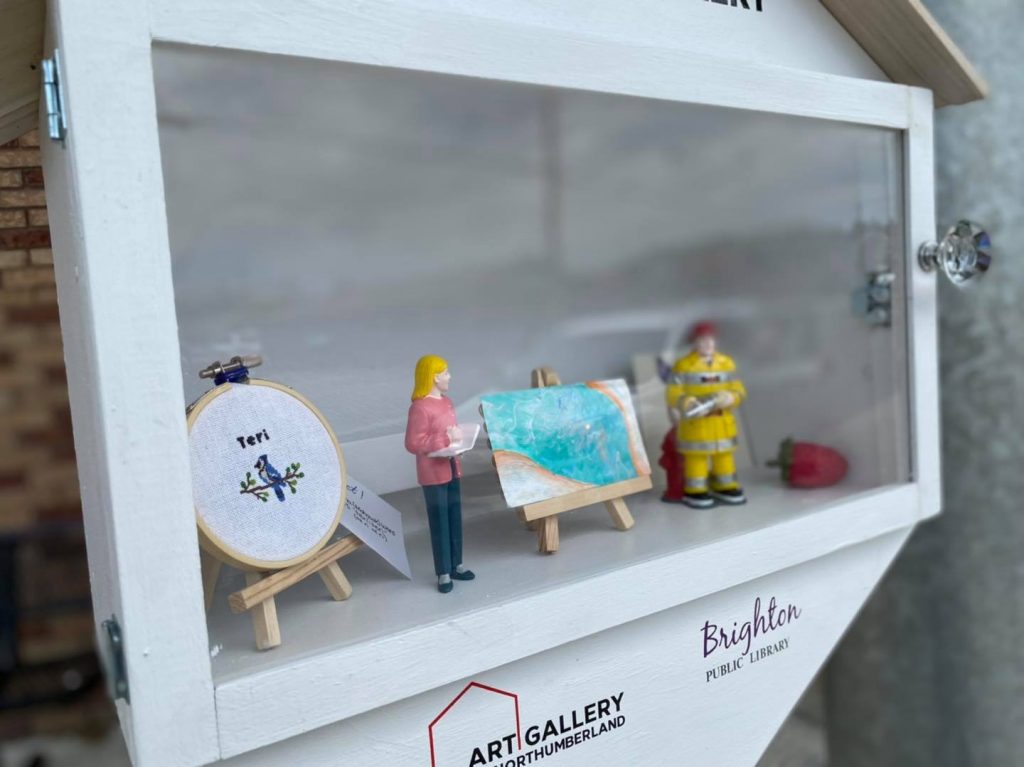
In my county this week, The Art Gallery of Northumberland launched a collaborative project with three area libraries. They riffed off the idea of “little libraries” that has been around for some time—and which we covered in a previous post—only this time they are offering visual art rather than books on a take-one-leave-one basis. What fun!

And then what should I find, but a poem about this very same idea only with poetry. How’s that for synchronicity in action! It’s called “Poetry Caching in Spring” by Linda Varsell Smith and was posted on poetscollective.org

Poetry Caching in Spring

A realtor box
with free poems staked in yard
awaits visitors

Some walkers pick up
poems, thinking house for sale
crumble, toss poems

Rain seeps in the box
dribbles down smudging pages
Sun will curdle them

Walkers sit on wall
resting, reading poems, put
in backpacks or hands

Yanked up by the stake
to mow lawn, rests on trash cans
near camellias

Hail pelts plastic
casing, white as snow, soft ping
droned out by traffic

Stick-on, raised letters
offer poetry to all
who come to pass by

And, here’s where synchronicity really goes into overdrive: “Poetry Caching in Spring” it is a 21-line poem written in a 21-line poetry form called an Ethnographic Haiku—a perfect form for our Summer 21 Poetry Contest.

Ethnographic Haiku

An ethnographic haiku poem is made up of 7 haiku, in the usual 5-7-5 syllable line format, but the subject of the whole poem (in the case of “Poetry Caching in the Spring”, it is the box of poetry) should have a relationship with the environment.

Additionally, the poet is required to evoke at least three of the five senses and each haiku should represent one day in a full week in the life of the subject. The form is titled and punctuation is optional. That’s quite a tall order, but Linda Varsell Smith certainly pulls it off beautifully in her poem.

I cannot verify who came up with this form, but the details for writing one appear in Syllables of Velvet, a book of poetic forms collected by Linda Varsell Smith who writes in her intro:

“I found these forms in handbooks and on the Internet. I have worked on playing with forms in four previous books dealing with forms. Cinqueries: is a book filled with cinquos and lanternes. Fibs and Other Truths showed the many variations of fibs. Poems That Count is a collection of many syllabic, metric and word counting forms and examples. Poems That Count Too is a further collection of counting forms with examples. Syllables of Velvet incorporates all the forms in the previous books plus many discoveries beyond. I wrote at least one example for over 300 of them and directions how to do many other forms.”

Distorted Diablo

I was further surprised to find another 21-line poetic form, created by Pat Simpson, called a Distorted Diablo.

This form plays, as its name suggests, with the number 666, commonly known as the biblical devil’s number. The distortion comes from flipping the central 6 upside down into a 9 to get the new number 696. These numbers now become the line form of the poem: a stanza of 6 lines, followed by a stanza of 9 lines and finishing with a second 6-line stanza for a total of 21 lines.

In addition, the sixain segments are both written with 6 syllables per line and the middle 9-line stanza has 9 syllables in each line. Rhyming is optional. My instinct if I were writing a Distorted Diablo would be to make my content devilish or distorted, but apparently subject matter is not prescribed.

Here is an example of a Distorted Diablo called “Ode to Volunteers.”

Summer 21 Poetry Contest

So that brings me to a reminder about our Writescape Summer 21 Poetry Contest.  The two forms above may tickle your muse, but poems can be any form you like. Just remember that the poem must be 21 lines long and evoke some aspect of the number 21 such as age of majority, or blackjack or 21 ways to… etc. We gave you lots of examples in the contest announcement blog. The contest is free to enter. Deadline is June 30 and the winner will be announced on July 21.

Full submission details here. We look forward to seeing your poem.

10 Books for kids by Indigenous writers

10 Books for kids by Indigenous writers

Following on from yesterday’s blog on resources for educating ourselves on Indigenous issues and perspectives, here is a list of children’s books and resources to share with the little people in your life. These suggestions came from Ruth’s daughter, Alexis, an Indigenous Studies teacher and an active ally. (It was hard to choose; there are so many wonderful titles out there. This is just a start.)


1.  Fatty Legs –  Christy Jordan-Fenton and Margaret Pokiak-Fenton, an inspiring memoir of Margaret Pokiak-Fenton’s time in residential school.

2. When I was Eight – Christy Jordan-Fenton and Margaret Pokiak-Fenton, this book is written to make Margaret Pokiak-Fenton’s memoir accessible for younger readers.

3.  The Water Walker – Joanne Robertson, a magical book that introduces children to how they can change the world by caring about our water. From Second Story Press, the book is available in a dual-language (Anishinaabemowin/Ojibwe and English) edition.

4. As Long as the River Flows – Larry Loyie (Oskiniko) and Constance Brissenden. A sensitive and evocative story of a Cree family’s last summer together before Larry (an award-winning author and playwright) was taken to residential school.

5.  I am not a Number – Jenny Kay Dupuis and Kathy Kacer. Beautifully illustrated, the story follows 8-year-old Irene at residential school. On her return home, her parents decide she and her brothers will not go back. From Second Story Press, the book is also in a dual-language edition (Nishnaabemwin (Ojibwe) Nbisiing dialect – English)

6. When We Were Alone – David A. Robertson. Robertson, a Swampy Cree author and graphic novelist wrote this book in response to the Truth and Reconciliation call to action for more curriculum resources. He saw a big gap for younger readers and wrote a beautiful story about strength and empowerment even when everything is taken away.

7. Bear For Breakfast / Makwa kidji kijebià wìsinyàn – Robert Munsch and Jay Odjick. Donovan wants to catch a bear for breakfast — but what does the bear want? Expect the unexpected from Robert Munsch and when he teams up with artist, writer and television producer from the Kitigan Zibi Anishinabe community, Jay Odjick, the images are kid-appealing. Scholastic publishes this title in English and Algonquin dual languages.

8. & 9. Shi-shi-etko and Shin-chi’s Canoe – Nicola I. Campbell- (these two are by far Alexis’ favourites, and they go together. A rendition of Shi-shi-etko  via film gives her goosebumps whenever she watches it.) To quote the first book: “Can you imagine a community without children? Can you imagine children without parents?”

10. Baseball Bats for Christmas – Michael Arvaarluk Kusugak. When a bunch of spindly trees are dropped off in Repulse Bay 1955 (present-day Naujaat, Nunavut) the kids aren’t sure what to do with these “sticking up” things. But then…

We know it’s 10 on the 10th, but we couldn’t help ourselves. We wanted to include these resources, too:

Illustration by Jeff Lemire

Secret Path – Songs by Gord Downie, illustrations by Jeff Lemire. Inspired by the tragic story of 12-year-old Chanie Wenjack’s 1966 journey home from residential school, the late Gord Downie of The Tragically Hip wrote 10 poems from Chaney’s perspective. Downie collaborated with music producers Kevin Drew and Dave Hamelin, and acclaimed graphic novelist and comic creator, Jeff Lemire, resulting in an award-winning 10-song album and an 88-page graphic novel by Lemire, both of which inspired The Secret Path, a television documentary. In the video, Downie’s words and Lemire’s illustrations bring to life Chanie Wenjack’s story along with many others who tried so hard to get home.

From the Royal Ontario Museum’s Indigenous Voices program, the ROM-at-Home series offers young people activities and insights into indigenous cultures in a fun and engaging video session:

Angels: 215

Angels: 215

Gwynn Scheltema

Today’s blog title is a small echo of the beautiful, sad poem written by Louise B. Halfe-Sky Dancer, our present Parliamentary Poet Laureate, on June 3, in the wake of the terrible findings in Kamloops BC in recent days, titled: Angels: 215 >, 1820 – 1979; “The Past is Always Our Present”

She ends her poem with these lines:

It is time to release 
This storm
That consumes all this nation.
Awasis, this spirit-light, these angels
Dance in the flame.
The bones
Will share their stories.
Listen. Act.
These children are ours.
Could be……………Yours.

Her poem brings sorrow and reflection to all of us, but it is her call to “Listen.” and “Act.” that speak to me. How do we listen?

We seek out the stories that are being told, and no matter how difficult, we hear them in all their sad detail. It’s time to face the truth; to educate ourselves and to respond accordingly.

Honour and remember

If you are saddened by the unmarked graves of 215 children found at Kamloops, realize first that this horror is only the tip of the proverbial iceberg. A visit to the Memorial Register of thousands of actual names of lost children at the website of the National Centre for Truth and Reconciliation brings home the enormity of this tragedy. Sadly, this list is not yet complete. More children still need to be found. But as NCTR says, “This register represents a starting place on our collective journey of honouring and remembering the children lost to the Residential Schools.”

Listen. Act.

TRC Report

A good place to start listening is with the Truth and Reconciliation Commission’s report. The Commission issued its final report on residential schools more than six years ago. Have you read it yet?

Historical photo of the Kamloops Indian Residential School, once the largest facility in the Canadian Indian Residential School system. Already known to have been the site of 51 student deaths, recent radar surveys have found evidence of 215 unmarked graves. PHOTO BY NATIONAL CENTRE FOR TRUTH AND RECONCILIATION

This report details the harsh mistreatment inflicted on Indigenous children at residential schools. Perhaps start with the section “Survivors Speak”. The stories here are not fiction; the stories here are not creative non-fiction; the stories here are the true oral stories from the people who experienced things firsthand. Honour that. Read them.

And then read the “Calls to Action”

Treaties and Land Agreements

For my province, Ontario, more than 40 treaties and other land agreements exist. These legal agreements set out the rights and responsibilities of First Nations and the provincial and federal governments.

The Ontario Provincial Government website offers information about these treaties, including some images and transcripts and maps. It is interesting to note that it also gives this disclaimer “Please note that this map has some limitations and is one of many ways to learn about treaties. Indigenous communities may have different understandings of the treaties than is represented here.”

So, perhaps watch these videos for that different perspective: Indigenous voices on treaties where Indigenous speakers share their knowledge about the importance of treaties, treaty relationships and rights in Ontario.

Indigenous Canada – Free course

One way to better understand treaties and the Indigenous perspective, is to sign up for this free 12-week Massive Open Online Course (MOOC) course from University of Alberta’s  Faculty of Native Studies. “Indigenous Canada” explores key issues facing Indigenous peoples today from an historical and critical perspective.

The course is designed for those who know little about these issues and want to know more. Topics covered include: The fur trade and other exchange relationships, land claims and environmental impacts, legal systems and rights, political conflicts and alliances, Indigenous political activism, and contemporary Indigenous life, art and its expressions.

Read Indigenous Literature

As writers, we all recognize the power of story. Give voice to that power by reading Indigenous authors. I cannot begin to give you an exhaustive list of books and story and poetry collections, but I can help with these links:

Other Media

If you prefer to listen rather than read, I’d recommend CBC Radio One’s weekly documentary program “Unreserved” that interviews and profiles prominent Indigenous people in Canada.

First Contact on TVO Season 1 is also an enlightening series. Six Canadians, all with stereotypical opinions about Indigenous Peoples, go on a 28-day journey exploring Indigenous Canada, challenging their perceptions and confronting their prejudices about a world they never imagined.

This great online exhibit through the National History Museum in Ottawa promotes oral stories, as well as the Creation Story:

And of course, what would our current lives be like without Zoom and Facebook seminars? Coming up Friday June 18 is a round table discussion on Indigenous Literature presented by Saskatchewan Ânskohk Writers’ Circle Inc. (SAWCI), in partnership with USask. They also have a great line-up for the fall.

A Writer’s Power Tool

A Writer’s Power Tool

Ruth E. Walker

A recent newscast featured a Saskatchewan couple who’ve been waiting for months to celebrate Christmas with their grandchildren. As the pandemic lockdown has eased in their region, and gatherings are now possible, they could celebrate together at last.

But they didn’t have to pull out the holiday trimmings. The holiday tree, adorned in lights and ornaments, and the carefully wrapped presents under that artificial tree have been waiting since December for restrictions to loosen and for family to gather.

What on earth could inspire a family to be ready for Christmas all this time? Day after pandemic day, looking at the reminder of what didn’t happen. The grandkids’ gifts unopened. The goofy animated décor gathering dust, still and silent. What kept them optimistic?

Hope

It is the saving grace of the human race. The thing that keeps many of us going when everything seems impossible, frightening or deadly. Hope.

John William Waterhouse

In Greek mythology, Pandora (meaning All Gifts) was created by Zeus’s order to punish mortals for receiving the gift of fire from Prometheus. Zeus designed Pandora to have insatiable curiosity and when he gives her a jar as a wedding gift, he tells her never to open it. Sure enough, she eventually can’t resist and the miseries and evils – greed, avarice, jealousy, hatred, cowardice, illnesses, pestilence – were all released.

Interestingly, ancient versions of this myth have all sorts of variations:

  • the jar was full of blessings, not evils
  • Zeus had two jars in Olympus, one with blessings and one with evils
  • Pandora’s husband, Epimetheus (meaning Afterthought), opened the jar, his name suggesting he learned from making mistakes like that one

Good with the bad

Not only did the ancients write various interpretations of the myth, over the centuries, translations and poetic license gave readers alterations to Pandora’s tale. In the version I learned as a child, the jar was a box like in Waterhouse’s painting and one thing remained inside: Hope. Hope begged to be released too and when released, gave all suffering mortals something to keep them going.

But is Hope a two-edged sword? Does it underpin all stories from the romantic to tragedies? Do readers hope for the lovers to finally find each other or hope that survivors will find the strength to carry on?

And what about our real lives? Hope surely underpins real lives, keeping us going when all is bleak. But sometimes Hope prolongs our agonies, offering something to sufferers that cannot be.

What drives your stories?

Just as we writers hope our work will find an audience, hope provides powerful motivation to characters in stories. And as we’ve suggested again and again, motivation drives your characters and keeps a forward momentum in your stories.

Your characters want to win the race, to learn the family secret, to escape from poverty, to slay the dragon and release the captives. And your readers are right there with them, cheering them on, hoping they achieve their goal. Unless, of course, you’ve not capitalized on the idea of motivation.

As you edit, look for motivation:

  • Make it clear in beginning chapters – what does your character want?
  • Keep it the driver of your main character – tie in reactions, choices, behaviour
  • Avoid motivation that makes no sense – unless it is key to creating a conflicted character

As your character grows emotionally (character arc) that motivation (want) can change and often does.

Winning the race becomes less important when she realizes the prize at the end is not worth leaving friends and family behind. Releasing the prisoners won’t succeed even if he slays the dragon unless he finds and defeats the dragon master.

Hope holds lots of power to motivate your characters. But you can motivate your characters through other powerful emotions: fear, longing, grief and so on. No matter the choice, don’t lose sight of it as you write and look for its presence as you edit.

Speaking of Hope:

Gwynn and I hope you don’t miss our summer contest, closing June 30th. It’s a fun way to imagine Summer ’21, the most hopeful summer in a long time.


Celebrate with us the Summer of ’21 and create a poem in any form as long as it has 21 lines. There will be prizes, bragging rights and the top 3 entries will be published right here over the summer.

Visit the post to get all the details and a boatload of inspiration and ideas — 21 of them, in fact. Entries are already coming in and we hope to read yours soon.