Visual Poetry

Visual Poetry

Gwynn Scheltema

Coming out of an oral tradition, poetry leans heavily on sound and syntax to carry its message and to make it memorable. Poetry also paints word pictures through images, and creates sound patterns in your head through meter, rhyme and other sonic devices.

But how poetry is presented on the page plays a part too. Mass access to printed poetry on the page is fairly new in historical terms, but that transition opened up a whole new—or should I say additional— way of engaging with poetry and new visual forms.

Poetry in shapes

Most of us were introduced to concrete poetry in elementary school. We were asked to “make shapes” with the words on the page so that the shape gave a clue to the meaning.

Although the term “concrete poetry” is a modern term from the days of ee cummings and Ezra Pound, the concept of shaping the visual form of the poem to enhance the meaning goes way back.  In Alexandria copies survive from the 3rd and 2nd centuries BC. Simmias of Rhodes wrote a poem in the shape of an egg, and Theocritus shaped his poem like panpipes. In 1633, George Herbert wrote (among others) “Easter Wings” in the shape of angel’s wings.

This image has an empty alt attribute; its file name is easter-wings.jpg

Here a 1966 poem by John Hollander, “Swan and Shadow” shows how complex and rigid the form can be, and “My Lolipop” written by an elementary student shows how playful and free it can be.

Blackout poetry

Shape is also important as a statement when poetry and visual art collaborate. Blackout poetry is an example of this—and lots of fun to do.

In this form of “found poetry”, take an existing page of text, a newspaper article, a pamphlet, a performance program, a letter, the page of an old book, or even an existing poem. Identify anchor words within the text and then “blackout” the remaining words with a marker, leaving a new poetic message on the page. If the message can interact with the original text, all the better.

Of course, although the original redaction method popularized by Austin Kleon, involved using a black marker and literally blacking out text, the form has evolved now to a much wider collaboration of visual art and text. Who knows what might come next, especially in our animated digital world.

Erasure

This form of visual poetry is similar to blackout poetry, except that not just words, but even single letters are retained and left in their original place, but the rest is “erased”.

The result is a visually confusing form that forces the reader to piece the remnants together as they read and allows time to dwell on the message of the new poem. It plays with white space, allowing meaning to bubble up as much from the negative spaces as from the words. Like all found poetry, there are also endless deconstructive possibilities if the texts used are well-known or weighty in terms of issues or political or religious texts.

Haiga

Another form of poetry/visual art collaboration is the Japanese form “haiga”. In this form, a haiku interacts with a painting. The aim is not to present the same message, but to juxtapose or contradict, or create a synergy where one expands the other. Haiga enriches the already inherent aspect of the haiku tradition where the last line plays one idea or image against another.

Here is an example from the famous poet Matsuo Bashō with an image by Kawanabe Kyōsa :

on a withered branch
a crow is perched
an autumn evening

枯朶に  烏のとまりけり  秋の暮

kare eda ni
karasu no tomarikeri
aki no kure

The image was painted by Kawanabe Kyōsa (1831 – 1889) but Bashō’s poem was written in 1680, when he was living in Edo (Tokyo) and teaching poetry. How the painting interacts with the haiku is explained beautifully here.  

Graphic Poetry

In Western culture, poetry has often been illustrated, especially in children’s anthologies. Graphic poetry goes one step further, using visual images to bring the poem to life visually as an aid to understanding. Dr. Seuss immediately comes to mind.

This form is not limited to poetry for children, however. Several of Richard H. Fay’s poems in Abandoned Towers are good representatives of graphic poetry.

Motion Poems

For me, one of the most exciting new ways to present poems, is what is being called a “motion poem” These poetry films came out of a collaboration between filmmaker Angella Kassube and poet Todd Boss in 2008.  Their company Motionpoems, pairs video artists with poets to produces films, multimedia installations, pop-up programs, and television documentaries.  The process always beings with the poem.  Watch a sample at their website.

Last word

As someone who loves to dabble with visual art as much as write poetry, I hope the collaboration of poetry and all things visual will continue. I still cherish the experience of sitting quietly with a poem on the page, but opening other avenues for experiencing poetry can only be a good thing. A wider way of sharing the poetic word.

And to this end, I decided to give it a try. Here is my first feeble attempt at reading and illustrating one of my poems, titled Un/natural World.

Out of Sight

Out of Sight

Ruth E. Walker

Sight, as a sense, is what the eye can see. You open your eyes and look in front of you and you see exactly what is there. Ah, but dear writer, as you see the words in this post, there is a tiny voice whispering in the back of your head and it is saying: But…but…but…

Of course, what you see is, in fact, there. But – and there it is – but what you see and how you see it depends on many factors. And if all your stories are full of factual descriptions of what is seen, you are not using this sense to your best advantage.

This post is not about description; rather, it’s an exploration of how to use the sense of sight to bring layers and interest into your writing.

To begin, our ability to see is found in the eye’s ability to reflect all the light in our field of vision. For example, if a gorgeous red cardinal sat outside my office window, I see that bird because its body reflects the existing light. My brain “sees” what reaches my eye’s retina then travels through an electronic signal to my brain where it interprets the signal to be an image.

All sight is a form of interpretation

Miriam-Webster definition reminds us that sight is what we construct into a representation of the position, shape, brightness, and usually color of objects.

How we construct the interpretation of what we see is shaped by an accumulation of our individual experiences from infancy to the present. Think about that when your characters act and react to their surroundings.

  • How do they truly “see” their world?
  • What colours, shapes, shadows and light would they notice first?
  • And does that change as their experiences in the story accumulate?

Perception is all

Remember that red cardinal? Could it be a robin? What if my family always said those all-red cardinals were male robins and the ones with the red breasts were female robins? The family belief would go on to ingrain a kind of logic – why do they sound different? “Because males sing a different sound from the females”, and so on.

Of course, that’s not what I grew up thinking. But – and there it is again – but I might have.

In the Young Adult novel, The Giver, a community creates a peaceful and stress-free life for all citizens by removing all emotions and creative stimulation. No one sees in colour in this bland and predictable place.

Until 12-year-old Jacob begins to have flashes of colour and discovers there is so much he and the others have been missing. This sets him off on an incredible journey of discovery.

“I” witness accounts

With our sight, we see what we see and, accordingly, should all be seeing the same thing even if we might call it something different. Except when we are affected physically (like with Jacob’s story) or emotionally, like when high levels of stress and the release of adrenaline puts pressure on a person’s vision resulting in blurred vision. Or skewed vision. Or fragments of vision. Or a vision of something that isn’t even present.

Consider an accident scene and the statements of a number of witnesses. They all “saw” the same thing but – here is that whisper again – but they don’t necessarily see the same thing in the same way.

It used to be that criminal cases were deemed to be watertight if the prosecution had an eyewitness to the crime, a believable person who could identify the criminal. But – yup, once more – but, we humans are fallible and what we are certain we “saw with out own eyes” has increasingly been of less value without lots of corroborating evidence.

Add into the mix the explosion of video evidence with more and more cell phones and CCTV surveillance in public places. A reliance on individual witness accounts is even more problematic.

But – are you tired of that one yet? – but grainy images, unclear shadows and the possibility of “doctoring” those images add the possibility of errors of perception — or even just the power of suggestion to change what is “seen”. And this suggests great ideas for writers, especially those who write thrillers and mysteries.

Losing sight

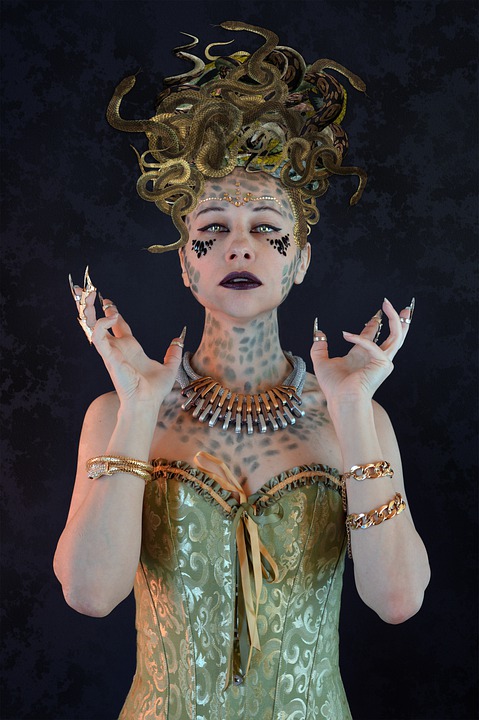
Finally, let’s consider the possibilities when sight is altered or has the power to alter someone’s life. Many myths, fables and stories include strange abilities with sight or complete blindness. In Greek mythology, to look upon the face of the snake-haired Medusa would turn you to stone.

Sight has also long been connected to our hearts. From the Greek myth of Odysseus and Penelope to Shakespeare’s Romeo and Juliet and beyond, love at first sight is a recurring theme throughout the ages of storytelling. In more modern times, sight continues to take centre stage in fiction. Even in comics, Superman’s x-ray vision proves useful to battle evildoers.

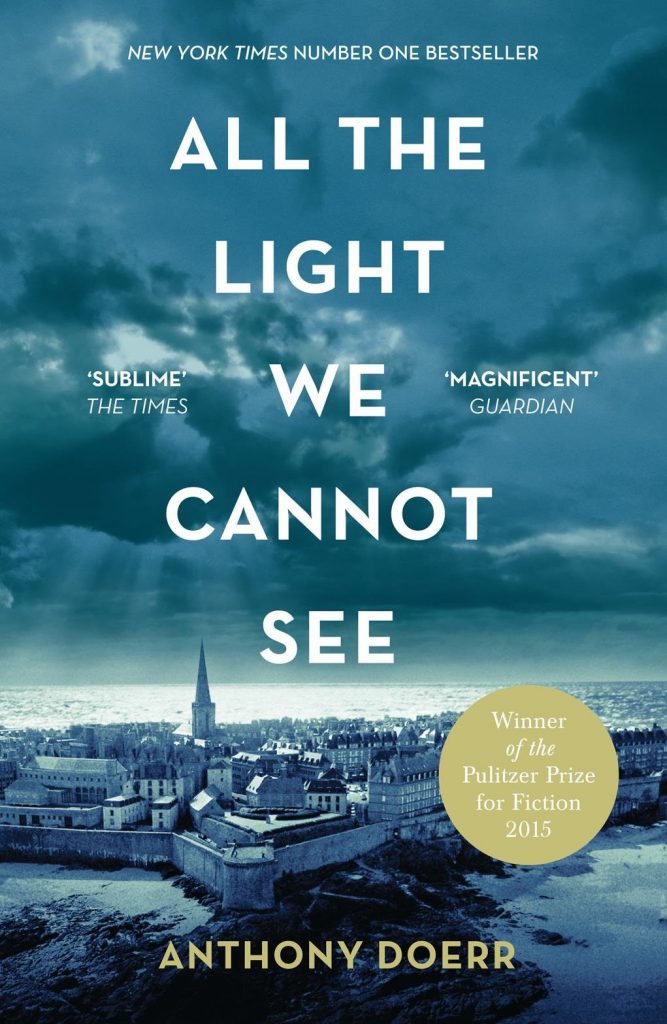
The absence of sight is key to some spectacular fiction. Portuguese author José Saramago’s novel Blindness explores what happens when a virus renders a population sightless. In the Pulitzer Prize-winning novel All the Light We Cannot See, a young blind girl in WWII occupied France and a German boy soldier connect through secret broadcasts of her reading from a braille copy of a Jules Verne novel.

Can you see the possibilities?

There are many more examples of sight as a tool for writing. The inability to “see” can be a metaphor for other kinds of “blindness.” An unreliable narrator may not see the truth around her but a character with limited vision might be the first one to see what needs to be done.

Playing with sight and perception can be a powerful tool in your toolkit. Discover where you might bring it into your story. Try using the “but, what if” approach to perception or view, and maybe you’ll see what difference it can make in a scene or a character.

Tasting Poetry

Tasting Poetry

Gwynn Scheltema

Taste is an involving sense, an immediate sense, a memory triggering sense, and because it revolves around something we all do—eat—we can use it in our writing to connect viscerally with the reader.

Everything Ruth talked about in last week’s post about taste applies to poetry as much as it does to fiction, so in this post, I’m going to share with you how some poets have used food and meals and the rituals around food to draw the reader into their poems.

Trigger emotions

We all have tastes we like and those we don’t: comfort tastes, bad tastes, tastes that make us fearful, tastes that remind us of childhood. Each of these has emotions attached: joy, fear, disgust, nostalgia, longing… The simple detail of food can concentrate the emotion in a poem.

In these two examples, notice the difference in emotions. “Edible Child” is full of love and gentleness; The excerpt from “Feast Days” is lonely and sad. Both draw on our knowledge of the foods mentioned and the state of that food. In the first poem, the tastes are good and sweet and fresh, like the child. In the second, the food is rotting and unappetizing.

EDIBLE CHILD
by Elisabeth Rowe

Sleeping child
I bend to breathe your
melon-scented infant skin,
I taste the soft bloom
on your plum-skin arms,
tickle my nose on the hairs
of your gooseberry legs,
nibble your fillet toes.

Edible child
once upon a time
I heard my mother’s hunger:

I love you so much
I could eat you all up.

Excerpt from FEAST DAYS
by
Annie Dillard

The apples in the cellar
are black, and dying inside their skins.
They pray all night in their bins,
but nobody listens;
they will be neither food nor trees.

Outside the norm

General opinion is often a fickle thing. People who don’t follow the norms tend to be noticed, sometimes mistrusted, or pitied or disliked: eating meat raw, dumpster diving or dumping a full plate of food. Images of baking apple pie or cooking Sunday roast point to family and security and love—unless you create a tension by turning that expectation on its head.

Excerpt from CHRISTMAS EVE: MY MOTHER DRESSING
By
Toi Derricotte

Sitting on the stool at the mirror,
she applied a peachy foundation that seemed to hold her down, to trap her;
as if we never would have noticed what flew among us unless it was
weighted and bound in its mask.

Excerpt from RETROSPECT IN THE KITCHEN
By
Maxine Kumin

After the funeral I pick
forty pounds of plums from your tree…
…stand at midnight…
putting some raveled things
unsaid between us into the boiling pot
of cloves, cinnamon, sugar:

Loves’s royal colour
The burst purple fruit bob up.

The sensory and the sensual

Ah yes! The senses and sex, an inevitable pairing. The hot and the cold.

HONEY
By Gwynn Scheltema

I want to dip you in honey
all stem and skin and juice
dripping
I want to press your flesh to my lips
feel you break in my mouth
like sun through rain

THIS IS JUST TO SAY
By
William Carlos Williams 

I have eaten
the plums
that were in
the icebox

and which
you were probably
saving
for breakfast

Forgive me
they were delicious
so sweet
and so cold

Identity

Excerpt from I’M MEXICAN
By
J Arceo

I’m Mexican.

No, I’m not spicy. Or feisty. Or exotic.

I’m just not bland.

Because my culture is too rich.
Because my hips give in to the beats of a drum.
And my tongue rolls with passion.
Because I come from vibrant colours
And full skirts.
And intricate patterns in my gene pool…

…Because I come from women with rifles and food that
excites you. And the very hands that harvest the land,
hold the very hearts that harvested me.

Meals

Excerpt from EATING TOGETHER
By 
Li-Young Lee

In the steamer is the trout   
seasoned with slivers of ginger,
two sprigs of green onion, and sesame oil.   
We shall eat it with rice for lunch,   
brothers, sister, my mother who will   
taste the sweetest meat of the head,   
holding it between her fingers   
deftly, the way my father did   
weeks ago.

MUTTON
By
Jonathan Swift

Gently stir and blow the fire,
Lay the mutton down to roast,
Dress it quickly, I desire,
In the dripping put a toast,
That I hunger may remove —
Mutton is the meat I love.
On the dresser see it lie;
Oh, the charming white and red;
Finer meat ne’er met the eye,
On the sweetest grass it fed:
Let the jack go swiftly round,
Let me have it nice and brown’d.
On the table spread the cloth,
Let the knives be sharp and clean,
Pickles get and salad both,
Let them each be fresh and green.
With small beer, good ale and wine,
Oh ye gods! how I shall dine.

Last Word

And to end, here is a fun poem calling you to action:

HOW TO EAT A POEM
by Eve Merriam

Don’t be polite.
Bite in.
Pick it up with your fingers and lick the juice that

may run down your chin.
It is ready and ripe now, whenever you are.

You do not need a knife or fork or spoon
or plate or napkin or tablecloth.

For there is no core
or stem
or rind
or pit
or seed
or skin
to throw away.

Writing with Taste

Writing with Taste

Ruth E. Walker

In today’s dive into one of the five senses, this one is more complicated than I’d given thought to. I’ll try to be tasteful, but truly our mouths hold both the good, the bad and, well, the ugly. Understanding how the sense of taste works can help you with developing your stories and your characters. But first, let’s take a quick trip over the tongue.

Number five is magical

Just as there are five basic senses (sight, sound, touch, smell and taste) there are five basic tastes: salty, sweet, sour, bitter and umami. That last one, umami, was new to me and science had only identified it during the 1980s. It’s a Japanese word meaning “a pleasant savory taste.” Most often associated with meats, umami helps us recognize amino acids. Elements of umami are found in broths and gravies, cheese, mushrooms, tomatoes and soya sauce.

Most of us know our bodies have taste receptors on our tongue. There are plenty of places to research about those receptors if you want a deeper dive. For example, did you know that those receptors, or taste buds, are also located on our palate, our cheeks, the upper part of our esophagus? As food travels from the tip of the tongue and to the back of our throats, we are tasting. So even if the tongue is damaged, we are still able to taste.

That looks yummy!

Unlike sight, taste is based on chemical reactions in our body. But is it just the flavour of things that make up taste? My dear friend and colleague, Gwynn, says “We eat with our eyes” and I agree. A gorgeous plate arranged with brilliant colours and diverse textures (leafy salads, ripe berries, tomatoes, rainbow peppers) is far more appetizing than a bowl of gluey grey mash (think 9-days-old porridge here.) But you just have to take a big bite out of a slender red chili pepper to understand your eyes aren’t the only factor (even as they water from the extreme heat of that bite.)

Imagine a world without flavours. Where bland is the norm and spices are heresy. Or where nourishment is delivered through injection, directly into the stomach or handed out in pill form, ingested ten times a day. Where liquid arrives through osmosis, taken in only when the body is immersed in water.

Some of this is the stuff of science fiction and some of it, like tube feeding, is a reality of some people. And others have lost the ability to taste through a brain disfunction or injury. Remember that as you develop your plots and your characters: the world is not simply as you know it.

Add more spice

We also eat with our nose. How about when you have a stuffed-up nose from a cold? We seem to lose some of our sense of taste. But we don’t really; we lose the ability to smell and that sense works in partnership with our tastebuds. Inhale the aroma first and then we taste the deliciousness. Without smell, taste loses a lot of its punch.

If everything in your stories is mint chewing gum, apple pie and roast beef, you might want to switch things up a bit. Or completely upend the ordinary with some extraordinary.

Remember Harry Potter and those Every Flavour Jelly Beans? From cotton candy to spinach to soap to vomit. OMG – that caught our attention. And the attention of marketing geniuses – you can order that delicious (?) every-flavour candy through Amazon. Of course.

Challenge the recipe of ordinary

Let’s not forget that taste is a matter of, well, taste. Individual taste from culture and experience. And, of course, environmental and physical effects. I didn’t like the pervasive smell of curry in our old apartment building as a teenager. But oh boy, do I love it now. Some of my family and friends cannot tolerate dairy. And some are pescatarian, some are vegetarian and some are vegan. Diets – and therefore, taste – can be a matter of choice or a matter of health, or both.

So what about your characters? Can a meat lover learn to leave it all behind and delight in soy burgers? Does a vegetarian “cheat” in secret? Tastes in food can create complex situations and complicated people.

Taste can form an important part of character arc. Stereotypes and bigotry can melt away when the power of new flavours and foods is unstoppable. The novels Chocolat and The Hundred Foot Journey are delightful explorations of how the gulf between cultures and beliefs can be filled in with a range of life-changing tastes.

And, of course, in Roald Dahl’s Charlie and the Chocolate Factory, we learn that only the child who is “honest and kind and brave and true” is able to win the ultimate prize.

Writerly taste test

Our world is full of explosive and amazing flavours. If you want to make sure your readers are experiencing a diverse palate of taste, considering expanding your own horizons. And, in these days of limited indoor dining options, you can help support local restaurants through takeout.

If your Chinese food go-to is standard fare: chicken balls and chow mein, check out the specialty items. What about trying Korean, Moroccan, Indonesian, Thai? Have you tasted shawarma? Greek dolmades? Scared to try sushi? C’mon writer, step outside the flavour box and dip your tongue into tastes you’ve never tried.

The internet is awash in recipes you can engage your taste buds with. Notice how your body reacts to the different tastes. And notice what other senses kick in. As we’ve often pointed out — our senses work together to give us a full body experience. Reflect that in your writing.

Try fun experiments: put a pinch of salt on one side of your tongue and a pinch of sugar on the opposite side. Pay attention to your response. Then rinse your mouth with water and put a pinch of salt and sugar together and see how your taste buds react. Is sugar dominant or is salt?

If you stay aware of the importance of the power of taste, you can apply that knowledge to stories and the characters within them. And that is a big plus for your readers.

10 Senses Writers Should Know

10 Senses Writers Should Know

In our regular Wednesday Top Drawer blogs, we been exploring the five senses which are so helpful when a writer wants to immerse readers in their stories. Sound, taste, touch, smell and sight are all basic tools in any storyteller’s toolkit.

In today’s 10 on the 10th, we’re offering up a few of the other senses that exist for human beings and which will be just as useful in your toolkit as you write and edit your work.

1. Original Five This is our go-to when working with writers in editing and workshops. It’s vital that all writers are conscious of the value of the senses in stirring connections for readers. The constant in writing is sight – it’s obvious because how else can you get readers to “see” what’s happening. But if you want your readers to feel character emotions, to recognize mood and tone, and to immerse themselves in the story instead of hovering above, successful writers use the other four basic senses.

But read on to discover nine other senses the complex human body has to contend with.

2. Proprioception.  This is one sense you don’t really think about. Let’s test it: Go ahead. Close your eyes. Now touch your nose.

Your body uses three main things that help it with proprioception – skin, muscles and joints. These tell us where our body parts are in relation to the rest of us. With your eyes closed, you can find your nose with your finger, scratch an itch on your big toe, or clap your hands together because proprioception tells you where your arms, legs and head are positioned.

But what if you have a character whose proprioception is not working well? Bruises, bumps, trips and falls would be far more common.

3. Nociception: Ouch! This sense lets you know when you are in pain. That sensory system carries three main receptors: the skin, bones and joints, and your organs. When we feel pain, we recognize it. The greater the pain, the more it takes up our attention. But when it’s over, the intensity of it leaves us, fades and in some cases, is completely forgotten.

When you’re writing a scene that involves great pain, you have to recall moments in your life when you experienced it. Remember how your body felt – a cut on the skin is different from a twist of an ankle, smack against the skull from a baseball, or spasm in the gut from food poisoning.

4. Time: Oh my – have we been gone that long?Connected to our brain functions, time is being debated by science over whether this is a sense at all. They do agree, however, that our ability to sense time is stronger in younger people. But overall, science recognizes that humans are surprisingly accurate with measuring time. Our brains process time through the cerebral cortex, cerebellum and basal ganglia found deep in the brain.

So imagine what might happen to a world that has a shift in time, a shutdown of existence for a few seconds and then, back online. How would that mess with our sense of time? What would our world look like now?

5. Thermoception (external): Time to turn on the furnace, dear. This sense is our body’s ability to notice external temperatures.

6. Thermoception (internal): Can you take my temp because I feel like I’m burning up? This sense is our body’s ability to notice our body’s temperature.

Numbers 5 and 6 have the same name but they are two distinct senses. Our bodies have two separate hot & cold receptors, but we also have is a different type of thermoceptor in our brains to detect temperature. These thermoceptors in the brain are used for monitoring internal body temperature.

So what happens if one thermoceptor (say, the external) goes wonky. The body would feel internal heat but external heat would not exist? Wow. Talk about conflict in your writing.

7. Equilibrioception:Whoa! Where is up and where is down? Anyone who’s ever had vertigo, will know immediately how this unbalanced moment feels. The sense that let’s you keep your balance also is the sense that recognizes when things speed up and change direction. Astronauts in gravity-free space notice this sense the hard way when they return to Earth and, suddenly, gravity is back with a bang.

Buried inside your inner ears, this sensory system is the vestibular labyrinthine system. When you lose your balance, this system is where the search for balance is taking place. So without this system, a body cannot sense what is up and what is down. Besides the nausea, people with vertigo often shift into fear – the unknown takes over and distress sets in. Fortunately, for most, it’s a temporary condition. But when it’s not…

8. Magnetoreception Haven’t you always wondered how birds know to fly north in the spring and vice versa in the fall? Besides the fact that the temperature is changing, they know their direction from their ability to detect Earth’s magnetic field. It sets them off in the right direction each time.

We are not like birds, so we don’t have much in the way of magnetoreception. But it is there – experiments show we’re not entirely without a sense of north and south. There’s a theory that ferric iron deposits in our noses (our noses? really?) may be part of our sense of the magnetic field. It might be worthwhile to research magnetic implants. Some people implant magnets in their fingertips to gain sensory perception of magnetic fields. Now, THAT’S an interesting character, don’t you think?

9. Synesthesia:This sensory phenomenon is experienced by about 3% of the population, and most often people who experience it are born with it or develop it in early childhood. Synesthetes have a neurological condition in which information meant to stimulate one sense also stimulates another at the same time. I see numbers and words in colour; my granddaughter asked me to “turn down the music” on a painting I was doing.

Could a character who hears voices be a synesthete and not suffering from delusions as others think he is? Perhaps for the child who refuses to eat, it’s not disobedience, but the fact that this plate of food tastes “pointy” and hurts.

10. Extrasensory perception (aka – ESP or sixth sense):From mixed up senses in synesthesia to senses beyond the physical, ESP is sensing through the mind. Scientifically we don’t know much about the how and why of this sense, (yet) but many of us have experienced it or known someone who has.

It occurs often enough that we have many names for it: intuition, telepathy, psychometry, insight, clairvoyance, visions. That sense of retrocognition – knowing what went before, we often call déjà vu; precognition – knowing what is about to happen can be experienced in something as simple as knowing who is calling when the phone rings.

Literature is alive with this sense, from people who see and interact with ghosts to prophets or wise sages declaring destinies. But you can include it in small ways too, the chill some-one feels when a particular character approaches, or the dog who growls at a new visitor.

Rhyme Time

Rhyme Time

Gwynn Scheltema

So here we are in Poetry Month once again and Ruth is busy doing a series on the senses, so I thought I’d marry up with that and write a poetry-based blog that speaks to last week’s blog, Can you Hear Me?  Specifically I thought I’d speak to the often heard comment: “Why doesn’t poetry rhyme anymore?”

When someone says that, they are usually referencing the kind of recognizable rhyme we think of associated with Hallmark verse or Robert William Service’s The Cremation of Sam McGee.  [no disparaging here, just identification]. Of course, the debate over the merits of “traditional rhyming verse” versus “free verse” continues with no resolution in sight, but given the myriad aspects associated with poetry, it’s interesting that that debate usually centers around rhyme or the lack thereof.

The truth is, free verse is alive with rhyme. All kinds of different rhyme. Let’s take a look.

Traditional rhyme

Rhyme is based on an identity of sound between words or verse-lines, “sound echoes” if you will. Traditional verse relies largely on end rhyme or external rhyme – placing rhyming words at the end of a line:

Lets take the first few lines of Robert Frost‘s famous poem, “Neither Out Far Nor In Deep.”
The people along the sand
All turn and look one way.
They turn their back on the land.
They look at the sea all day.

As long as it takes to pass
A ship keeps raising its hull;
The wetter ground like glass
Reflects a standing gull.

In traditional verse forms, the end rhyme is usually organized into rhyme schemes. The rhyme scheme in excerpt above is ababcdcd.

Anything but end rhyme… 

Now compare that with these lines from a “free verse” poem, The Anniversary”, by American poet Ai:

…I’m not afraid of the blade ninja-877220_640
you’ve just pointed at my head.
If I were dead, you could take the boy, ….

There are no end rhymes here, but there is plenty of rhyme nonetheless.  In the first line we see an example (afraid; blade) of internal rhyme – rhyme that occurs within a verse line. As in a lot of free verse, rhyme also occurs from line to line, just not necessarily at the end. (head/dead).

Rhyme, rhyme rhyme….

These are perfect, strict, full, or pure rhymes– the last fully accentuated vowel and end consonant are identical. Be aware that we are talking sound here, not spelling. – cat/hat; tree/bee; fool/mule; tough/huff.

hands-1345059_640Perfect rhyme can be further divided: masculine rhyme, where one final stressed syllable rhymes (sang/rang), and feminine rhyme, where at least two syllables rhyme and the final syllable is not stressed (mo-ther/bro-ther; com-par-i-son/gar-ri-son).

Additionally, Ai’s poem contains slant rhyme (also known as off rhyme, near rhyme, imperfect rhyme or half rhyme) – words whose sounds are closely related but not identical. If the poet plays with consonants at the beginning of words, that’s alliteration; at the end of words, it is called consonance. If the poet plays with similar vowel sounds, it is known as assonance. Blade and head at the end of the first and second lines have the same end consonant sound, although they have different vowel sounds. Other slant rhymes would be bend/hand; home/same; trophy/daffy; fellow/fallow; kind/conned.

Rhyming choices don’t end there. Eye rhyme, for instance, plays with sight, not sound: two words that look like they ought to rhyme, but don’t. (love/move; lull/full; though/cough).

Gwendolyn Brooks’ poem, “We Real Cool”, is chock full of rhyme and other sonic devices:graffiti-8391__180

We real cool. We
Left school. We
Lurk late. We
Strike straight. We
Sing sin. We
Thin gin. We
Jazz June. We
Die soon.

I’m sure you’ve already found internal rhyme (thin/gin); and slant rhyme (real/cool). There’s also assonance (sing/sin), alliteration (lurk/late), and consonance (real/cool) and repetition (We). This piece also has para rhyme, or rich consonance, that uses consonant blends and the order of consonants to create sound echoes. (left/late; strike/straight; jazz/die-s).

Conventional verse was primarily rooted in the oral tradition, and rhyme helped us remember the lines. Free verse is largely a written medium, appreciated visually as well as through sound.

Rhyme creates emphasis and structural unity, and draws attention to the relationship between words and thoughts. In Brook’s poem, notice how the absence of repetition (We) in the last line emphasizes the thought that their lives will be truncated too. Good rhyme goes beyond the obvious.

I love rhyme, but end rhyme is my least favourite. In many ways I prefer to discover the patterns and links as I read. When used effectively, I believe rhyme adds to the sensory impact of poetry by creating a pleasing network of related “sound echoes”.

Ragged Company

Ragged Company

Today we invite guest blogger, poet Kathryn MacDonald, to share some thoughts on Ragged Company by Richard Wagamese and his take on how everyone has a story to tell. Kathryn (Kate) reviews books and poetry collections and also blogs on poetry and related topics at her website kathrynmacdonald.com where today’s blog first appeared.

Guest blogger: Kathryn MacDonald

Ragged Company by Richard Wagamese

…the day that’s all around you, is inside you too, and you think that it’s a perfect fit. But you go outside and you walk in your woe. You take it to the streets or the fields or wherever and you walk in it.

This is what you do with yearning.

A book is powerful when it captures emotion, when it stirs memory buried so deep you’re surprised when it surfaces. Ragged Company by the late Ojibway author Richard Wagamese is a powerful story.

The memory Wagamese stirred in me is rooted in a downtown neighbourhood of Ottawa around 25 years ago. Every morning as I walked the few blocks to my office along the river, I passed a man sitting on a worn grey blanket, his back to a wall. In winter, icy wind tunneled through the street. In summer, dust and debris blew relentlessly. I respected his diligence. Some mornings—not every morning—I dropped change into his hat, but whether I did or not, we nodded. Gradually over time, I think we looked for each other.

One morning, he beckoned me to squat down as he unfolded a newspaper. There on his lap was a feather. “A peregrine feather,” he told me. A man had found it—a pair were nesting high on one of the city’s hotel towers—and had given it to him. A hawk feather. A simple, thoughtful act. A smile crinkled his eyes. I felt deeply honoured to be sharing his joy.

A Hard Story

Ragged Company is a hard story told in stark language through the voices of five narrators—four “rounders” of the streets and one “Straight John.” Everyone has a story, and none are as soft as mine. One of the characters, One For the Dead (they each have street names), explains to the “Straight John” the importance stories play in our lives:

“We’re all storytellers, Granite,” I said. “From the moment we’re graced with the beginnings of language, we become storytellers. Kids, the first thing they do when they learn to talk is tell you all about what they’re doing, what they’re seeing. They tell you stories about their little lives. Us, too. When we get together after not seeing each other for a while, the first thing we do is tell each other a story about what we’ve been up to. What we’ve seen, what we did, what we felt and went through. Guess we kinda can’t help ourselves that way. It’s who we are.

I won’t go into the plot line of Ragged Company, you can check the cover copy for that, but the themes of loss and yearning and the importance of friendship and respect are particularly interesting as explored by Wagamese.

Although Granite is a retired journalist who knows something about stories, he learns more about others and about himself. He comes to realize a truth:

Beggary. It’s not the sole property of the street people or the ill defined. It’s part of all of us, part of everyone who has ever suffered loss. A handout. It meant something more suddenly. It meant more than the image and the idea of a dirty, wrinkled, weakened hand stretched outward to accept nickels and dimes. It meant every hand extended across the galaxy of separation that exists between all of us.

This is a story about loss of culture, loss of family, loss of love, and loss of self. It is also a story about finding those things within and through the company of others. It is course and tender, brutal and poetic. The sixth narrator—perhaps the voice of Wagamese—is reflective and appears sparingly in offset italic type. It is this voice that introduced the novel and the thread of movies that runs throughout creating insight, magical, empathetic insight.

For the writers among us:

  1. Movies become open doorways to understanding unspoken realities and dreams, catalysts for feeling and for discussion among the unlikely friendships. Whether you write prose or poetry, think about how you open windows and doors for your characters and readers?
  2. We write our myths and legends into our work, sometimes directly as Wagamese does with Ojibway stories, and sometimes subtly written between the lines. Think about your awareness of the stories layered in your writing and what they add to (or distract from) your theme.

Meet Kathryn MacDonald

Photo by Alber Hernandez, Cuba

Kathryn’s poems have appeared in literary journals in Canada, the U.S., Ireland, and England. Her poem “Duty / Deon” won Arc Award of Awesomeness (January 2021).  “Seduction” was shortlisted for the Freefall Annual Poetry Contest edited by Gary Barwin. “Seduction” was published in Freefall (Fall 2020). She has poems forthcoming in The Beauty of Being Elsewhere, an anthology edited by John B. Lee. Her collection, published in 2011, is titled A Breeze You Whisper.

Scent to Engage

Scent to Engage

Ruth E. Walker

The other day, I was in the spare room, organizing some bedding when I brushed up against the jewellery armoire that belonged to my mother-in-law. It’s a treasure trove of costume jewellery – some high-end, some vintage and some just-fun pieces. Since her death in 2005, we’ve been slowly working through a lot of her belongings. Some were easy to move along. Some, like this cherry wood oversized chest still has a hold on me.

As I brushed past it, the front door popped open. Immediately, I was swept into a maelstrom of memories. It wasn’t the jangle of chains and beads that hung on the inside of the door. Nor was it the turquoises and greens and brilliant blues of those assorted beads. None of that.

It was the smell, the scent of her favourite perfume still clinging like flowering vines to each and every piece in there. After more than 15 years, I could hear her voice, her laugh, the whoosh of breath as she would collapse into a chair. It reminded me of the incredible of power that the senses, and in particular, the sense of smell, has for us human beings.

A writer’s power tool

Anyone who has taken a Writescape workshop, attended a Writescape retreat or received a substantive Writescape edit will have heard or seen how we emphasize the five senses in all forms of writing. We call it a power tool in all writers’ kits of technique and craft. Beyond sight – writers need to engage readers’ senses: taste, touch, sound…and the most powerful one? Yeah. You know it, don’t you. Smell.

Smell is the most evocative sense for triggering memories and connections. I suspect it has something to do with our hardwiring from when we first stepped down from the trees and stood upright in the savannah, raising our nostrils to the air, seeking food and water, avoiding things that smell “off” and staying alert for the whiff of sabre-toothed tigers, cave bears, and massive, roaming bison.

It smells like science

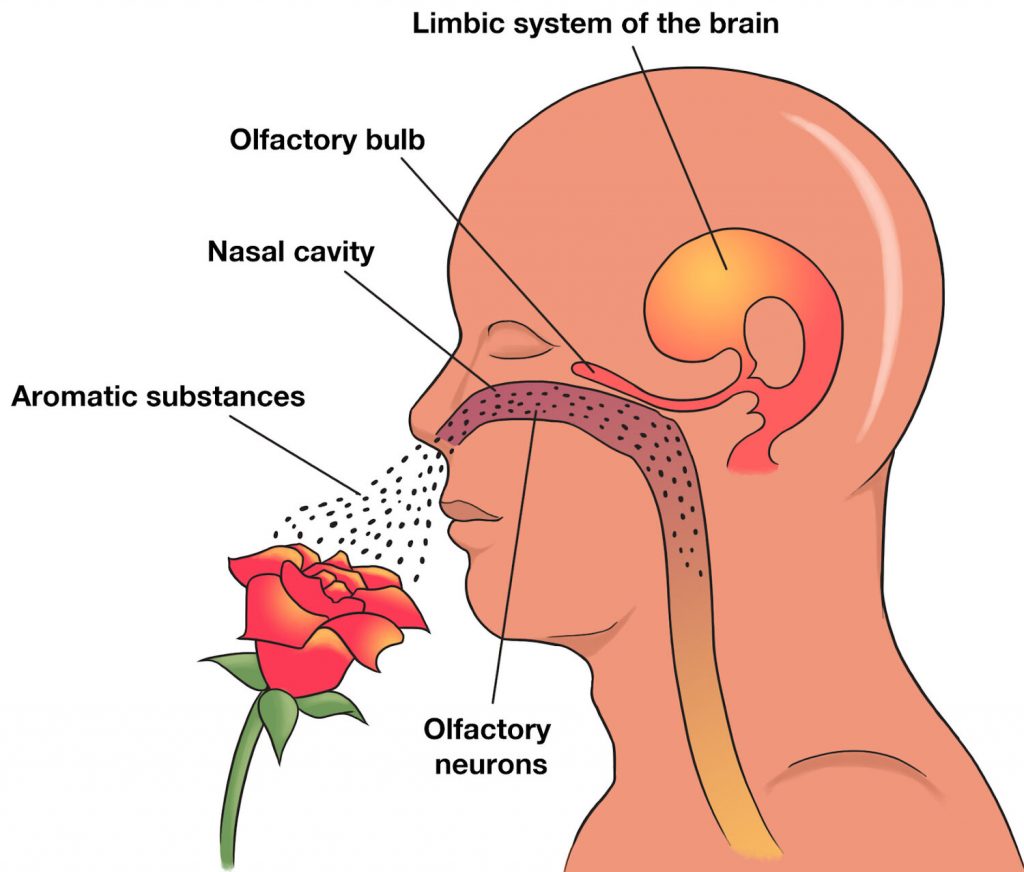
Scientific research affirms that our sense of smell is different from the rest of the senses. All the others – taste, touch, sound and sight – they get processed in the brain through our thalamus – the info relay station. In turn, the thalamus sends those sensations to the hippocampus (our memory manager) and the amygdala (our emotion processor.) But smell, it’s a bit of snob. It bypasses that trusty old thalamus and takes a direct path to the olfactory bulb which, in turn, has its own direct link to the hippocampus and amygdala.

Did you know that human beings have at least 1,000 different types of smell receptors but only four types of light sensors for sight and about four types of receptors for touch?

(Thanks discovery.com for helping me make sense of the human brain.)

Apply often

So that, dear writers, is why this sense is supercharged and ready to ignite your stories. If you want to read more about how the olfactory bulb stores our long-term memories that influence our behaviours, the above-noted link to discovery.com will take you there. On the other hand, if you want a complete tour of the olfactory system, Wikipedia offers a dump truck load of scientific illustrations, terms and definitions.

Applying any sense in your writing works best when it:

  • Is in the logical place (but sometimes the illogical place works best)
  • Fits with your character (or maybe surprises your character)
  • Fits with your setting (whoa! Where did that stink in my flower shop come from?)
  • Fits with your story (a bakery should always smell like…rotting meat?)

The writer has several choices when incorporating a physical sense into a scene. As noted in the above “absolutes”, turning things around can be an effective tool for raising intensity in a scene.

Subvert the normal world

For example, your calm, cool and buttoned-down accountant might surround herself with comfort scents – a faint whiff of sandalwood in her study, an understated sniff of cedar in her walk-in closet, the dry musk of leatherbound account ledgers on her desk.

How can you shake up the predictable safety of her world?

What if she finds a street person perched on her desk, a decidedly unwashed individual with a preference for beans and cheap beer? Upside down goes her ordered world – and not just because of the surprise of the desk squatter, but the lovely scents you’ve surrounded her with up to this point fade from this nasal onslaught.

How can adding the street person to the story be logical? What if the accountant unknowingly holds the key to how the intruder lost everything: his job, reputation, wife and kids, home. Falsely accused and convicted, he’s finally out of prison. Our squatter is determined to restore his original life. The “stink” he brings into the room is a metaphor for all the terrible things that still cling to him.

Will she wash them away?

Apply with subtlety

On the other hand, when you want to be subtle with an emotional scene, tug at heartstrings or allude to themes in your story, you can use smell to underscore the moment. It’s easy to use the overpowering odour of flowers to evoke the floral perfumes so prevalent at funerals. But can we be more understated?

For example, a scene about dying could include something that doesn’t smell but hints at it. A painting of lilies or of mixed blooms. Silk or plastic flowers. A carpet with a chrysanthemum motif. A scented candle still wrapped in plastic. A bottle of hand sanitizer, so antiseptic…so embalming fluid-like.

Or a wooden jewellery armoire, tucked in the corner of your spare room.

Over to you. What are the scents that send your memories and emotions on a trip far away and long ago? Share them in the comments. Meanwhile, happy and slightly scented writing to you all.

10 lists to spark creativity

10 lists to spark creativity

In last week’s blog on jumpstarting your creativity with a playful artist’s date, one of the activities mentioned was creating a bucket list. The first image below is a fun, creative way to do that.

The image was so inspiring to us, that we went searching the internet for similar creative list images that could be used as jumping off points for nudging your imagination. Be creative in designing your own list to work from, or use one of these.

Let us know in the comments below what these lists inspired in you.

Bucket list for any age
I can’t image life without…
Unusual grocery list
I am….
A list of lists
Looking back I wish I’d known,,,
Me from A to Z
Things I want to learn
Christmas list for Santa
Things I cannot stand
Take yourself on a date

Take yourself on a date

Gwynn Scheltema

When I read Julia Cameron’s seminal book The Artists’s Way, she introduced me to the concept of an Artist’s Date: a block of time set aside to nurture your creative inner artist.

This is how Julia Cameron describes it:

The Artist Date is a once-weekly, festive, solo expedition to explore something that interests you. The Artist Date need not be overtly “artistic” — think mischief more than mastery. Artist Dates fire up the imagination. They spark whimsy. They encourage play. Since art is about the play of ideas, they feed our creative work by replenishing our inner well of images and inspiration. When choosing an Artist Date, it is good to ask yourself, “what sounds fun?” — and then allow yourself to try it.

Different times

In normal times, Artist Dates were small adventures pursued by yourself outside your normal environment: poking around in a thrift shop, visiting a museum or art gallery, or trying a new restaurant. COVID has changed our choices, but definitely not eliminated them. You just have to be imaginative and remember what is at the core: fun; new to you; sensory and solo.

Because our creative brain is a sensory brain, anything that stimulates the senses or fires up the imagination will work.  Have an adventure; push yourself out of your comfort zone. We all accept play is crucial for a child’s development, it is also beneficial for adults. Play can add joy to life, relieve stress, supercharge learning, and connect you to others and the world around you. Play can also make work more productive and pleasurable.

As a writer, be mindful and consider how you might describe what you experience in words. Notice physical details and the emotions that stir within you. Make notes of your discoveries to use later.

Listen and move

Try listening to music you don’t usually listen to or you’ve never listened to before. A new instrument, a new singer, a new cultural sound. a podcast that seems “too frivolous”. Spotify is your friend.

Or go down memory lane. Dig out old CDs that haven’t seen the light of day since your youth. Go online and find songs of a particular decade. Create a playlist of old favourites. Listen to your parents’ era music, or your children’s or your character’s.

Dance like no one’s watching. Sing like no one’s listening. Whistle.

Take a walk or a hike in a new place and listen for as many sounds as you can: birds, falling water, rustling leaves, chattering squirrels—or clang of garbage cans being collected, sirens, traffic, people, dogs…

Do something that involves physical movement that you’ve never tried or haven’t done in years: jump rope, whirl like a dervish, dig out the old hula hoop, do a new yoga sequence, balance-walk along a raised structure, make snow angels, go tobogganing, hug a tree.

Make something

Try a new dinner recipe, make a favourite soup from scratch, or bake bread. Get really adventurous and make yogurt or sauerkraut or preserves.

Attempt a simple carpentry project, try beading or macramé. Join an online paint night.

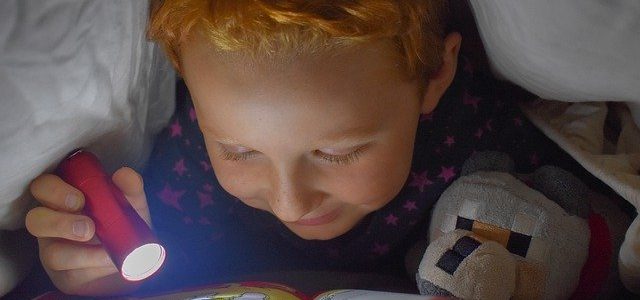
Play with LEGO or play dough or wax crayons. Make a blanket fort and read a book in it. How does that feel? Silly? Good!

Colour some pictures. What memories does that bring up?

Make a vision board, or an inspiration board, or a collage of the way you feel today. Try a craft, not because it has purpose, but because it’s fun.

Treat yourself

Do something, anything, that is usually considered a waste of time or an indulgence: lie on your back and watch clouds; take a bath with scented candles or scented soaps or exploding bath bombs or bubbles; re-read a favourite children’s book.

Pop open your favourite beverage or drink that third coffee without guilt. Mindfully cream your hands and feet or experiment with new hairstyles. Dress up in your favourite colour—all over, all in—just for a day. Dress down in your most favourite rattiest outfit with no judgement. Purge your closet. Guys, don’t bother shaving for the day.

Binge watch a new TV series or a movie you’ve been meaning to watch. Watch a movie you want to watch that you wouldn’t admit to anyone you wanted to watch it.

Have a tech-free afternoon. Sleep in a hammock. Snoop on virtual house tours on the real estate sites. Eat a whole bar of chocolate.

Expand your mind

Sign up for a course in a new genre or poetry or stamp collecting or genealogy. Randomly follow a writer in another genre on Twitter and engage to learn new perspectives, or join a group on Facebook that is totally new to you, like astronomy.

Make a list of 100 things that make you happy. Start a journal of the 50 things you want your grandchildren to know about you. Write a bucket list and illustrate it or scrapbook it.

Take virtual museum tours, watch virtual opera or ballet. Use apps to walk the Camino or Cabot’s trail.

Last words

Artist’s dates break the routine and unlock creativity and optimism. In these times they can give us a sense of fun to help fight the confinement many of us may be feeling. I did a quick count, and I’ve listed over 50 things you could try. You could no doubt come up with 50 more.

Artist Dates are not high art. They are meant to be fun. Ask yourself, “What sounds playful? What does my inner child want to do? What am I drawn to that others might label a waste of time, too silly, too frivolous?” Try doing that.

These three greats say it best:

“The intuitive mind is a sacred gift and the rational mind is a faithful servant. We have created a society that honors the servant and has forgotten the gift.” Albert Einstein

“We don’t stop playing because we grow old; we grow old because we stop playing.” George Bernard Shaw

“The creation of something new is not accomplished by the intellect but by the play instinct.” Carl Jung