

Ruth E. Walker
Discovering Douglas Adams and The Hitchhiker’s Guide to the Galaxy was a thrill. Oh, the combination: wit, satire and science fiction comedy. As a young-ish mother of four, the escape was delicious.
And lately, I’ve enjoyed getting reacquainted with his wacky worldview in the television series Dirk Gently’s Holisitic Detective Agency. But all that is an aside (which is one of things I loved about reading Douglas Adams — the incredible digressions…but then I also enjoy Monty Python.)
What I most admire about Douglas Adams is how often his words (either from his books or otherwise) remain so smart and relevant. Here’s a gem from a speech “Parrots, the universe and everything” at the University of California in May 2001. It was just days before his untimely death at age 49:
We don’t have to save the world. The world is big enough to look after itself. What we have to be concerned about is whether or not the world we live in will be capable of sustaining us in it.
 And here’s my favourite because it fits my writing world:
I love deadlines. I love the whooshing noise they make as they go by.
Yes indeed. So today, I have no less than two writing deadlines. First, I need to finish THIS post and get it proofread and ready to launch by midnight. And second, long before midnight, I need to send the last four chapters of my novel to my critique group.
Time Management?
 Look at that. My “midnight” deadline is secondary to my “long before midnight” deadline. Well, that must be because my last four chapters are ready to go.
Nope. They are “mostly” ready (Python-esque description, yes?) I’m still agonizing over plot decisions I’ve made. I’m unsure if I’ve overwritten the final few scenes, that I’ve gone for “big” when “intimate” might better serve the story.
Yes. Of course I hear you. Isn’t that what my critique group is for? To offer feedback on the writing? So what is my problem?
It’s the deadlines that are killing me and my creativity today. Add into the mix some background on another deadline, one that I’ve missed. In the past couple of years, I’ve been at a few writing conferences. At those conferences, there were optional pitch sessions with literary agents. I started with the idea that I could use those sessions as a chance to practise a real pitch for when the book is done.
So I paid attention to the questions the agents asked. I noticed what got their interest in the written query and writing sample and what put them on snooze. And I practised being comfortable sitting across from someone who might have a profound effect on my writing career. Believe me, I need that practise.
True confession
 I can stand at the front of a room and deliver a workshop with passion and confidence. But offer up that compelling elevator pitch? Describe my book and its themes in 25 words or less? Open my mouth and not jam my foot directly into it?
Something terrible happens to me when I’m talking about my novel to agents and editors. My brain leaves the room. So practise is necessary, in my case.
Last September, I was at a pitch session with a well-known literary agent. I didn’t even have to open my mouth before she let me know how much she enjoyed my writing sample. In seconds, I went from Nervous Nellie to author. We had a great meeting and I imagined how lovely it would be have this woman as my agent. She asked to see the full manuscript in November. “Of course,” I said. I was only a month or so from penning “The End” so that timing was a perfect fit.
I had a deadline. I had strong interest from an agent. And a manuscript so close to being done, I could taste it. What could go wrong?
The Douglas Adams effect
Whoosh. That deadline went by so fast, I barely heard it. Sure, I have a lot of reasons that the book languished, unfinished. But I suspect that a big part of the missed deadline is related to my lack of confidence in writing the darn thing. That’s not a logical reason. Feedback from agents and editors in my practice sessions, along with my excellent (and tough) critique group’s comments, confirms that the writing is strong and the story original and engaging.
But when are we logical beings? When does our passion for our craft translate into efficiency and organization? In my case, it often doesn’t. Remember those digressions I love? Squirrel! And I’m madly off in several directions, forgetting the original goal.
Nonetheless, I’ve made it to the end of this post so that is one deadline met. As long as no squirrels pass my window and the house remains relatively quiet, I should also manage to meet the next one. And as to that November 2016 so-important-I-shouldn’t-let-it-whoosh-by deadline? I can only hope that literary agent is okay working with authors for whom deadlines are sometimes counter-productive. And that she’ll like the novel well enough to sign me.
I’ll keep you posted.
Did You Know:
 You’ve got lots of time before registration deadline for Turning Leaves, our annual fall retreat. But don’t let that stop you from signing up. The first four writers who sign up get a special bonus: a suite room with a lake view. Still waiting for the deadline to creep up on you? With this year’s guest author Vicki Delany ready to share secrets on how she’s one of Canada’s top mystery writers, we expect a full house. Don’t be disappointed. November 3, 4 & 5.


 I include a record of submissions that I send out —whether they come to fruition or not— because even the act of submitting is a positive and motivating step for any writer. I list writing events I attend. I list open mic opportunities, readings, interviews or panels I participate in. I paste copy from encouraging emails about my work. I record the completion or start of writing projects, or even segments within writing projects— “finished Chapter 3!”. I record workshops attended or given, and retreats and writer’s breakfasts. I fill in the dots on the calendar for every B.I.C session I complete.
 Seeing where you were a year ago and where you are today can be revealing. Priorities and goals can change over the course of the year. Projects can fizzle or get sidelined by new projects (and life) unimagined at the start of the year, and that is not necessarily a bad thing. Just because something on your goal list doesn’t get completed doesn’t mean you’ve failed. Reflect on what you’ve learned. Adjust and move on. Go with the flow.
 Achieving writing goals is all very well, but if they are achieved at the expense of your health or your family relationships and other important aspects of life, then perhaps you need to reconsider your life balance. As Ruth said in her blog,
 National Novel Writing Month is an Internet-based challenge to write 50,000 words of a new novel in one month. It started in 1999 with only 21 participants. By 2012, there were over 340,000 who collectively wrote over 3.2 billion words.
 Churning out over 1600 words will keep you busy–and alone–most days, but you can also connect with fellow participants and participate in daily challenges, pre-Nano prep sessions and post-Nano activities. You can connect through Twitter [@nanowrimo], on
 It sure does. Even if participants don’t complete the 50,000 words, they get words written, lots of words. And anything that helps you write is worth trying. Sometimes just the tension of knowing you have a deadline combined with being part of a larger global event can bring inspiration and focus to the creative process.
 through Chapter 1 again. For the moment you are convinced that, yes, you started in the right spot. But you find a short cut on an upper stretch that improves the trip, so you make it. Chapter 1 feels really good now.
 And the truth is, most first drafts are not publishable. As Hemingway so succinctly said, “All first drafts are shit.” First drafts will have strong parts and weaker bits, and bits that should be axed and areas where more needs to be written. That’s NORMAL. That’s what the editing process is for.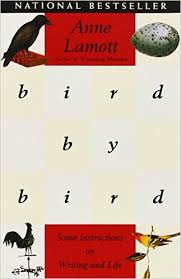


 Lately, I’ve been trying to increase the number of steps I walk each day. I bought a pedometer to record them. At first I just went about my regular routine to see what I was achieving already. Sad. Very sad. Some days I didn’t even break 500!
 At first glance, if you do the math, an 80,000 first draft written over a year, five days a week, 50 weeks in the year, would only require a measly 320 words a day! A 100,000 word book is only 400 words a day.



 Feeling Guilty?
 Reading is not a luxury